SMILE and PRK can both correct an eligible prescription without making a LASIK flap. They do not treat the cornea in the same way. SMILE removes a small piece of tissue through a short incision; PRK reshapes the exposed corneal surface after its outer layer is removed. Corneal maps, tissue reserve, prescription, eye-surface health, and the time you can allow for healing determine whether either is a reasonable option.
The choice is not simply which procedure is newer or which one is called "flapless." A person whose cornea is unsuitable for LASIK does not automatically qualify for SMILE or PRK. The SMILE procedure page and PRK/ASA procedure page explain each treatment on its own; this guide focuses on the decision between them.
How are SMILE and PRK different?
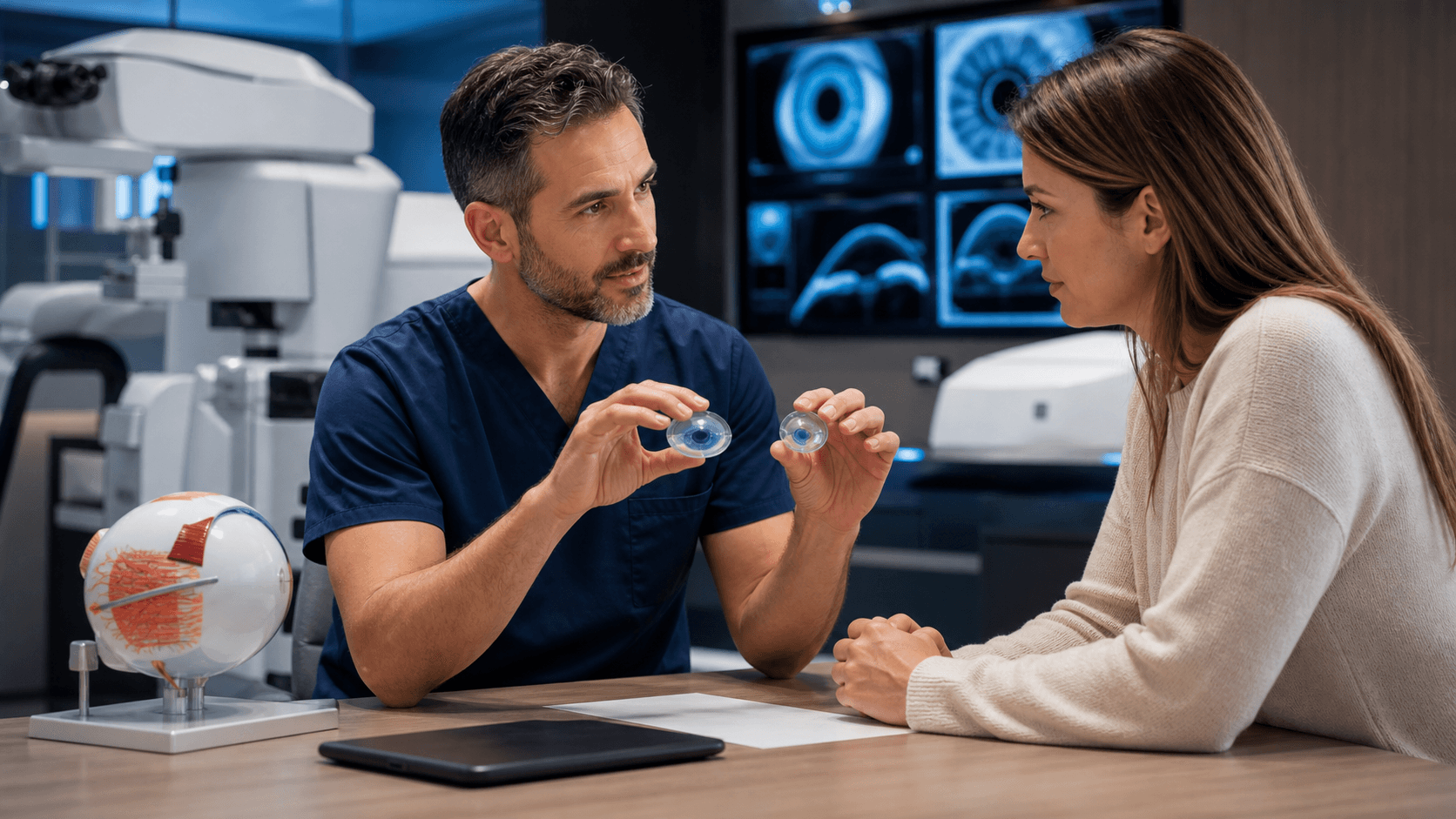
SMILE uses a femtosecond laser to create a lenticule within the cornea, then removes it through a small incision. PRK removes the thin epithelial layer at the front of the eye and uses an excimer laser to reshape the surface beneath it. The epithelium grows back during recovery.
Neither technique makes a hinged LASIK flap. That shared feature is useful for some patients, but it does not mean the techniques have the same eligibility rules, comfort, or follow-up plan. SMILE candidacy also depends on the approved indication for the specific device and the surgeon's treatment range. PRK can be considered for different prescriptions, depending on the laser and the eye. Do not assume that every prescription advertised under either name is available for your measurements.
Which measurements matter most?
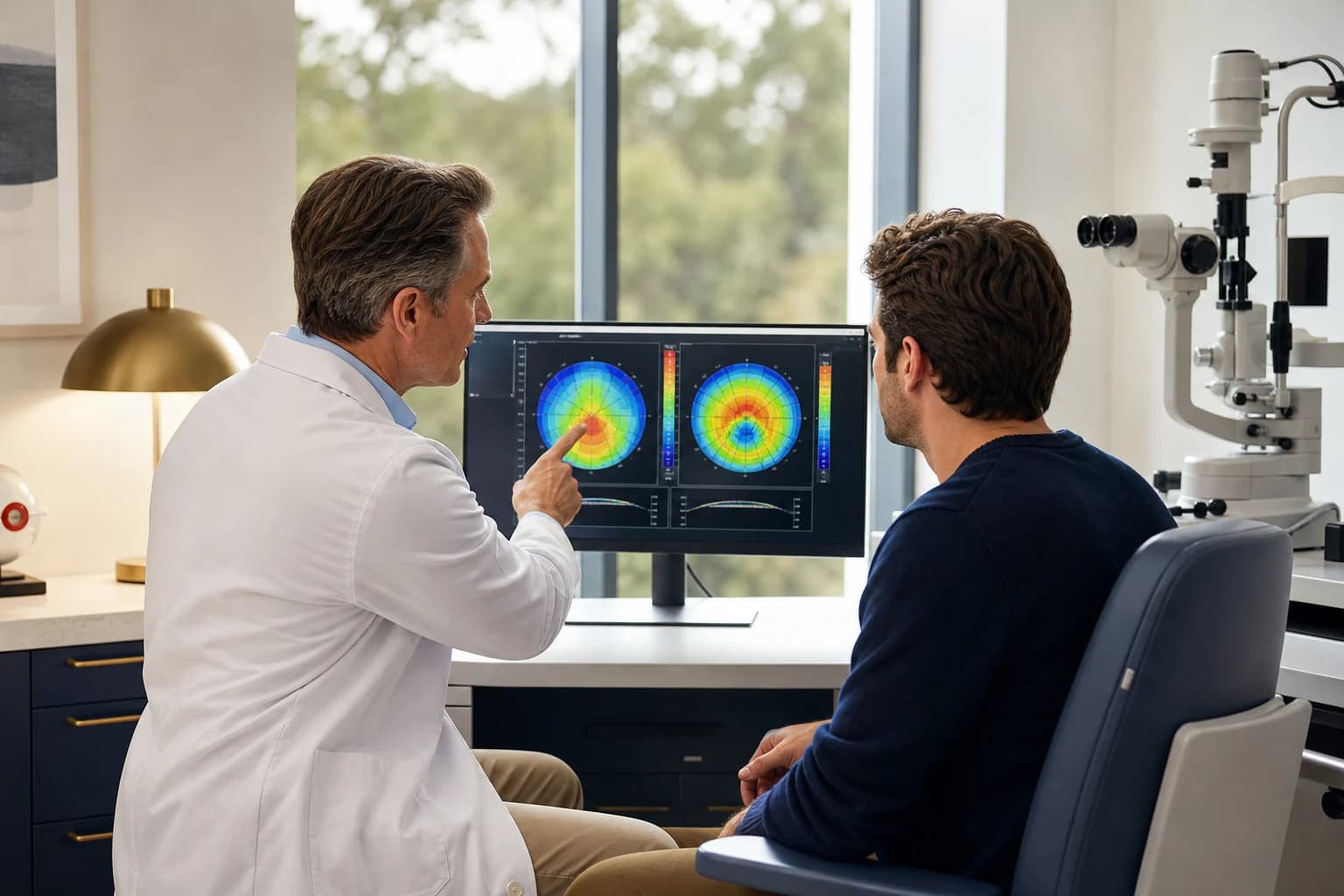
A decision starts with repeatable refraction and corneal imaging. Ask the team to explain the shape of your cornea, its thickness, any asymmetry, and how much tissue each proposed correction would leave. A healthy-looking glasses prescription alone cannot answer those questions.
The tear film matters too. Unstable tears can make measurements unreliable and may worsen after any corneal procedure. If contact lenses have temporarily changed your corneal shape, testing may need to be repeated after a lens break. Our contact-lens testing guide explains why the schedule varies by lens type.
For some eyes, neither laser method leaves an acceptable safety margin. The answer may be an EVO ICL assessment, treatment of an ocular-surface problem first, continued glasses or contacts, or a discussion of a separate eye condition. A careful exam should leave room for "not now" as an answer.
Is recovery the same?
No. PRK requires the surface layer to regenerate and usually involves a temporary bandage contact lens. Discomfort, light sensitivity, and blurred or changing vision can be more prominent during that phase. The detailed PRK healing guide covers the surface-healing period and follow-up.
SMILE does not remove that surface layer in the same way, so useful vision may return sooner for many appropriately selected patients. That is not a promise of next-day driving, a particular work date, or perfect vision. Dryness, glare, residual prescription, inflammation, and other complications remain possible. The SMILE recovery guide explains what should be checked before resuming activities.
For someone commuting to Plano from Frisco, Dallas, or another DFW city, practical planning includes transport to the first examination, the early postoperative check, and a backup if vision has not recovered enough to drive. Do not plan a return trip around an advertised average.
What if you play contact sports or work around eye impact?
Both avoid a LASIK flap, but that single feature should not settle the decision. Your job, protective eyewear, injury history, and the exact corneal measurements matter more. Ask whether each option is appropriate for your specific exposure and when it would be safe to resume it. An occupational rule may also apply independently of medical candidacy.
If thin corneas are your main concern, ask for the proposed treatment depth and residual tissue plan for both techniques. "Flapless" does not mean "no tissue removed." If irregularity or ectasia risk is found, elective corneal laser surgery may not be advisable at all.
What should you ask at the consultation?
Ask the surgeon to show you the maps and explain why your eye qualifies for one method, both, or neither. Find out how a dry-eye finding would be treated before a final recommendation. Ask what vision and comfort may be like during the first week, which follow-ups are required, and what would change the plan after repeat testing.
Visionary Eye Surgery evaluates patients in Plano. DFW residents do not need separate city-specific versions of the same medical decision: they need an exam that compares the same measured eye across realistic options. A consultation can establish which option, if any, is appropriate.
Sources
Keep reading
Explore this content with AI
Open this article in your preferred AI assistant for a plain-English summary, action steps, and questions to ask before booking a consultation.
Want a direct answer about your eyes? A complimentary consultation gives you a clear, written recommendation.