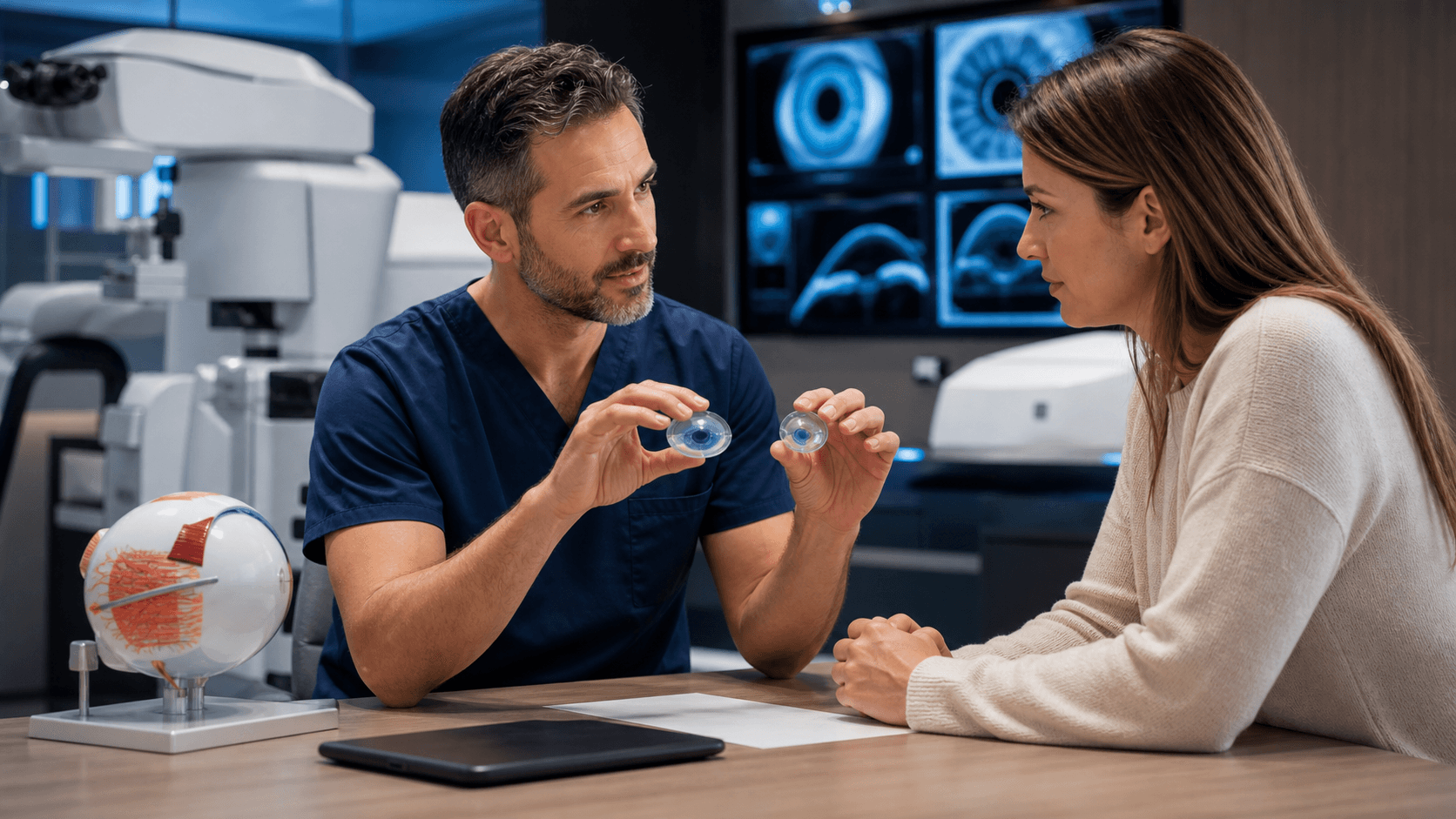
PRK and LASIK use an excimer laser to reshape the cornea. The central difference is how the surgeon reaches the treatment layer. LASIK creates and replaces a thin corneal flap. PRK, also called advanced surface ablation or ASA, removes the surface epithelium and lets it regenerate after treatment.
That one technical difference changes the early recovery, comfort, activity planning, and which corneas can safely support the procedure. It does not make either operation universally better.
For someone comparing PRK vs. LASIK in Plano, the useful question is not which name is more familiar. It is which treatment leaves the eye with the safest structural plan and the most realistic recovery for that person's work and life.
PRK vs. LASIK at a glance
| Decision point | LASIK | PRK / ASA |
|---|---|---|
| How the laser reaches the cornea | A hinged flap is created and repositioned | The surface epithelium is removed and grows back |
| Corneal flap | Yes | No |
| Early visual recovery | Usually faster | Usually slower and more variable |
| Early discomfort | Often limited to the first several hours | Commonly more noticeable during surface healing |
| Bandage contact lens | Usually not needed | Commonly used until the epithelium closes |
| Return to screen-based work | Often within a few days when vision and comfort allow | May require several days or longer |
| Contact-sport planning | Requires a flap-specific discussion | No flap to dislodge |
| Final recommendation | Depends on the full exam | Depends on the full exam |
These are planning differences, not promises. Recovery and visual quality vary, and either procedure may be inappropriate when the prescription, corneal shape, tear film, healing risk, or eye health falls outside a safe range.
What PRK and LASIK have in common
Both procedures permanently reshape corneal tissue. Both can treat selected cases of myopia, hyperopia, and astigmatism within the approved range of the laser and the surgeon's treatment plan. Both require a stable prescription and a healthy enough cornea and ocular surface.
They also share possible side effects and complications, including:
- Dryness, burning, or fluctuating vision.
- Glare, halos, starbursts, or reduced low-light quality.
- Undercorrection, overcorrection, or residual astigmatism.
- Infection or inflammation.
- Corneal weakening or irregularity in an eye that was not an appropriate candidate.
- A later need for glasses, contact lenses, or another treatment.
LASIK adds flap-specific risks. PRK adds a longer surface-healing phase and a risk of corneal haze. Good screening is meant to reduce avoidable risk, not to claim that risk is zero.
When LASIK may be the better fit
All-laser LASIK may be favored when the cornea has healthy shape and thickness, the prescription can be treated without removing too much tissue, the tear film is stable, and rapid early recovery matters.
That can be useful for patients who cannot take a longer break from driving, screen work, or daily responsibilities. Many people notice useful vision early, but the eye can still fluctuate and feel dry while the corneal nerves and tear film recover.
LASIK should not be selected for speed alone. A fast recovery is not a good trade if the flap or remaining corneal thickness creates an avoidable structural concern.
When PRK may be the better fit
PRK / ASA may enter the conversation when avoiding a flap matters. Examples can include:
- A cornea that is thinner than desired for a LASIK flap and treatment.
- Work or recreation with a meaningful risk of eye impact.
- Military, law-enforcement, aviation, or occupational standards that favor a surface procedure.
- Corneal anatomy that supports surface ablation better than flap-based treatment.
- A prior corneal procedure that changes the available options.
PRK is not automatically safe because the cornea is thin. The laser still removes tissue. Corneal tomography, treatment depth, residual strength, prescription, and any sign of keratoconus or ectasia risk still matter. An eye that should not have LASIK may need PRK, EVO ICL, specialty care, or no elective surgery at all.
The recovery difference is real
The first few days after LASIK
Vision can improve quickly after LASIK, but blur, light sensitivity, tearing, scratchiness, and fluctuating focus can occur. Patients need postoperative checks before driving or returning to unrestricted activity. Rubbing the eyes is avoided, and the prescribed drop plan matters.
The surface can look healed before dryness and visual quality have fully stabilized. That is why early clarity should not be confused with completed healing.
The first week after PRK
PRK asks the epithelium to regrow. A bandage contact lens is commonly used while the surface closes. Discomfort, tearing, light sensitivity, and blur can be more noticeable during this phase. The lens is removed only after the surgeon confirms that healing is sufficient.
Vision often improves in stages rather than all at once. It can sharpen, soften, and sharpen again as the surface smooths and inflammation settles. The dedicated PRK recovery timeline explains work, driving, exercise, medication, and warning signs in more detail.
The following weeks and months
LASIK usually reaches functional vision sooner. PRK often takes longer to settle. In appropriately selected eyes, the eventual visual goals can be similar, but the path to that endpoint is different.
Patients planning PRK should build the decision around the slower timeline rather than hoping to recover like a LASIK patient. A specific return-to-work or driving date cannot be guaranteed before the eye is examined after surgery.
Does PRK cause less dry eye than LASIK?
Avoiding a flap may reduce some corneal nerve disruption, but PRK is not a dry-eye treatment. The surface is deliberately removed and must heal. Existing meibomian gland dysfunction, inflammation, allergy, contact-lens intolerance, or unstable tears can make either recovery less predictable.
A refractive evaluation should inspect the eyelids, tear breakup, corneal staining, and symptoms before choosing a procedure. If dryness is the reason LASIK is in doubt, read PRK with dry eyes and thin corneas and treat the ocular surface before final measurements when appropriate.
What the consultation must measure
A safe PRK-versus-LASIK recommendation needs more than a glasses prescription. The exam may include:
- Manifest and cycloplegic refraction when indicated.
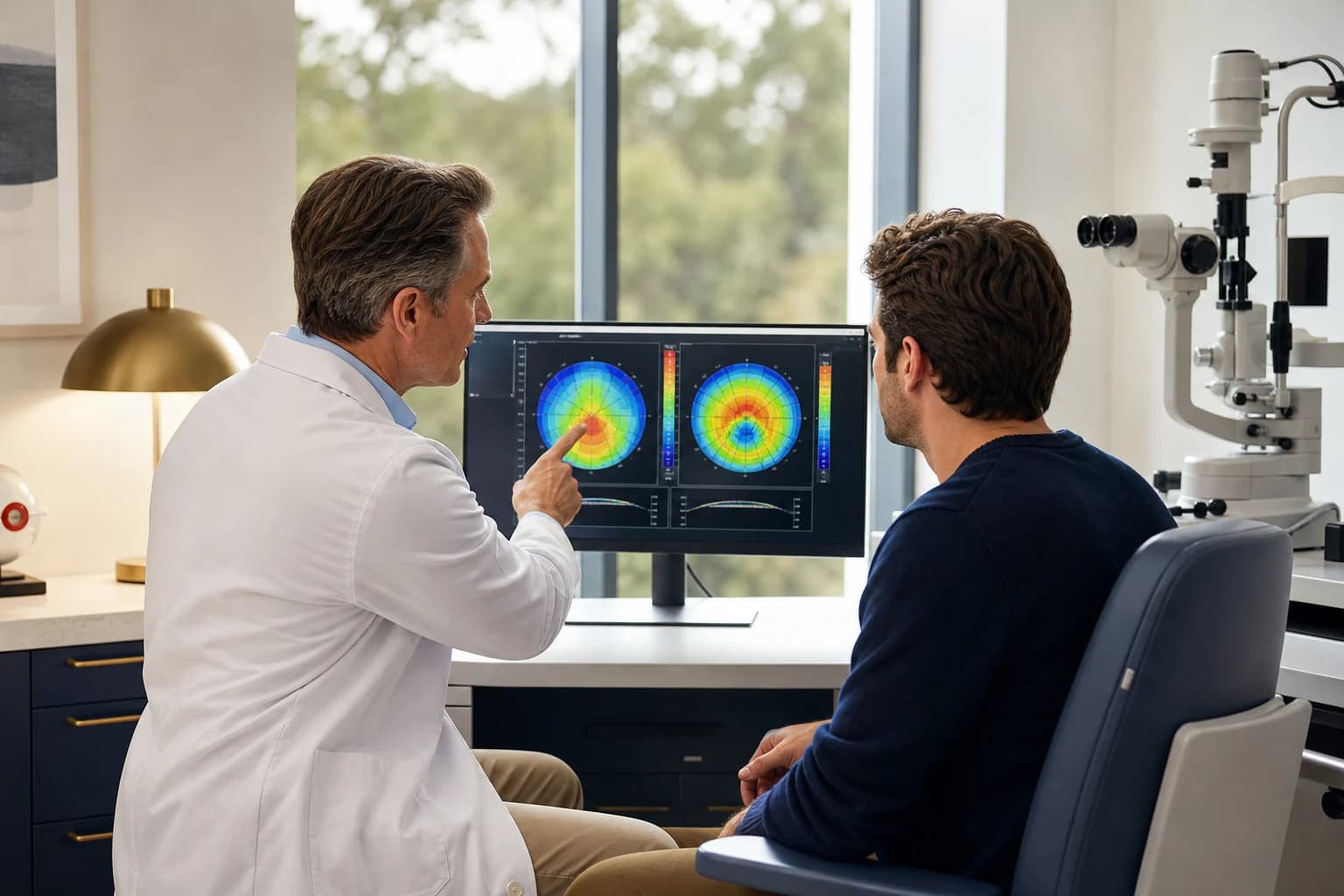
- Corneal topography or tomography to evaluate shape and asymmetry.
- Pachymetry to measure corneal thickness.
- A treatment-depth and residual-tissue calculation.
- Tear-film and eyelid evaluation.
- Pupil assessment, especially for low-light concerns.
- Dilated examination of the natural lens and retina when appropriate.
- Review of medications, autoimmune disease, pregnancy, prior surgery, and healing history.
The same measurements can lead two people with similar prescriptions to different recommendations. That is normal. The procedure should follow the anatomy, not the keyword that brought the patient to the page.
When neither PRK nor LASIK is the right answer
A high prescription, irregular cornea, progressive keratoconus, severe ocular-surface disease, shallow tissue reserve, unstable refraction, or another eye condition can move both laser procedures off the table.
EVO ICL corrects selected prescriptions with an implantable lens rather than corneal tissue removal. SMILE uses a small incision without a LASIK flap but still reshapes the cornea. Patients over 40 may also need a lens-based discussion because presbyopia and early lens changes can be more important than corneal treatment.
The LASIK, EVO ICL, and PRK comparison puts those alternatives in one place. A good consultation should be willing to recommend waiting or staying with glasses and contacts when none of the surgical options has a favorable risk-benefit balance.
If you are choosing between two flapless laser approaches rather than between PRK and LASIK, see the focused SMILE versus PRK guide.
Questions to ask before choosing
- Why does my corneal map favor one procedure?
- How much tissue would the planned correction remove?
- What is the realistic driving and work timeline for my eyes?
- How will existing dry eye or allergy be treated first?
- Which symptoms require an urgent call after surgery?
- What follow-up visits and medications are included?
- If the result is not on target, when could an enhancement be considered?
- Which non-laser option would be safer if my measurements change?
Visionary Eye Surgery uses the vision-correction consultation to compare the procedures against the same diagnostic record. The purpose is not to force a PRK or LASIK answer. It is to identify which option, if any, the eye can safely support.
Sources
Your exam can clarify which options fit your eyes. Visit our Plano team from anywhere in DFW.
Book a free visit