SMILE avoids a LASIK flap, but it is not risk-free. It permanently changes corneal shape by creating and removing a thin lenticule of tissue through a small incision.
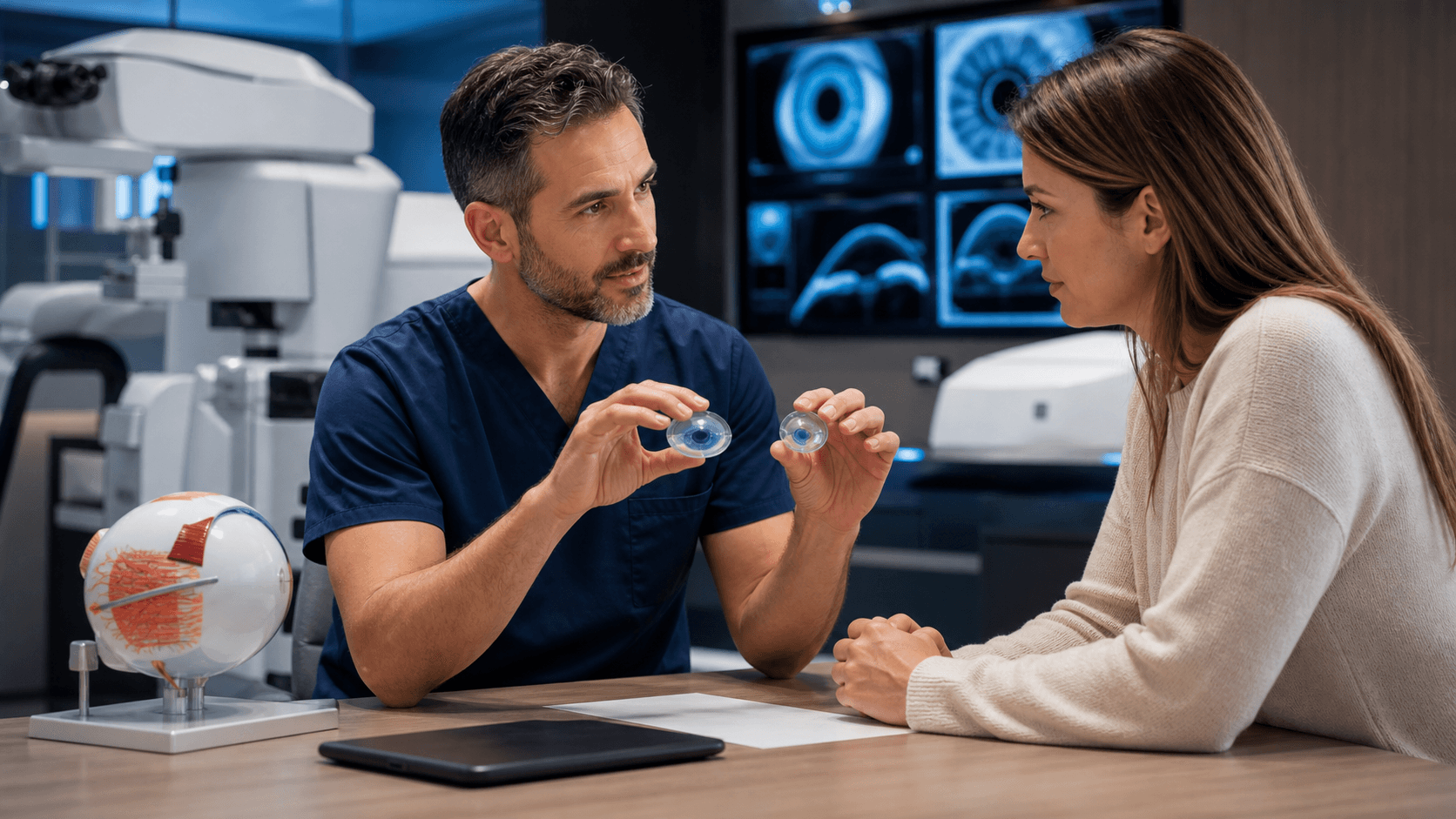
For a well-screened candidate, SMILE can reduce dependence on glasses or contact lenses. The responsible decision still includes the side effects, limitations, alternatives, and possibility that the result will not be perfect.
This guide separates common early symptoms from less common complications and explains what should be discussed before treatment.
Common early symptoms after SMILE
During early healing, patients may notice:
- Fluctuating or hazy vision.
- Dryness or a gritty sensation.
- Light sensitivity.
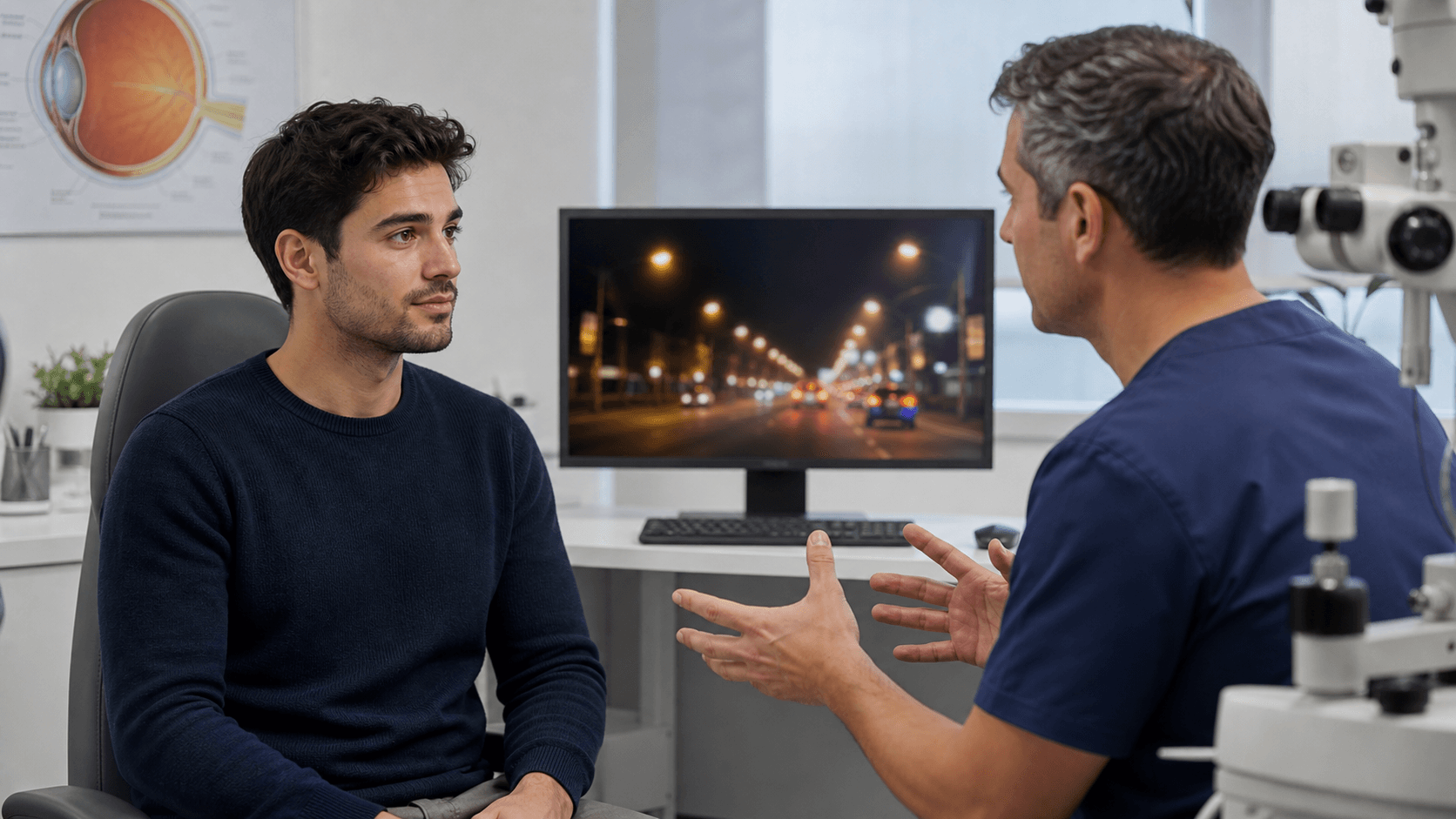
- Glare, halos, or starbursts at night.
- Mild soreness or awareness of the eye.
- Difficulty focusing for long periods.
- Uneven clarity between the two eyes.
The FDA patient information booklet for SMILE lists dry eye, glare, halos, starbursts, hazy or blurred vision, fluctuating vision, focusing difficulty, light sensitivity, grittiness, soreness, and difficulty with night driving among possible symptoms.
Many early symptoms improve as the cornea and tear film recover. The timeline is not identical for every patient, and a symptom that is worsening should not be dismissed as routine.
Dry eye can still happen without a flap
SMILE uses a smaller surface incision than LASIK and may disturb fewer anterior corneal nerves. That does not mean it cannot cause or worsen dry-eye symptoms.
Pre-existing meibomian gland dysfunction, blepharitis, allergy, contact-lens intolerance, screen-heavy work, medications, and ocular-surface inflammation can all affect comfort and visual stability.
Severe dry eye is listed as a contraindication in FDA patient information for the original VisuMax SMILE approval. Milder surface disease may need treatment before measurements are finalized.
If blinking changes the clarity or artificial tears are already used frequently, ask for a cause-based dry eye evaluation before choosing laser correction.
Glare, halos, starbursts, and night driving
Night-vision symptoms can occur after any corneal refractive procedure. They may be influenced by tear-film instability, residual prescription, pupil size, healing, optical aberrations, and the amount or pattern of correction.
Before surgery, describe your real visual demands:
- Night driving on unlit roads.
- Aviation or commercial driving.
- Police, military, or first-responder work.
- Low-light sports.
- Long evening screen use.
Ask how your pupil measurements, corneal map, prescription, and existing night vision affect the recommendation. A general statement that SMILE is "flapless" does not answer those questions.
Overcorrection, undercorrection, and residual astigmatism
SMILE may leave some nearsightedness, farsightedness, or astigmatism. Vision may be good overall while glasses remain useful for driving, fine detail, or another specific task.
Do not assume that every residual prescription can be corrected with another SMILE procedure. Enhancement options depend on corneal thickness, shape, tear film, amount of residual error, time since surgery, and the surgeon's assessment. Glasses, contact lenses, PRK, LASIK conversion strategies, or no additional procedure may be considered.
An enhancement is a new decision, not proof that the original surgery failed. The SMILE enhancement guide explains the reassessment, records to bring, and questions about treatment options without assuming another procedure is suitable.
Loss of best-corrected vision is uncommon but possible
Best-corrected vision means the sharpest vision achieved with glasses or contact lenses. The FDA booklet warns that this can be worse after SMILE in some cases.
Possible reasons include irregular corneal shape, scarring, infection, inflammation, haze, or another complication. That is why informed consent should discuss more than the chance of seeing 20/20 without glasses.
Rare but serious complications
Rare complications listed in FDA information include:
- Infection or significant inflammation.
- Corneal scarring, swelling, haze, or cloudiness.
- Irregular corneal shape.
- Ectasia, in which the cornea progressively thins and bulges.
- Increased eye pressure.
- Problems during lenticule removal or an interrupted procedure.
- Retinal or vitreous complications.
- Vision loss that cannot be fully corrected with glasses, contacts, or another treatment.
This list is not intended to make a rare event sound common. It is intended to make clear that no elective eye operation has zero risk.
Who may not be a good SMILE candidate?
SMILE candidacy depends on the labeling for the specific platform as well as the surgeon's clinical judgment. Treatment may not fit when there is:
- An unstable prescription.
- Insufficient corneal thickness for the planned correction.
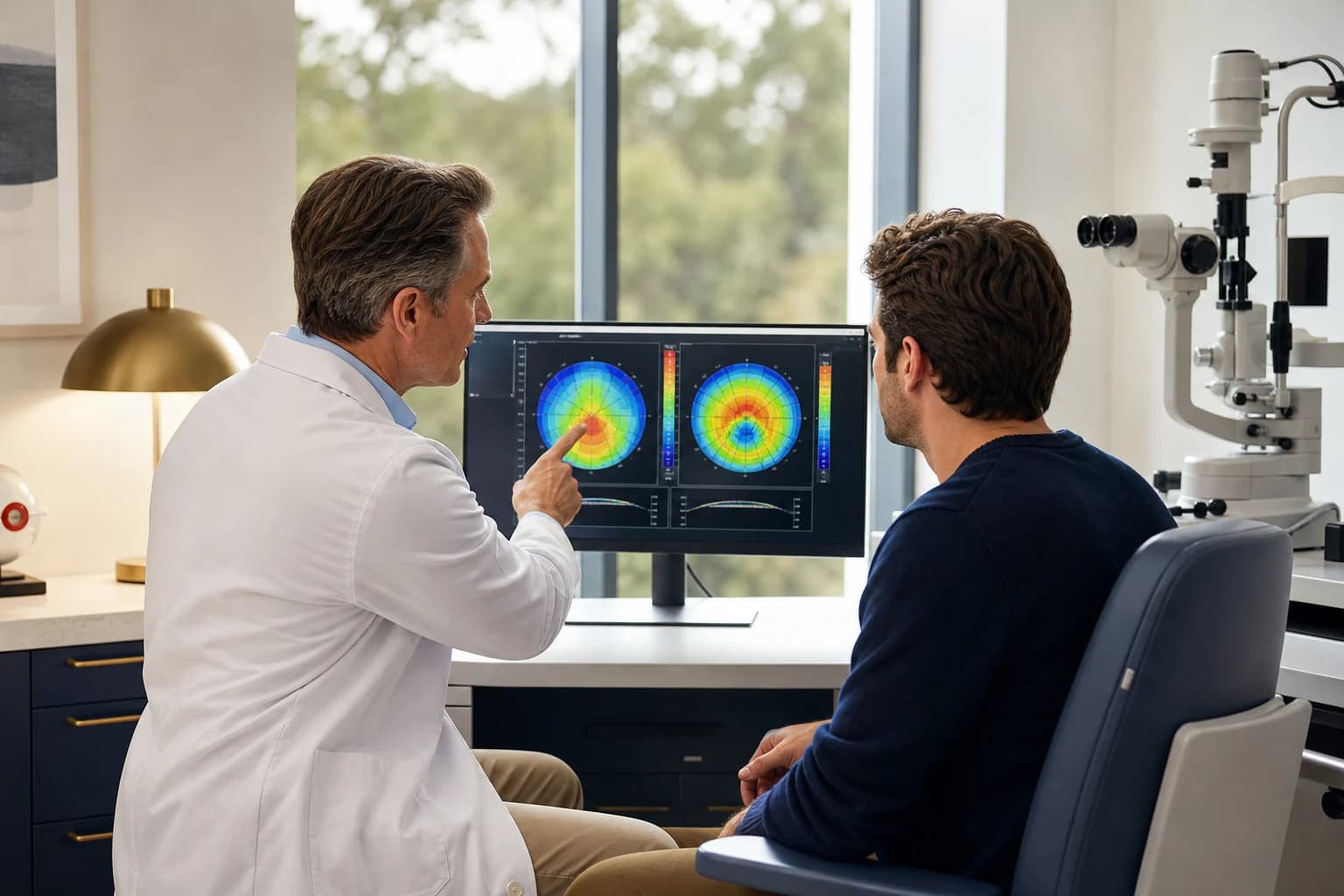
- Keratoconus, suspicious topography, or another ectasia risk.
- Severe dry eye or an unstable ocular surface.
- Active eye infection or inflammation.
- Uncontrolled glaucoma or diabetes.
- Pregnancy or nursing, when measurements may be less predictable.
- Certain active autoimmune or connective-tissue diseases.
- A prescription or visual goal outside the procedure's approved scope.
SMILE does not correct every type of refractive error and does not prevent presbyopia. Patients around 40 and older may still need reading glasses even when distance vision improves.
Use the SMILE candidacy guide for the measurement and prescription discussion.
Is SMILE riskier than LASIK?
Neither procedure is automatically safer for every eye.
SMILE avoids a flap, which removes flap-related risks and may be attractive for some active patients. LASIK offers a different treatment range and a well-established enhancement pathway. PRK avoids a flap but has slower surface healing. EVO ICL avoids laser removal of corneal tissue but is an intraocular procedure with a different risk profile.
The correct comparison depends on:
- Corneal thickness and shape.
- Prescription and astigmatism.
- Tear-film health.
- Age and near-vision goals.
- Night-vision demands.
- Contact sports or occupational exposure.
- Comfort with the recovery and risk profile of each procedure.
Read LASIK vs SMILE or compare LASIK, SMILE, PRK, and EVO ICL before deciding.
Warning signs after surgery
Follow the surgeon's written instructions and call promptly for:
- A sudden or substantial decrease in vision.
- Severe or increasing pain.
- Increasing redness or discharge.
- New flashes, floaters, a curtain in vision, or another urgent symptom listed in the postoperative instructions.
- Trauma, chemical exposure, or accidental rubbing that changes vision.
- Symptoms that worsen after first improving.
Do not drive until the surgeon confirms that vision and healing make it safe.
Questions to ask before SMILE
- Why does SMILE fit my cornea better than LASIK, PRK, or EVO ICL?
- Are my topography, tomography, thickness, and tear-film measurements normal and repeatable?
- What symptoms are common during the first week and first month?
- What is my risk of glare, halos, or dry eye based on my current findings?
- What visual tasks may still require glasses?
- If correction remains, what enhancement options would be possible in my eye?
- Which symptoms require an urgent call?
- Who will perform the procedure and manage follow-up?
Start with the SMILE eye surgery page or schedule a vision-correction consultation at Visionary Eye Surgery in Plano.
Sources
Medically Reviewed by Dr. Shehz, DO
Dr. Shehzad Batliwala, DO—better known as Dr. Shehz—is a board-certified ophthalmologist and eye surgeon who brings both technical precision and genuine compassion to every patient he treats.
Explore this content with AI
Open this article in your preferred AI assistant for a plain-English summary, action steps, and questions to ask before booking a consultation.
Want a direct answer about your eyes? A complimentary consultation gives you a clear, written recommendation.