SMILE eye surgery uses a femtosecond laser to create a small disc of corneal tissue, called a lenticule, which the surgeon removes through a small incision. There is no LASIK flap, but the cornea still needs time to heal and visual quality does not follow the same schedule for every patient.
Many patients notice useful vision early. Sharpness, dryness, glare, halos, and focusing comfort can continue to change for days or weeks. A recovery plan should separate what is common from what requires a call and should match the patient's work, driving, sports, and travel needs.
Surgery day: rest and protect the eyes
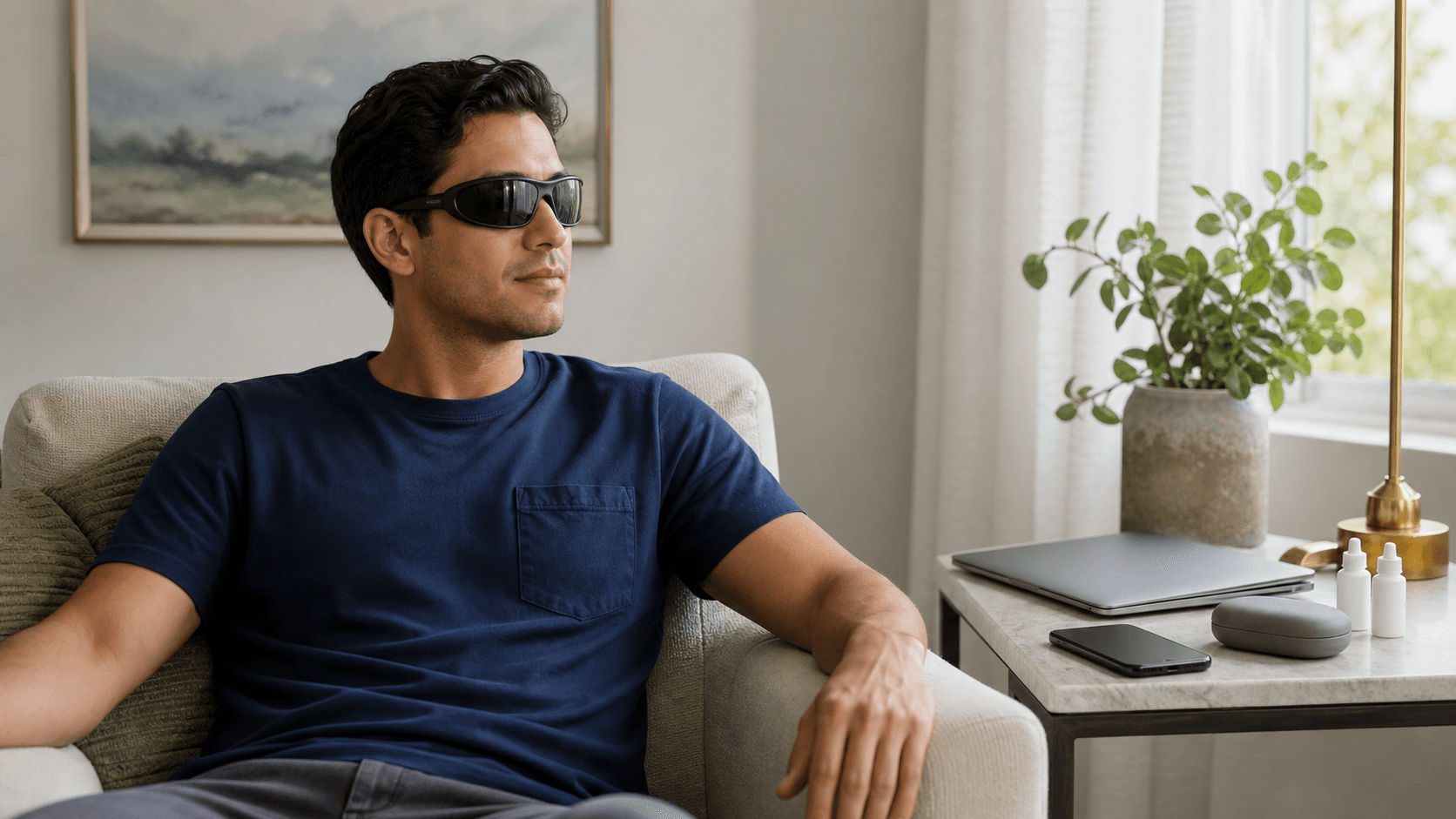
Immediately after SMILE, vision is commonly blurry or hazy. Tearing, light sensitivity, scratchiness, and a foreign-body sensation can occur as the incision and corneal tissue begin healing.
Plan to:
- Have an adult drive you home.
- Use prescribed drops exactly as directed.
- Rest with the eyes closed when comfortable.
- Avoid rubbing or squeezing the eyes.
- Wear any protective shields or glasses the surgical team provides.
- Keep water, makeup, dust, and contaminants away from the eyes.
- Call the practice if pain or vision changes are more severe than the instructions described.
Do not judge the final result on surgery day. The laser treatment may be complete, but the cornea and visual system are at the beginning of recovery.
The first follow-up: confirm the early healing pattern
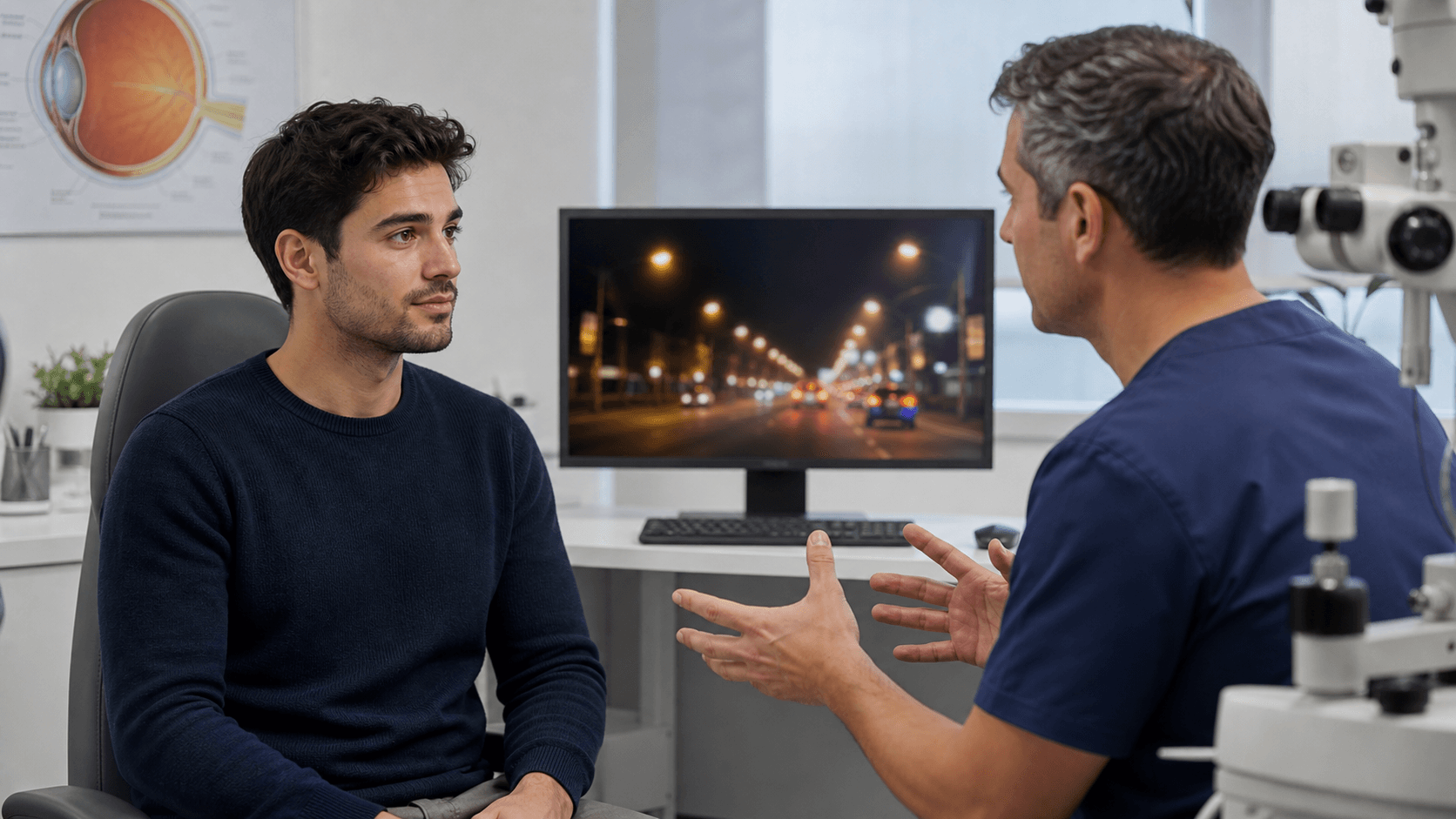
The initial postoperative visit is intended to check:
- Visual acuity in each eye.
- The incision and corneal surface.
- Inflammation or debris at the lenticule interface.
- Eye pressure when appropriate.
- Drop technique and medication schedule.
- Dryness, glare, halos, light sensitivity, and discomfort.
Some patients can see well enough for routine tasks quickly, while others need more time for usable contrast and focus. Driving should resume only when vision meets legal and functional requirements and the surgeon has cleared it. Being able to read a chart in the office does not automatically mean night driving is comfortable.
Days 2 through 7: functional vision improves, but fluctuation is normal
During the first week, many patients notice steady improvement. Vision may still vary by time of day or with screen use, blinking, dryness, and lighting.
Common early experiences can include:
- Mild blur that clears after blinking.
- Different sharpness between the two eyes.
- Dryness, burning, or intermittent watering.
- Glare, halos, or reduced night contrast.
- Eye fatigue during screens or close work.
- Light sensitivity.
Desk-work timing depends on visual comfort and job demands. Someone working at a computer may return sooner than a pilot, night driver, surgeon, first responder, or worker in a dusty environment. Take scheduled screen breaks, blink fully, and use only the lubricants or medications approved by the surgical team.
Weeks 2 through 4: clarity and visual quality continue to settle
By this stage, everyday distance vision may feel more consistent, but fine visual quality can still evolve. Dryness and night symptoms may remain noticeable even when daytime acuity looks good.
Follow-up may assess:
- Whether the prescription is stabilizing.
- Tear-film quality and ocular-surface staining.
- Residual inflammation.
- The relationship between symptoms and the corneal exam.
- Whether activity restrictions can be lifted.
Do not self-treat persistent blur as "just dryness" without an examination. Tear-film instability is common, but residual prescription, interface issues, inflammation, or another eye condition may produce similar symptoms.
Months 1 through 3: evaluate stability, not just the eye chart
Vision can continue to refine over the first several months. The relevant outcome includes more than uncorrected acuity:
- Day and night contrast.
- Glare and halo severity.
- Dry-eye comfort.
- Stability across the day.
- Vision in each eye and both eyes together.
- Ability to perform work, driving, and sports safely.
If the eyes are comfortable and the prescription is stable, routine follow-up may become less frequent. If quality remains inconsistent, the surgeon should identify the cause before discussing any refinement.
When can you return to normal activities?
There is no single calendar that fits every patient. Use the surgeon's written instructions, because technique, healing, examination findings, and activity risk differ.
Screens and desk work
Short periods may be comfortable early, but extended screen use can reduce blink rate and worsen dryness. Increase time gradually and take breaks rather than forcing through blur or irritation.
Driving
Do not drive on surgery day. Resume only after clearance and when vision is safe in the conditions you actually face. Night glare may affect driving after daytime vision feels functional.
Exercise
Light activity may resume before heavy lifting, high-intensity workouts, or environments where sweat can enter the eyes. Follow the practice's staged instructions.
Swimming and hot tubs
Pools, lakes, hot tubs, and other water exposures can introduce microorganisms. Wait for explicit clearance.
Makeup and skin products
Keep products away from the eye while the incision heals. Replace potentially contaminated eye makeup and follow the timing given by the surgical team.
Contact and combat sports
SMILE avoids a LASIK flap, but that does not make the early eye invulnerable. Return to contact sports only after the cornea has been examined and the surgeon clears the activity.
What can slow or complicate SMILE recovery?
Recovery may be less predictable when there is:
- Untreated dry eye, MGD, blepharitis, or allergy.
- Eye rubbing.
- A higher or more complex prescription.
- Corneal irregularity.
- Missed drops or follow-up visits.
- Exposure to dust, smoke, contaminated water, or eye trauma.
- A residual prescription or another eye condition.
This is why candidacy and preoperative surface treatment matter. The SMILE candidacy guide explains the age, prescription, corneal, and tear-film factors considered before treatment.
Call promptly for warning signs
Contact the surgical team promptly for:
- Sudden or meaningful loss of vision.
- Severe or increasing pain.
- Increasing redness, swelling, or discharge.
- A new white spot on the cornea.
- Significant light sensitivity that is worsening rather than improving.
- Trauma, chemical exposure, or forceful eye rubbing.
- New flashes, many floaters, or a curtain-like shadow.
- Any symptom the postoperative instructions identify as urgent.
Do not wait for the next scheduled appointment when recovery is moving in the wrong direction.
SMILE recovery versus LASIK and PRK
SMILE avoids a corneal flap and usually has a faster surface-healing course than PRK, but individual visual recovery varies.
- LASIK: often provides rapid early vision, with flap-specific precautions and possible dryness.
- SMILE: uses a small incision without a flap; early usable vision can return quickly, while clarity and night quality continue to settle.
- PRK/ASA: has a longer surface-healing phase because the epithelium is removed and regenerated.
Procedure choice should not be based on recovery speed alone. Corneal shape, thickness, prescription, dry eye, occupation, sports, and available treatment range matter. Use the LASIK, SMILE, and PRK comparison for the procedure-level decision.
Plan follow-up before returning to your routine
Before traveling from Frisco, Dallas, or Fort Worth to our Plano practice, confirm the follow-up schedule, transportation needs, and how to reach the team if symptoms change. The SMILE eye surgery page explains the procedure and consultation; the side-effects guide helps you prepare questions about risk.
If a prescription remains after healing, an examination should identify the cause before another treatment is considered. Read about enhancement after SMILE for the questions to ask at that reassessment.
Sources
Your exam can clarify which options fit your eyes. Visit our Plano team from anywhere in DFW.
Book a free visit