If you already know you need iStent, Hydrus, Durysta, iDose, goniotomy, or canaloplasty, the MIGS procedure guide can help you compare devices. If you need a diagnostic glaucoma evaluation, glaucoma doctor Plano, glaucoma evaluation, glaucoma consultation, high eye pressure treatment, treatment review, or second opinion, the diagnostic workup comes first.
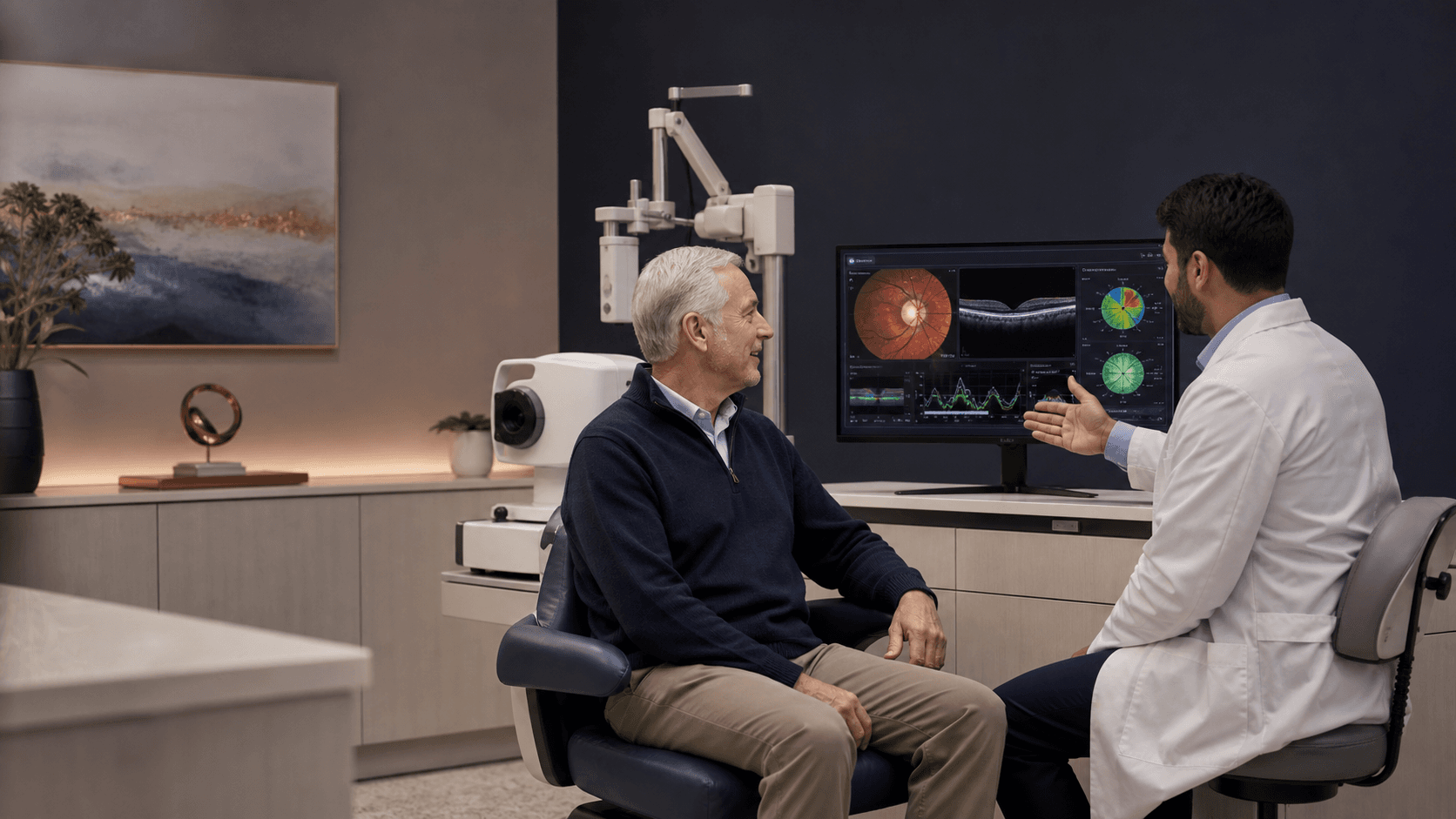
Glaucoma can damage peripheral vision before you notice symptoms. That is why the exam has to connect pressure readings with optic nerve structure, visual field function, corneal thickness, drainage angle, cataract timing, medication tolerance, and your target pressure. If you need the condition-level explanation first, review the glaucoma overview before comparing a procedure with medication or laser options.
Ocular hypertension and elevated eye pressure should not be rushed into surgery. Ocular hypertension means eye pressure is elevated without confirmed optic nerve damage or visual-field loss. Some patients are monitored with repeat pressure checks, OCT, visual fields, corneal thickness, and drainage-angle exams; higher-risk patients may need drops or SLT. MIGS enters the conversation when open-angle glaucoma, cataract timing, drop burden, or a specific pressure goal makes a procedure medically appropriate.
Across North Texas, glaucoma care is often presented in two separate ways: long-term monitoring with OCT, visual fields, drops, and SLT, or cataract-combined procedures such as iStent or Hydrus. A stronger glaucoma evaluation connects both sides. It explains when monitoring or laser is enough, when sustained-release medication such as Durysta or iDose may reduce drop burden, when MIGS belongs in the cataract plan, and when advanced disease needs fellowship glaucoma referral or traditional surgery instead.
Visionary Eye is based in Plano and sees local and traveling patients who need a documented pressure goal, a MIGS discussion, or a clearer next step before adding more drops. Patients making a longer trip can use the out-of-town records review before deciding whether an in-person glaucoma or MIGS consultation makes sense.
Choosing glaucoma care is not about finding the longest procedure list. The visit should separate monitoring, selective laser trabeculoplasty, sustained-release medication, MIGS, combined cataract and glaucoma surgery, and referral for traditional surgery when advanced disease needs a lower pressure goal.
Glaucoma is often silent early, so a glaucoma doctor visit is especially important for patients with high eye pressure, suspicious optic nerves, family history, diabetes, prior eye injury, steroid use, severe nearsightedness, or changing side vision. Sudden eye pain, redness, halos, headache, nausea, or abrupt blurry vision can signal an urgent pressure problem and should not wait for a routine consultation.