






VISIONARY EYE
GLAUCOMA

MIGS. Lower pressure, minimal recovery.

Minimally Invasive Glaucoma Surgery is a family of micro-procedures that reduce eye pressure without the recovery of traditional glaucoma surgery - often combined with cataract surgery in a single visit.

  • 20/Happy Patient Guarantee
  • Dr. Shehzad Batliwala, Board-Certified
  • Lifetime follow-up
  • FSA/HSA + 0% APR financing
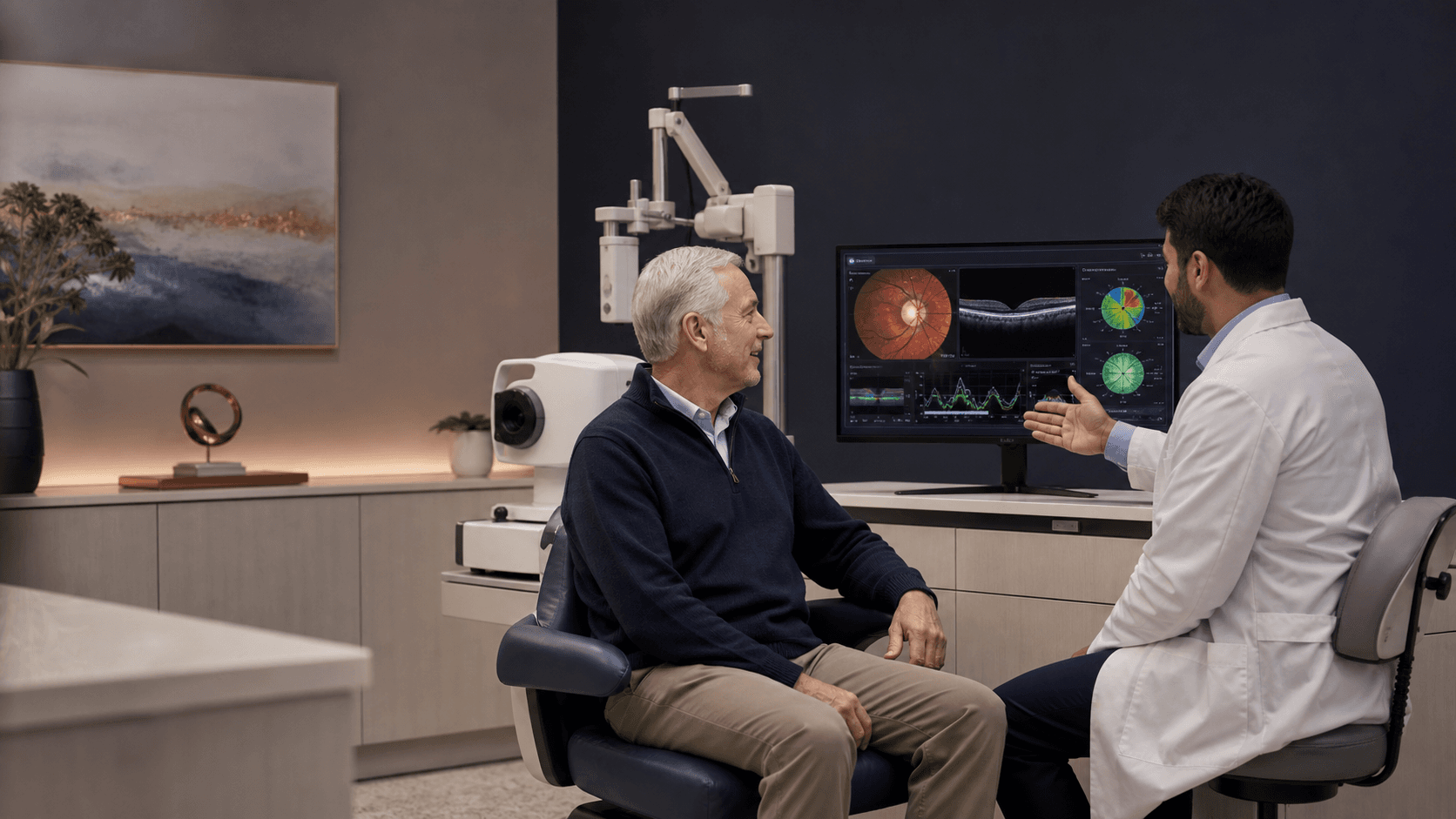
Glaucoma consultation and diagnostic review
  • 6 devicesFull MIGS family in-house
  • 10-15 minAdded to cataract surgery
  • Drop-freeOutcome for many patients
  • Same dayRecovery as cataract alone
How MIGS works

Lower the pressure without opening the eye.

Glaucoma damages the optic nerve by raising the pressure inside the eye. Traditional glaucoma surgery worked by carving large external pathways for fluid to escape, effective, but with long recovery and real risk.

MIGS is the modern alternative. Through a 1-2 mm incision (the same one we use for cataract surgery), we place or activate a microscopic drainage device inside the eye's natural plumbing. Schlemm's canal, the trabecular meshwork, or the anterior chamber.

  • 1-2 mm incision
  • 10-15 minute add-on
  • No external bleb
  • Most patients reduce or end drops
Glaucoma diagnostic review for MIGS planning
Why patients pick MIGS

Four reasons MIGS has replaced older glaucoma surgery for most patients.

  • Fewer (or zero) daily drops

    Many patients reduce or stop their glaucoma drops entirely after MIGS, depending on starting pressure and device.

  • Less medication dependence

    Drops aren't just inconvenient, they cause irritation and adherence problems. MIGS treats the cause, not the symptom.

  • Same-day recovery

    When combined with cataract surgery, MIGS adds 10-15 minutes and zero additional recovery time.

  • Better safety profile

    MIGS preserves future surgical options. If you ever need traditional glaucoma surgery, it remains available.

Your journey

Your journey to visual freedom.

  1. 60 min
    Step 01

    Free consultation

    Full glaucoma workup, pressure, optic nerve imaging, visual field. We choose the right MIGS device (or rule it out) here, not in the OR.

  2. 30 min
    Step 02

    Pre-op imaging

    Detailed angle imaging and corneal scans inform the exact device choice and placement strategy for your eye.

  3. 10-15 min
    Step 03

    Surgery day

    Awake but completely comfortable. 10-15 minutes added to cataract surgery, or standalone if you've already had cataracts done. You go home that day.

  4. Lifetime
    Step 04

    Lifetime follow-up

    Next-day check, then 1 week, 1 month, 3 months. Pressure monitoring continues for life, included with care.

How it works

How MIGS lowers eye pressure.

Glaucoma damages the optic nerve when fluid can't drain properly and pressure builds inside the eye. Every device in the MIGS family works the same underlying way - it improves that drainage. The how differs by device; the goal is always lower, steadier pressure.

  1. 01Step 01

    Measure pressure and map the drainage angle

    Diagnostics

    A full glaucoma workup measures your eye pressure and images the drainage angle, optic nerve, and visual field. These diagnostics determine whether MIGS is appropriate and, if so, which device best fits your anatomy and pressure goal.

  2. 02Step 02

    Access the eye through a micro-incision

    Often with cataract surgery

    MIGS is performed through the same tiny, self-sealing incision used for cataract surgery - which is why the two are so often combined, adding only 10-15 minutes. Numbing keeps you comfortable, and no large external wound is created.

  3. 03Step 03

    Improve the eye's natural drainage

    Trabecular meshwork / Schlemm's canal

    Working at the eye's drainage system, your surgeon either places a microscopic stent (iStent, Hydrus), opens or bypasses the blocked trabecular meshwork (goniotomy, canaloplasty), or delivers sustained medication (Durysta, iDose). Each route restores outflow so fluid can leave the eye more easily.

  4. 04Step 04

    Lower pressure - with fewer drops

    Same-day recovery

    As outflow improves, intraocular pressure drops. Many patients reduce or eliminate their daily glaucoma drops, and because MIGS is minimally invasive, recovery is fast and your future surgical options stay open if they're ever needed.

The full MIGS family

Six devices, each chosen for a reason.

Every device in the FDA-approved MIGS family is performed in-house. The decision happens in the consultation, not the OR.

Microscopic implant that improves fluid drainage.

iStent / iStent inject

A microscopic implant that creates a permanent opening between the eye's anterior chamber and its drainage system. Often performed during cataract surgery for mild-to-moderate open-angle glaucoma.

Best for

Mild to moderate open-angle glaucoma, often paired with cataract surgery

  • Can be performed during cataract surgery or standalone
  • May reduce daily glaucoma drops
  • Designed for long-term IOP control

An eyelash-sized microstent for Schlemm's canal.

Hydrus Microstent

The Hydrus Microstent is a tiny, flexible device placed inside Schlemm's canal to improve fluid outflow and reduce intraocular pressure.

Best for

Mild to moderate primary open-angle glaucoma

  • Often performed with cataract surgery
  • Placed through a micro-incision
  • May reduce or eliminate glaucoma drops
A tiny opening in the trabecular meshwork.

Goniotomy

Goniotomy creates a tiny opening in the trabecular meshwork, the eye's natural drainage system, to restore normal fluid flow and lower intraocular pressure.

Best for

Open-angle glaucoma patients who need better IOP control and want to reduce medication reliance

  • No implant left behind
  • Often performed alongside cataract surgery
  • Most patients resume normal activities within days
Restoring natural drainage from the inside.

Canaloplasty

Canaloplasty uses a microcatheter to dilate Schlemm's canal - restoring the eye's natural drainage pathway without permanent implants or external blebs.

Best for

Patients seeking implant-free pressure reduction

  • No permanent implant
  • Preserves future surgical options
  • Minimal incision
A biodegradable implant that delivers medicine for months.

Durysta

Durysta is a tiny biodegradable implant placed in the eye that releases bimatoprost - the active ingredient in many glaucoma drops - slowly over several months. The implant dissolves on its own.

Best for

Patients struggling with daily drop adherence or chronic drop irritation

  • Can reduce daily drops for months
  • Biodegradable - no removal
  • Ideal for drop-adherence challenges
A long-acting glaucoma drug-delivery implant.

iDose TR

iDose is a tiny, sustained-release glaucoma implant that delivers medication directly inside the eye to help reduce intraocular pressure.

Best for

Open-angle glaucoma or ocular hypertension patients with drop side effects or adherence challenges

  • May reduce daily drops
  • Direct medication delivery inside the eye
  • Can provide control for months or years
Compare at a glance

Which device fits which patient.

A starting reference, not a recommendation. The right device depends on diagnostics we can't do online.

  • iStent

    Permanent implant
    Yes
    Can reduce daily drops
    Yes
    Often combines with cataract surgery
    Yes
    Biodegradable
    No
    No permanent implant
    No
    Open-angle glaucoma focus
    Yes
  • Hydrus

    Permanent implant
    Yes
    Can reduce daily drops
    Yes
    Often combines with cataract surgery
    Yes
    Biodegradable
    No
    No permanent implant
    No
    Open-angle glaucoma focus
    Yes
  • Goniotomy

    Permanent implant
    No
    Can reduce daily drops
    Yes
    Often combines with cataract surgery
    Yes
    Biodegradable
    No
    No permanent implant
    Yes
    Open-angle glaucoma focus
    Yes
  • Canaloplasty

    Permanent implant
    No
    Can reduce daily drops
    Yes
    Often combines with cataract surgery
    Yes
    Biodegradable
    No
    No permanent implant
    Yes
    Open-angle glaucoma focus
    Yes
  • Durysta

    Permanent implant
    No
    Can reduce daily drops
    Yes
    Often combines with cataract surgery
    No
    Biodegradable
    Yes
    No permanent implant
    Yes
    Open-angle glaucoma focus
    Yes
  • iDose

    Permanent implant
    Yes
    Can reduce daily drops
    Yes
    Often combines with cataract surgery
    Yes
    Biodegradable
    No
    No permanent implant
    No
    Open-angle glaucoma focus
    Yes
Wouldn't have it any other way. If someone wants to see their absolute best come see dr shehz!!
Unique LangGoogle Review
Pricing & insurance

MIGS is typically covered by insurance.

Most MIGS procedures are considered medically necessary by both private insurance and Medicare. We verify benefits before you commit and walk you through any out-of-pocket costs up front.

  • Medicare-covered
  • Most private insurance
  • Benefits verified up front
  • FSA & HSA accepted
Glaucoma procedures covered by medical insurance
The honest version

Why we don't discount MIGS

MIGS is almost always insurance-covered. We verify your benefits before you commit and quote any out-of-pocket portion in writing - nothing gets added on surgery day.

FAQ

Common questions.

Don't see your question? Call us at 214-972-2020 or book a free consultation.

  • Will MIGS replace my drops entirely?
    Many patients reduce or eliminate daily glaucoma drops after MIGS. The exact outcome depends on your starting pressure and the device chosen. Some patients still benefit from 1-2 daily drops, just at a much-reduced regimen.
  • Can MIGS be done with cataract surgery?
    Yes - most MIGS devices are designed to be performed alongside cataract surgery, adding only 10-15 minutes to the procedure with no extra recovery time. Durysta is the typical exception.
  • How long does the implant last?
    Permanent implants (iStent, Hydrus, iDose) are designed to remain indefinitely. Durysta is biodegradable and dissolves over months. Goniotomy and canaloplasty don't leave an implant at all.
  • Is MIGS safer than traditional glaucoma surgery?
    Generally, yes. MIGS has a much lower complication profile than trabeculectomy or tube shunt procedures and typically allows preservation of those options for the future if ever needed.
  • Which MIGS device is right for me?
    It depends on your glaucoma stage, your eye anatomy, your pressure goals, and whether you're also having cataract surgery. We'll explain our reasoning at your consultation - and we'll never push a device that doesn't fit your eyes.

Still have questions?

Talk to our team, no pressure, no sales pitch. We answer the question, not the upsell.

Other options

Not the right fit? Other procedures we offer.

MIGS treats glaucoma. If your real issue is cataracts, dry eye, or refractive error, we have a dedicated path for each.

READY WHEN YOU ARE

See what better vision looks like. At any stage of life.

Reaching for your glasses on the nightstand. Fighting contacts at the gym. Watching the menu blur at dinner. These aren't problems to live with anymore, and the only place to find out what's actually possible for your eyes is in the chair.

7,000+
Surgeries by Dr. Shehz
Board-certified
1
Surgeon. Every case.
5★
Patient-rated on Google
  • 20/Happy Patient Guarantee
  • Dr. Shehzad Batliwala, Board-Certified
  • Lifetime follow-up
  • FSA/HSA + 0% APR financing