CTAK for keratoconus in Plano. A less invasive path beyond transplant.
A custom-shaped corneal inlay that reshapes keratoconus from the inside - restoring clearer, more correctable vision without removing your cornea.
- 20/Happy Patient Guarantee
- Dr. Shehzad Batliwala, Board-Certified
- Aftercare included
- Payment options available
- AdditiveAdds tissue, not cuts
- Custom-shapedMatched to your cornea
- Donor tissueSterilized, not plastic
- No transplantPreserves your cornea
Your surgeon: Dr. Shehzad Batliwala, DO, MGM · Board-Certified Ophthalmologist
Who Corneal Tissue Addition (CTAK) is for.
You may be a great fit if any of these sound familiar.
- Keratoconus or corneal ectasia glasses can't correct well
- Difficulty tolerating rigid or scleral contact lenses
- A cornea too steep or irregular for laser correction
- Told a corneal transplant is your only option
- Stable cornea, often alongside cross-linking
We may recommend something else if…
- Significant central corneal scarring
- Active eye infection or inflammation
- Cornea too thin or advanced for an inlay
- Vision correctable comfortably with glasses
These findings may delay treatment or rule it out. Your clinician will explain the risks and whether another option is appropriate.
Your exam guides the recommendation. Surgery is not the default.
A more natural way to reshape the cornea.
Keratoconus reshapes the front of your eye into a cone, scattering light and blurring vision in a way glasses often can't fully fix. For years the only answers were specialty contacts you could barely tolerate - or a full corneal transplant.
CTAK - Corneal Tissue Addition Keratoplasty - offers another path. It uses a custom-shaped piece of sterilized donor cornea, sculpted by laser to match the exact map of your eye, then placed within your own cornea to round the cone back toward its natural shape. Instead of replacing your cornea, we gently rebuild it.
- Additive, not subtractive - we add tissue rather than cut it away
- Customized to your individual corneal map, not a one-size ring
- Sterilized donor tissue, not plastic - works in harmony with your eye
- Minimally invasive - a small laser channel, typically without stitches

How Corneal Tissue Addition (CTAK) works.
- 01Step 01
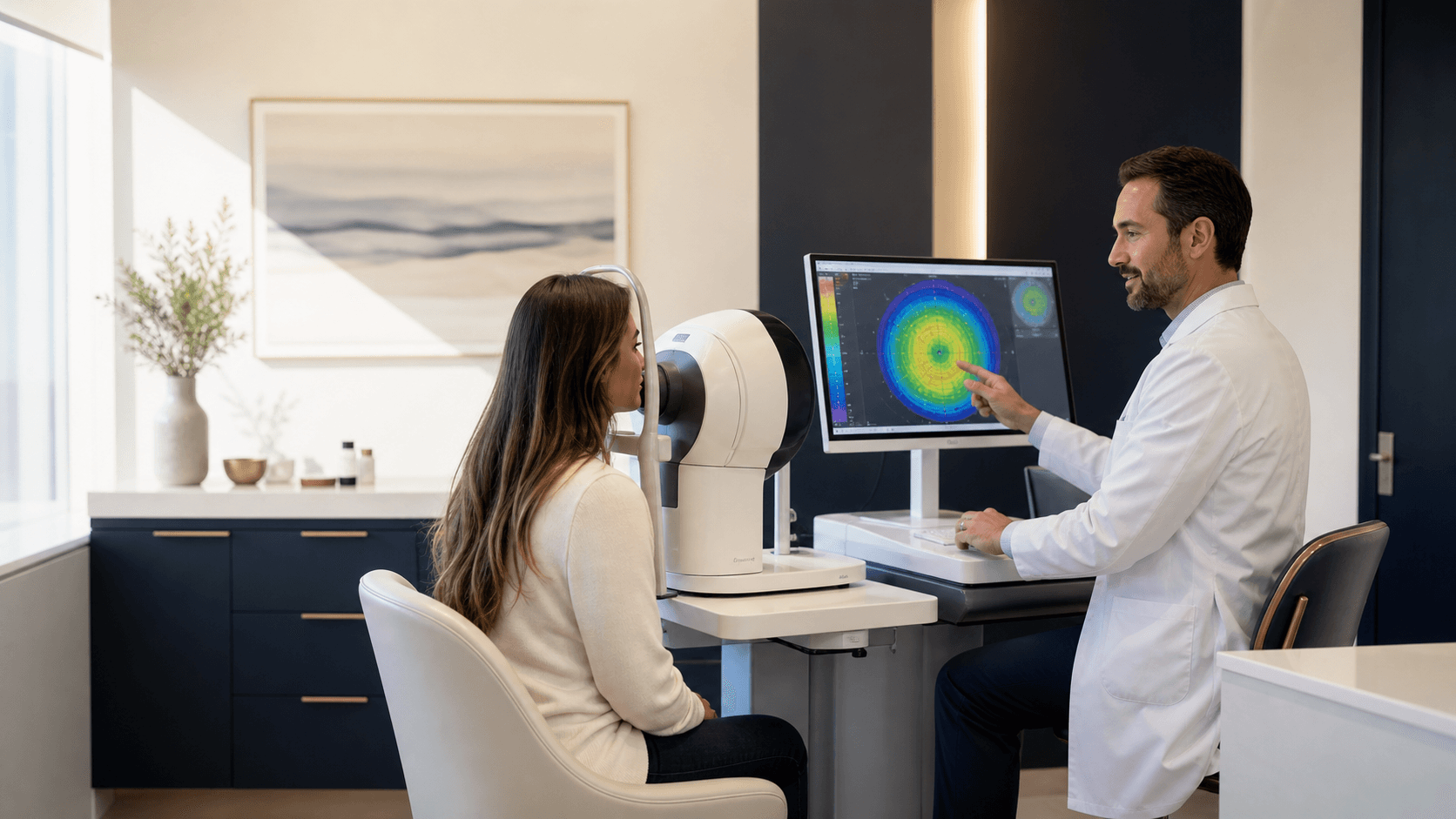
Map your cornea in 3-D
Corneal mappingWe capture a detailed three-dimensional map of your cornea to understand the exact shape and steepness of your cone. This map becomes the blueprint the entire procedure is built around.
- 02Step 02
Shape the donor inlay
Femtosecond laserA femtosecond laser sculpts the sterilized donor-tissue inlay to match your individual corneal map precisely - not a one-size-fits-all ring, but tissue shaped for your eye alone.
- 03Step 03
Place it within your cornea
Small channelThe same laser creates a small channel inside your own cornea, and the inlay is gently positioned within it - typically without stitches and while preserving the cornea you already have.
- 04Step 04
Reshape toward a regular cornea
Over the weeks afterOver the following weeks your cornea settles into a smoother, more regular shape, improving how light focuses in your eye and making it far more correctable with glasses or contacts again.
What to expect, start to finish.
- Step 0160 min

Mapping & candidacy
Detailed corneal topography confirms the shape of your cone and whether CTAK - alone or with cross-linking - is the right fit for your eye.
- Step 02Pre-procedure

Inlay preparation
A femtosecond laser sculpts the sterilized donor-tissue inlay to match your individual corneal map precisely.
- Step 03Outpatient

Procedure
The laser creates a small channel in your cornea and the inlay is gently positioned inside - an outpatient procedure, typically without stitches.
- Step 04Weeks + follow-up

Reshaping & follow-up
Over the following weeks your cornea settles into a more regular shape. We track stability and fine-tune your correction once the eye is stable.
What Corneal Tissue Addition (CTAK) changes day to day.

An alternative to transplant
CTAK adds tissue inside your own cornea instead of replacing it - keeping you off the transplant path when possible.
Shaped to your eye
The inlay is laser-sculpted to your individual corneal map - a custom fit, not a generic ring.

Preserves future options
Because no corneal tissue is removed, CTAK keeps more of your future choices open than a transplant would.
Minimally invasive
Performed through a small laser-created channel, typically without stitches - working in harmony with your own cornea.
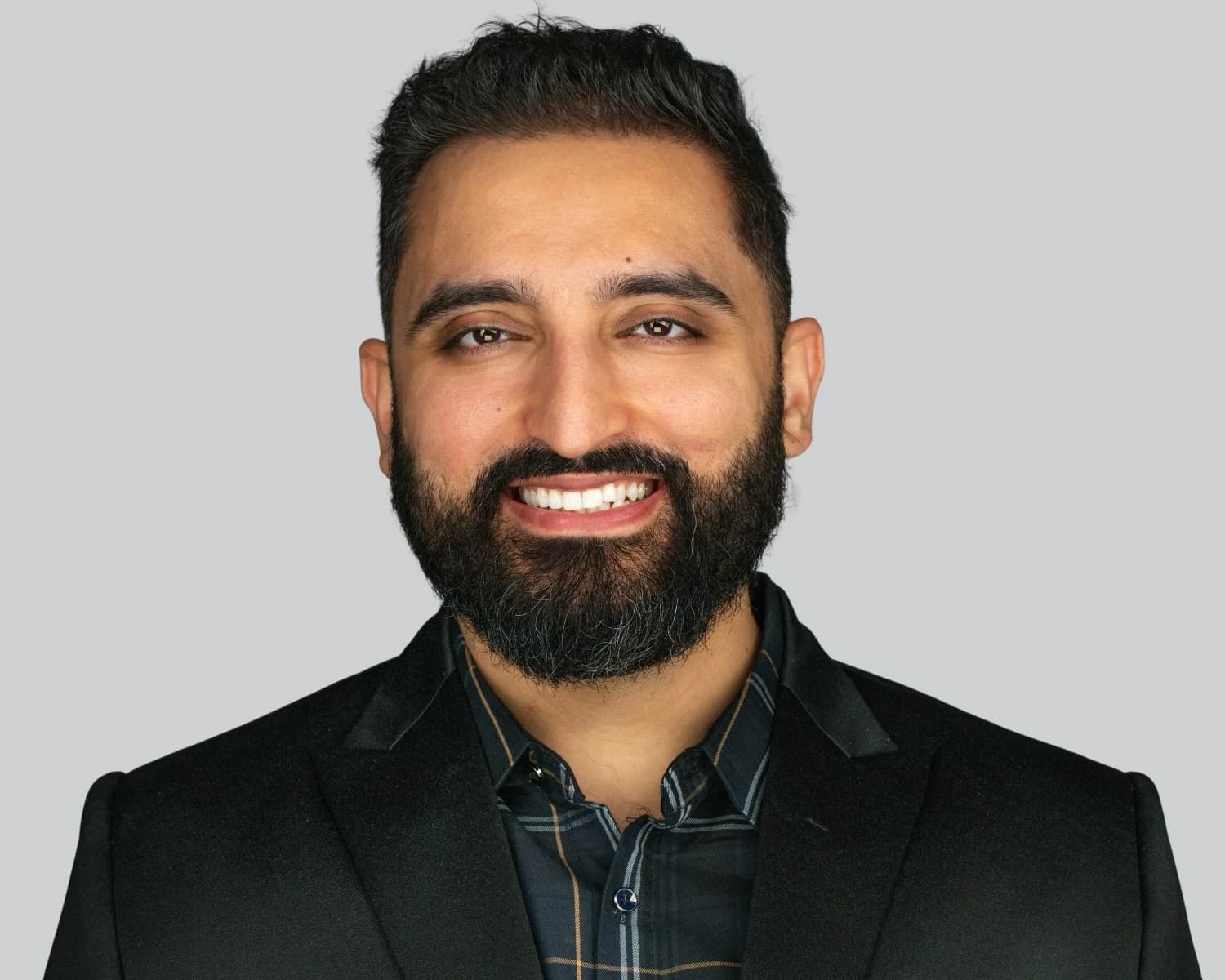
Care led by Dr. Shehzad Batliwala.
Dr. Shehz is a double board-certified vision correction surgeon who completed ophthalmology residency at Dean McGee Eye Institute and pursued advanced refractive training. He performs every surgery at Visionary Eye personally and leads the diagnostic plan used to decide whether a procedure is appropriate.
5.0 Google rating from 92 reviews- Double board-certified vision correction surgeon
- Ophthalmology residency at Dean McGee Eye Institute
- Advanced refractive and lens-surgery training
- Every surgery personally performed by Dr. Shehz
Clear costs. Real options.
Cost, coverage, and payment options depend on the procedure and your plan. We review the estimate before treatment. Our Affordability page explains financing and payment options.
Why we don't discount Corneal Tissue Addition (CTAK)
Coverage for CTAK varies by plan. We verify your benefits before you commit and quote any out-of-pocket portion in writing - no surgery-day surprises.
What patients say


Is CTAK a corneal transplant?
No. A transplant replaces your cornea with donor tissue. CTAK adds a small, custom-shaped piece of donor tissue inside your own cornea - preserving the cornea you have.Will I still need glasses or contacts after CTAK?
Often, and that's by design. CTAK's goal is to make your cornea regular enough that glasses or contacts work well and comfortably again. It's about restoring correctable, functional vision - not eliminating correction entirely.Where does the tissue come from? Is it safe?
The inlay is sterilized, treated donor corneal tissue prepared to strict standards. Because it's processed for sterility, the risk of rejection is very low compared to a full transplant.Is it permanent?
The inlay is intended to be long-lasting. Because no corneal tissue is removed, the procedure preserves more future options than a transplant.Can CTAK be combined with cross-linking?
Yes. Many keratoconus patients benefit from cross-linking to stabilize the cornea alongside CTAK to reshape it. Your consultation will determine the right sequence for your eye.Does insurance cover it?
Coverage varies. Our team reviews your specific plan and explains your options clearly before anything moves forward.
Still have questions?
Talk to our team, no pressure, no sales pitch. We answer the question, not the upsell.
Not the right fit? Here's what else we offer.
Picking the right procedure is a diagnosis question, not a marketing one. If your eyes are better served by a different path, we'll tell you.



Visiting us from DFW?
Care takes place at our Plano office. See the drive and visit details from your city, then confirm your consultation, driver, and follow-up plan with our team before choosing a surgery date.
- Frisco~15 min from Plano
- Richardson~15 min from Plano
- Allen~10 min from Plano
- McKinney~20 min from Plano
- Addison~20 min from Plano
- Carrollton~20 min from Plano
Keep researching, on your terms.
Explore cost, recovery, and candidacy at your own pace.
- Patient Guide6 min read
CTAK for Keratoconus: Before Corneal Transplant
Learn when CTAK donor-tissue reshaping may be considered for selected stable keratoconus and how it differs from CXL, specialty lenses, and corneal transplant.
Read article - Patient Guide7 min read
Do I Need CXL for Keratoconus?
Learn how serial corneal maps, thickness, age, documented progression, specialty lenses, and treatment protocol determine when CXL should be considered.
Read article - Procedures3 min read
Can I Get LASIK With a Thin Cornea?
A thin cornea does not decide LASIK eligibility by itself. Corneal shape, prescription, planned tissue removal, and eye health must be evaluated together.
Read article
More patient guides (1)
See what better vision looks like. At any stage of life.
Glasses on the nightstand. Contacts fighting you at the gym. The menu blurring at dinner. You don't have to live with it. Come find out what's possible for your eyes.
- 7,000+
- Surgeries by Dr. Shehz
- 2×
- Board-certified
- 1
- Surgeon. Every case.
- 5★
- Patient-rated on Google
- 20/Happy Patient Guarantee
- Dr. Shehzad Batliwala, Board-Certified
- Aftercare included
- Payment options available