Ophthalmologist in Plano.
Medical eye care with ophthalmologist Dr. Shehzad Batliwala and our optometry team. A comprehensive exam checks vision and eye health, then guides treatment, surgical evaluation, or monitoring when appropriate.
- 20/Happy Patient Guarantee
- Dr. Shehzad Batliwala, Board-Certified
- Aftercare included
- Payment options available
- CompleteHistory, eye health, and vision
- 2 doctorsSurgeon and ocular-disease optometrist
- One buildingExam, imaging, and surgery
- Plano, TX8080 Independence Pkwy
A chart test can be perfect in an eye that is losing sight.
Several eye conditions can be silent early. Glaucoma may affect peripheral vision before central blur is noticed, and retinal or macular findings may not be obvious from a chart test alone. Symptoms, risk, and a structural exam provide the context that visual acuity cannot supply by itself.
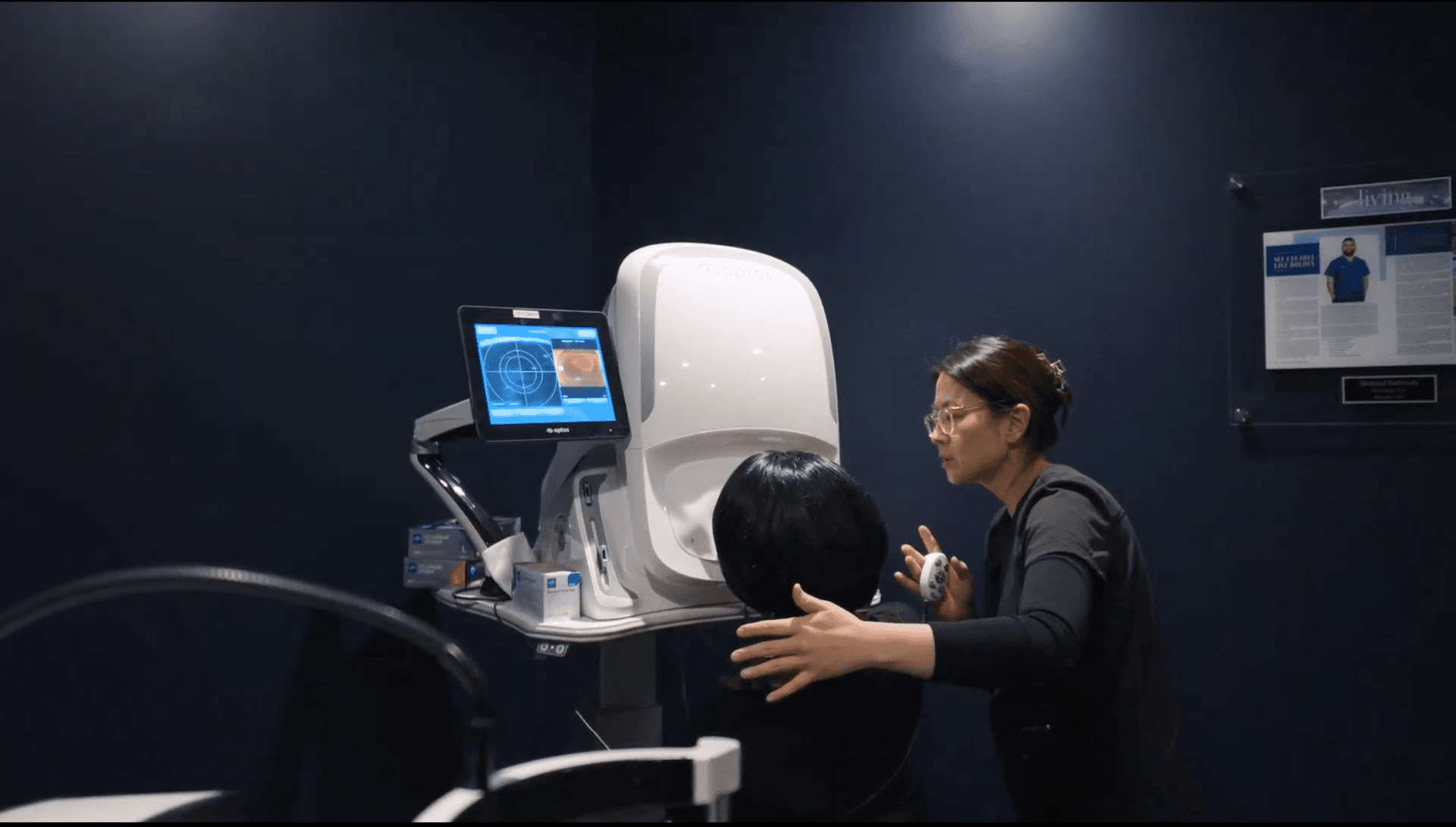
That is the entire argument for a comprehensive exam over a screening. A screening asks whether you can read the chart today. A comprehensive exam examines structures including the optic nerve, retina, lens, cornea, and tear film, then adds focused testing when a finding or risk factor justifies it.
It also works the other way. Some people arrive convinced they need surgery and learn that a surface or prescription issue should be addressed first. Fluctuating vision that clears when you blink can point toward tear-film instability, while glare or dim vision may have a different cause.
We would rather establish that with measurements than with a conversation. If your eyes do not need a procedure, the exam is where that becomes obvious, and we will say so plainly.
Every test, and the decision it changes.
Not every visit needs all of these. Which ones you get depends on your symptoms, your history, and what the earlier measurements show.
- Visual acuity and refraction
- How well each eye resolves detail, and the lens power that corrects it.
- →Whether blur is refractive and correctable, or a sign of something else.
- Slit-lamp examination
- The lids, lashes, tear film, cornea, iris, and natural lens under magnification.
- →Whether the eye's surface or the lens explains the symptom.
- Intraocular pressure
- The pressure the optic nerve is living with.
- →Whether glaucoma testing needs to go further than a single reading.
- Dilated retinal examination
- The optic nerve, macula, retinal vessels, and peripheral retina.
- →Whether diabetic changes, macular disease, or a retinal problem is present.
- OCT imaging
- A cross-section of the retinal and optic-nerve layers, in microns.
- →Whether structural findings warrant monitoring, repeat imaging, or more focused retinal or glaucoma evaluation.
- Visual field testing
- Sensitivity across the field of vision, point by point.
- →Whether functional loss is present and, with reliable repeat tests, whether it is changing over time.
- Corneal topography
- The curvature and shape of the corneal surface.
- →Whether astigmatism is regular, or the cornea itself is irregular.
What to bring, and what to expect.
Before you arrive
Bring your current glasses, a list of medications including eye drops, your insurance card, and any prior imaging or visual fields. If corneal measurements may be needed, ask how long to leave contact lenses out so the surface has time to stabilize.
The exam itself
Visit length depends on symptoms, dilation, and added testing. Dilation may be recommended when the retina, optic nerve, lens, or unexplained vision change needs a fuller view. It can cause temporary light sensitivity and blurred near vision, so bring sunglasses and ask whether a driver is advisable for you.
What you leave with
The goal is a clear summary of what was measured, what the findings mean, and what happens next, including monitoring when no treatment is needed. If a procedure is worth discussing, the plan should include the reasoning and the alternatives.
Two doctors, one set of records.
A residency-trained optometrist and a double board-certified vision correction surgeon work from the same clinical record, connecting comprehensive testing, medical eye care, specialty-lens needs, surgical evaluation, and follow-up.
5.0 Google rating from 92 reviews
Dr. Shehzad Batliwala, DO, MGM
Vision correction & anterior segment surgeon
- Double board-certified
- Ophthalmology residency, Dean McGee Eye Institute
- Medical school, University of North Texas Health Science Center
- Advanced refractive training, including EVO ICL

Dr. Ameerah Al-Sadi, OD
Residency-trained optometrist, ocular disease
- Doctor of Optometry, NSU Oklahoma College of Optometry
- Ocular disease residency, Clay-Rhynes & RGB Eye Assoc.
- Ocular surface disease and specialty contact lens fitting
- Scleral lens fitting for irregular corneas
Where the exam leads from here.
Glaucoma and ocular hypertension
Pressure trend, optic-nerve imaging, and visual fields decide whether the plan is monitoring, drops, selective laser trabeculoplasty, or a procedure.
Glaucoma care in PlanoCornea and keratoconus
Corneal mapping separates a stable irregular cornea from one that is changing, which is the difference between lenses and cross-linking.
Cornea care in PlanoDry eye and ocular surface disease
Tear-film, eyelid, and meibomian-gland findings explain why the surface is failing before anything is prescribed for it.
Dry-eye clinic in PlanoCataracts
Testing confirms whether a cataract explains the change, then connects your daily visual goals to standard and premium lens choices.
Cataract evaluationLaser vision correction
One set of corneal measurements decides between flap, flapless, and surface-laser approaches — or rules all three out.
Compare the laser optionsEverything else the exam finds
Diabetic eye disease, macular changes, pterygium, and lid disease are managed here or referred, with the reason explained either way.
Browse eye conditionsStill deciding which kind of eye doctor you need? The ophthalmologist vs. optometrist guide walks through which concerns belong where.
Some changes should not wait for a routine appointment.
A sudden shower of new floaters, flashes of light, or a curtain or shadow in vision can signal a retinal tear or detachment. Call an eye doctor immediately or go to an emergency room; do not use routine online scheduling for these symptoms.
Review National Eye Institute emergency guidanceWhat the visit is actually like.

Dr. Wesley Herman did the Symphony lens surgery on me in 2018. I had the utmost faith in Dr. Herman and could not be happier with the improved results in my vision! Dr. Herman retired and recommended Dr. Shehzad for my continued eye care. I was nervous as to would I feel confident in Dr. Shehzad. . (read more)
Before you book an exam.
What is the difference between an ophthalmologist and an optometrist?
An ophthalmologist is a medical doctor who completed residency in eye surgery and disease, and who can perform surgery. An optometrist completes a Doctor of Optometry degree and manages eye health, prescriptions, and many medical eye conditions; a residency-trained optometrist has additional training in ocular disease. Visionary Eye has both, which is why an exam, a medical diagnosis, and a surgical opinion can happen in one place rather than across three referrals.How often should I have a comprehensive eye exam?
Exam frequency depends on age, symptoms, medical history, family history, prescription, and known eye disease. Diabetes, glaucoma risk, high myopia, a condition already under management, or a new vision change may require more frequent care. Use the interval recommended after your exam rather than a fixed schedule for everyone.Is a comprehensive eye exam the same as a vision screening?
No. A screening checks whether you can read a chart, and it can be entirely normal in an eye with early glaucoma, a retinal problem, or a cataract that has not yet reduced acuity. A comprehensive exam evaluates the structures of the eye and may include dilation or focused imaging when the retina, optic nerve, symptoms, or risk factors need a closer look.Do I need to be dilated?
Dilation is often recommended when the retina, optic nerve, lens, or an unexplained vision change needs a fuller view. Imaging can supplement the examination, but it answers different questions. Your symptoms, risk factors, and prior exam history determine whether dilation is needed at this visit.Will my eye exam be covered by insurance?
It depends on why you are being seen and the benefits in your plan. Routine refractive care may use vision benefits, while evaluation of a medical symptom or diagnosed eye condition may use medical insurance. Deductibles, copays, referral rules, and covered testing vary, so the visit type and known benefits should be checked before the appointment.Can I get glasses or contact lenses here?
The visit can include refraction when a prescription question is relevant, and Dr. Al-Sadi fits specialty contact lenses, including scleral lenses for irregular corneas and keratoconus. Confirm routine glasses dispensing or standard contact-lens services with the office when scheduling.Do I need a referral to be seen?
You can request an appointment directly. Some insurance plans still require a referral or authorization for coverage, so check your plan and the visit type before the appointment.Where in Plano are you, and do you see patients from nearby cities?
We are at 8080 Independence Pkwy, Suite 155, Plano, TX 75025. Patients come from across North Texas, including Allen, Frisco, McKinney, Dallas, Fort Worth. Patients traveling farther can ask which records to send and whether testing can be coordinated into a focused visit.
Still have questions?
Talk to our team, no pressure, no sales pitch. We answer the question, not the upsell.
Keep researching, on your terms.
Explore cost, recovery, and candidacy at your own pace.
- Eye Health6 min read
Can You Drive After a Dilated Eye Exam?
Learn how dilation affects near vision and light sensitivity, who should arrange a driver, what to bring, and why some eye visits require dilation.
Read article - Eye Health7 min read
Ophthalmologist vs. Optometrist: Who Should You See?
Learn the practical difference between an ophthalmologist, optometrist, and optician, which eye doctor fits your concern, and which symptoms need urgent care.
Read article - Glaucoma Care8 min read
Glaucoma Suspect vs. Ocular Hypertension
Understand the difference between ocular hypertension, a glaucoma suspect, and glaucoma, plus the pressure, OCT, field, cornea, and angle tests that guide follow-up.
Read article
More patient guides (2)
See what better vision looks like. At any stage of life.
Glasses on the nightstand. Contacts fighting you at the gym. The menu blurring at dinner. You don't have to live with it. Come find out what's possible for your eyes.
- 7,000+
- Surgeries by Dr. Shehz
- 2×
- Board-certified
- 1
- Surgeon. Every case.
- 5★
- Patient-rated on Google
- 20/Happy Patient Guarantee
- Dr. Shehzad Batliwala, Board-Certified
- Aftercare included
- Payment options available