Eyes can feel dry and still overflow with tears. This is not a contradiction.
When the normal tear film is unstable or the eye's surface is irritated, the lacrimal glands may release a burst of watery reflex tears. Those tears can run down the cheek without providing the balanced oil, water, and mucin layers needed for lasting comfort and clear vision.
Dry eye is one possible cause of watering, but not the only one. Allergy, infection, eyelid position, a blocked tear-drainage system, a foreign body, and other eye conditions can produce similar symptoms. The pattern and examination findings should determine the treatment.
A healthy tear film is more than water
The tear film must spread smoothly across the cornea and remain stable between blinks. It is supported by:
- An outer oil layer from the meibomian glands that slows evaporation.
- A watery component from the lacrimal glands.
- Mucins that help tears adhere to and spread across the eye's surface.
- Complete blinking and healthy eyelid margins that redistribute the film.
If the oil layer is poor, tears may evaporate too quickly. If tear volume is low, the surface may not stay lubricated. If the eyelids are inflamed or blinking is incomplete, the film may break apart even when the eye appears wet.
The result can be burning, grittiness, fluctuating blur, light sensitivity, redness, and paradoxical watering.
Reflex tears are not the same as stable tears
Think of reflex tearing as an alarm response. Irritation activates sensory nerves and produces a rapid wash of watery fluid. It can temporarily flood the eye but may not correct the underlying tear-film imbalance.
Clues that watering may be related to dry eye include:
- Burning, stinging, or a gritty sensation along with tearing.
- Vision that clears after blinking and then blurs again.
- Symptoms that worsen with screens, air conditioning, fans, wind, or driving.
- Contact lenses that become uncomfortable later in the day.
- Eyelid crusting, redness, recurrent styes, or visible lash debris.
- Improvement with a clinician-approved lubricant, followed by recurrence.
Watery eyes alone do not prove dry eye. An examination is needed when the symptom persists or affects vision.
Meibomian gland dysfunction is a common driver
Meibomian gland dysfunction (MGD) affects the oil-producing glands along the eyelid margins. The oils may become thick, the gland openings may be blocked, or glands may lose function over time.
Without a stable oil layer, the watery portion of tears evaporates faster. The exposed surface then triggers more irritation and reflex tearing.
MGD can overlap with:
- Blepharitis.
- Ocular rosacea.
- Demodex-related lid disease.
- Incomplete blinking during screen use.
- Contact-lens wear.
- Hormonal and medication effects.
- Prior eye surgery or chronic surface inflammation.
The MGD and dry-eye testing guide explains why repeatedly changing artificial tears may not solve a gland-driven problem.
Other causes of watery eyes
Allergy
Allergy commonly causes itching, swelling, and bilateral watering. Rubbing can worsen irritation. Allergy and dry eye can occur together, and some allergy medicines can affect surface comfort.
Blepharitis or Demodex
Lid-margin inflammation can disrupt meibomian oils and irritate the surface. Collarettes around the lashes can be a clue to Demodex. Treatment should target the cause rather than treating all lid disease as the same problem.
A blocked or narrowed tear drain
Tears normally drain through small openings near the inner eyelids. Narrowing or blockage can make tears spill over even when production is normal. One-sided persistent tearing, discharge, or recurrent infection may raise this question.
Eyelid position or incomplete closure
An eyelid that turns in or out, does not close completely, or blinks incompletely can expose the surface or prevent normal drainage.
Infection, abrasion, or foreign material
Conjunctivitis, a corneal abrasion, an embedded foreign body, or contact-lens-related infection can cause tearing. Pain, discharge, light sensitivity, or reduced vision makes prompt examination more important.
Corneal and neurologic causes
Recurrent erosion, corneal nerve changes, facial-nerve problems, and other conditions can alter surface sensation, blinking, or tearing. Persistent symptoms that do not match a simple dry-eye pattern deserve a broader evaluation.
What a cause-based dry-eye evaluation checks
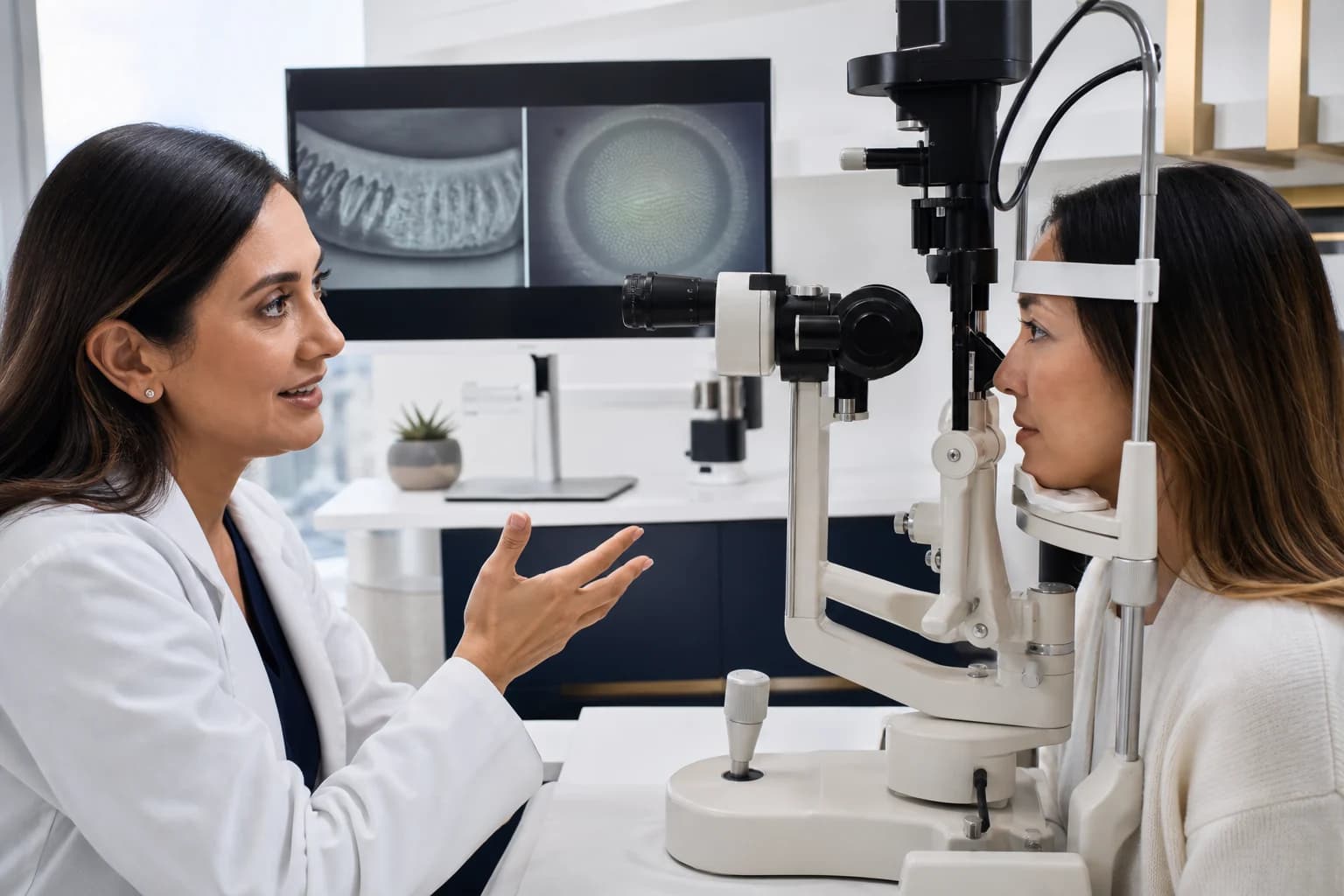
A focused examination may include:
- Symptom pattern and medication review.
- Tear breakup and surface staining.
- Tear quantity when indicated.
- Eyelid position and blink completeness.
- Lash-line findings and Demodex clues.
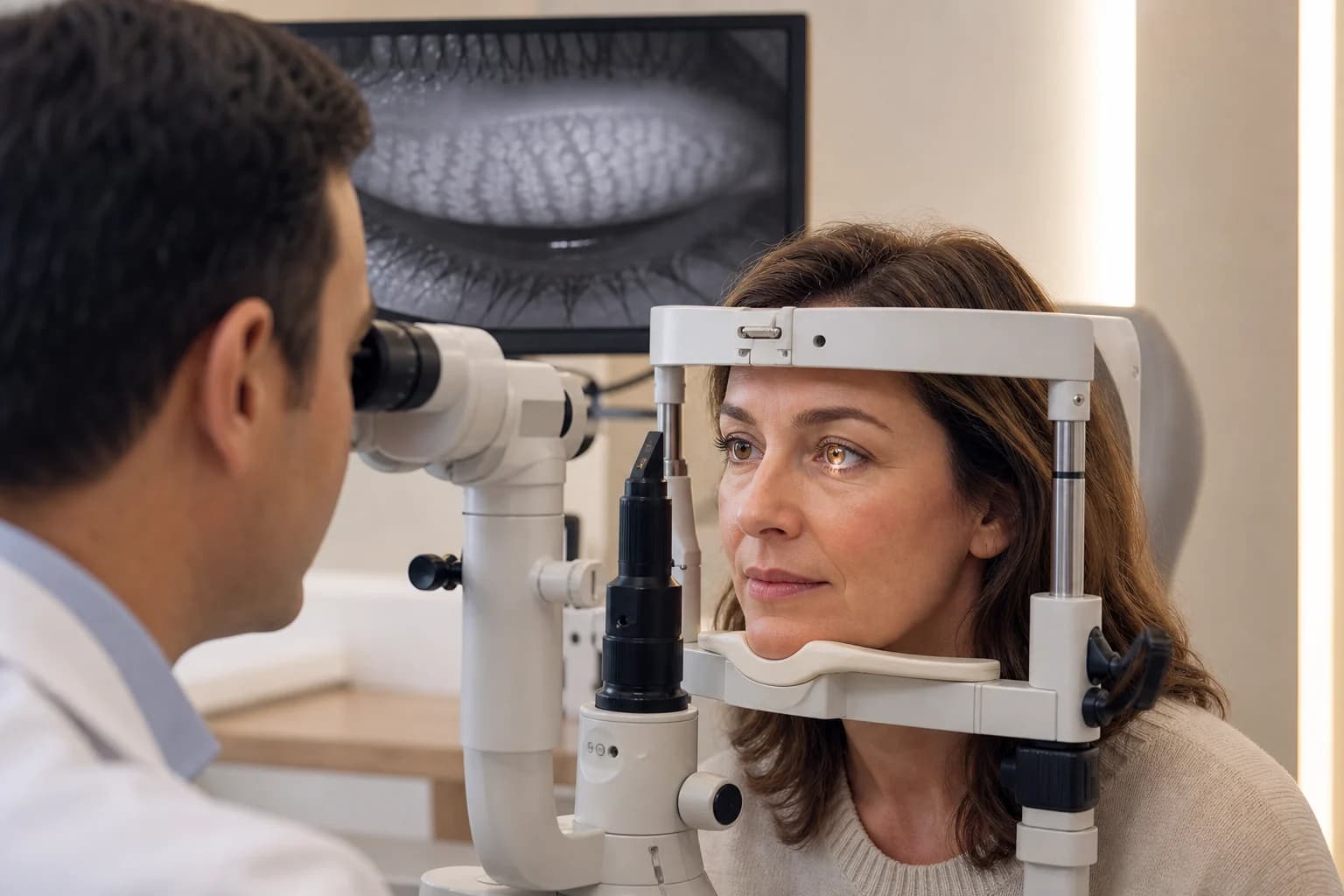
- Meibomian gland openings, oil quality, and expression.
- Meibography when useful.
- Corneal sensation and signs of prior injury or surgery.
- Allergy, contact-lens, and environmental contributors.
- Tear-drainage testing when overflow rather than evaporation appears more likely.
Not every patient needs every test. The goal is to identify whether watering comes from poor tear quality, low tear volume, inflammation, drainage, eyelid mechanics, or another problem.
Treatment should match the cause
Possible treatment layers include:
- Preservative-free lubricants selected for the tear-film pattern.
- Environmental changes and deliberate screen breaks.
- Warm compresses and lid care when appropriate for MGD.
- Prescription anti-inflammatory or tear-support medication.
- Treatment directed at allergy, blepharitis, Demodex, or ocular rosacea.
- Meibomian gland expression or thermal treatment.
- IPL for selected MGD and rosacea-related inflammatory patterns.
- Punctal treatment only when tear conservation fits the diagnosis.
- Referral for tear-drainage or eyelid treatment when overflow is mechanical.
One device should not be the answer to every watery eye. For example, IPL can help selected MGD and ocular-rosacea patterns, but it does not open a blocked tear duct or replace treatment for infection.
Use the dry eye clinic page for diagnosis-led evaluation, the dry eye treatment page for treatment layers, and the IPL page when gland inflammation and rosacea are the confirmed targets.
What can you do before the appointment?
Until the cause is known:
- Avoid rubbing the eyes.
- Note whether symptoms are one-sided or affect both eyes.
- Record triggers such as screens, wind, outdoor allergy exposure, contacts, or makeup.
- Bring all eye drops and a medication list.
- Photograph intermittent lid swelling or redness when safe to do so.
- Follow contact-lens hygiene and stop wearing lenses if they cause pain, redness, discharge, or reduced vision.
- Do not start leftover antibiotic, steroid, or redness-relief drops without professional guidance.
These details can make the examination more useful, especially when symptoms fluctuate.
When watering needs prompt care
Seek prompt eye care for:
- Sudden or reduced vision.
- Moderate or severe pain.
- Marked light sensitivity.
- Significant redness or swelling.
- Thick discharge.
- A chemical splash or suspected foreign body.
- Contact-lens-related pain or blur.
- A new white spot on the cornea.
- Tearing after trauma.
Persistent one-sided tearing also deserves evaluation, even when it is painless, because drainage and eyelid causes may need specific treatment.
The useful answer is a diagnosis, not a product list
For persistent watering, start with a cause-based dry-eye evaluation. The examination should distinguish tear-film problems from other causes before a treatment is chosen.
The next step is to identify whether reflex tearing, MGD, allergy, lid disease, drainage, or another surface problem is driving the symptom. Once that is clear, the treatment plan becomes more precise and unnecessary device-first care is easier to avoid.
Sources
Your exam can clarify which options fit your eyes. Visit our Plano team from anywhere in DFW.
Book a free visit