Demodex blepharitis is easy to mistake for ordinary dry eye. Burning, redness, crusting, fluctuating vision, and contact lens discomfort can all overlap with other eyelid and tear-film problems.
The distinguishing clue is often a cylindrical sleeve of debris at the base of the lashes, called a collarette. When collarettes and the examination support Demodex overgrowth, the treatment discussion is different from routine MGD or aqueous-deficient dry eye care.
This guide focuses on Demodex-related blepharitis, prescription treatment such as Xdemvy (lotilaner), and the situations where MGD, ocular rosacea, or dry eye still need a parallel plan. For a broader tear-film and gland evaluation, start with our Dry Eye Clinic in Plano guide.
How Demodex blepharitis is identified
Blepharitis means inflammation along the eyelids. It can affect the front of the lid near the lashes, the back of the lid where the oil glands open, or both.
Patients may notice:
- Red or irritated eyelid margins.
- Crusting or flakes around the lashes.
- Burning, gritty, or sandy eyes.
- Dry eye redness.
- Itching or swollen lids.
- Recurrent styes or chalazia.
- Watery eyes even though the eyes feel dry.
- Contact lenses that no longer feel comfortable.
- Vision that clears briefly after blinking.
Blepharitis is not always an infection. It can involve bacteria, Demodex mites, clogged oil glands, ocular rosacea, skin inflammation, allergy, or a chronic lid-margin problem that keeps destabilizing the tear film. Collarettes at the lash base are an important Demodex clue, and prescription therapy such as Xdemvy/lotilaner may be discussed when the findings fit.
That is why treatment should start with the cause.
How MGD and blepharitis overlap
The meibomian glands sit inside the eyelids and release oil into the tear film. That oil layer keeps tears from evaporating too quickly.
When the gland openings are blocked or inflamed, the oil can become thick, poor quality, or difficult to express. This is meibomian gland dysfunction, often called MGD.
MGD and posterior blepharitis often travel together. The lid margin stays inflamed, the oil layer breaks down, and the eye surface dries out faster. The result can feel like simple dryness, but the real driver is gland and eyelid disease.
Artificial tears can help symptoms for a short time. They usually do not fix blocked oil glands, chronic lid inflammation, ocular rosacea, Demodex, or poor oil quality by themselves.
A red lid margin is different from a fleshy growth on the white of the eye. If the concern is a visible growth moving toward the cornea, start with pterygium surgery evaluation or the pterygium condition guide instead of treating it like eyelid inflammation.
Blepharitis is also different from cosmetic eyelid hooding. If the main concern is upper-lid skin, tired-looking eyelids, or an eyelid lift consultation, use the ZipLyft cosmetic eyelid rejuvenation page. If the eyelids burn, crust, swell, or destabilize vision, stay with dry-eye and eyelid-inflammation care.
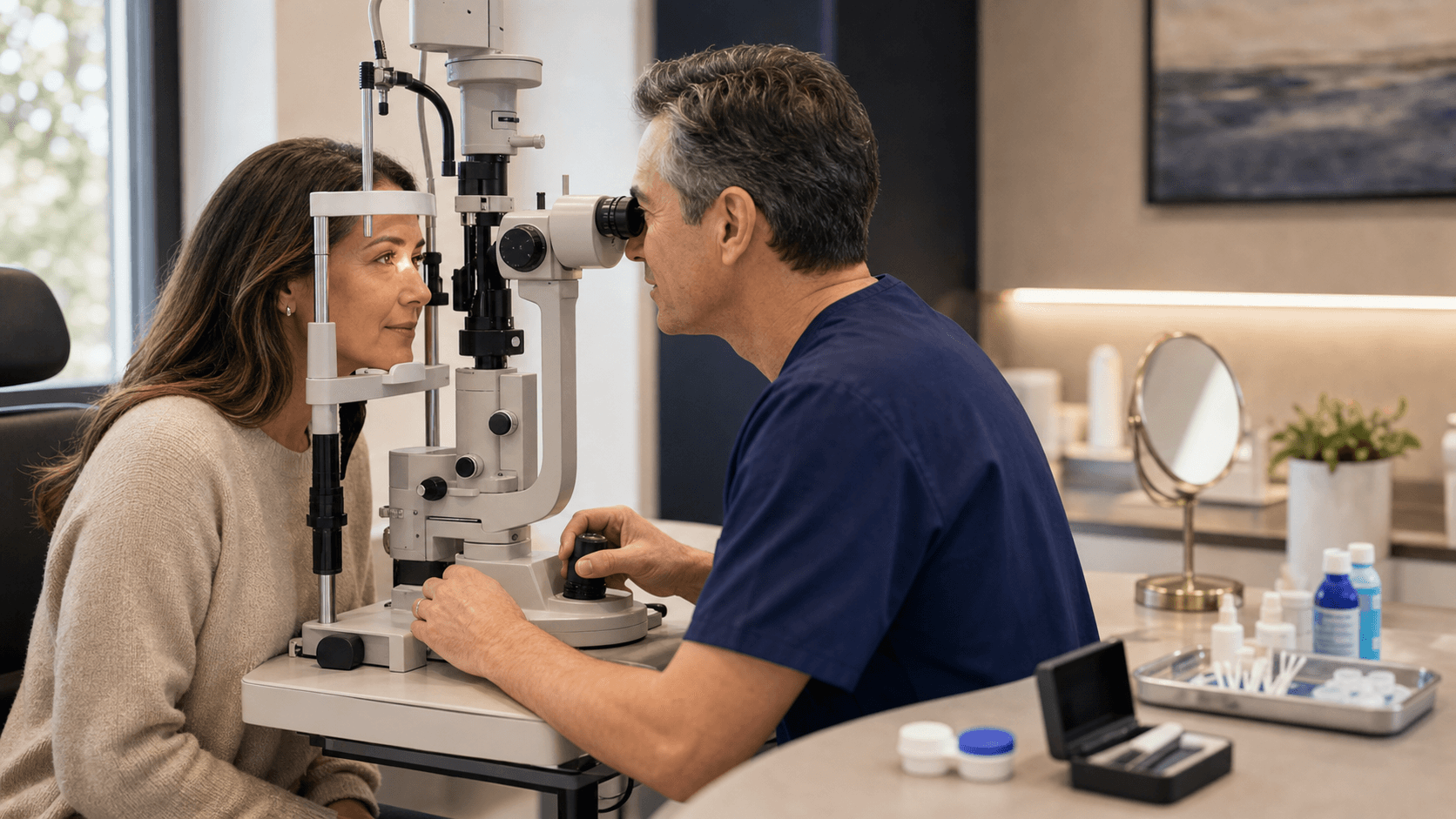
What a blepharitis evaluation should check
A useful blepharitis or MGD visit should not stop at "your eyes look dry."
The exam should look for:
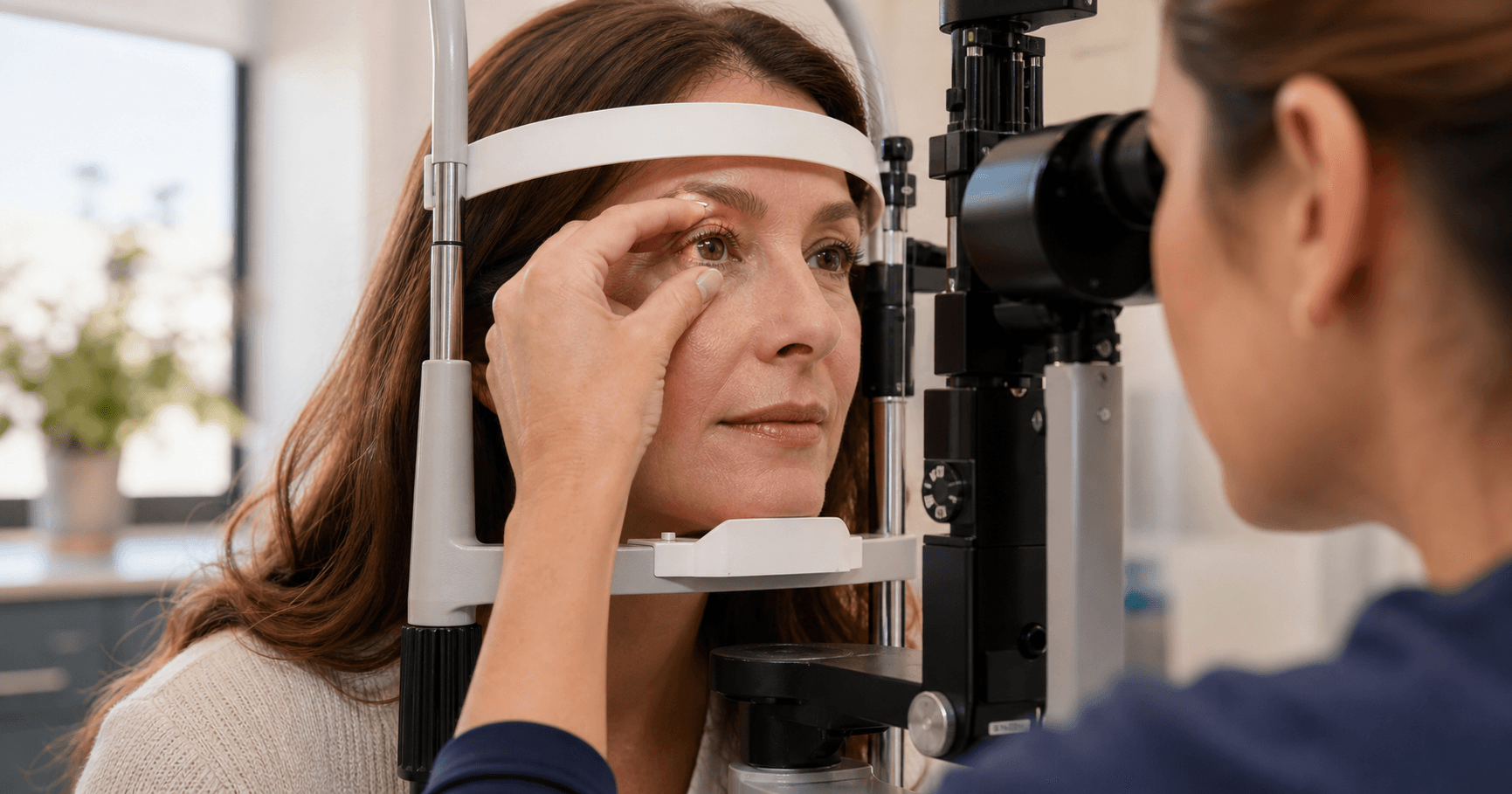
- Eyelid margin redness and thickening.
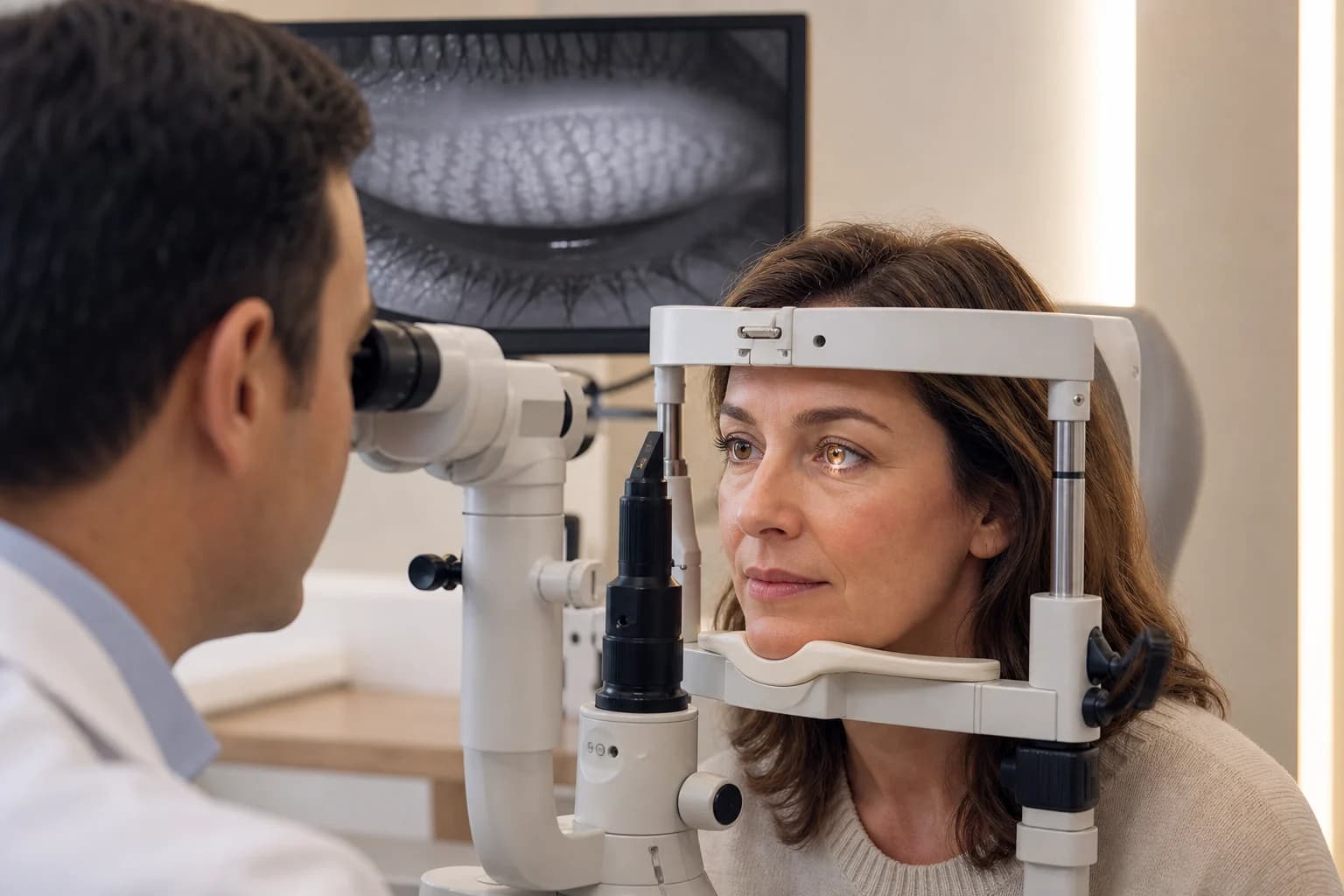
- Lash debris, collarettes, or Demodex clues.
- Whether Xdemvy/lotilaner or another Demodex-directed plan should be discussed.
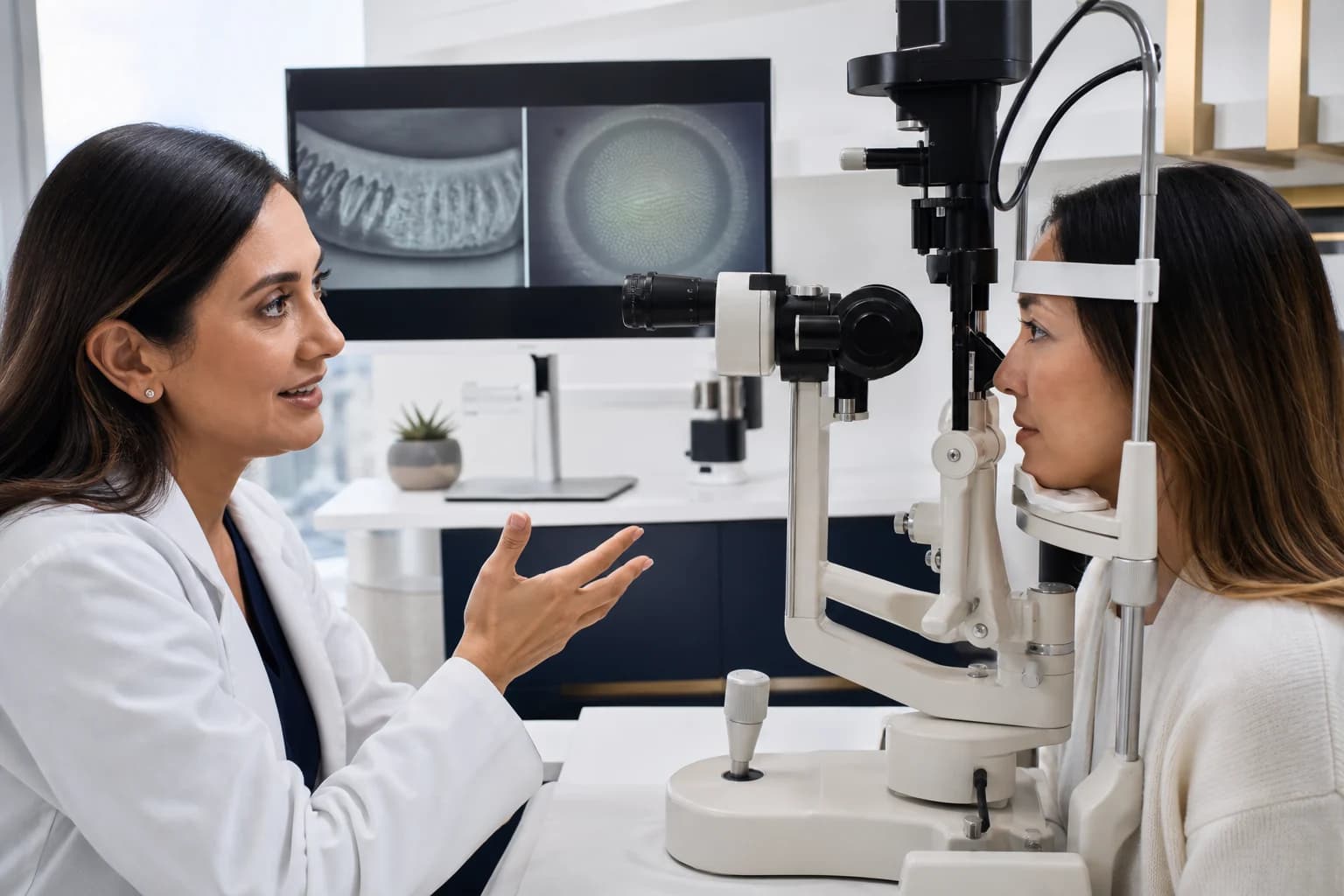
- Meibomian gland openings, oil quality, and gland dropout or meibography when available.
- Tear breakup time.
- Corneal or conjunctival staining.
- Ocular rosacea signs.
- Recurrent styes or chalazia.
- Contact lens tolerance.
- Allergy, medication, and skin-history contributors.
- Whether the problem is mostly evaporative dry eye, aqueous-deficient dry eye, or both.
This distinction matters because each pattern is treated differently. Demodex-driven blepharitis, gland-driven MGD, allergy, bacterial lid disease, rosacea-related inflammation, and low tear production are not the same problem.
Why IPL is not the same as Demodex treatment
IPL does not remove Demodex mites. IPL Eye Treatment is most often considered when the exam points to evaporative dry eye from MGD, ocular rosacea, lid-margin inflammation, or redness around the eyelids.
IPL uses calibrated pulses of light around the eyelid area. The goal is to reduce inflammatory signals, calm abnormal vessels related to redness, warm thickened oil, and support healthier gland expression.
IPL is not the first answer for every blepharitis patient.
It may be a fit when:
- MGD is a major driver.
- Eyelid redness and gland inflammation are active.
- Ocular rosacea is part of the pattern.
- Warm compresses and drops have not been enough.
- Dry eye redness keeps returning.
- Contact lens dryness appears tied to poor tear oil.
- The tear film needs stabilization before LASIK, PRK, EVO ICL, cataract surgery, or lens replacement measurements.
It may not be the right first step when symptoms are mainly allergy, infection, untreated Demodex, aqueous-deficient dry eye, or another medical surface problem.
Treatment is usually a plan, not one product
Blepharitis treatment can include several layers, depending on the exam.
Common pieces may include:
- Lid hygiene and lash-line cleaning.
- Warm compresses or heat-based gland support.
- Preservative-free artificial tears.
- Prescription anti-inflammatory therapy.
- Xdemvy/lotilaner or other Demodex-directed treatment when collarettes and the lash pattern support it.
- Meibomian gland expression, thermal pulsation, or maintenance.
- IPL when gland inflammation or ocular rosacea is the right target.
- Contact lens changes or a temporary contact lens break.
- Scleral lens support for selected severe ocular surface disease cases.
The point is not to do everything. The point is to choose the few treatments that match the cause.
Why this matters before eye surgery
Blepharitis and MGD can interfere with surgical planning.
Before LASIK, SMILE, PRK, cataract surgery, RLE, or EVO ICL, the tear film has to be stable enough for reliable measurements and predictable healing. If the surface is inflamed, topography and lens calculations can become less reliable.
For patients comparing vision correction, dry eye and blepharitis are not side issues. They can change the order of care. Sometimes the best first step is not surgery. It is stabilizing the eyelids and tear film, repeating measurements, then choosing the right procedure.
Sources and clinical references
- Blepharitis overview - National Eye Institute
- Xdemvy (lotilaner ophthalmic solution) prescribing information - FDA
- Dry eye overview - National Eye Institute
These sources support general clinical context. They do not replace an examination or determine candidacy.
Related resources
- Dry Eye Clinic in Plano
- Dry Eye Treatment
- IPL Eye Treatment
- Pterygium Surgery
- Affordability
- PRK With Dry Eyes Guide
The bottom line
Blepharitis is not just "dirty eyelids," and dry eye redness is not always fixed by more drops.
If the lid margin, oil glands, lashes, rosacea, or tear film are driving the problem, the plan should identify that first. At Visionary Eye in Plano, we evaluate blepharitis, MGD, eyelid inflammation, contact lens dry eye, and dry eye redness as part of a broader dry eye clinic workup, then shape treatment around dry eye care, IPL, prescription therapy, lid care, or surgical-readiness planning only when the findings support it.
Your exam can clarify which options fit your eyes. Visit our Plano team from anywhere in DFW.
Book a free visit