Dry eye can happen because the eye does not produce enough of the watery part of tears, because the tear film evaporates too quickly, or because both problems are present. Those patterns are called aqueous-deficient dry eye and evaporative dry eye.
The distinction matters because a treatment aimed at tear quantity will not fully correct poor oil flow from the eyelids, and a treatment aimed at the meibomian glands may not solve significant tear underproduction.
In real patients, the categories often overlap. The Tear Film & Ocular Surface Society describes aqueous-deficient and evaporative dry eye as a continuum, not two boxes that never meet.
The difference at a glance
| Feature | Evaporative dry eye | Aqueous-deficient dry eye |
|---|---|---|
| Main problem | Tears break up or evaporate too quickly | Lacrimal glands do not provide enough aqueous tears |
| Common contributor | Meibomian gland dysfunction, poor blink, eyelid or surface disease | Lacrimal gland dysfunction, age, medication, autoimmune disease, or other systemic factors |
| Clues on examination | Unstable tear breakup, abnormal gland openings or oil, eyelid inflammation | Low tear volume, reduced tear meniscus, surface staining, reduced production tests |
| Symptoms | Burning, blur, watering, grittiness, contact-lens intolerance | Burning, grittiness, light sensitivity, blur, marked dryness |
| Can the other type coexist? | Yes | Yes |
Symptoms alone cannot reliably separate the two. Both can cause blur that improves after blinking, reflex watering, redness, burning, fatigue, and sensitivity to wind or screens.
What evaporative dry eye means
The outer lipid portion of the tear film slows evaporation and helps keep the tears stable between blinks. Meibomian glands in the eyelids produce that oil.
When the gland openings are blocked, the oil is too thick, the glands are inflamed, or blinking does not spread the tear film well, tears can break up too quickly. This is commonly called meibomian gland dysfunction, or MGD.
Possible contributors include:
- Chronic blepharitis or eyelid inflammation.
- Rosacea.
- Incomplete blinking or long periods of concentrated screen use.
- Contact-lens wear.
- Eyelid position or exposure problems.
- Demodex at the lash line.
- Environmental wind, low humidity, heating, or air conditioning.
An eye can water heavily and still have evaporative dry eye. The unstable surface sends an irritation signal, which can trigger reflex tears that do not remain stable for long. The why dry eyes water guide explains that symptom in more detail.
What aqueous-deficient dry eye means
Aqueous-deficient dry eye means the lacrimal system is not producing enough of the watery tear component to maintain the ocular surface.
Possible contributors include:
- Age-related reduction in tear production.
- Sjogren syndrome or another autoimmune condition.
- Lacrimal gland disease or damage.
- Certain medications.
- Reduced corneal sensation or nerve-related tear signaling.
- Scarring or inflammation affecting the ocular surface.
Dry mouth, joint symptoms, skin or mucous-membrane changes, or a history of autoimmune disease can be relevant. An eye clinic does not diagnose systemic autoimmune disease from a dry-eye test alone, but concerning history may justify coordination with primary care or another specialist.
Why mixed dry eye is common
Low tear volume can make the remaining tear film more concentrated and unstable. Rapid evaporation can increase surface inflammation, which can then impair tear production and corneal sensation. The problems can reinforce each other.
That is why a patient may have blocked meibomian glands and low tear production at the same visit. Labeling the condition as only MGD or only aqueous deficiency can leave half the problem untreated.
The goal of classification is not to force a single label. It is to identify the dominant contributors and build a plan for each one.
Which tests help separate the patterns?
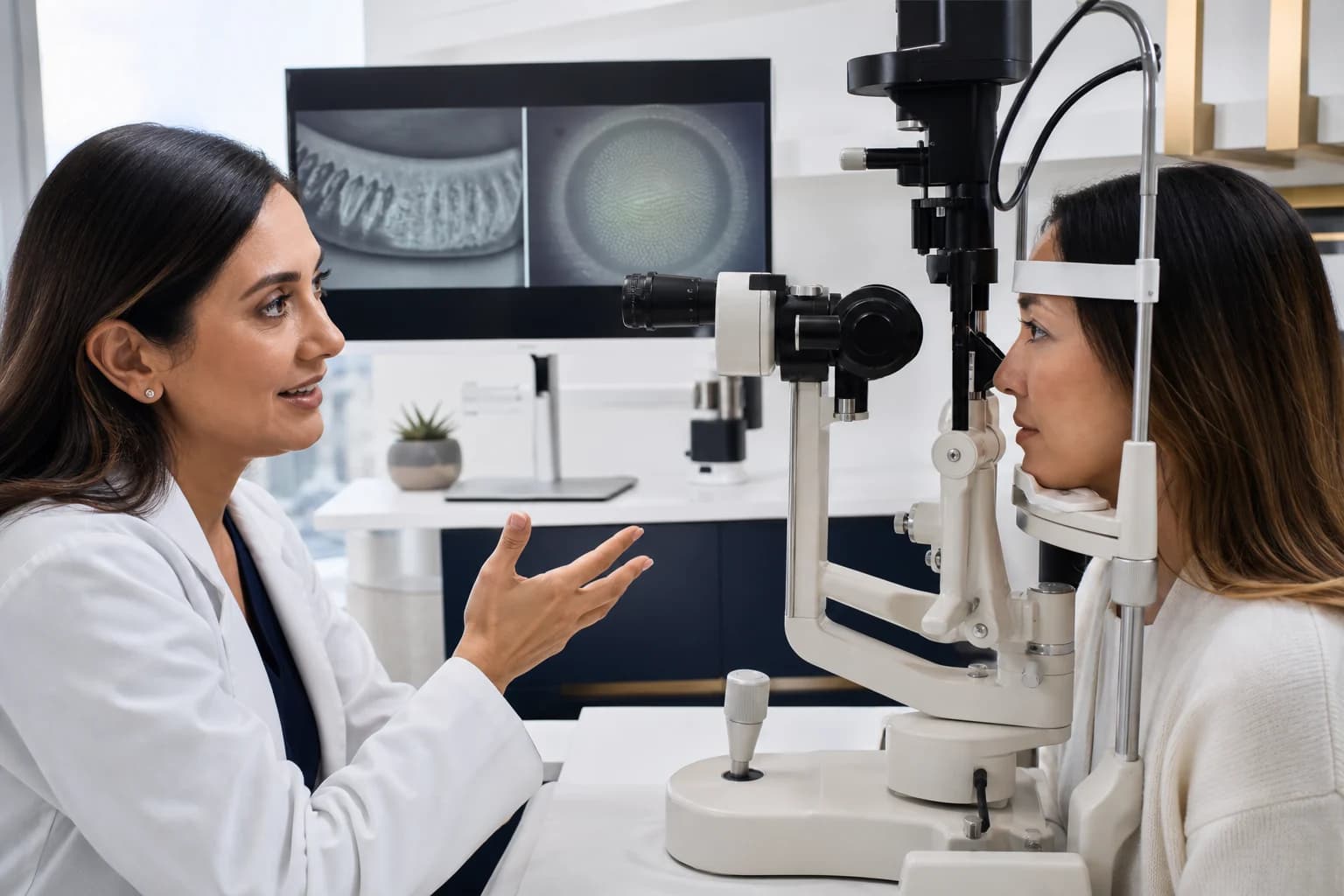
A dry-eye evaluation in Plano may include a selection of the following tests. Not every patient needs every device.
Tear-film breakup and corneal staining
Fluorescein dye can show how quickly the tear film becomes unstable and where the corneal or conjunctival surface is damaged. A short breakup time supports instability but does not identify the cause by itself.
Eyelid and meibomian gland examination
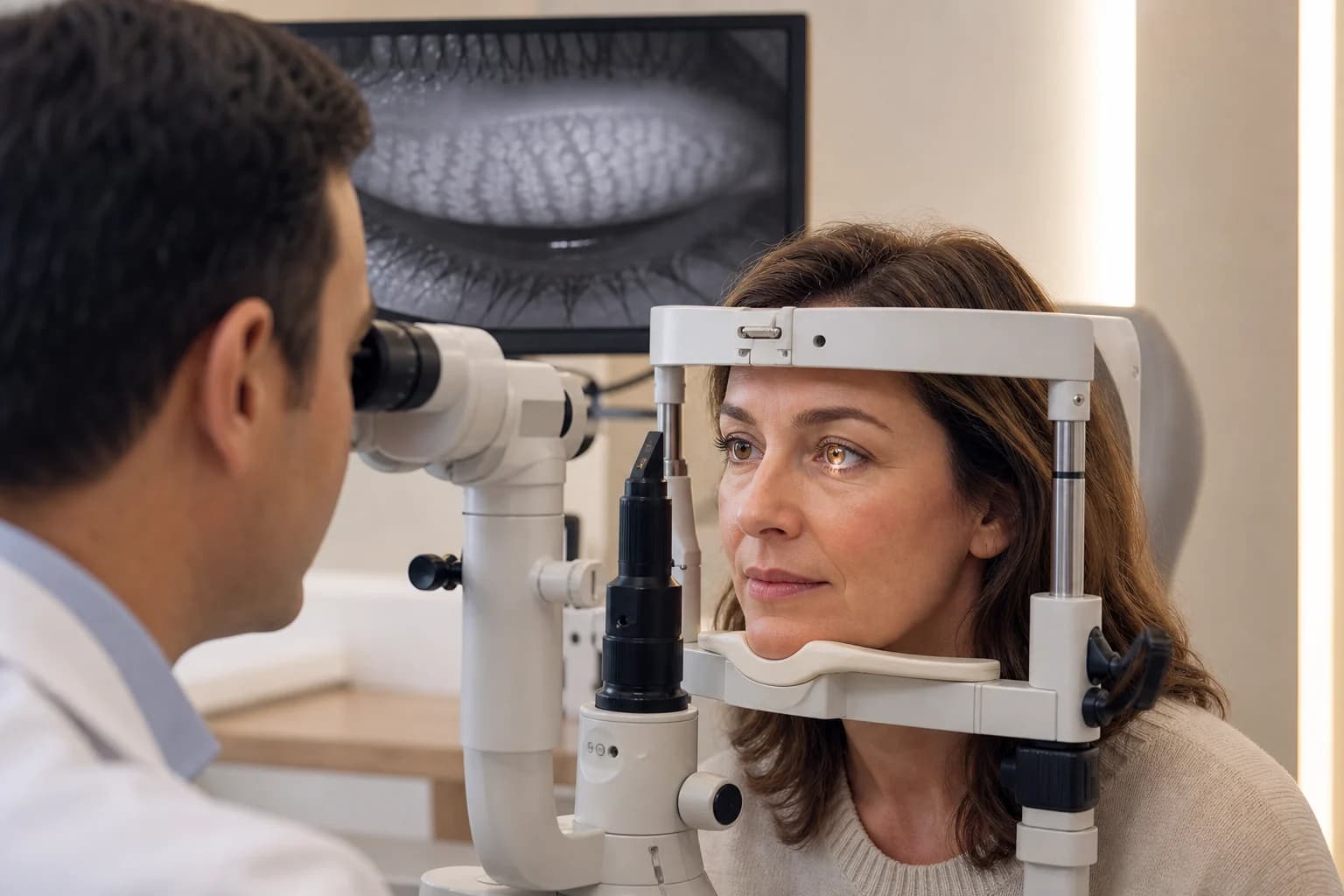
The clinician looks for blocked gland openings, abnormal oil quality, lid-margin redness, collarettes, incomplete blinking, and gland dropout. Meibography can image gland structure, while expression shows whether oil can leave the glands.
Tear volume and production
The tear meniscus gives a visual clue to volume. A Schirmer test or another production assessment may be useful when significant aqueous deficiency is suspected. Results need context because irritation, technique, and environment can affect measurements.
Osmolarity and inflammatory markers
Some clinics use tear osmolarity or point-of-care inflammatory testing. These can add evidence but should be interpreted alongside symptoms, staining, tear stability, gland findings, medication use, and systemic history.
A full eye examination
Allergy, infection, recurrent erosion, nerve-related pain, eyelid malposition, medication toxicity, and other corneal disease can imitate or coexist with dry eye. A precise diagnosis includes ruling out those alternatives.
Why the treatment plans differ
A predominantly evaporative plan
Treatment may focus on eyelid hygiene, an appropriate heat routine, blink behavior, reducing environmental stress, treating blepharitis or inflammation, and improving meibomian gland function. Prescription treatment or an in-office procedure may be considered when the findings support it.
IPL eye treatment can be part of an MGD or rosacea-related plan for selected patients. It is not the answer for every dry-eye pattern, and it does not replace evaluation of low tear production, infection, allergy, or corneal disease.
A predominantly aqueous-deficient plan
Treatment may include preservative-free lubrication, prescription anti-inflammatory therapy, conserving existing tears with punctal plugs in selected eyes, moisture protection, medication review, and evaluation of systemic contributors.
Punctal plugs are not automatically the first step. Keeping tears on the eye longer can also retain inflammatory material or topical medication, so surface inflammation and the full treatment plan matter.
A mixed plan
Mixed dry eye may need both gland-focused and tear-conservation strategies. The order matters. For example, stabilizing eyelid inflammation and the surface may change which measurements remain abnormal and which maintenance plan is practical.
The broad dry-eye treatment page explains the available categories. The why dry-eye drops stop working guide addresses treatment failure when the underlying driver was never identified.
What patients can track between visits
Useful details include:
- Whether symptoms are worse on waking or later in the day.
- Screen, driving, air-conditioning, wind, or contact-lens triggers.
- Whether blinking briefly clears the blur.
- Watering, crusting, itching, or lash debris.
- Dry mouth, joint symptoms, or known autoimmune disease.
- Every prescription and over-the-counter eye drop being used.
- Which treatments helped, failed, or caused irritation.
A short symptom-and-treatment timeline is more useful than bringing a bag of half-used products without knowing what each one changed.
When dryness needs prompt evaluation
Seek prompt eye care for significant pain, light sensitivity, reduced vision that does not clear with blinking, marked one-sided redness, discharge, contact-lens-related pain, trauma, or a chemical exposure. Those findings can represent infection, inflammation, corneal injury, or another problem that should not be managed as routine dry eye.
Questions to ask at a dry-eye visit
- Is my pattern mainly evaporative, aqueous-deficient, or mixed?
- What findings support that conclusion?
- Are my meibomian glands blocked, inflamed, or structurally reduced?
- Is tear production actually low?
- Could medication, allergy, eyelid position, or autoimmune disease contribute?
- Which treatment addresses each documented cause?
- How will we measure whether the plan is working?
- What is the maintenance plan after symptoms improve?
The useful endpoint is not a longer product list. It is a diagnosis-led plan that matches tear quality, tear quantity, eyelid health, corneal findings, and the patient's daily triggers.
Sources
Your exam can clarify which options fit your eyes. Visit our Plano team from anywhere in DFW.
Book a free visit