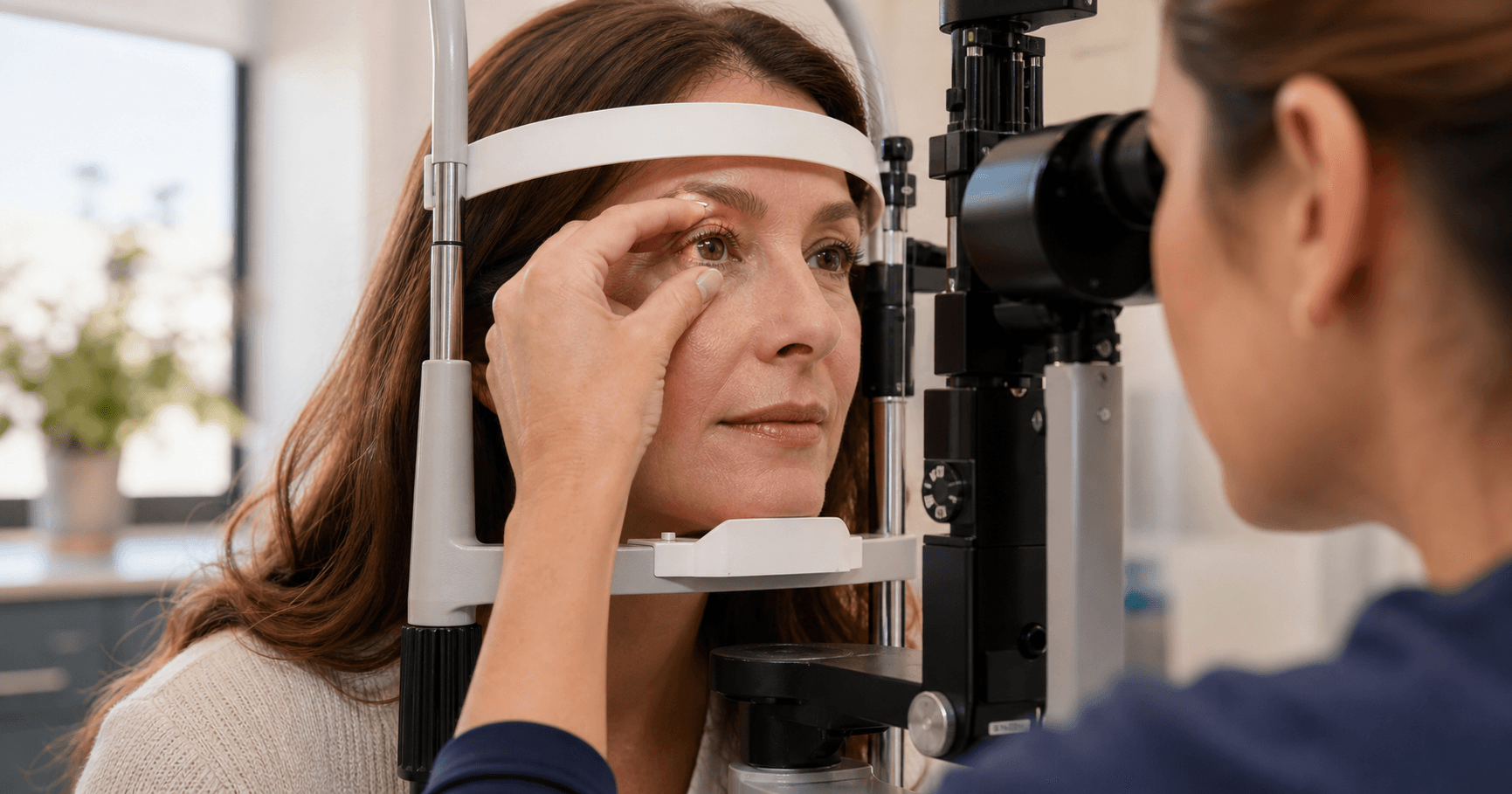
Most people looking for a dry eye clinic in Plano have already tried artificial tears. Some use drops throughout the day and still wake up with burning, redness, watery eyes, or fluctuating vision.
Many chronic dry-eye patients do not only have a tear-quantity problem. They may have poor oil quality, blocked meibomian glands, eyelid inflammation, allergy, medication effects, contact lens stress, or more than one cause at the same time. A useful evaluation identifies that pattern before recommending a treatment or device.
This article explains the broader dry-eye workup. For lash collarettes and mite-specific treatment, use the Demodex blepharitis guide.
Dry eye is not one diagnosis
Dry eye can come from several overlapping problems:
- Low tear production.
- Fast tear evaporation.
- Meibomian gland dysfunction, often called MGD.
- Blepharitis.
- Ocular rosacea.
- Contact lens intolerance.
- Medication effects.
- Hormonal changes.
- Screen-heavy work.
- Allergy or eyelid inflammation.
Because the causes overlap, the treatment should not be identical for every patient.
If the tear film evaporates quickly because the oil glands are blocked or inflamed, adding more water-like drops may only give short relief. The real problem is still the unstable oil layer.
What MGD means
The meibomian glands sit along the eyelid margins. They release oil into the tear film so tears do not evaporate too quickly.
When those glands are blocked, inflamed, or producing poor-quality oil, the tear film breaks down. That can cause:
- Burning.
- Gritty or sandy feeling.
- Fluctuating vision.
- Contact lens intolerance.
- Eyelid redness.
- Watery eyes.
- Dry eye redness.
- Morning irritation.
MGD is one reason patients can have watery eyes and dry eyes at the same time. The eye is irritated, so it waters, but the tear film is still unstable.
How blepharitis fits in
Blepharitis is inflammation of the eyelids. It can involve bacteria, oil gland dysfunction, Demodex, rosacea, or chronic eyelid-margin inflammation.
Patients often notice:
- Crusting at the lashes.
- Red eyelid margins.
- Burning or itching.
- Flaky debris.
- Swollen lids.
- Recurrent styes or chalazia.
- Eyes that look irritated even after sleep.
Blepharitis and MGD often travel together. That is why a dry-eye plan may include lid hygiene, warm compresses, prescription therapy, gland expression, IPL, or other targeted care instead of only lubricating drops.
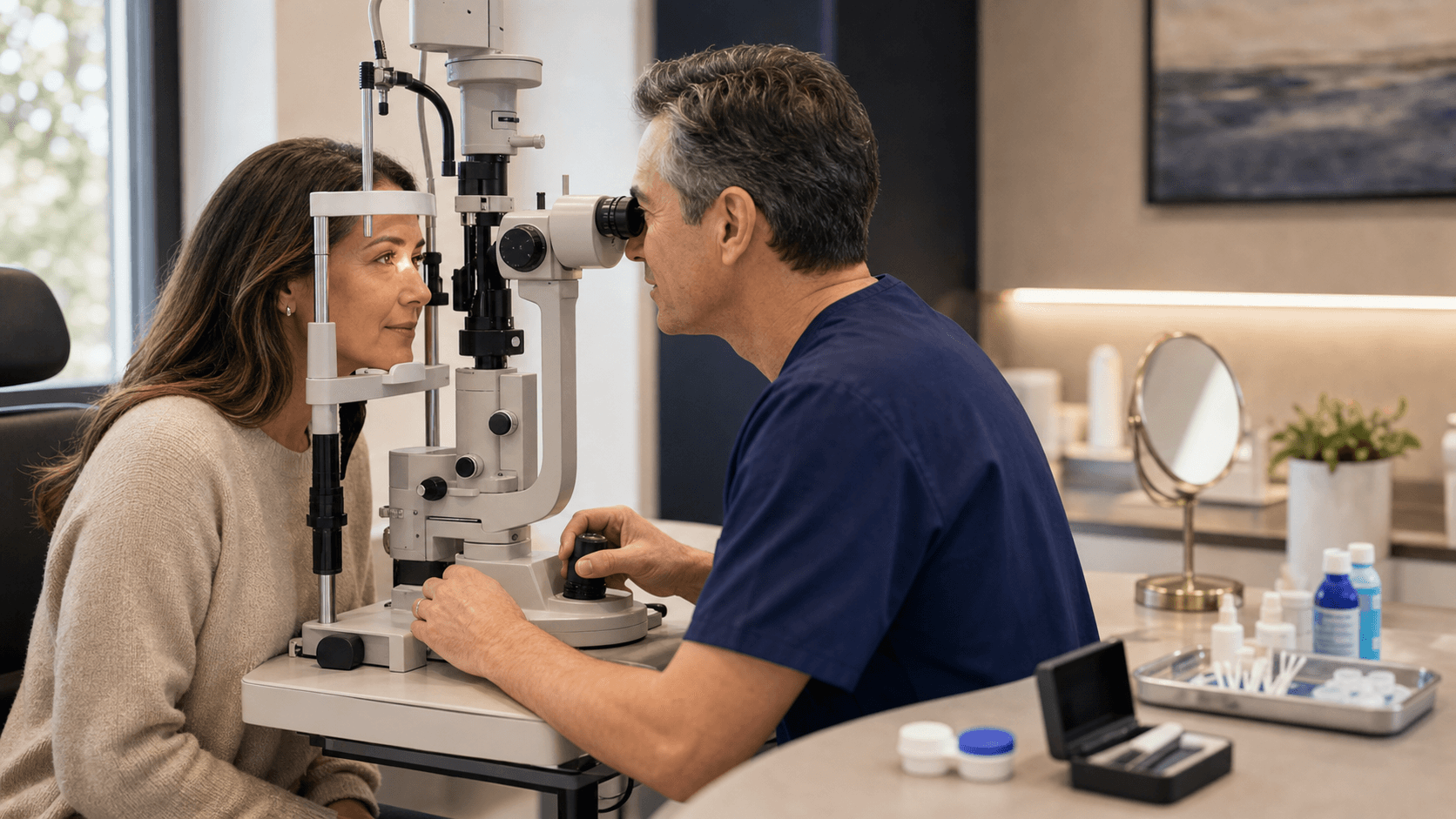
What a dry eye clinic should measure
A dry eye evaluation should answer a simple question: what is driving the dryness?
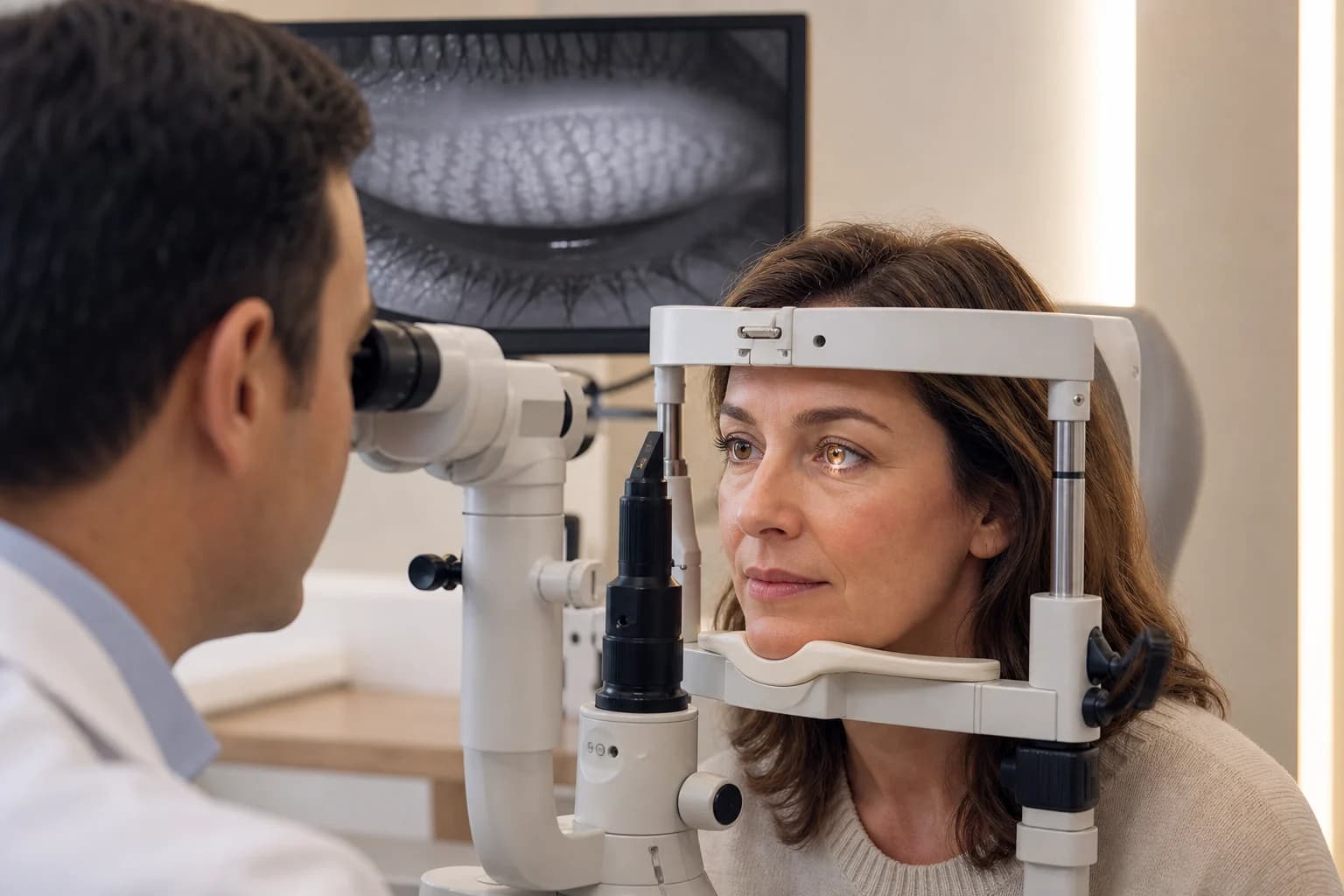
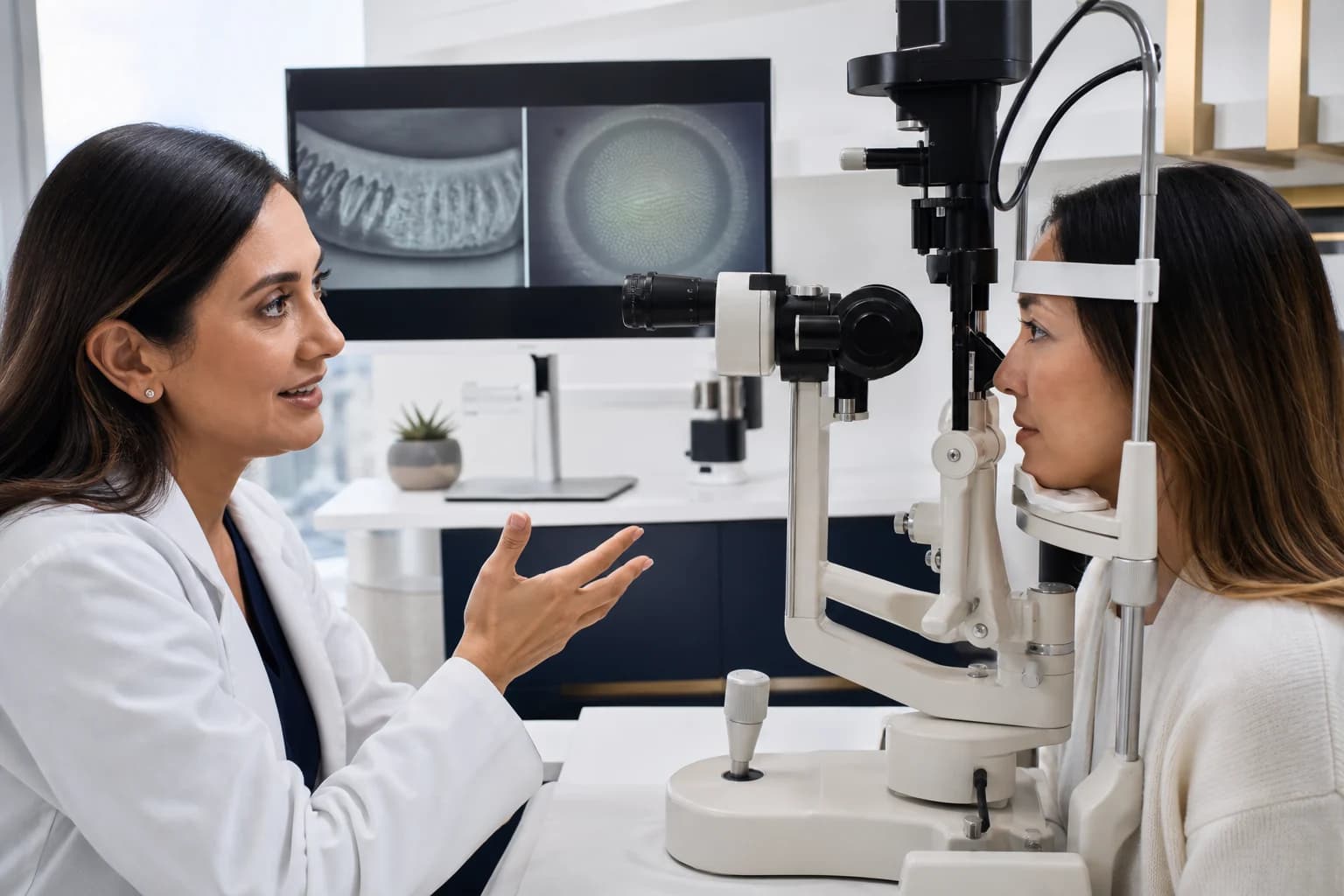
Useful testing and exam steps may include:
- Symptom pattern and screen/work triggers.
- Tear break-up time.
- Tear osmolarity or inflammation testing when appropriate.
- Eyelid and lash evaluation, including collarettes or Demodex clues.
- Meibomian gland expression, oil quality, and gland dropout or meibography when available.
- Corneal and conjunctival staining.
- Tear quantity testing, including Schirmer testing when needed.
- Review of contact lens history.
- Medication and allergy review.
- Ocular rosacea signs.
- Surgical planning review if LASIK, PRK, EVO ICL, or cataract surgery is being considered.
The goal is not to label the patient "dry." The goal is to identify which layer of the tear system is failing.
Dry eye clinic vs a regular eye exam
A routine eye exam can confirm that the surface looks irritated. A dry eye clinic visit should go further.
It should separate evaporative dry eye from aqueous-deficient dry eye, identify whether MGD or blepharitis is active, look for eyelid inflammation, collarettes, Demodex patterns, tear-film hyperosmolarity, gland dropout, and explain whether contact lens intolerance is a tear-film problem, a lens-fit problem, or both.
That distinction matters because treatment plans are different. Some patients need prescription anti-inflammatory therapy. Some need Demodex-directed drops, lid-margin treatment, and gland support. Some need IPL, thermal pulsation, RF discussion, or gland expression. Some need punctal plugs for low tear volume. Some severe ocular surface disease patients may need serum tears or scleral lens support. If the "redness" is actually a raised growth moving toward the cornea, the right next step may be a pterygium surgeon evaluation or pterygium condition review, not a dry-eye-only plan. The right answer depends on the exam, not on one label.
When IPL helps dry eye
IPL eye treatment is most often discussed for evaporative dry eye related to MGD, ocular rosacea, and eyelid inflammation.
IPL does not replace every dry-eye treatment. It is one option in a larger plan.
It may be considered when:
- MGD is a major driver.
- Redness and inflammation are concentrated around the eyelids.
- Rosacea is contributing.
- Warm compresses and drops have not been enough.
- Contact lenses are becoming uncomfortable because the tear film is unstable.
IPL should be recommended after an exam, not because "dry eye" appears on a form.
Contact lens dry eye deserves its own discussion
Contact lens wear can expose tear-film problems that glasses hide.
Patients often describe:
- Lenses that feel fine for two hours and unbearable by afternoon.
- Blurry vision that clears after blinking.
- Redness after removing contacts.
- Needing drops constantly.
- Switching brands without relief.
Sometimes the solution is a different lens. Sometimes the solution is treating MGD, blepharitis, or inflammation. Sometimes contact lens intolerance is one reason to compare LASIK, SMILE, PRK, or EVO ICL.
If you are considering vision correction, dry eye should be treated before final measurements. A poor tear film can affect comfort, diagnostic accuracy, and satisfaction.
Why dry eye matters before LASIK, PRK, EVO ICL, or cataract surgery
Dry eye is not just a comfort issue. It can affect surgical planning.
Before laser vision correction, the cornea and tear film need to be stable enough for accurate measurements and predictable healing. Before cataract or lens surgery, dry eye can affect biometry and lens-selection confidence.
That is why we often treat dry eye before recommending a procedure. It is not a delay for the sake of delay. It is part of getting the result right.
Related resources
- Dry Eye Clinic in Plano
- Dry Eye Treatment
- IPL Eye Treatment
- Blepharitis treatment guide
- Pterygium Surgery
- PRK with dry eyes guide
Bottom line
If artificial tears are not solving the problem, look deeper.
A serious dry eye clinic in Plano should evaluate MGD, blepharitis, Demodex/collarettes, eyelid inflammation, contact lens dry eye, ocular rosacea, aqueous tear volume, tear-film stability, hyperosmolarity risk, and gland dropout before recommending a plan.
Start with our dry eye clinic guide, move into the dry eye treatment page for the treatment plan, compare IPL eye treatment, review dry eye payment options, or schedule an evaluation if redness, burning, fluctuating vision, or contact lens discomfort keeps coming back.
Your exam can clarify which options fit your eyes. Visit our Plano team from anywhere in DFW.
Book a free visit