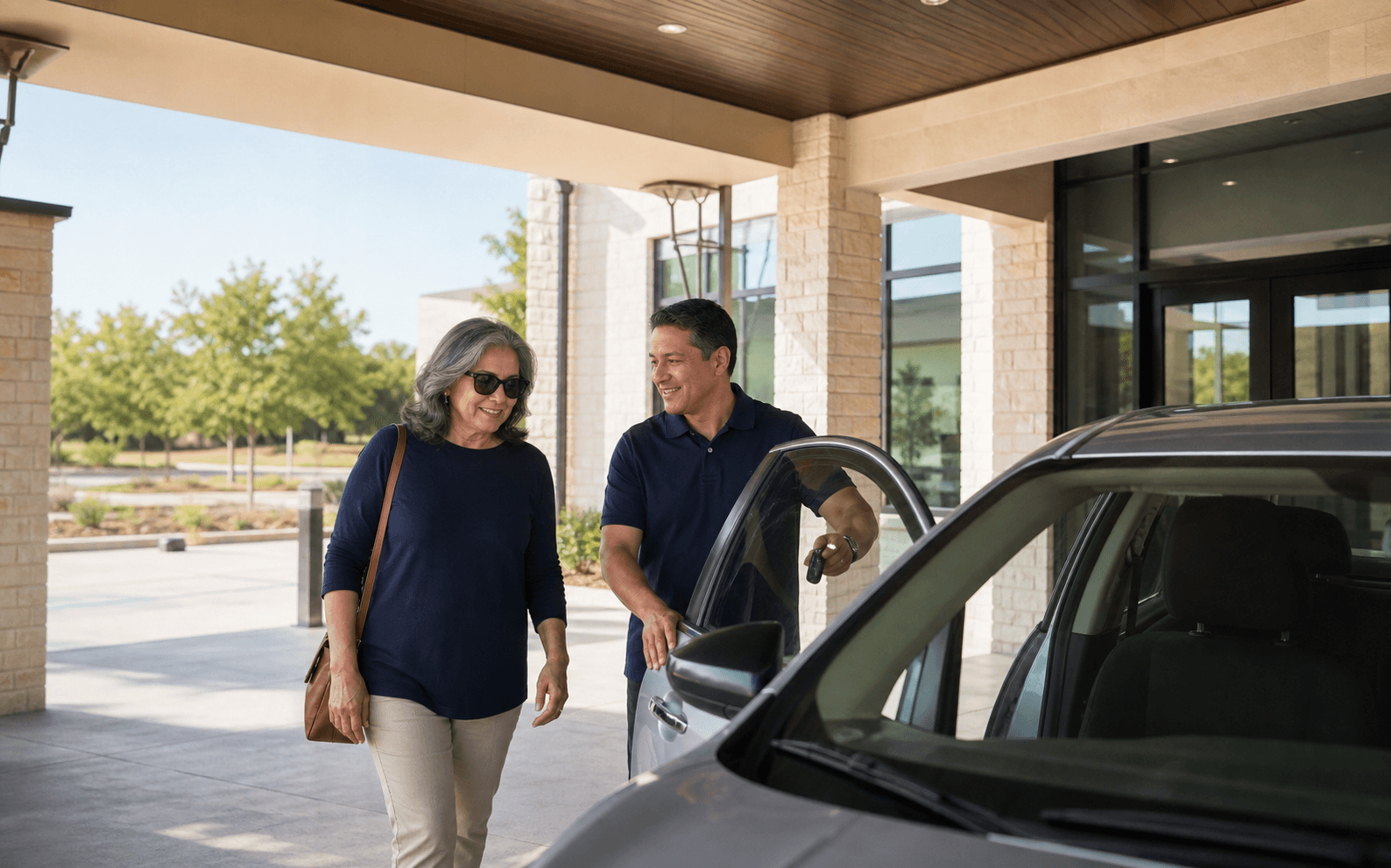
Eye dilation can cause blurred near vision and light sensitivity for several hours. The National Eye Institute recommends asking a friend or family member to drive you home after a dilated examination.
Some people feel that their distance vision remains usable, while others are too blurred or light-sensitive to drive comfortably. Because you cannot know exactly how strongly you will respond before the drops are used, arranging a driver is the safer plan, especially for a first dilated visit.
Do not drive if you cannot read signs clearly, judge traffic safely, tolerate daylight or headlights, or meet the legal vision requirements for driving.
What dilation does
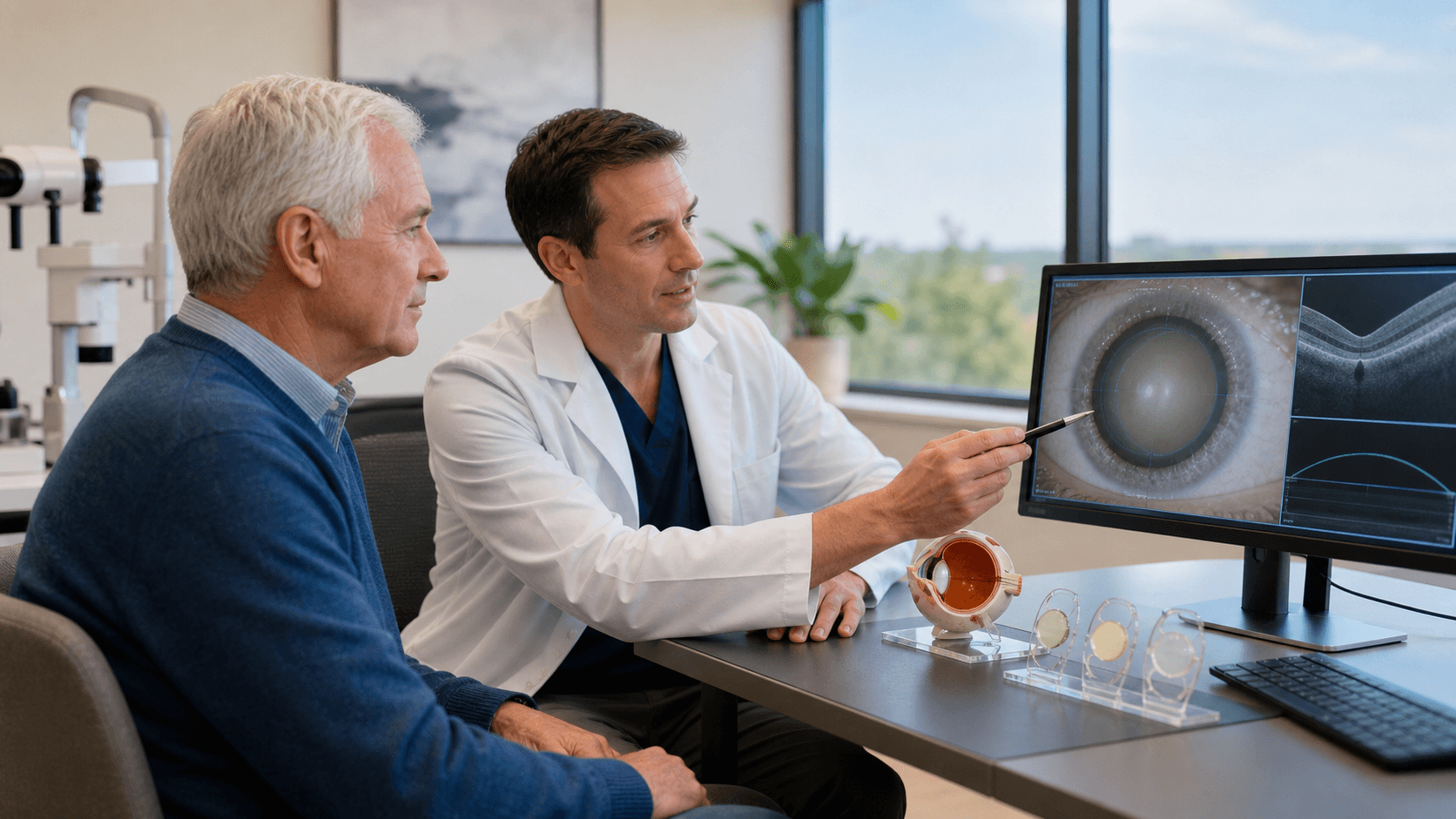
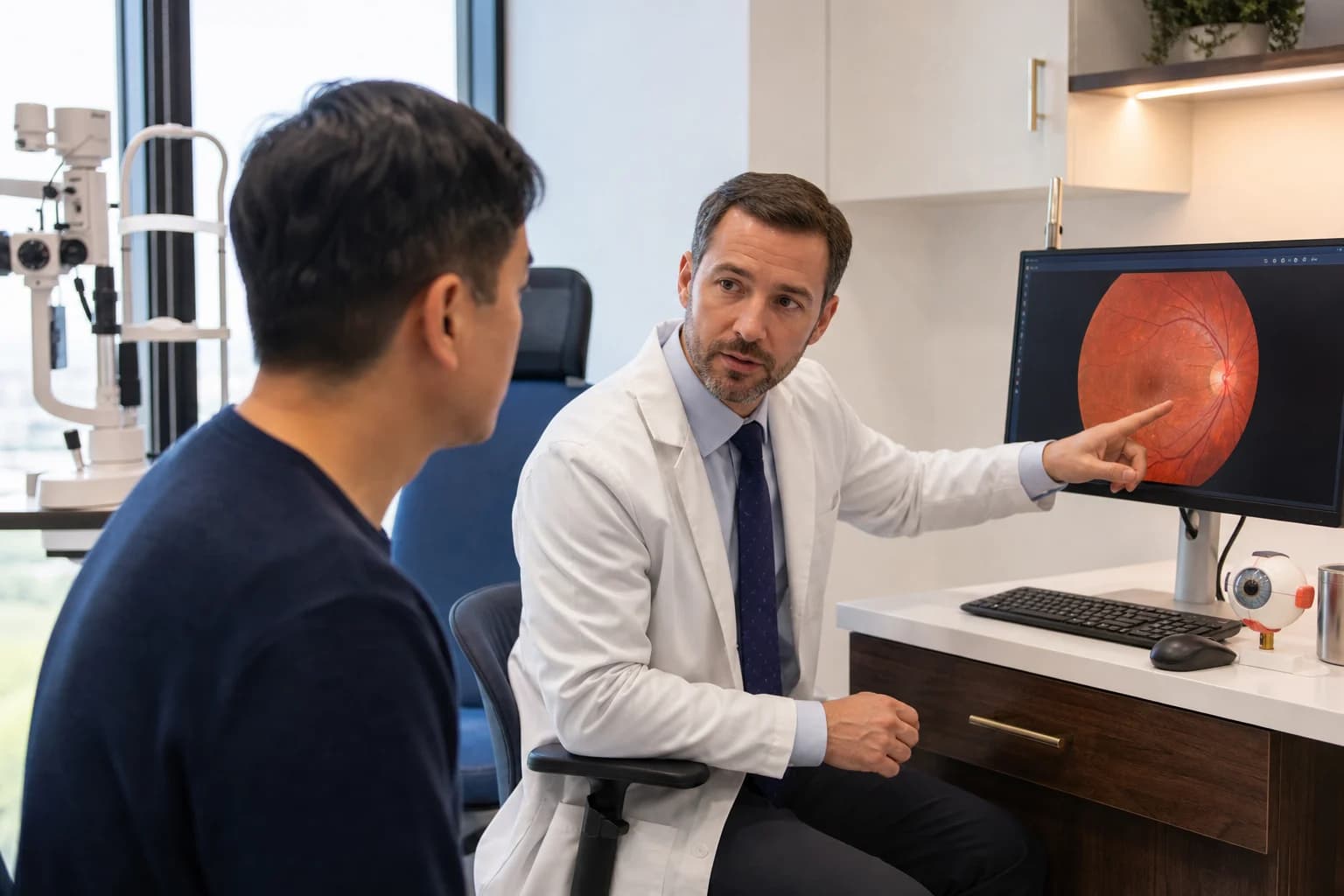
Dilating drops widen the pupil. A larger pupil lets the eye doctor examine more of the natural lens, retina, macula, blood vessels, and optic nerve.
The drops can also temporarily reduce the eye's ability to focus at near distance. Common effects include:
- Light sensitivity.
- Blurred reading or phone vision.
- Glare outdoors.
- Difficulty moving between bright and dim settings.
- Mild temporary stinging when the drops are placed.
The effect varies with the medication, eye color, age, prescription, and individual response.
How long does dilation last?
For many adults, blur and light sensitivity improve over several hours. Some people remain affected longer. Children and certain medications can have a longer duration.
The clinic can explain what drops are commonly used, but it cannot guarantee the exact time your pupils will return to normal. Avoid scheduling a visually demanding task immediately after the appointment.
Who should plan on bringing a driver?
A driver is particularly sensible if:
- This is your first dilated examination.
- You already have poor vision in one eye.
- Cataracts, corneal disease, retina disease, or another condition limits vision.
- Bright light or glare makes driving difficult.
- The trip includes highways, rush-hour traffic, night driving, or unfamiliar roads.
- You are also having diagnostic testing, a procedure, or medication that affects driving.
- The clinic specifically instructed you not to drive.
For a surgical consultation, ask separately about the surgery-day driving rule. Dilation guidance does not replace postoperative instructions, and patients cannot drive themselves home after many eye procedures.
Why an ophthalmologist may need to dilate your eyes
Dilation can help evaluate:
- Cataracts and the natural lens.
- The retina and macula.
- The optic nerve in glaucoma or unexplained vision loss.
- Flashes, floaters, or a possible retinal tear.
- Diabetes- or blood-pressure-related eye changes.
- High myopia and peripheral retinal risk.
- Unexplained blur that is not corrected by glasses.
- Eye health before LASIK, EVO ICL, cataract, or another surgery.
Not every visit needs dilation. The reason should connect to the symptom, condition, or surgical decision being evaluated.
Use the Plano ophthalmology guide for comprehensive medical eye care, or read ophthalmologist versus optometrist when you are not sure which clinician fits the concern.
Can sunglasses make driving safe?
Sunglasses can reduce brightness and improve comfort, but they do not guarantee that vision is safe for driving. They do not reverse near blur, restore focusing ability, or correct an underlying eye condition.
Bring sunglasses because the National Eye Institute recommends them for post-dilation light sensitivity. Use them for comfort while someone else drives if your vision is affected.
What to bring to a dilated visit
- Sunglasses, preferably with good side coverage.
- A driver or a ride-share plan.
- Current glasses.
- A list of medications and allergies.
- Prior eye records relevant to the concern.
- A written list of symptoms and when they began.
- Insurance and referral information when needed.
If you wear contact lenses, ask whether they should be removed before testing and whether you need to bring a storage case.
Planning the drive from around DFW
Travel time matters more when vision may be blurred on the return trip. Patients coming from Denton, Fort Worth, Arlington, Irving, Dallas, Frisco, McKinney, or another DFW city should plan the ride home before arriving, not after the pupils are dilated.
The areas-we-serve directory links to practical city guides with route and visit information. Check live traffic, allow time for testing, and ask how long the full appointment is expected to take.
For refractive surgery testing, also read when to stop contact lenses before LASIK or EVO ICL measurements. Contact-lens preparation and dilation are separate parts of the visit plan.
When dilation is being used for urgent symptoms
Sudden flashes, a shower of new floaters, a dark curtain or shadow, sudden vision loss, severe pain, or significant redness with reduced vision can require prompt evaluation. Do not delay urgent care because a driver is unavailable.
Call the eye-care team for immediate instructions or use local emergency services. If vision is suddenly impaired, do not drive yourself.
The National Eye Institute identifies sudden new floaters with flashes or a curtain-like shadow as possible signs of a retinal tear or detachment, which can be a medical emergency.
Questions to ask before the appointment
- Is dilation likely at this visit?
- How long should I allow for the examination and testing?
- Should I bring a driver?
- Will I be able to return to screen work or reading?
- Should I stop contact lenses before the visit?
- Are any procedures planned that create additional driving restrictions?
- Which symptoms should trigger urgent contact after I leave?
The safest plan
Assume that dilation may make driving uncomfortable or unsafe, arrange a ride, and bring sunglasses. If the clinician decides dilation is not needed, the extra planning costs little. If the drops affect you strongly, the ride is already handled.
Contact Visionary Eye Surgery before your appointment if you need to confirm whether dilation is expected or whether a driver is required for the specific testing planned.
Medical sources
Your exam can clarify which options fit your eyes. Visit our Plano team from anywhere in DFW.
Book a free visit