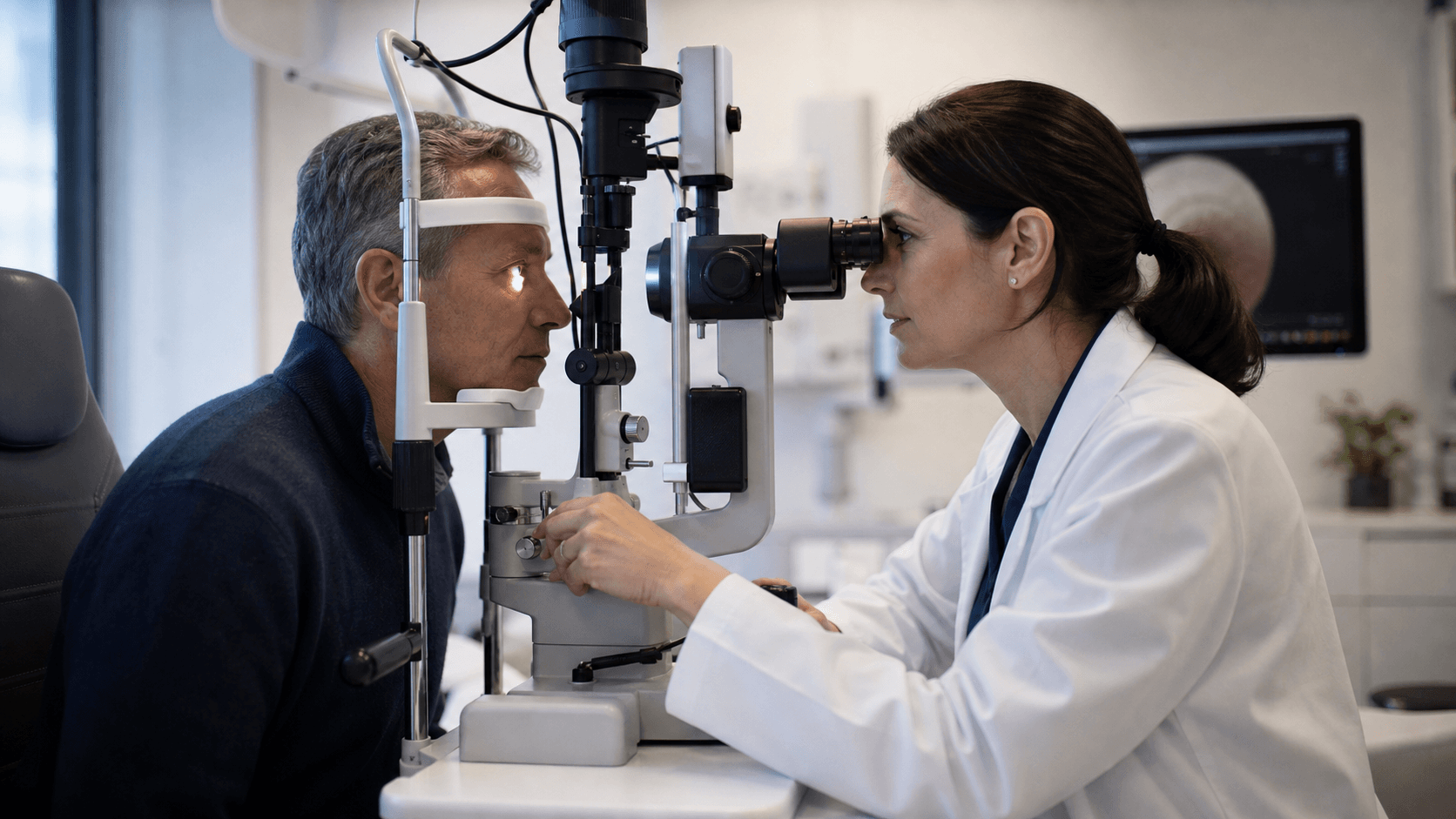
The short answer is that both ophthalmologists and optometrists examine eyes, diagnose many eye problems, and prescribe treatment. The important difference is the scope of medical and surgical care each clinician is trained and licensed to provide.
If your main need is a routine glasses or contact-lens prescription, an optometrist is often the most direct starting point. If you have a known eye disease, a surgical question, a complicated diagnosis, or symptoms that may require medical or surgical treatment, an ophthalmologist is usually the better fit.
The right choice depends on the problem, not on which title sounds more familiar.
The practical difference at a glance
| Eye-care professional | Training and role | Common reasons to visit |
|---|---|---|
| Ophthalmologist | A medical doctor (MD) or osteopathic physician (DO) trained in medical and surgical eye care | Eye disease, surgery, cataracts, glaucoma, corneal disease, complex symptoms, or a surgical second opinion |
| Optometrist | A doctor of optometry (OD) trained in primary eye and vision care | Routine eye exams, glasses, contact lenses, and diagnosis or management of many eye conditions |
| Optician | A professional who fills eyewear prescriptions; not an eye doctor | Selecting, fitting, and adjusting glasses or contact lenses from a prescription |
There is overlap. Many optometrists manage chronic eye conditions and work closely with ophthalmologists. Many ophthalmologists also provide comprehensive exams. A coordinated referral between the two is normal and often gives the patient the right level of care at the right time.
Start with an optometrist for routine vision needs
An optometrist is often a good first stop when you need:
- A routine eye examination.
- A new glasses or contact-lens prescription.
- Contact-lens fitting or troubleshooting.
- Evaluation of mild, non-urgent blur or eye discomfort.
- Ongoing care for a condition that is stable and already has a treatment plan.
An optometrist can identify findings that need medical or surgical attention and refer to an ophthalmologist when appropriate. For many patients, the optometrist remains the primary eye-care clinician before and after a specialist consultation.
Choose an ophthalmologist when disease or surgery may be involved
An ophthalmologist is the more direct starting point when the question involves:
- Cataracts or a possible need for lens surgery.
- Glaucoma, high eye pressure, optic-nerve changes, or visual-field loss.
- Corneal disease, keratoconus, scarring, recurrent erosion, or a growing pterygium.
- A procedure such as LASIK, PRK, SMILE, EVO ICL, cataract surgery, RLE, CXL, or MIGS.
- An eye injury, infection, significant inflammation, or unexplained vision loss.
- A complicated second opinion after prior eye surgery.
- A condition that has not improved with the current treatment plan.
At Visionary Eye Surgery, the Plano ophthalmology page is the broad starting point for diagnosis-led medical and surgical evaluation. A patient who already knows the concern can go directly to the relevant service, such as cataract surgery, glaucoma care, cornea care, or the dry eye clinic.
Three situations that should move you toward an ophthalmologist
1. Your vision problem is not corrected by a new prescription
Blur can come from refractive error, but it can also come from cataracts, corneal disease, retinal disease, glaucoma, inflammation, or an unstable tear film. If updated glasses do not solve the problem, the next visit should investigate the eye's health rather than repeatedly changing the prescription.
2. A procedure is being considered
A surgical consultation should confirm the diagnosis, review alternatives, and explain why one procedure fits the eye better than another. For refractive surgery, that means more than checking the glasses prescription. Corneal shape and thickness, tear-film health, pupil behavior, lens changes, retina, age, and visual goals can all affect the recommendation.
Use the LASIK procedure overview when comparing laser options, or the vision-correction comparison when LASIK, PRK, SMILE, or EVO ICL may all be relevant.
3. Testing shows disease or a meaningful risk factor
High eye pressure, an abnormal optic nerve, changing corneal maps, a cataract, retinal findings, or unexplained visual-field loss may require physician-level interpretation or surgical planning. The goal is not to rush into a procedure. It is to establish what the finding means, whether it is changing, and what level of follow-up is appropriate.
Symptoms that need urgent care
Do not wait for a routine future appointment if you develop:
- Sudden loss or a curtain-like change in vision.
- New flashes with a sudden shower of floaters.
- Severe eye pain, headache, nausea, and halos around lights.
- Significant redness with pain, light sensitivity, or reduced vision.
- A chemical injury, penetrating injury, or embedded foreign body.
- Contact-lens-related pain, discharge, or sudden blur.
- Sudden double vision or a new neurologic symptom.
Call an eye-care professional promptly or follow local emergency instructions. These symptoms cannot be sorted safely through an online article.
Do you need a referral to see an ophthalmologist?
Many patients can schedule an ophthalmology appointment directly, but insurance rules vary. Some HMO or managed-care plans require a referral from a primary-care physician or optometrist. Before the visit, ask the practice and insurer:
- Is the clinician in network?
- Is a referral or prior authorization required?
- Is the visit being billed as routine vision care or a medical eye examination?
- Which diagnostic tests may be performed, and how are they covered?
For elective procedures such as LASIK, SMILE, EVO ICL, or RLE, medical insurance generally works differently than it does for medically necessary disease care. The Affordability page explains financing and benefit-verification questions without promising coverage.
What to bring to a medical or surgical eye visit
Useful records can prevent repeated testing and make a second opinion more specific:
- Current glasses and contact-lens prescriptions.
- Prior operative reports from LASIK, PRK, cataract surgery, CXL, or another eye procedure.
- Corneal topography or tomography.
- OCT scans and visual fields.
- Eye-pressure history.
- Medication and allergy lists.
- A timeline of when the symptom began and what makes it better or worse.
If the question is surgical, also bring the activities that matter most: night driving, screen work, reading, sports, work restrictions, or contact-lens tolerance. Those details can change which option is most sensible.
How to choose the right Plano eye-care starting point
Choose by the decision you need to make:
- New glasses or contacts: start with an optometrist or comprehensive eye-care practice.
- Known disease or abnormal testing: schedule the relevant medical evaluation.
- Possible surgery: meet with the surgeon who will interpret the measurements and discuss alternatives.
- Unclear or complex symptoms: choose a comprehensive medical eye examination that can escalate to subspecialty care when needed.
- Urgent symptoms: seek prompt professional or emergency evaluation.
Visionary Eye Surgery's Plano location focuses on diagnostic and surgical ophthalmology. You can also review Dr. Shehzad Batliwala's credentials and approach before deciding whether the practice matches the problem you need solved.
Sources
Your exam can clarify which options fit your eyes. Visit our Plano team from anywhere in DFW.
Book a free visit