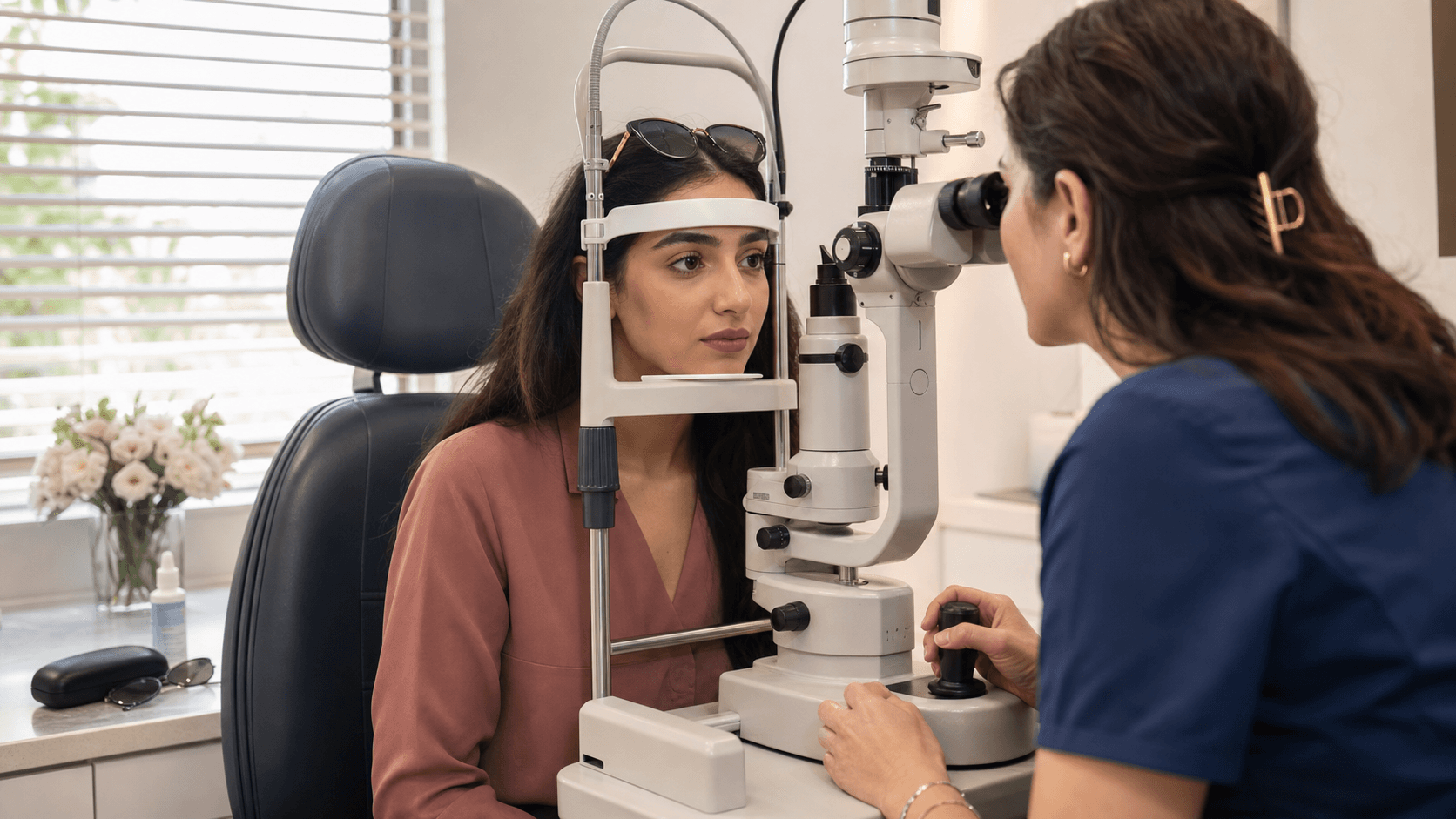
PRK and LASIK use an excimer laser to reshape the cornea, but their early healing is different. LASIK creates a corneal flap. PRK treats the surface after the epithelium is removed, so those surface cells must regrow before vision becomes dependable.
That slower early recovery can be a worthwhile tradeoff when avoiding a flap fits the cornea, occupation, activity level, or surgical plan. It should still be planned honestly. PRK recovery is measured in stages, and visual improvement is not perfectly linear.
This guide describes common checkpoints after PRK at Visionary Eye Surgery in Plano. Your written instructions and examinations take priority.
The short answer
The first several days focus on epithelial healing, comfort, infection prevention, and protecting the bandage contact lens. Functional vision often improves after the surface closes, but sharpness can fluctuate for weeks. Fine visual quality and the final prescription may continue to settle over several months.
A practical outline is:
- Surgery day: arrange a driver, begin prescribed medication, and rest the eyes.
- Days one through four: expect the most surface discomfort and blur while epithelium regrows.
- Around the first week: the surgeon confirms healing and decides when to remove the bandage lens.
- Weeks two through four: vision usually becomes more functional but may vary during the day.
- Months one through three: clarity, refraction, and optical quality continue to stabilize.
Surgery day
PRK is generally performed with numbing drops. After laser treatment, the surgeon places a therapeutic bandage contact lens over the cornea to protect the healing surface.
When the anesthetic wears off, burning, tearing, light sensitivity, aching, or a foreign-body sensation can develop. Use only the prescribed comfort and medication plan. Do not rub the eye, remove the bandage lens, or use someone else's medication.
Have another adult drive you home. Reduce unnecessary screen use, keep the environment comfortable, and follow the instructions about protective shields and drops.
Days one through four
The epithelium heals inward from the edges of the treated area. During this stage, vision can be quite blurry and may briefly seem better or worse as the surface changes.
Common early experiences can include:
- Light sensitivity.
- Tearing.
- Mild-to-moderate pain or burning.
- Grittiness or awareness of the bandage lens.
- Hazy, ghosted, or fluctuating vision.
- Difficulty with prolonged screen use.
The FDA patient information for PRK describes a therapeutic contact lens used as a temporary wound covering and a slower recovery than LASIK. Recovery still varies by prescription, treatment size, ocular surface, and individual healing.
If the bandage lens falls out, do not reinsert it. Contact the practice for instructions.
For the treatment overview and consultation, see PRK eye surgery in Plano. If your work involves sun or outdoor exposure, use the PRK haze and sun-protection guide to prepare questions before choosing dates.
The first postoperative visits
For questions about a lens that moves, falls out, or needs removal, see our PRK bandage contact lens care guide. Contact your treating team for personal instructions.
The surgeon examines the corneal surface rather than removing the bandage lens on a fixed date without checking. The visit may assess:
- Whether the epithelium has closed.
- Corneal clarity.
- Signs of infection or excessive inflammation.
- Vision.
- The bandage lens position.
- The medication schedule.
The lens is removed when the surface is ready. Some eyes need more time.
Days five through seven
Comfort often improves as the epithelium closes. Vision can remain inconsistent after the bandage lens is removed because the new surface is still smoothing and the tear film may be unstable.
Do not judge the final result by the first week. A day of clearer vision followed by a blurrier day can occur during early healing. Report a worsening pattern, increasing pain, or new redness rather than assuming every change is expected.
Weeks two through four
Many patients return to more normal routines during this stage, but task-specific timing matters. Computer work, nighttime driving, aviation, law enforcement, healthcare, construction, and outdoor jobs place different demands on visual quality and eye protection.
Dryness and fluctuating focus can affect screens and night vision. Use only the lubricating products approved by the surgical team. Keep using prescribed anti-inflammatory medication on schedule; these drops may be tapered over time to manage healing and reduce haze risk.
Ask before swimming, using a hot tub, returning to contact sports, applying eye makeup, or working around dust and chemicals.
Months one through three
The corneal surface and underlying tissue continue to remodel. Vision, contrast, halos, and refraction may improve gradually. Higher prescriptions or larger treatments may take longer to settle.
Follow-up may include:
- Uncorrected and corrected vision.
- Refraction.
- Corneal clarity and haze assessment.
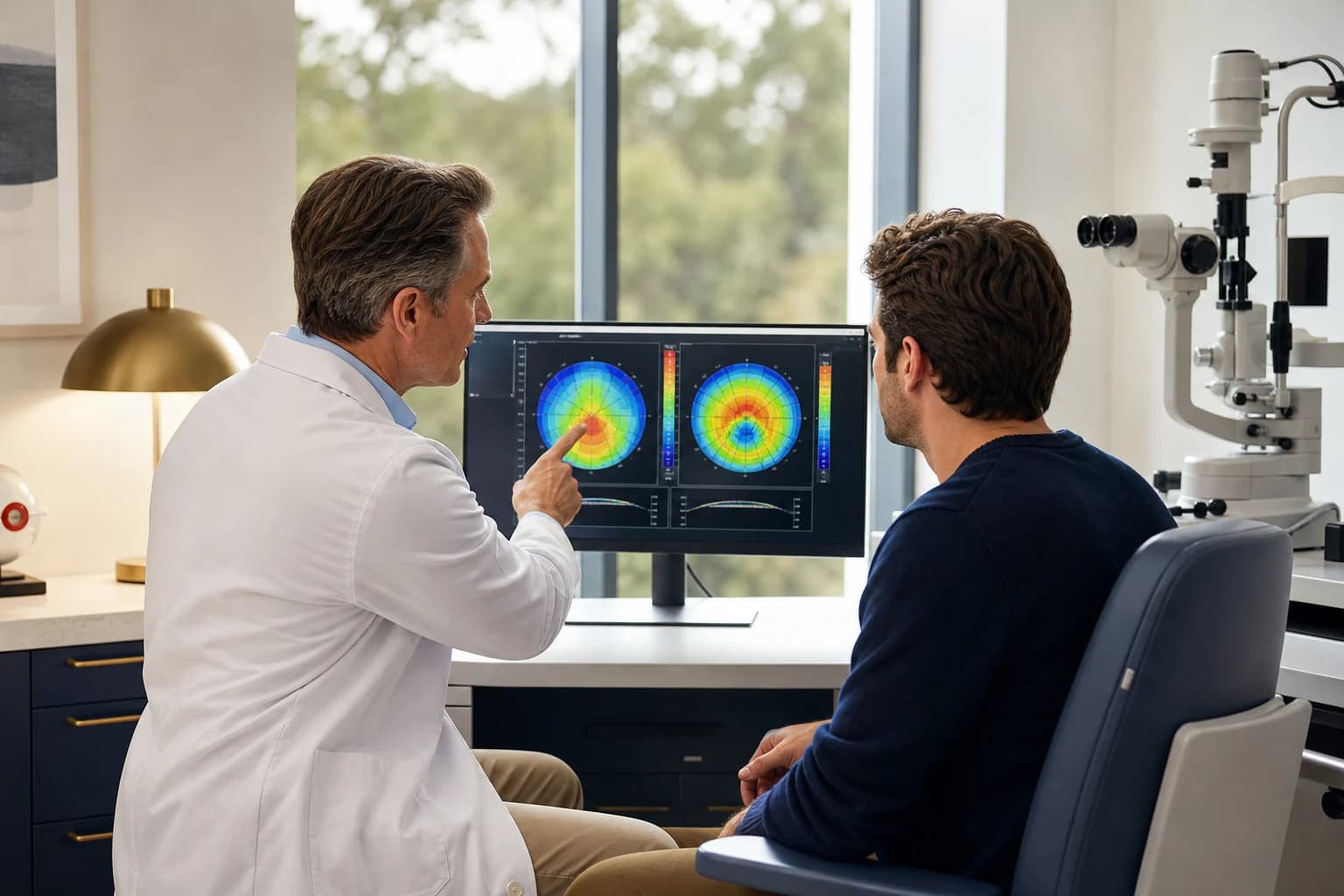
- Topography when clinically appropriate.
- Tear-film and dry-eye review.
- Medication adjustment.
Do not rush into a new glasses prescription or enhancement decision while the cornea is still changing. The surgeon should confirm stability first.
When can I work, drive, and exercise?
There is no universal clearance date. Return depends on healing, vision in both eyes, discomfort, medication effects, and the task.
Use these questions:
- Has the surgeon confirmed that the epithelium is closed?
- Is the bandage lens still in place?
- Can I perform the task safely with my current vision?
- Does the activity expose the eye to sweat, dust, dirty water, impact, or rubbing?
- Have I received explicit driving or activity clearance?
Light daily movement and high-impact sport should not be treated as the same activity. Follow the personalized progression from the surgical team.
PRK recovery vs LASIK recovery
LASIK often provides faster early functional vision because the surface epithelium is largely preserved over the flap. PRK avoids a flap but requires surface regeneration.
That makes PRK relevant for some patients with thinner corneas, high-impact occupations, or anatomy where surface treatment is preferred. It does not mean PRK is automatically safer or better for every thin cornea. Corneal shape, thickness, prescription, dry eye, and ectasia risk must all be evaluated.
Use the LASIK, EVO ICL, and PRK comparison for procedure selection. Patients concerned about tear-film disease can also read PRK with dry eyes.
Warning signs that need an urgent call
Contact the surgical team promptly for:
- Sudden or substantial vision loss.
- Severe pain or pain that is worsening instead of improving.
- Increasing redness or discharge.
- A bandage lens that falls out or causes sharp pain.
- New trauma or chemical exposure.
- Symptoms listed as urgent in your postoperative instructions.
Early examination is important when the healing pattern changes unexpectedly.
Plan for recovery before choosing PRK
Before scheduling, ask:
- Why does PRK fit my cornea better than LASIK, SMILE, or EVO ICL?
- How many days should I plan away from my specific work?
- When will the bandage lens be checked and removed?
- What is the drop schedule and expected taper?
- When can I drive, exercise, swim, travel, and wear eye makeup?
- What symptoms require an urgent call?
- When will the result be considered stable?
Start with the PRK/ASA procedure page or schedule a vision-correction consultation at Visionary Eye Surgery in Plano.
Medical sources
Medically Reviewed by Dr. Shehz, DO
Dr. Shehzad Batliwala, DO—better known as Dr. Shehz—is a board-certified ophthalmologist and eye surgeon who brings both technical precision and genuine compassion to every patient he treats.
Explore this content with AI
Open this article in your preferred AI assistant for a plain-English summary, action steps, and questions to ask before booking a consultation.
Want a direct answer about your eyes? A complimentary consultation gives you a clear, written recommendation.