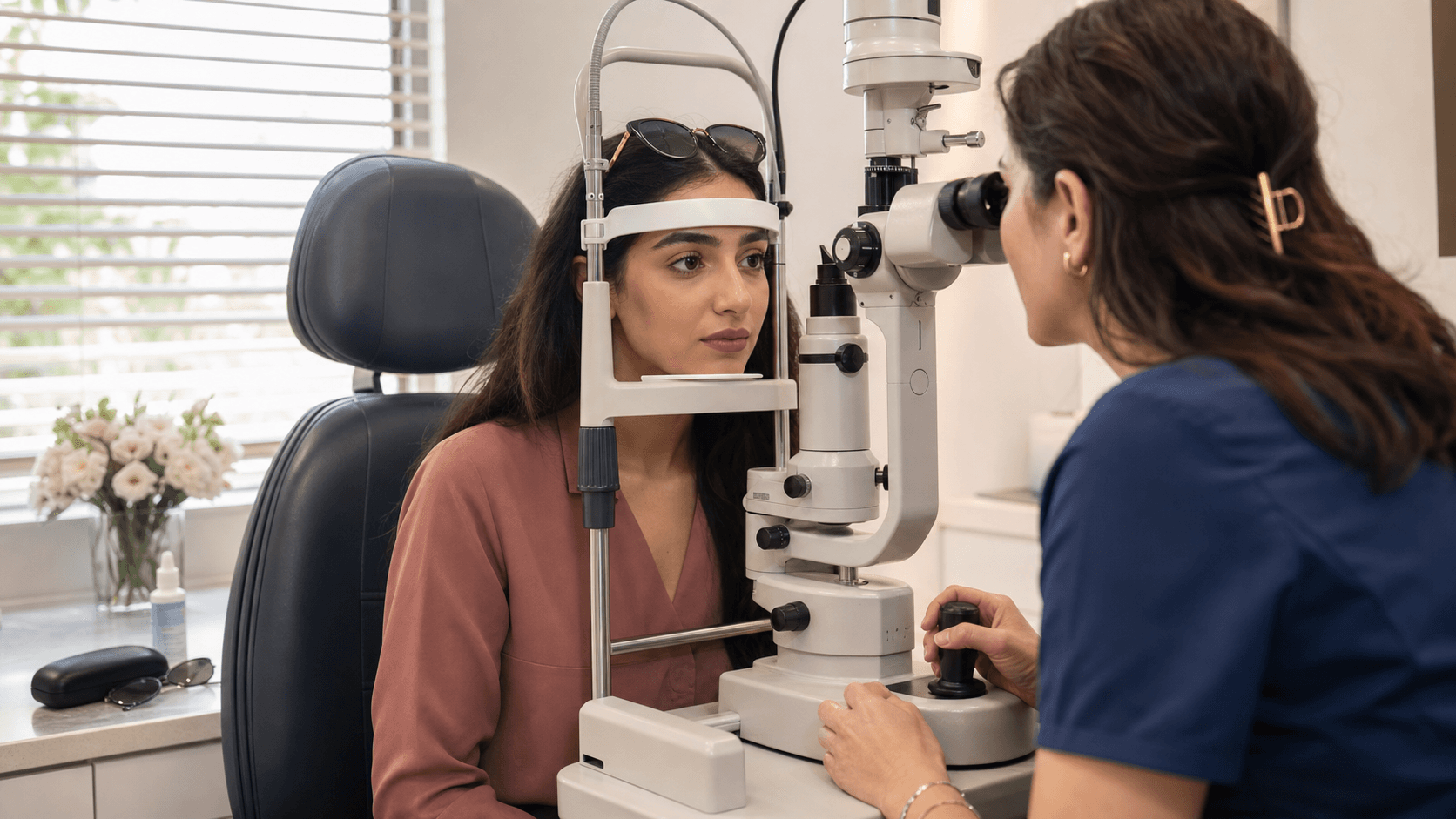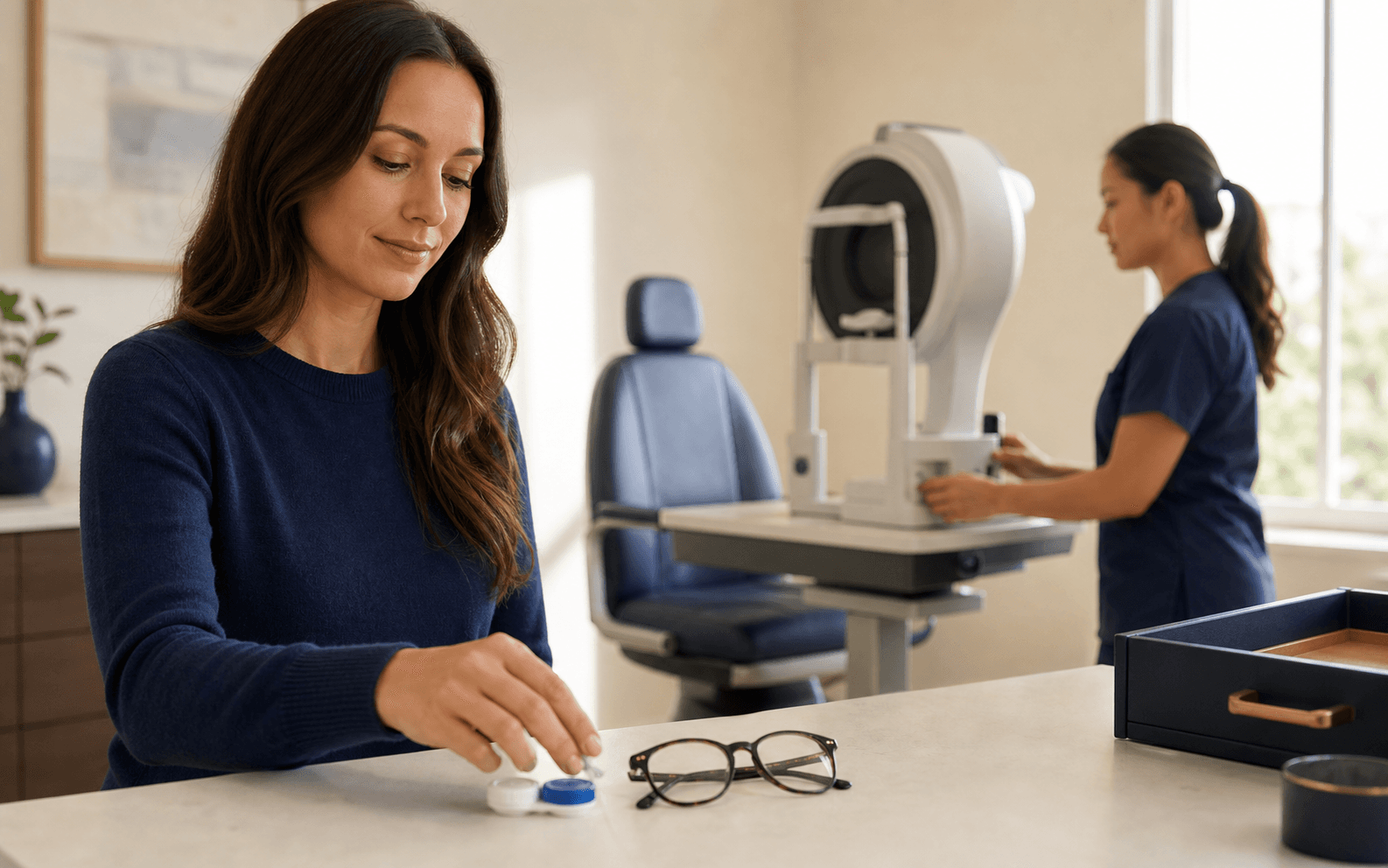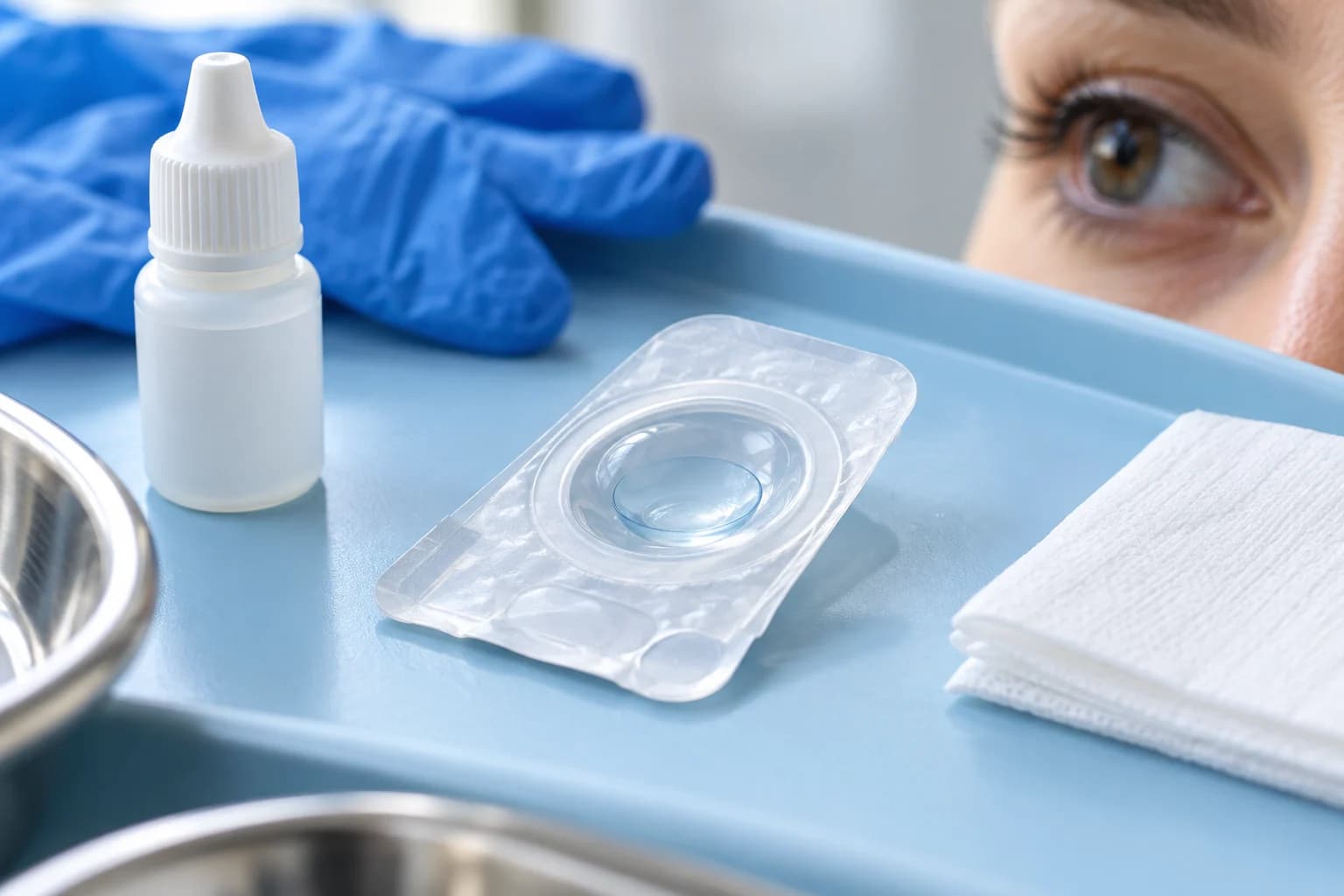
A bandage contact lens after PRK protects the healing corneal surface. It is part of the postoperative treatment, not a regular contact lens to take out each evening. Follow the surgical team's instructions for drops, protection, and the examination at which removal will be considered.
This guide answers lens-care questions for people planning PRK/ASA in Plano from across DFW. The PRK recovery timeline remains the main guide for the broader healing sequence.
What does the bandage lens do?
PRK treats the cornea's surface after the outer epithelial layer is removed. A soft therapeutic lens can reduce friction from the eyelid and protect that surface as it heals. Its purpose differs from a prescription lens used to correct ordinary nearsightedness.
The lens does not mean the eye has already healed, and it does not remove the need for prescribed medication or follow-up. Vision may remain blurry while the surface recovers. A symptom that is severe or worsening should still be assessed even if a lens is in place.
Who removes it, and when?
The clinic should give you a planned examination and explain who will remove the lens. Removal depends on the healing surface, not simply on reaching a particular day after surgery. Do not remove it yourself unless your treating clinician has specifically instructed and trained you to do so.
Avoid scheduling around a promise that the lens will definitely come out at one visit. If the surface needs more time, the team may change the plan. This is a useful reason to keep the early follow-up calendar flexible.
What if it moves or falls out?
Contact the surgical team for instructions. Do not reinsert a lens that has fallen out, replace it with your usual contact lens, or try to find it by rubbing or probing the eye. Tell the team when it happened, which eye is affected, and whether pain or vision has changed.
If you are unsure whether it is still in place, an examination can settle that more safely than repeated attempts to inspect it at home. Keep the clinic's urgent contact details available before the procedure, including its instructions for after-hours concerns.
How should you handle drops and water exposure?
Continue the prescribed drops exactly as directed. Ask which lubricants are compatible with your treatment and whether the team prefers preservative-free products. Avoid introducing a new drop, contact-lens solution, or medication without checking.
Keep water away from the lens, avoid swimming, and follow the team's showering instructions. Wash your hands before using drops and avoid touching the bottle tip to the eye or lashes. The therapeutic reason for overnight lens wear does not eliminate infection risk.
Use this checklist to clarify your personal plan:
| Situation | Confirm with your team |
|---|---|
| A missed drop | What action should you take for that specific medication? |
| Showering and washing hair | How should you protect the eye? |
| An uncomfortable lens | Which symptoms need an examination? |
| Lens removal appointment | Who will assess healing and remove it? |
| Travel or a missed follow-up | Where and when can the eye be checked? |
Plan the first week from your home city
Someone traveling from Allen or Carrollton may be able to reach Plano easily on an ordinary day, but light sensitivity and blur can change the transport plan after PRK. Arrange help rather than assuming you can drive to the removal appointment.
For a longer trip from Denton or Fort Worth, confirm how an unexpected lens problem would be assessed. Ask whether the clinic needs you in Plano and what to do when it is closed. Do not postpone an urgent concern simply because travel is inconvenient.
Put the follow-up appointment, a driver's contact, and the medication plan in one place. Send work or childcare arrangements to anyone helping you before surgery so that the first few days do not depend on reading small messages comfortably.
When should you seek urgent help?
Increasing redness, discharge, worsening pain, or reduced vision while wearing a bandage lens needs prompt advice. Severe pain or a sudden visual change warrants urgent assessment. If the surgical team cannot be reached, seek urgent eye care and tell the clinician that you recently had PRK and may have a therapeutic lens in place.
For treatment comparisons, see PRK versus LASIK. For your own medication or removal instructions, contact your treating team rather than applying someone else's recovery schedule.
Sources
- Moorfields Eye Hospital: care of bandage contact lenses
- University Hospitals of Leicester: wearing a bandage contact lens
- FDA: PRK and LASIK patient information
This is an educational preparation guide, not individualized postoperative instructions.
Your exam can clarify which options fit your eyes. Visit our Plano team from anywhere in DFW.
Book a free visit