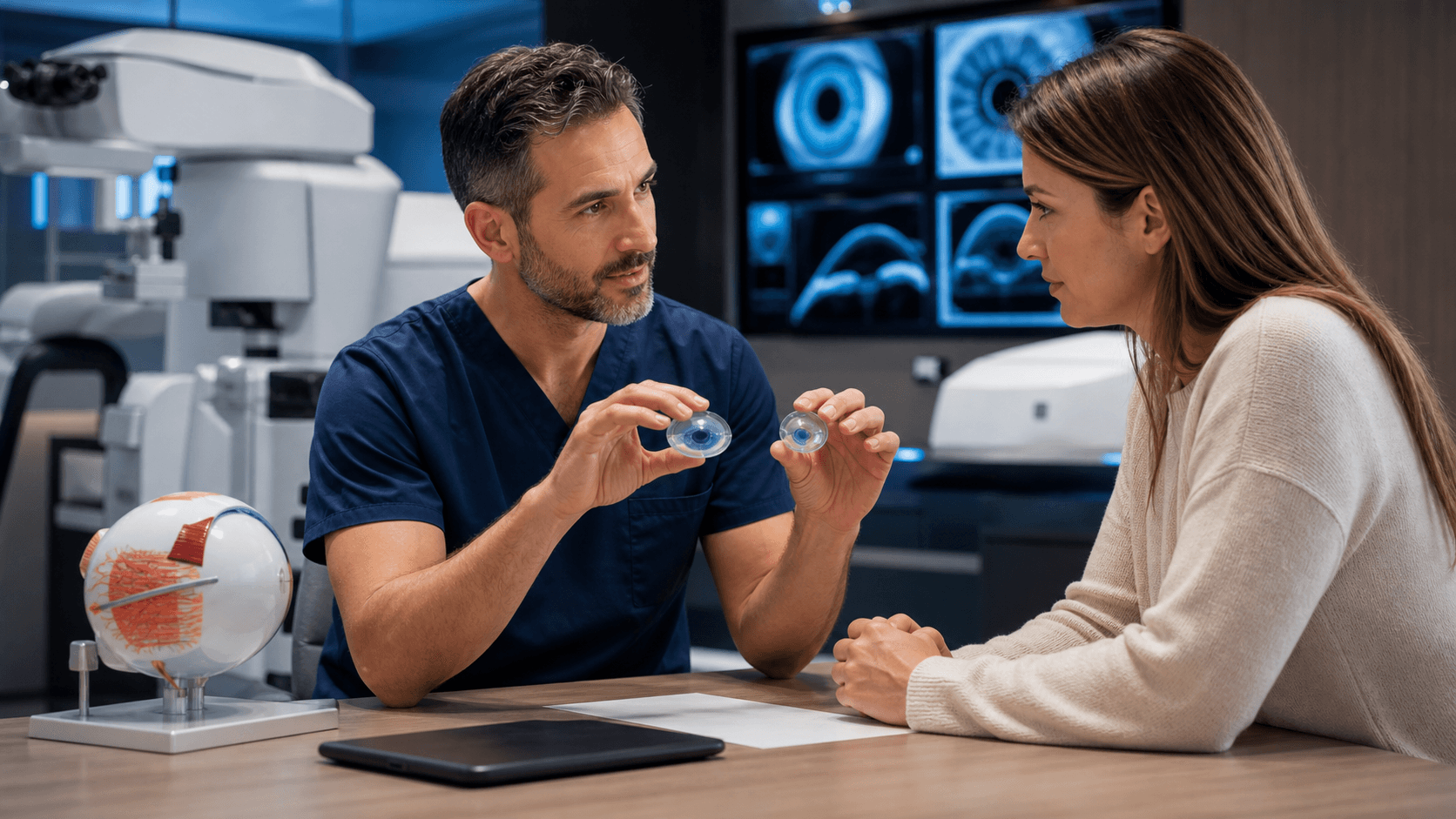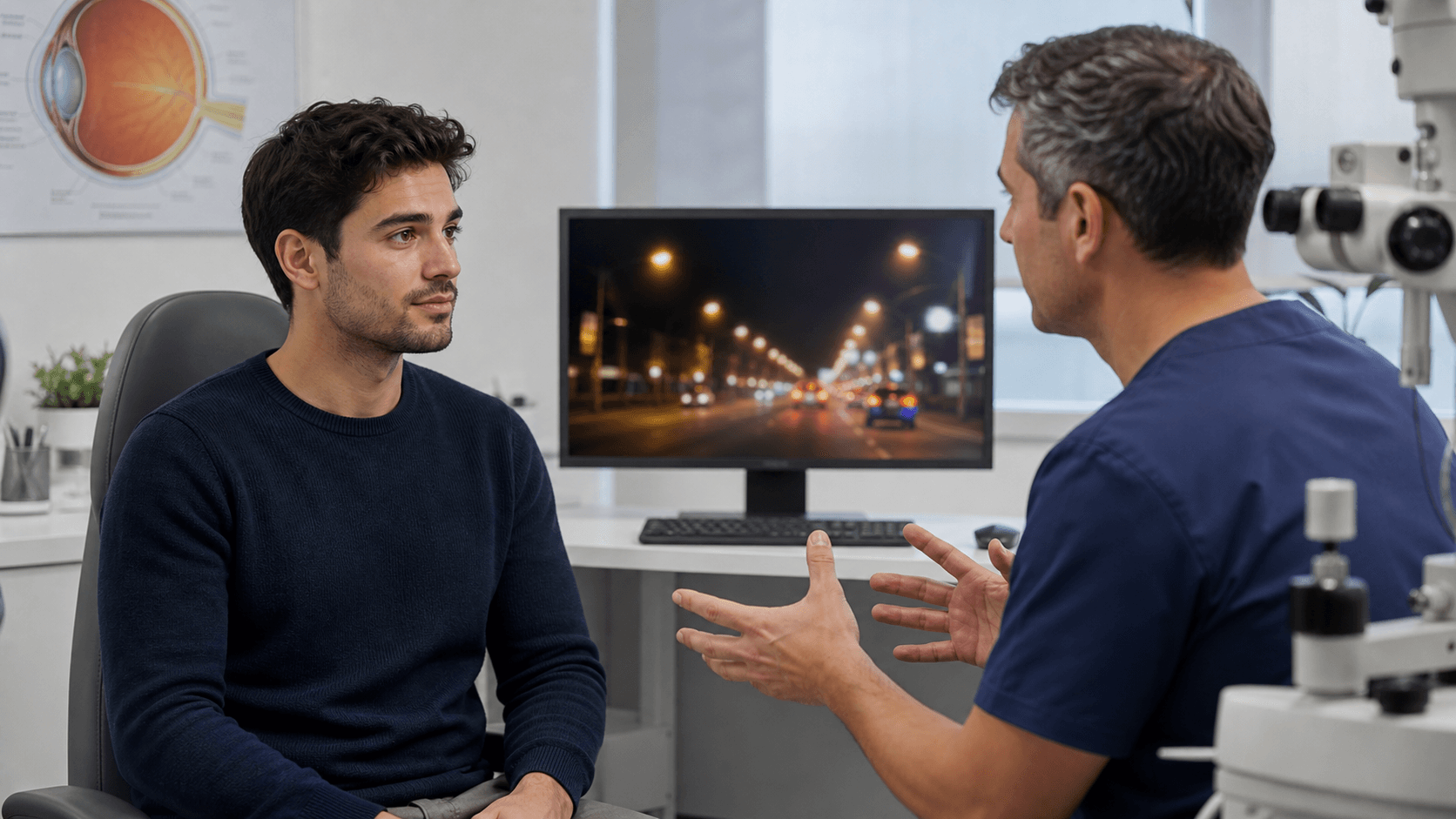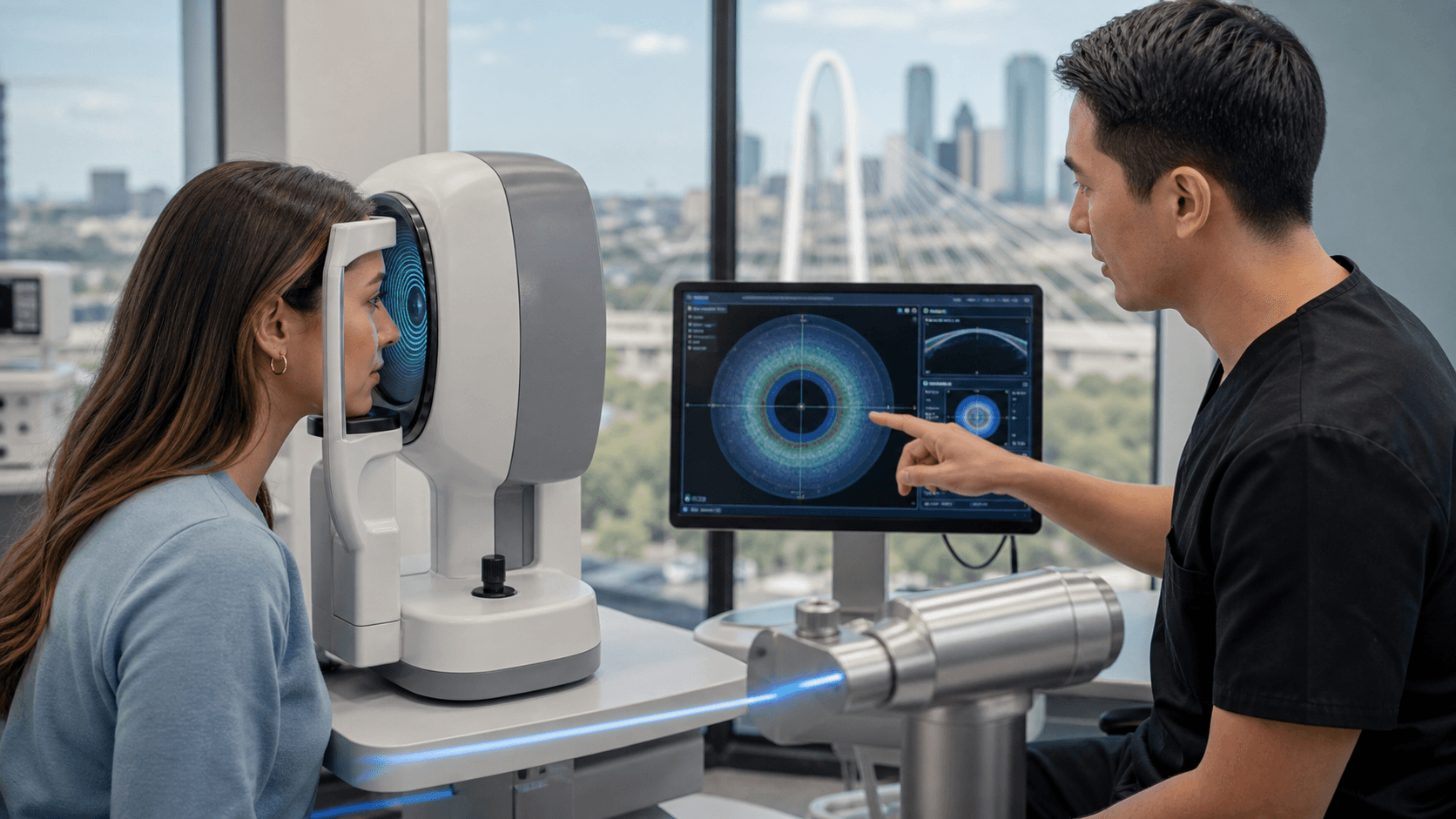
SMILE candidacy depends on a stable, treatable prescription and a healthy cornea, not simply wanting a flapless procedure. An examination also needs to address dry eye, other eye conditions, and the tasks you want to improve. A person can meet an age or prescription threshold without being a suitable surgical candidate.
Start with the SMILE eye surgery page for the procedure overview. This guide focuses on the screening decision for patients across Dallas-Fort Worth.
Does your prescription fit the proposed treatment?
SMILE is used to treat qualifying nearsightedness with or without astigmatism. It is not a general solution for farsightedness or age-related loss of near focus. Bring recent prescriptions so the clinician can assess change over time instead of relying on one measurement.
The FDA labeling for the VisuMax myopia and astigmatism indication describes patients aged 22 or older and documented prescription stability over the preceding year. Prescription limits and other requirements also apply. Ask which device and indication are being proposed; do not substitute the specifications of a different platform or a clinic in another country.
A higher prescription does not automatically mean SMILE is preferable to LASIK or EVO ICL. The tissue required, corneal measurements, and the rest of the examination need to be considered together.
Does avoiding a flap make a thin cornea suitable?
Not automatically. SMILE still changes corneal tissue. A cornea that is thin, irregular, or suspicious for ectasia needs careful evaluation before any laser procedure is recommended. The absence of a LASIK flap does not remove the need for adequate tissue and healthy corneal shape.
Ask what the maps and thickness measurements show, whether repeat testing is needed, and which finding would rule out surgery. If contact lenses have influenced the measurements, the team may need a period without them before testing again. Follow instructions for your specific lens type rather than choosing a generic interval online.
Our contact-lens preparation guide explains this part of screening. A result that needs repeating is not a reason to rush toward a different procedure.
How does dry eye affect the decision?
SMILE may produce fewer early dry-eye symptoms than LASIK in some patients, but it does not prevent dry eye or treat an existing ocular-surface disorder. The ZEISS patient overview describes both the potential benefit and the need for individual suitability assessment.
Tell the clinician about fluctuating vision, burning, watering, contact-lens intolerance, and previous dry-eye treatment. The goal is to understand the cause and obtain reliable measurements before committing to surgery. Untreated inflammation or unstable measurements may mean postponing the decision.
Ask how the team will determine that the surface is ready. "Flapless" should not be used as a substitute for evaluating symptoms.
Which work and activity details matter?
Describe contact sports, protective equipment, night driving, screen use, and exposure to dust or smoke. These details help the surgeon compare tradeoffs and set recovery restrictions; a job title alone does not select an operation.
A patient in Frisco arranging time away from work and a patient in Fort Worth organizing transport to Plano may need different practical plans. Neither should assume a promised next-day return to every activity. Ask what clearance will depend on and what backup arrangements would help if recovery takes longer.
Recovery and surgical risk deserve separate reading. Use the SMILE recovery timeline and SMILE side-effects guide rather than treating a fast-recovery headline as the whole decision.
When should another option or no surgery be considered?
If SMILE does not address the prescription or the measurements are unfavorable, glasses, contacts, a different procedure, or observation may be appropriate. An irregular cornea is not automatically a reason to switch to customized LASIK; some findings can rule out corneal laser treatment altogether.
The LASIK versus SMILE comparison covers the main differences. Ask the surgeon to explain why the recommended option is preferable for your eye, and what would make waiting more sensible.
Also ask what would happen if a prescription remained after surgery. The SMILE enhancement guide addresses reassessment and possible retreatment without promising that an enhancement will be suitable.
What should your consultation settle?
You should leave knowing whether your measurements support SMILE, whether anything needs treatment or retesting first, and what limitations are most relevant to your goals. Request a written estimate and clarify aftercare separately; a lower price does not establish candidacy.
Visionary Eye Surgery is in Plano and sees patients from across DFW, including Dallas. Confirm preparation, dilation, transport, and follow-up needs before traveling. Contact the practice for the next step. A consultation should allow an informed decision, including the choice not to have surgery.
Keep Reading
Explore this content with AI
Open this article in your preferred AI assistant for a plain-English summary, action steps, and questions to ask before booking a consultation.
Want a direct answer about your eyes? A complimentary consultation gives you a clear, written recommendation.