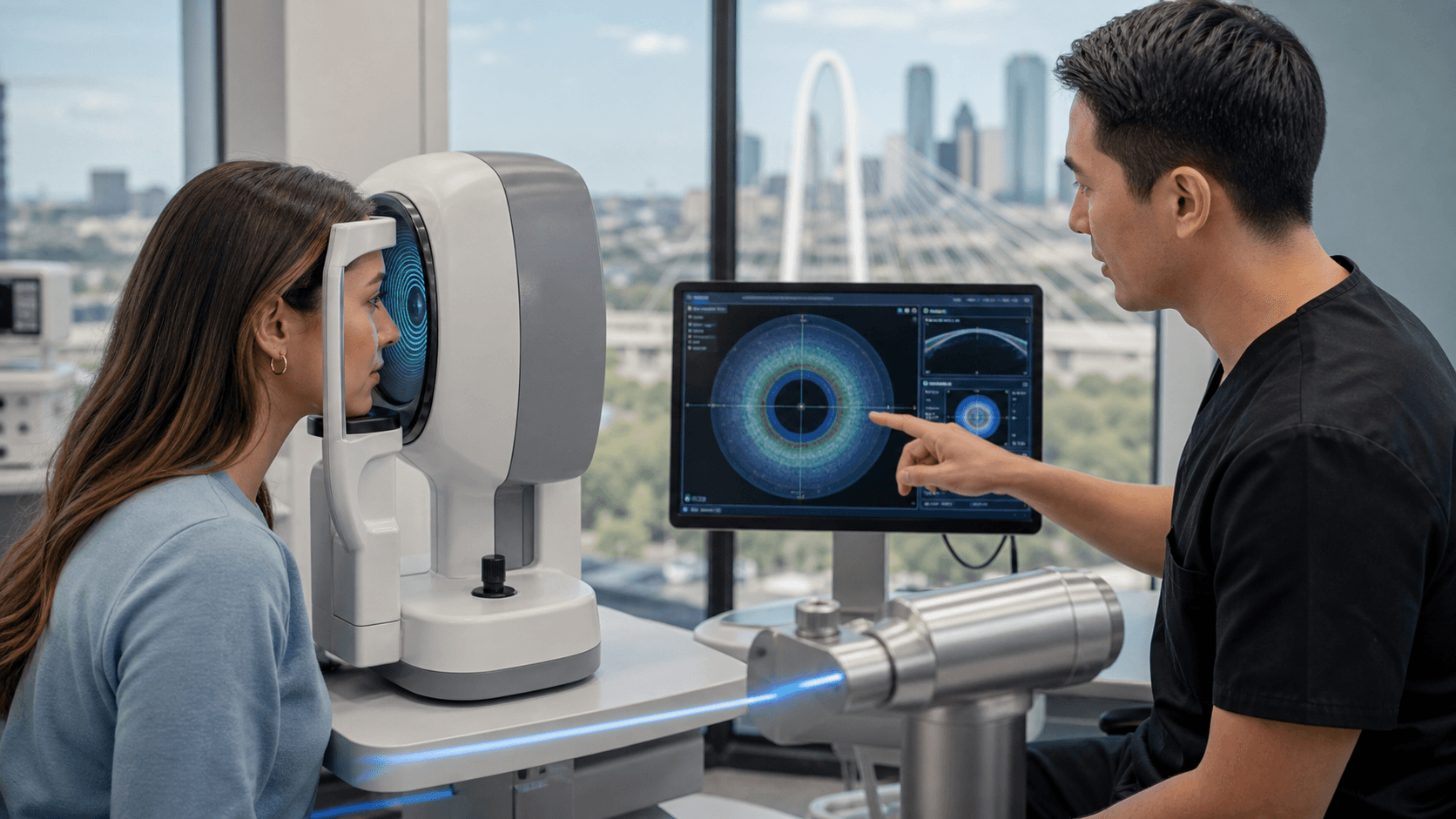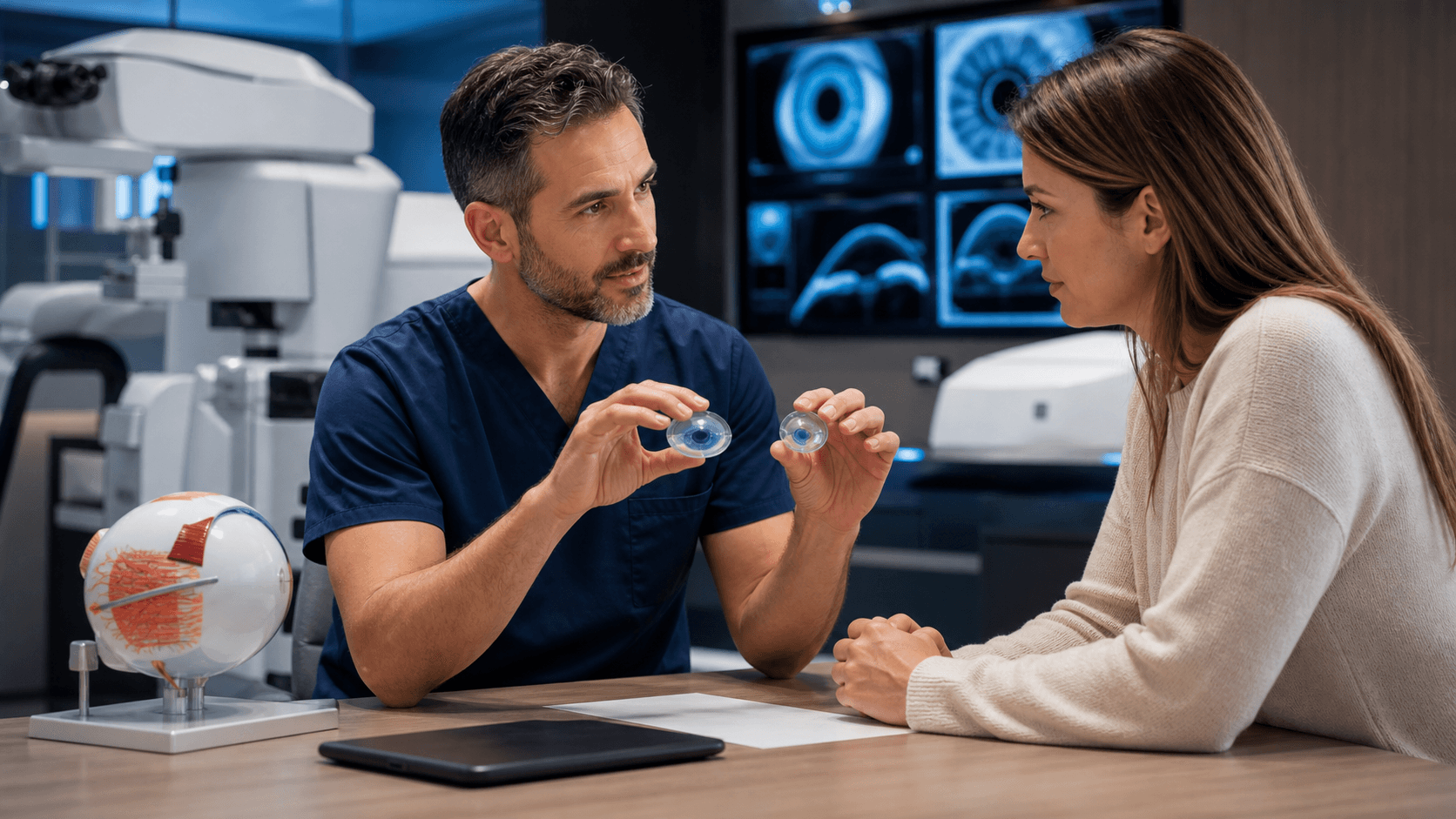
The SMILE option described by Visionary Eye Surgery treats qualifying nearsightedness, not farsightedness or age-related reading difficulty. Overseas SMILE pro indications differ from U.S. labeling, so an international announcement does not establish availability in Texas.
Use the SMILE procedure page for the local treatment overview. This article answers the narrower farsightedness question; the SMILE candidacy guide addresses the wider examination.
Why do some websites say SMILE treats farsightedness?
Procedure names can appear on international websites whose approvals differ from those in the United States. The ZEISS international SMILE page describes hyperopia treatment with SMILE pro in selected markets, but explicitly says that its information is not intended for U.S. patients and that approved indications vary by country.
The FDA's expanded U.S. SMILE indication covers myopia with or without astigmatism. That is not the same as hyperopia approval. Ask the surgeon which device, procedure, and current U.S. indication apply to your actual prescription.
Do not infer availability in Plano from an overseas announcement, a newer machine's name, or an advertisement using the general phrase "laser vision correction." Different procedures can use different laser systems even within the same practice.
Is farsightedness the same as needing reading glasses?
Not necessarily. Hyperopia is a focusing error related to the eye's optical structure. Presbyopia is the age-related loss of the natural lens's ability to change focus for near tasks. They can coexist, but they are not interchangeable diagnoses.
The National Eye Institute's explanation of refractive errors distinguishes these conditions. Someone who previously saw well at distance but now holds a phone farther away may have a different problem from someone with a longstanding farsighted prescription.
Ask the clinician to explain your distance prescription, astigmatism, and near-vision needs separately. The eye-prescription guide explains the labels on a prescription, but only an examination can establish which problem is driving your symptoms.
What options might a farsighted patient discuss instead?
Glasses or suitable contact lenses remain options. In selected eyes, a LASIK assessment may be appropriate, but being farsighted does not automatically make you eligible for laser treatment. Prescription range, corneal measurements, ocular-surface health, and expectations still matter.
The FDA's LASIK overview explains how corneal reshaping addresses refractive errors. It should not be read as a promise that surgery will restore a younger natural lens's focusing ability or remove every need for readers.
If lens aging is central to the problem, ask whether nonsurgical correction or a lens-based discussion is appropriate. Lens replacement is an intraocular operation that removes the natural lens; it is not an automatic substitute because SMILE does not fit. Our reading-glasses options guide covers that broader decision.
What should you ask before choosing a procedure?
Start with: "Which diagnosis are we trying to correct?" Then ask which tasks should improve and which may still require glasses. A distance-vision goal and a close-reading goal may call for different compromises.
Request an explanation of the proposed treatment's approved range, expected remaining correction, risks, and recovery. If the plan gives the eyes different focusing targets, ask about depth perception and how tolerance would be evaluated. A brand name alone does not explain those tradeoffs.
Ask what would make the surgeon recommend no operation. A useful recommendation can be updated glasses or waiting rather than selecting the most recently advertised technology.
How should DFW patients plan the evaluation?
Visionary Eye Surgery's practice is in Plano. If you are coming from Dallas or another DFW community, describe your near and distance symptoms when booking rather than requesting SMILE solely because you want fewer glasses.
Bring current glasses and recent prescriptions. Ask about contact-lens preparation, the time needed for testing, and transport if dilation affects driving. The consultation should clarify the problem before committing you to a procedure or a travel schedule.
Contact the practice to discuss a vision-correction evaluation. The aim is a treatment that fits your diagnosis and daily vision, not making a prescription fit a procedure name.
Keep Reading
Your exam can clarify which options fit your eyes. Visit our Plano team from anywhere in DFW.
Book a free visit