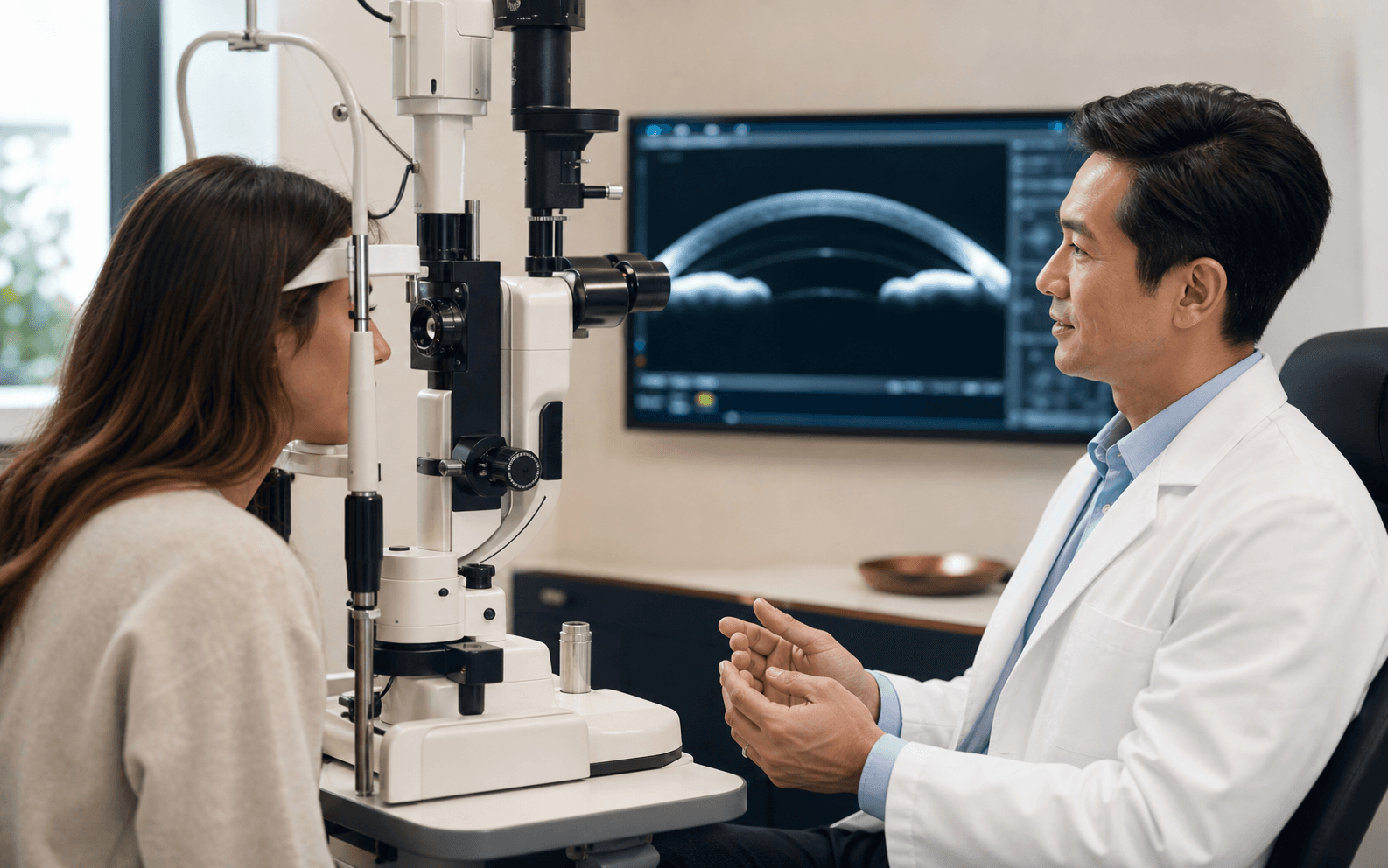
Toric EVO ICL can address eligible nearsightedness and astigmatism together. The lens is implanted behind the iris while the natural lens remains in place. Whether it is a good option depends on more than the cylinder number on a glasses prescription: the surgeon also measures the eye's internal space, checks eye health, and plans how the toric lens will be aligned.
This guide addresses the astigmatism decision. The EVO ICL procedure page covers the operation and broader candidacy; our EVO ICL cost and candidacy guide addresses the financial and general eligibility questions.
What does the toric lens correct?
Astigmatism means the eye focuses light differently in different directions. On a glasses prescription, CYL describes the amount of correction and axis describes its orientation. A toric ICL has an astigmatism-correcting component that must be selected and positioned for that eye. It is not the same device or decision as a toric lens used after cataract surgery; EVO ICL leaves the natural lens in place.
The US-approved toric EVO ICL is for specified combinations of myopia and astigmatism. A person with astigmatism but no qualifying nearsightedness should not assume this lens is indicated. Current device labeling, not an online prescription calculator, defines the eligible ranges; a consultation checks whether your measurements fit them.
Why do cylinder and axis matter during planning?
The team confirms a stable refraction and measures the cornea and front chamber of the eye. Lens size, placement, and the astigmatism axis all matter. A contact-lens or glasses prescription by itself does not reveal the internal measurements needed for an implant.
If a toric lens is not aligned as intended, some astigmatism can remain. The surgeon checks the result and position during follow-up rather than assuming the prescription is fully corrected on day one. An additional procedure to reposition, exchange, or remove an ICL can sometimes be needed. That possibility belongs in consent before surgery, even though it is not the expected path for every patient.
What if the astigmatism is irregular?
Irregular corneal shape can make the glasses prescription less reliable as a guide to the visual result. Corneal mapping helps determine whether the blur is ordinary, regular astigmatism or whether another corneal condition needs assessment first. The question is not simply whether a toric model exists; it is whether the lens would address the main cause of your blur.
Ask the surgeon what the corneal maps show, whether the proposed lens treats the measured cylinder, and what vision may still require glasses. Our prescription-numbers guide explains sphere, cylinder, and axis before the appointment.
How does this compare with other options?
LASIK or PRK reshapes the cornea. Toric EVO ICL is an implant inside the eye. Each approach has different anatomical requirements, healing, and risks; none is a default winner for everyone with astigmatism. A patient with dry-eye concerns or a cornea that does not favor laser treatment may still need an implant-specific assessment before choosing ICL. The EVO ICL versus LASIK guide covers that broader comparison.
For adults considering lens replacement instead, age-related near vision and the natural lens become separate decision points. Toric EVO ICL does not restore youthful reading focus or prevent a future cataract. A lens-replacement discussion may be more relevant when the natural lens itself is part of the problem. Dallas patients can also review the EVO ICL visit guide before traveling to Plano.
What should a DFW patient ask at consultation?
Ask which part of your prescription is myopia and which is astigmatism; whether the corneal shape is regular; what internal measurements support the lens choice; and how the team will check alignment after surgery. Ask what residual prescription, halos, pressure changes, or additional surgery could mean for your particular eye. If you travel to the Plano office from another DFW city, confirm the follow-up schedule and whom to contact for new symptoms.
The useful outcome of that visit is a documented comparison, including the option to keep glasses or contacts. A toric label alone is not a recommendation to operate.
Sources
- FDA: EVO/EVO+ ICL and toric ICL original indication
- FDA: later age-range expansion for EVO ICL and toric ICL
- FDA: EVO ICL patient information booklet
Keep Reading
Your exam can clarify which options fit your eyes. Visit our Plano team from anywhere in DFW.
Book a free visit