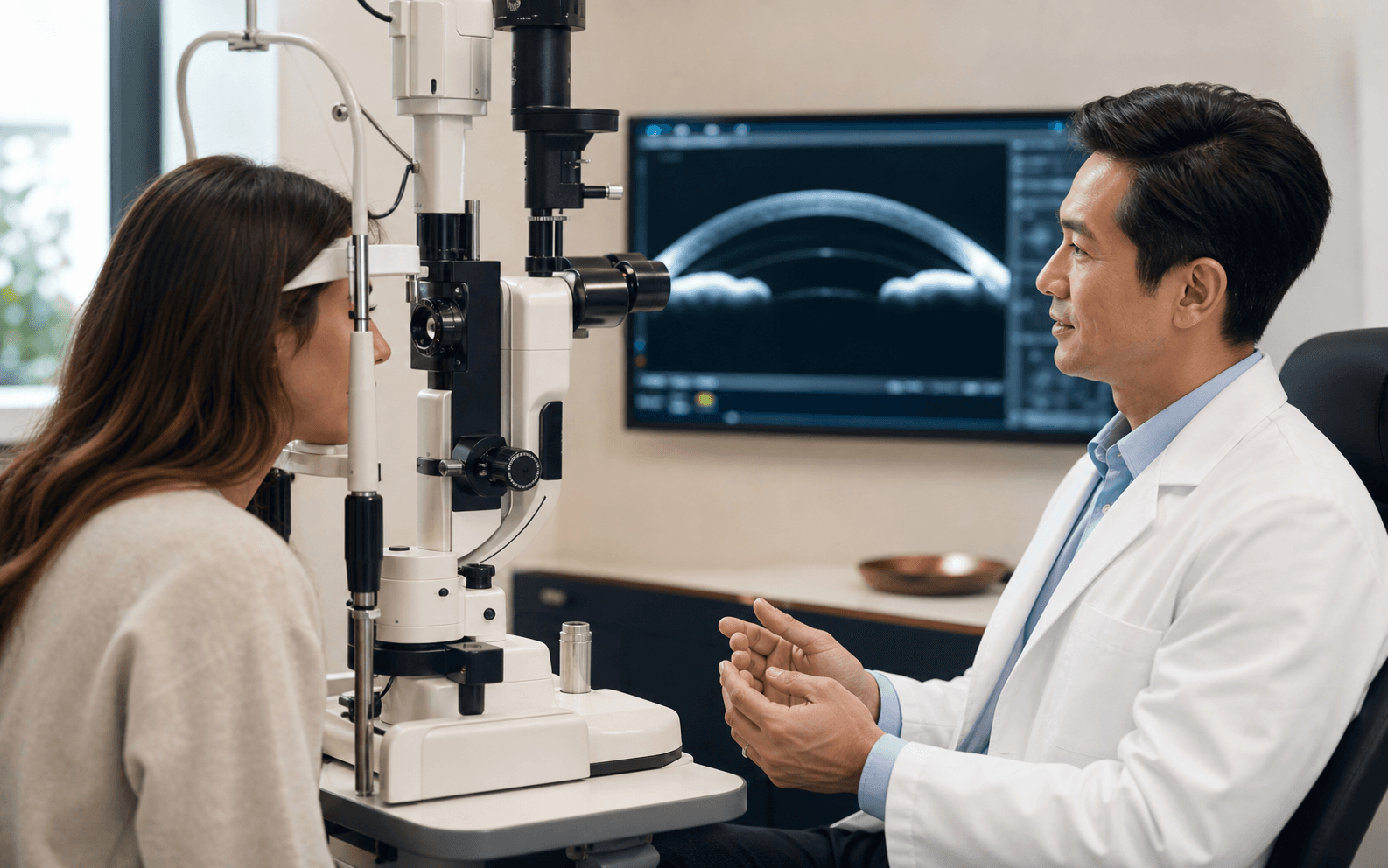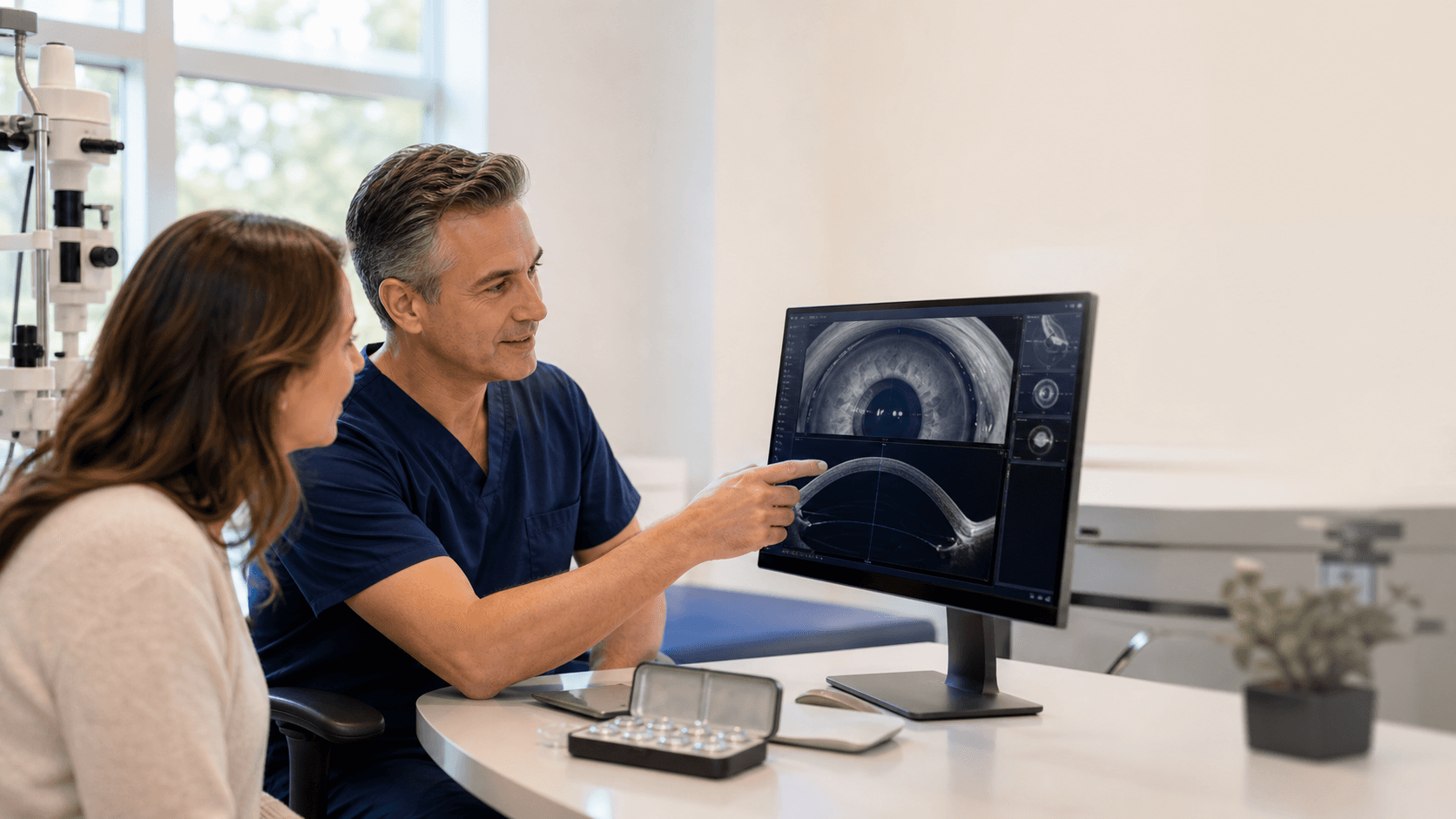
EVO ICL vault is the space between the implanted lens and the eye's natural lens. It is one part of checking how the implant fits. A vault measurement needs to be interpreted with the rest of the eye examination; a number found online cannot tell you whether your own lens is safe.
For the full treatment overview, start with EVO ICL at Visionary Eye Surgery. This article focuses on measurements and their interpretation, not a second general candidacy or recovery guide.
Is vault the same as anterior chamber depth?
No. Anterior chamber depth is a preoperative anatomical measurement used in evaluating whether there is appropriate space for an implant. Vault describes the relationship between the implanted ICL and the natural lens after placement. They answer different questions and should not be used interchangeably.
The FDA's EVO ICL information explains why eye shape and the available space matter. An evaluation also considers findings beyond a single distance measurement. Ask the team to point out which measurement is being discussed instead of assuming every number on a scan refers to vault.
A useful question is: "Is this a measurement used to plan the implant, or a measurement of how an existing implant fits?" That distinction can prevent unnecessary worry when comparing a preoperative report with a postoperative scan.
Why does the surgeon monitor the space around the lens?
The implant needs to coexist with the natural lens, iris, and fluid-drainage structures. An unusually high or low vault can prompt closer assessment, but it is not automatically the same thing as a complication. Eye pressure, the drainage angle, lens clarity, and other examination findings affect interpretation.
In the US EVO ICL clinical trial, investigators evaluated vault alongside pressure, endothelial cells, lens status, and other findings. The study included cases where lens exchange was performed for angle narrowing. This illustrates why follow-up is broader than checking whether the patient can read the eye chart. It does not establish a treatment rule for an individual patient.
Avoid comparing only your number with another person's forum post. Ask what the measurement means in the context of your anatomy, whether it has changed, and what the clinician plans to watch.
Does an unexpected measurement always require lens exchange?
No. A decision may involve observation, repeat measurements, or an intervention, depending on the complete findings. Removal or exchange is another operation with its own risks, not a simple reset. Only an examining clinician can determine whether action is needed.
Ask what finding would change the current plan, how soon the next examination should happen, and whether any symptoms warrant an earlier assessment. If the clinician recommends an exchange, ask why observation is not preferred and what the proposed replacement is intended to improve.
The long-term EVO ICL guide covers reasons an implant may eventually be removed or exchanged. Here, the narrower question is how the fit is being evaluated today.
Which records are helpful for a second opinion?
Request the implant identification information, lens size and power, operative report, and available preoperative and postoperative measurements. Include the dates of the measurements and any pressure readings or medication changes the treating team documented.
Bring the reports rather than a handwritten list of isolated values if possible. Ask the receiving clinic which files it can review and whether images need to be transferred separately from the visit summary. A photograph of a report can be a useful starting point, but may not contain all the information needed for a decision.
Do not alter prescribed drops while gathering records. If vision changes suddenly or significant pain develops, seek urgent assessment instead of waiting to assemble a complete file.
How should DFW patients plan these visits?
Patients from Dallas, Irving, or Arlington should ask which visits need the surgeon, which tests will be repeated, and where urgent concerns should be assessed. Good distance vision is not a reason to skip a scheduled implant check.
Visionary Eye Surgery is located in Plano. A service-area page does not mean there is an office in each city. Before arranging work leave or transport, confirm the actual location and whether dilation is expected. Our EVO ICL visit-planning guide covers the broader appointment sequence.
What should you take away from a vault discussion?
You should understand what was measured, whether the finding is stable, which other examination results matter, and what happens next. Ask the team to write the follow-up plan in plain language. A reassuring explanation should include the reason for reassurance, not merely say that the number is "normal."
Contact the practice for an evaluation or help identifying the records to bring. Severe eye pain, sudden worsening of vision, a new curtain or shadow, or new flashes with floaters needs urgent eye care. A blog cannot assess an implant or exclude a complication.
Keep Reading
Explore this content with AI
Open this article in your preferred AI assistant for a plain-English summary, action steps, and questions to ask before booking a consultation.
Want a direct answer about your eyes? A complimentary consultation gives you a clear, written recommendation.