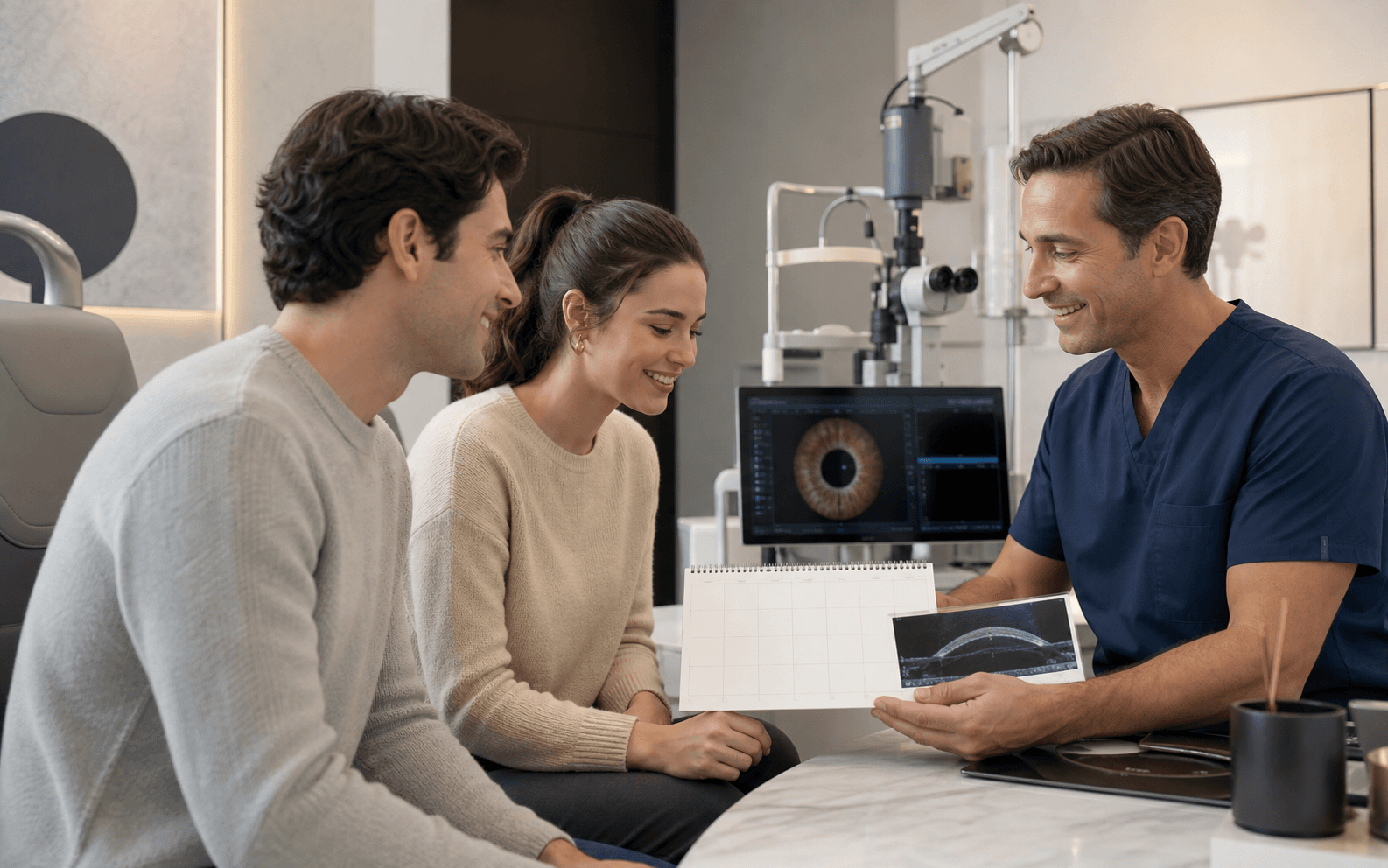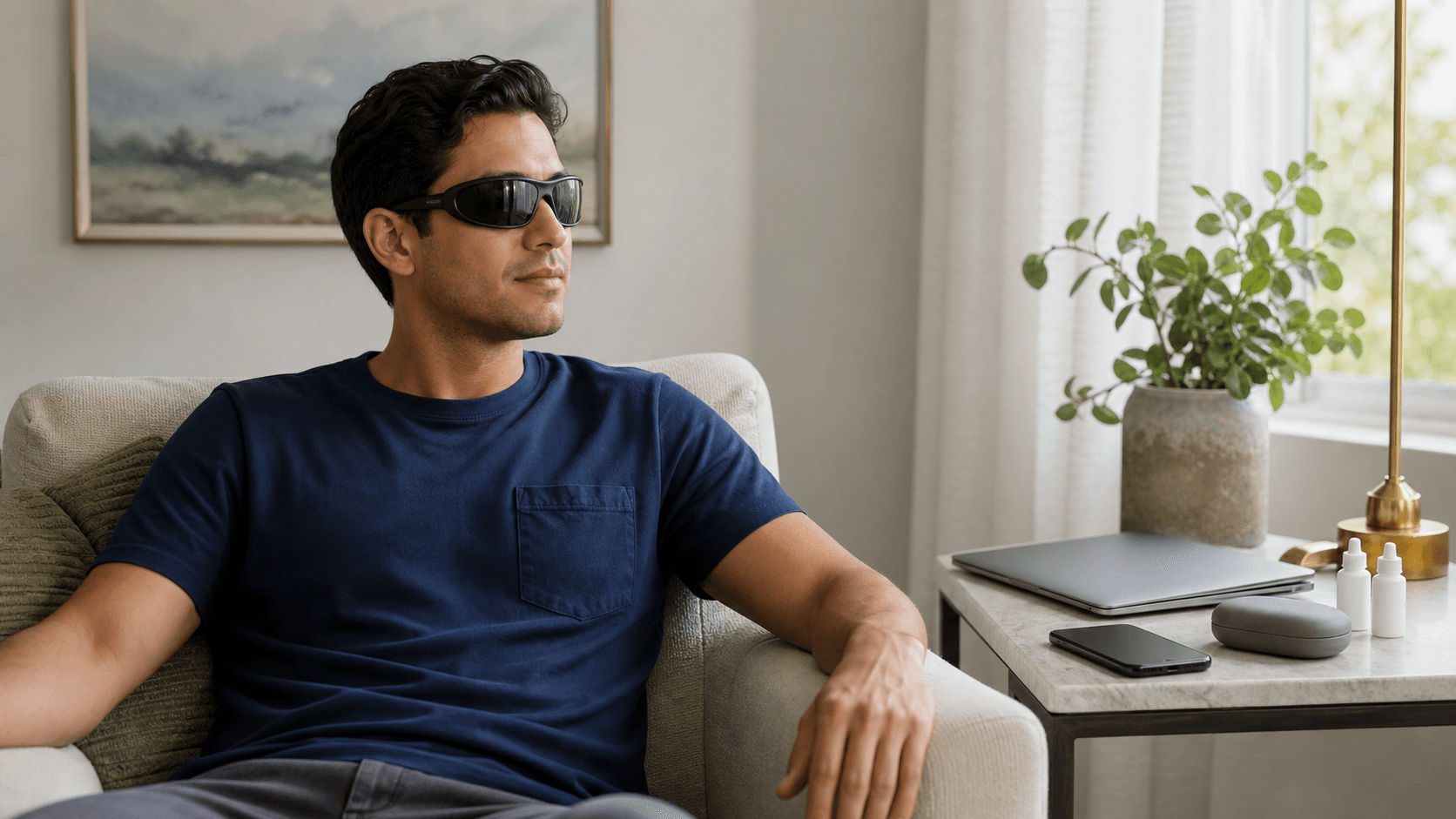
Many patients notice a meaningful improvement in vision soon after EVO ICL surgery, but "seeing better" and "being fully healed" are not the same thing. Recovery includes more than a vision check. We also monitor eye pressure, inflammation, lens position, the space between the EVO ICL and the natural lens, and the health of the front of the eye.
This guide explains the usual checkpoints after EVO ICL surgery at Visionary Eye Surgery in Plano. It is not a personal clearance schedule. Your instructions may be different based on your anatomy, prescription, pressure response, and exam findings.
The short answer
Many EVO ICL patients can see more clearly within the first day or two and may feel ready for desk work soon afterward. Vision can still fluctuate, and scheduled follow-up matters even when the eye feels comfortable.
The safest way to think about recovery is:
- First day: rest, use prescribed medication, and have someone else drive.
- Early follow-up: confirm pressure, lens position, and early healing.
- First week: vision often becomes more consistent, but activity limits still come from your surgeon.
- First month and beyond: confirm stability and continue the follow-up schedule recommended for an implanted lens.
Surgery day
Vision is often blurry immediately after surgery. Dilating medication, the operating microscope, surface dryness, and normal early inflammation can all affect what you see. Light sensitivity, a scratchy sensation, or mild awareness of the eye may occur.
Plan for another adult to drive you home. Use your prescribed drops exactly as directed, keep water and contaminants away from the eye, and do not rub it. Follow the written instructions from your surgical team rather than substituting a generic online schedule.
The goal on surgery day is not to test how much you can do. It is to protect the eye and arrive for the early examination.
The first 24 hours
Some patients wake up the next morning surprised by how much they can see. Others need more time before the image feels sharp and balanced. Both experiences can fall within an early recovery period, which is why the examination matters more than a single vision impression.
At an early follow-up, the surgeon may assess:
- Uncorrected and corrected vision.
- Eye pressure.
- Inflammation.
- Corneal clarity.
- EVO ICL position and vault.
- The drainage angle and front-of-eye anatomy.
- Whether the prescribed drop plan should change.
Do not skip this visit because vision seems good. A pressure change is not always obvious without measurement.
Days two through seven
During the first week, many patients notice that vision becomes more dependable. Mild fluctuation can still happen, especially with dryness, extended screen use, or changing light. Night driving may feel different while the visual system adjusts.
Return-to-work timing depends on what your job requires. Quiet computer work and a dusty job site are not the same recovery environment. Driving also requires more than reading an eye chart; you need adequate vision, comfort, and your surgeon's clearance.
Continue to avoid rubbing the eye. Ask before swimming, using a hot tub, applying eye makeup, returning to contact sports, or working in dusty or contaminated environments. There is no responsible universal calendar that fits every eye and every activity.
Weeks two through four
By this stage, the conversation shifts from early protection to stability. Your surgeon checks whether vision, pressure, inflammation, and lens position are behaving as expected. If you have toric EVO ICL for astigmatism, alignment may also be reviewed.
Some patients still notice halos, glare, or changing clarity in dim light. These symptoms should be discussed rather than dismissed. Our separate guide explains EVO ICL halos, night vision, and risk factors in more detail.
Keep every scheduled visit even if you feel fully recovered. EVO ICL is designed as a long-term implant, so ongoing eye examinations remain part of responsible care.
When can I exercise after EVO ICL?
Your surgeon should give you an activity plan based on the operation and the first follow-up findings. A safe progression usually separates light daily movement from strenuous lifting, high-impact exercise, water exposure, and activities where the eye could be hit.
Before resuming an activity, ask:
- Could sweat, dust, or water get into my eye?
- Could I be struck in the face or eye?
- Does this activity involve straining or a major change in pressure?
- Has my surgeon checked the eye since surgery?
Those questions are more useful than copying a day number from another patient's recovery.
What symptoms need an urgent call?
Contact the surgical team promptly for symptoms that are severe, worsening, or different from the instructions you were given. Urgent warning signs can include:
- A sudden or significant decrease in vision.
- Increasing eye pain rather than mild irritation.
- Marked redness or discharge.
- Severe headache, nausea, or vomiting with visual symptoms.
- A sudden increase in flashes, floaters, or a curtain-like shadow.
- New trauma to the eye.
Do not wait for a routine appointment if the team has instructed you to call.
Why follow-up matters after the quick recovery
The EVO ICL sits inside the eye between the iris and natural lens. The FDA patient information for EVO ICL describes potential risks that include pressure changes, glare or halos, cataract formation, endothelial cell loss, inflammation, and the possibility of additional treatment. These risks do not mean the procedure is wrong for a qualified patient. They explain why detailed screening and follow-up are part of the procedure.
At your EVO ICL consultation in Plano, we measure more than prescription. Anterior chamber depth, angle anatomy, endothelial health, lens sizing, retinal health, and the condition of the natural lens all influence the recommendation.
Recovery is part of candidacy
The best procedure is not simply the one with the quickest headline recovery. It is the one that fits your eye and can be followed safely.
If your prescription is high, your cornea is thin, or contact lenses aggravate dry eye, start with our EVO ICL cost and candidacy guide. If you are still comparing treatments, use the EVO ICL, PRK, and LASIK comparison.
For a recovery plan based on your measurements and daily responsibilities, schedule a consultation with Visionary Eye Surgery in Plano.
Medical sources
Your exam can clarify which options fit your eyes. Visit our Plano team from anywhere in DFW.
Book a free visit