EVO ICL is not a one-appointment process. A patient should expect a detailed candidacy and sizing evaluation, the surgery visit, an eye-pressure check shortly after surgery, and early postoperative examinations. Additional follow-up depends on healing, findings, the surgeon's protocol, and long-term monitoring needs.
That schedule matters when the patient is traveling to Plano from Fort Worth, Denton, Arlington, Dallas, or another part of the Metroplex. The safe plan is to understand which appointments must happen at the surgical practice before choosing a date, not to assume every step can be combined.
What is the minimum sequence to plan for?
The exact calendar varies, but the EVO ICL patient information supplied by STAAR describes several important stages:
| Stage | What the visit is for |
|---|---|
| Candidacy and sizing evaluation | Confirm prescription stability, eye health, anterior-chamber anatomy, corneal endothelial health, and lens sizing measurements |
| Surgery day | Implant the lens and complete immediate postoperative instructions |
| Pressure check 1 to 6 hours after surgery | Detect an early pressure rise that may need prompt treatment |
| Day-after examination | Check vision, pressure, the incision, inflammation, and lens position |
| Approximately one-week examination | Recheck pressure, healing, medication use, and the early visual result |
| Later follow-up | Monitor stability and eye health at intervals selected by the surgeon |
This is not a guaranteed appointment count. Measurements sometimes need to be repeated, the two eyes may be handled according to a practice-specific plan, and an unexpected finding can add a visit. Long-term examinations remain important even when vision feels excellent.
Why does EVO ICL need more planning than an ordinary eye exam?
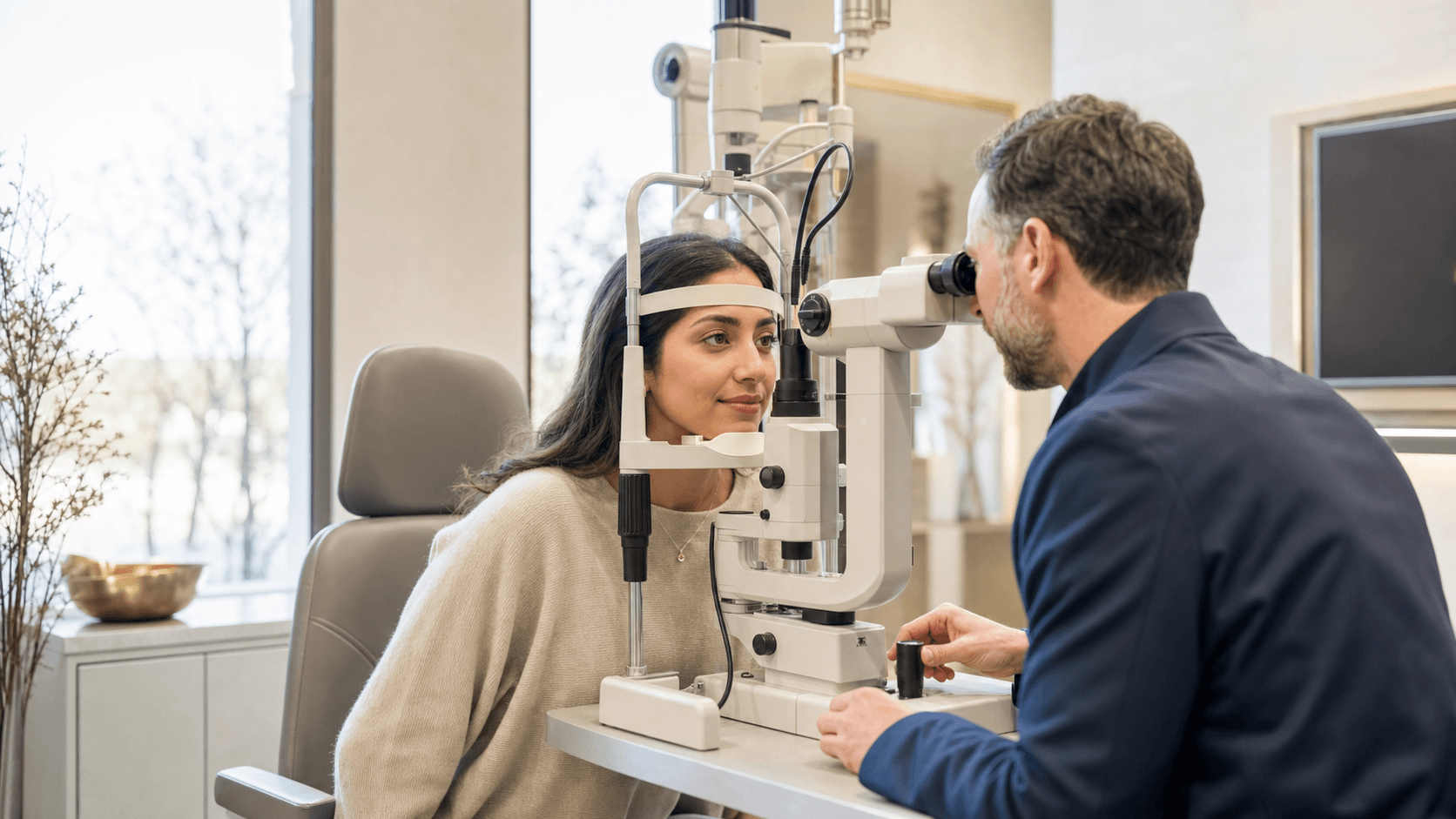
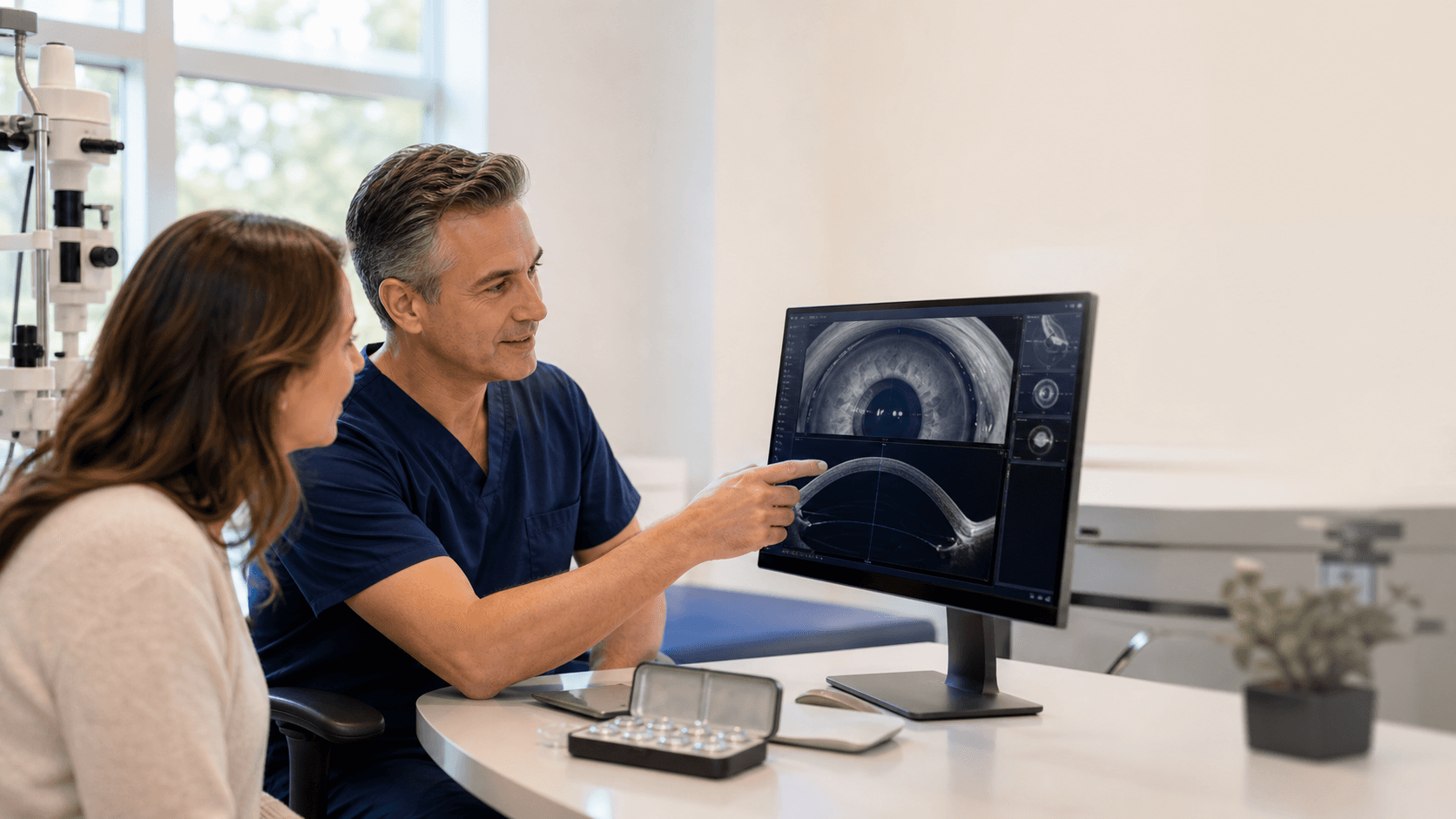
EVO ICL is placed inside the eye, behind the iris and in front of the natural lens. The evaluation must confirm more than the glasses prescription.
Testing can include:
- Refraction and prescription-stability review.
- Corneal shape and thickness.
- Anterior-chamber measurements used for candidacy and sizing.
- Corneal endothelial cell assessment.
- Eye pressure.
- Dilated retinal and lens evaluation.
- Tear-film and general ocular-health review.
If contact lenses are affecting the measurements, testing may need to wait until the eyes stabilize. Follow the practice's exact lens-removal instructions rather than applying a timeline from another clinic. Our separate guide explains why contacts must come out before LASIK or EVO ICL testing.
The examination also assesses how the implant fits. Our EVO ICL vault guide explains the measurement and why it must be interpreted with the rest of the examination, not used to replace follow-up.
Why is pressure checked a few hours after surgery?
The official EVO ICL patient booklet instructs physicians to check eye pressure between one and six hours after surgery. Pressure can rise early, and a significant increase needs prompt assessment and treatment to reduce the risk of optic-nerve injury.
This is why a patient should not plan to leave immediately for a long drive home without confirming the day-of-surgery schedule. The pressure check is a clinical safety step, not an optional convenience visit.
Why are the next-day and one-week checks important?
Clear vision the morning after surgery does not prove that every healing measure is normal. Early examinations can assess:
- Eye pressure.
- Lens position and space between the EVO ICL and natural lens.
- Corneal clarity.
- Inflammation.
- The incision.
- Medication use.
- Visual acuity and symptoms.
The manufacturer's patient information describes checks the day after surgery and approximately one week later. A surgeon may add a one-month or other visit based on the practice protocol and the eye.
Can long-distance DFW patients combine appointments?
Some testing may occur during one comprehensive evaluation, but no patient should assume that consultation, final sizing, surgery, and all early follow-up can be compressed into one trip.
Patients coming from Fort Worth, Denton, or Arlington should ask for the likely sequence before selecting surgery dates. Patients traveling from Dallas should still protect enough time for traffic, dilation, diagnostic testing, and the same-day pressure check.
Ask the team:
- Can prior records be sent before the first visit?
- Will the first examination include all sizing measurements?
- When is the same-day pressure check?
- Is a next-day visit required in Plano?
- Which later follow-ups must occur with the operating surgeon?
- When can routine monitoring be coordinated closer to home?
- What would cause an extra visit?
These questions make the travel plan more accurate without asking the clinical team to remove a safety check.
Do you need a driver?
Yes for surgery day. The EVO ICL patient information states that patients should arrange transportation and not drive themselves home immediately after surgery.
Driving later depends on vision, comfort, medication effects, and the surgeon's clearance. Do not use a predicted recovery time as permission to drive, especially when the route includes high-speed highways or a long distance.
Patients should also ask whether dilation during the consultation makes a driver advisable for that separate visit.
What should you bring to each stage?
For the evaluation:
- Current glasses and prescription history.
- Contact-lens brand and type.
- Prior eye records or corneal measurements.
- Medication and allergy list.
- A list of work, driving, and night-vision demands.
For surgery and early follow-up:
- A responsible driver.
- Sunglasses.
- The prescribed medication list and instructions.
- Questions or a written symptom log.
- Emergency contact information supplied by the practice.
When should you call rather than wait for the next visit?
Contact the surgical team promptly for severe pain, a sudden decrease in vision, increasing redness, or another symptom identified in the postoperative instructions. Do not wait for the scheduled appointment when a meaningful change occurs.
EVO ICL follow-up is not busywork. It is how the surgeon confirms that pressure, lens position, inflammation, and vision remain appropriate during early healing and over time.
Review the EVO ICL procedure page for candidacy and treatment ownership, the EVO ICL recovery guide for the healing sequence, and how long EVO ICL lasts for long-term monitoring.
Sources
- STAAR Surgical: EVO ICL patient information booklet
- U.S. Food and Drug Administration: EVO ICL patient labeling
- FDA post-approval study database: EVO/EVO+ ICL
This article describes a planning framework, not a guaranteed schedule. Visionary Eye will provide the actual visit sequence after reviewing the patient's eyes and travel needs.
Your exam can clarify which options fit your eyes. Visit our Plano team from anywhere in DFW.
Book a free visit