PRK can be considered for selected eyes with a residual prescription after LASIK, but repeat surgery requires a new assessment of vision, corneal shape, and tissue. Needing glasses again does not, by itself, mean that another laser treatment is appropriate.
The PRK/ASA procedure page explains surface treatment. This guide focuses on retreatment after LASIK, not choosing your first operation or enhancement after SMILE.
Why has vision changed since LASIK?
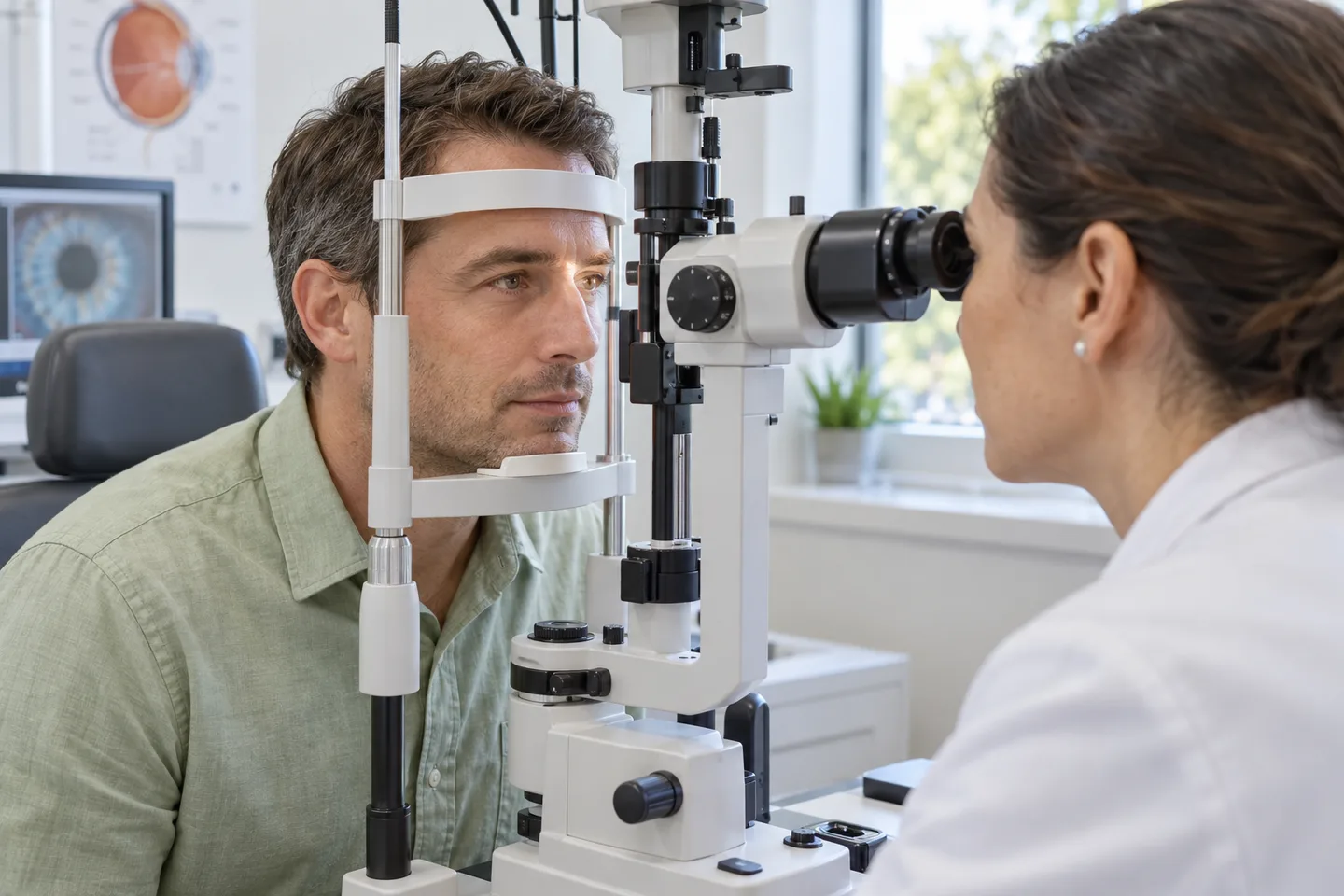
An examination needs to identify the reason before discussing correction. A residual prescription, an unstable tear film, age-related reading difficulty, lens changes, or a problem with the cornea may call for different responses.
Tell the clinician when the change began, whether it varies through the day, and whether new glasses restore comfortable vision. Bring the original LASIK report, any enhancement records, and recent prescriptions if available. These help the team understand what was treated rather than assuming every blurry eye needs a touch-up.
The FDA's postoperative LASIK guidance emphasizes allowing healing and stable measurements before considering further treatment. A calendar date alone is not sufficient. Sudden vision loss or severe pain needs prompt eye care, not a routine enhancement appointment.
How is PRK different from lifting the LASIK flap?
With a flap-lift enhancement, the surgeon reopens the existing LASIK flap and treats beneath it. With PRK, treatment is performed at the corneal surface after removing its outer cell layer, without reopening that flap. PRK does not erase the flap or restore tissue removed by the first operation.
A prospective study comparing retreatment approaches reported outcomes for flap-lift LASIK and PRK after previous corneal refractive surgery. It involved a small selected group, not a rule that one approach is best for every patient. The decision depends on anatomy, prior treatment, the problem being corrected, and the surgeon's assessment.
Ask why the recommended approach fits your eye and why the alternative is less suitable. A procedure being possible is different from its expected benefit outweighing its risk.
What needs checking before another laser treatment?
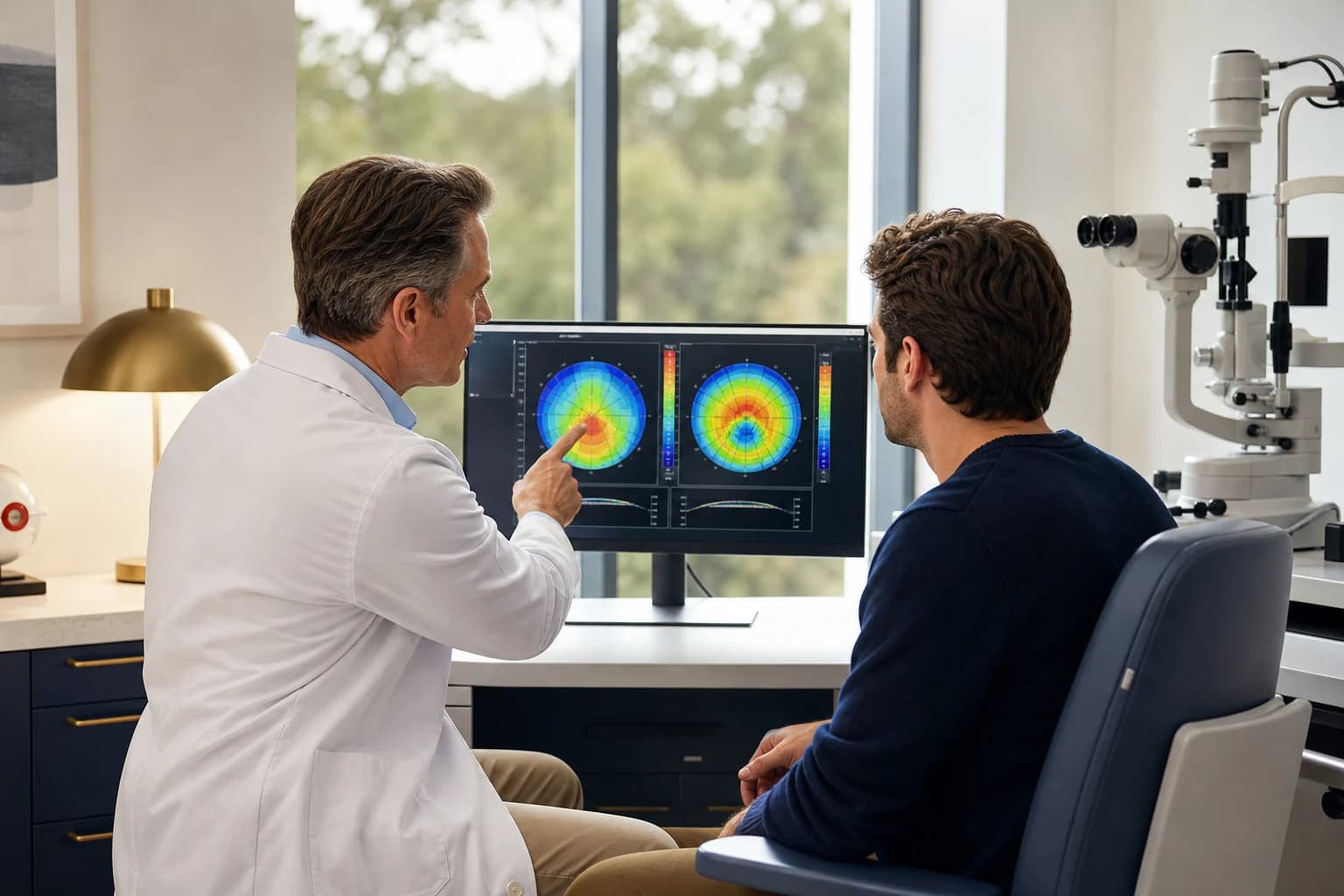
Ask how the assessment will establish a stable prescription, a healthy ocular surface, and adequate tissue for the proposed correction. The corneal shape also matters: a thickness number alone cannot establish safety.
The surgeon should explain whether the visual problem is actually attributable to the prescription and what improvement is realistic. If glasses do not restore the expected vision, that deserves investigation rather than assuming laser correction will solve it.
Discuss the original flap and treatment details, any corneal irregularity, and whether further tissue removal would be inadvisable. A published PRK-after-LASIK case series documents this use of PRK, but research on eligible eyes does not establish that an individual previously treated eye qualifies.
It may be reasonable to use glasses, manage an ocular-surface problem, obtain another opinion, or decline additional surgery. An enhancement is another operation with its own consent process, not a guaranteed final step of the first LASIK procedure.
Will recovery be like the first LASIK procedure?
Do not plan around your previous LASIK experience. Surface healing can involve discomfort, a temporary bandage contact lens, and fluctuating vision. The PRK recovery guide explains the general pattern, while your surgeon must set the expectations for a previously treated eye.
Ask about haze, infection, delayed healing, dry-eye symptoms, and a result that still needs glasses. Avoid treating a published study's success rate as your personal forecast. Request written activity restrictions, follow-up arrangements, and instructions for symptoms that require urgent contact.
The bandage-lens guide covers questions to ask if a protective lens is used. Do not remove it or change postoperative medication yourself.
How do you plan an enhancement assessment from DFW?
Visionary Eye Surgery is based in Plano. If you are traveling from Richardson or another DFW community, ask how to send your prior surgical records and whether the team evaluates your particular retreatment situation before scheduling.
Confirm contact-lens preparation instructions, transport after dilation, and whether repeat measurements may require another visit. Ask for the total estimate and how any policy from your original surgeon applies; a prior LASIK package does not automatically cover treatment elsewhere.
Contact the practice for an assessment. The first decision is what caused the change in vision, then whether any additional procedure is justified.
Keep Reading
Your exam can clarify which options fit your eyes. Visit our Plano team from anywhere in DFW.
Book a free visit