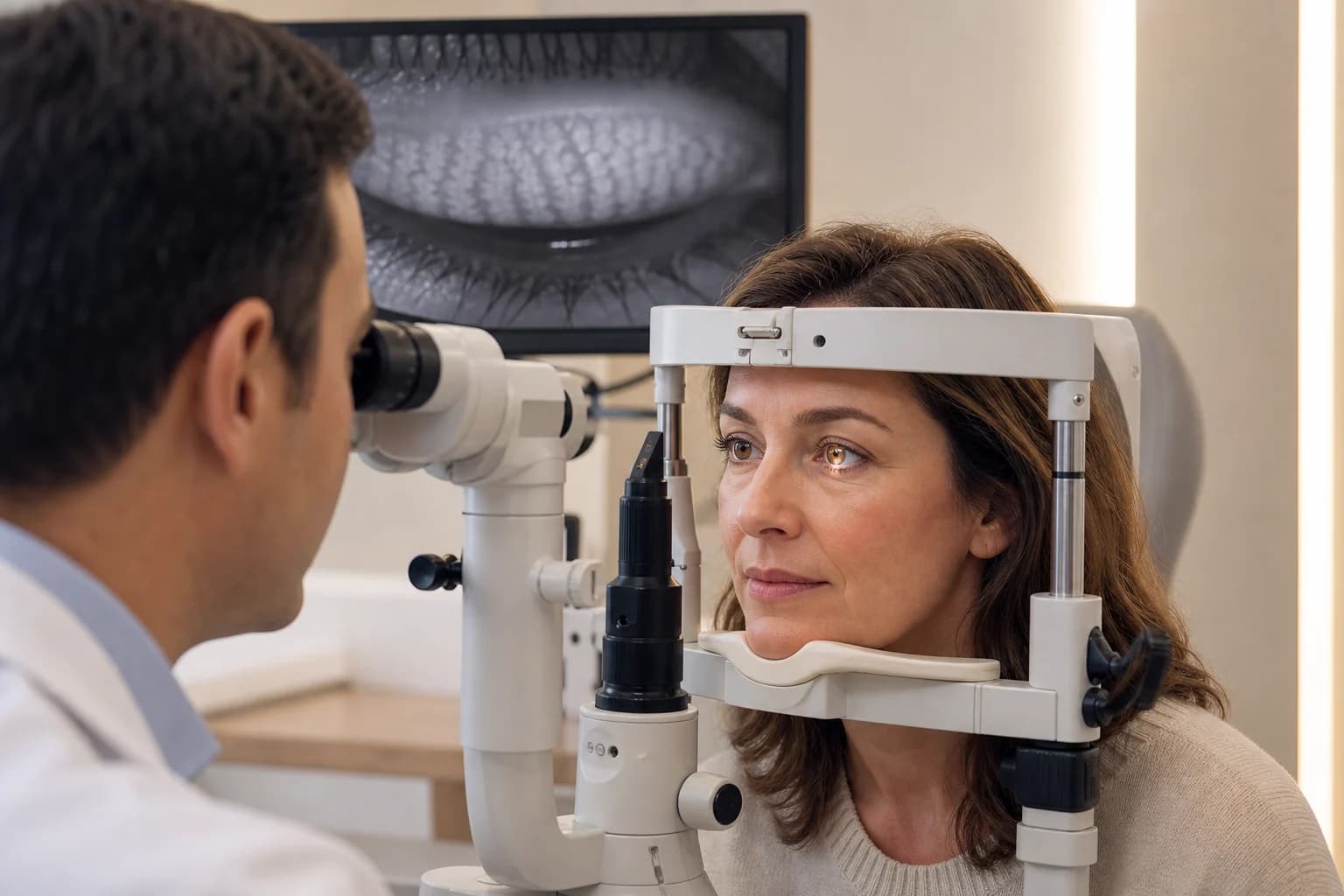
IPL and thermal pulsation are different approaches that may be considered for selected patients with meibomian gland dysfunction. IPL uses pulses of light applied to the skin with appropriate protection. Thermal pulsation applies localized heat and pressure. Neither is automatically the best treatment for every person with dry-eye symptoms.
The IPL treatment page explains that service. This comparison helps you ask why a particular approach is being recommended, not choose a device before the diagnosis is established.
Are both treatments aimed at the same problem?
They may be considered within care for gland-related evaporative dry eye, but dry eye can involve several mechanisms. Aqueous tear deficiency, eyelid inflammation, and other findings may require a different or combined plan.
Ask what the examination found: is the main issue gland function, tear production, inflammation, or something else? The dry-eye evaluation page explains assessment. A symptom such as burning or watering does not by itself identify which device, if any, would help.
How do the methods differ?
An IPL system delivers controlled light to skin under a device-specific protocol. Thermal-pulsation systems use heat and pressure to address gland obstruction. The exact system, indication, protective measures, and operator training matter; the category name is not a complete description.
Ask the clinician to name the device and explain its intended use. Do not infer that a cosmetic IPL treatment or an at-home warming product is equivalent to an eye-care treatment. This article does not establish that Visionary offers LipiFlow or any other thermal-pulsation system.
Is one proven better for everyone?
No universal winner follows from the device names. Evidence should be considered alongside the diagnosis, selection criteria, treatment protocol, and the outcome being measured. A change in one gland measurement is not necessarily the same as the improvement you want during a workday.
Ask what success would mean for you and when it will be reassessed. Avoid relying on an advertisement that promises a fixed number of symptom-free months or implies that a treatment permanently cures every form of dry eye.
What affects suitability and the overall plan?
Ask about contraindications and precautions for the specific device, including relevant skin findings, medicines, and eye conditions. Do not withhold a medication or skin-treatment history because the visit is for the eyes.
Also ask which home care or prescribed treatments remain part of the plan. Do not discontinue existing treatment simply because an in-office procedure is being considered. The recommendation should explain how the proposed session fits with the rest of your care.
What should DFW patients ask before booking a course?
Request the reason for the recommendation, expected follow-up, total estimated course cost, and what happens if symptoms do not improve. For care in Plano from elsewhere in DFW, ask how many visits are anticipated without treating an estimate as a guaranteed outcome.
A consultation can determine whether a device treatment is appropriate or whether another cause needs attention first. The useful decision is not stronger versus weaker; it is whether the proposed treatment addresses the findings that explain your symptoms.
Sources
- FDA: IPL devices for managing dry eye
- FDA: Thermal-pulsation device indication
- AAO: Thermal-pulsation evidence assessment
Keep reading
Your exam can clarify which options fit your eyes. Visit our Plano team from anywhere in DFW.
Book a free visit