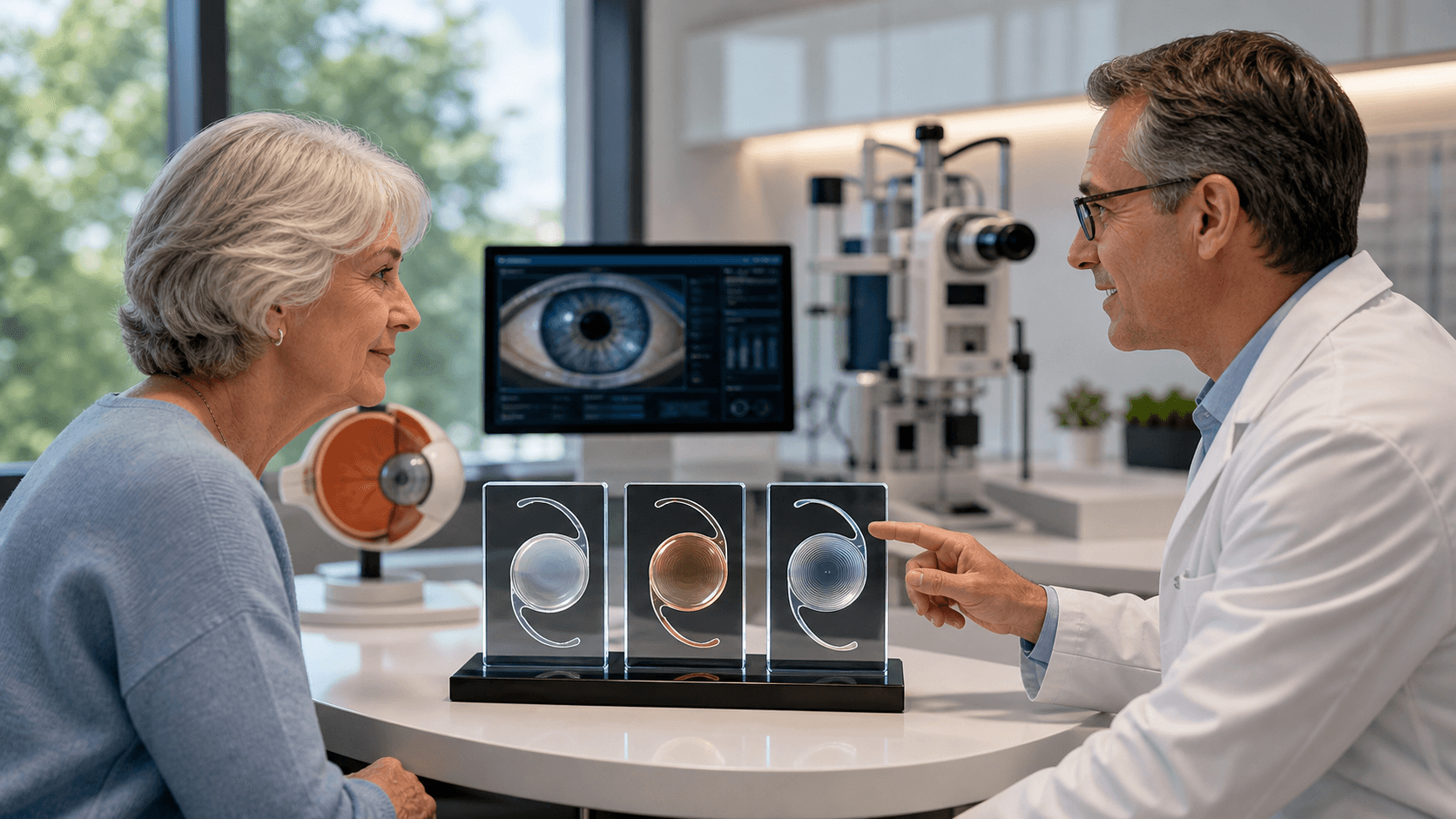
Patients often ask, "What are the 3 types of cataract surgery?"
The honest answer is that people use that question in two different ways. Some are asking about the surgical technique. Others are really asking which cataract surgery plan will help them reduce glasses after surgery.
This article explains the main surgery categories. For procedure planning, start with Advanced Cataract Surgery in Plano. If the main decision is lens choice, use the detailed cataract lens options guide.
The short answer
The three cataract surgery categories patients usually need to understand are:
| Category | What it means | Best next step |
|---|---|---|
| Traditional phacoemulsification | The standard small-incision cataract removal technique used for most cataracts | Premium Cataract Surgery |
| Laser-assisted cataract surgery | Uses a femtosecond laser for selected planning or incision steps | Cataract surgery consultation |
| Refractive, premium, or advanced cataract surgery | Cataract surgery planned around reducing glasses with advanced technology lenses such as toric, EDOF, multifocal, trifocal, or adjustable lens options | Compare cataract lenses |
There are also older or less common approaches, such as extracapsular cataract extraction, that may be used for unusually dense or complex cataracts. Most modern cataract patients, however, are deciding between standard cataract surgery and a premium refractive cataract plan.
1. Traditional phacoemulsification
Phacoemulsification is the standard modern cataract surgery technique. The surgeon makes a tiny incision, uses ultrasound energy to break up and remove the cloudy natural lens, then places an intraocular lens, or IOL, inside the eye.
Most cataract surgery today uses this core technique because it is efficient, predictable, and usually has a fast recovery.
Traditional cataract surgery is often focused on restoring clarity. A standard monofocal lens is commonly selected for one main distance, usually distance vision. Many patients still use reading glasses or progressives afterward.
This option may fit patients who:
- Want the cataract removed and are comfortable using glasses for some tasks.
- Prioritize a simple, proven lens plan.
- Have retina, cornea, or glaucoma issues that make premium lenses less predictable.
- Want to understand what insurance covers before discussing upgrades.
2. Laser-assisted cataract surgery
Laser-assisted cataract surgery uses a femtosecond laser for selected parts of the procedure, such as creating precise incisions or softening the cataract before removal.
The key point: laser assistance is a technology choice, not a guarantee of glasses-free vision by itself. The lens plan still matters.
Patients usually ask about laser cataract surgery because they want:
- More precision during surgical planning.
- A modern cataract surgery experience.
- Astigmatism management when appropriate.
- A clear explanation of whether the added technology changes the outcome for their eyes.
At consultation, the right question is not simply "laser or traditional?" A better question is: what combination of measurements, surgical technique, lens choice, and follow-up gives this eye the best result?
3. Refractive or premium cataract surgery
Premium cataract surgery uses cataract removal as an opportunity to improve how you see after the cloudy lens is gone.
If reducing glasses or correcting astigmatism is a priority, this is the part of the decision that matters most.
The advanced technology lens choice can include:
- Monofocal IOLs for one clear focal distance.
- Toric IOLs for astigmatism correction.
- EDOF lenses for a wider distance-to-intermediate range.
- Multifocal or trifocal IOLs for more range, including near vision.
- Light adjustable lens technology when post-operative fine tuning is appropriate.
Premium lenses can reduce dependence on glasses, but they are not automatically right for every eye. Dry eye, irregular astigmatism, corneal disease, retinal disease, glaucoma, night-driving needs, and expectations all matter. Start with the main cataract procedure page for surgical timing and use the lens-options page for a detailed IOL comparison.
When glaucoma or ocular hypertension is part of the chart, cataract planning should also address pressure goals, drop burden, whether glaucoma specialist care should happen first, and whether MIGS glaucoma surgery belongs in the same discussion.
That is why the best cataract plan starts with measurements and a lifestyle conversation, not a menu of lens names.
What about cataract surgery for astigmatism?
Astigmatism should be planned before surgery. If regular corneal astigmatism is present, a toric IOL may reduce blur and reduce the need for distance glasses.
The surgeon should confirm:
- How much astigmatism is present.
- Whether it is regular or irregular.
- Whether dry eye is distorting the measurements.
- Whether a toric lens, laser incision, or another plan is most appropriate.
- Whether the patient wants distance clarity only or a wider range of vision.
For a focused guide, read Cataract Surgery for Astigmatism in Plano.
Which type gives the best chance of no glasses?
The "no glasses" question is mostly a lens question.
Traditional cataract surgery with a monofocal lens can produce excellent clarity, but many patients still need readers or progressives. Premium lens strategies, such as toric, EDOF, multifocal, trifocal, blended, or adjustable lens plans, are designed to reduce glasses dependence across more of the day.
No cataract surgeon should promise perfect glasses-free vision for every task. A better goal is matching the lens to the eye and lifestyle, then setting expectations clearly before surgery.
Read more here: Cataract Surgery Without Glasses in Plano.
Recovery differences
Most modern cataract patients notice vision improving quickly, often within the first few days. Full stabilization and adaptation can take longer, especially with premium lenses.
Recovery can vary based on:
- Cataract density.
- Dry eye or ocular surface disease.
- Corneal health.
- Retina health.
- Whether astigmatism correction is part of the plan.
- Which IOL technology is selected.
- Whether the second eye is scheduled soon after the first.
Your consultation should explain both the expected recovery and the reasons your plan may differ from someone else's.
Cost and insurance
Standard cataract surgery is often covered by Medicare or medical insurance when it is medically necessary. Premium IOL upgrades, laser-assisted steps, and elective refractive goals may be out of pocket.
That is why pricing should be separated clearly:
- What insurance covers.
- What premium lens upgrades cost.
- Whether FSA/HSA funds apply.
- Whether financing is available.
- What follow-up care is included.
For the full breakdown, see cataract surgery cost and financing.
Bottom line
If you are comparing the three types of cataract surgery, do not stop at the technique names.
The bigger decision is what you want your vision to do after surgery: clear the cataract only, correct astigmatism, reduce readers, improve computer range, or aim for a broader glasses-free result.
Start with Premium Cataract Surgery in Plano, compare cataract lens options, review the glaucoma overview or glaucoma care in Plano if pressure is part of the plan, and book a cataract consultation when you are ready to see which plan your eyes can support.
Medically Reviewed by Dr. Shehz, DO
Dr. Shehzad Batliwala, DO—better known as Dr. Shehz—is a board-certified ophthalmologist and eye surgeon who brings both technical precision and genuine compassion to every patient he treats.
Explore this content with AI
Open this article in your preferred AI assistant for a plain-English summary, action steps, and questions to ask before booking a consultation.
Want a direct answer about your eyes? A complimentary consultation gives you a clear, written recommendation.