Yes, cataract surgery can often correct astigmatism.
The most common way is with a toric intraocular lens, or toric IOL. This lens replaces the cloudy natural lens and corrects astigmatism at the same time.
What astigmatism means
Astigmatism means the eye focuses light unevenly. Instead of one clean focus point, light may spread or distort, creating blur, ghosting, shadows, or night-driving glare.
Astigmatism can come from the cornea, the natural lens, or both. Cataract surgery removes the natural lens, but corneal astigmatism can remain unless it is addressed.
What a toric IOL does
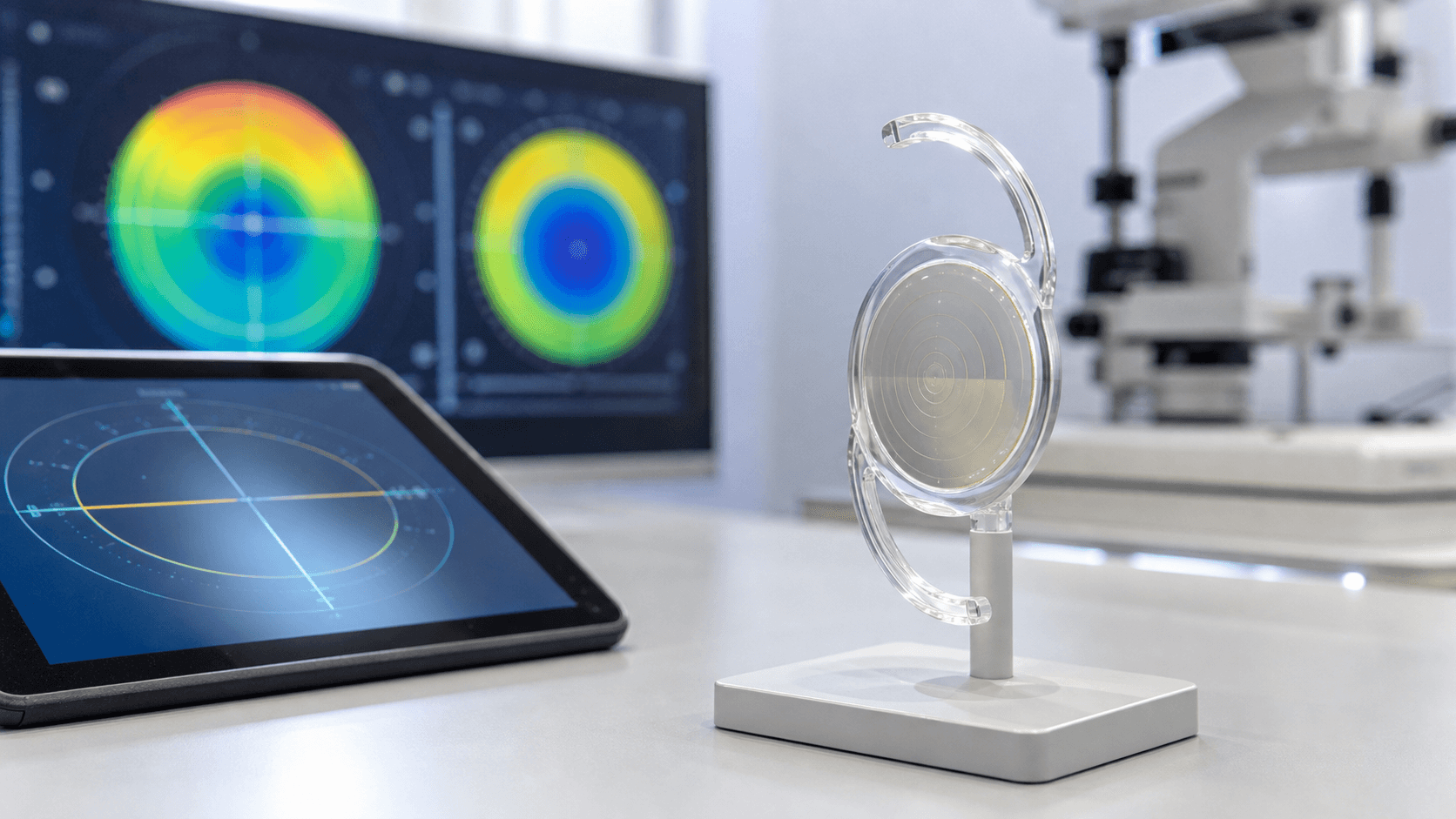
A toric IOL has astigmatism correction built into the lens. During cataract surgery, the surgeon removes the cloudy natural lens and implants the toric lens at a precise axis.
That axis matters. If the lens rotates away from the intended position, the astigmatism correction weakens.
This is why planning and alignment are so important.
Toric IOL measurements before surgery
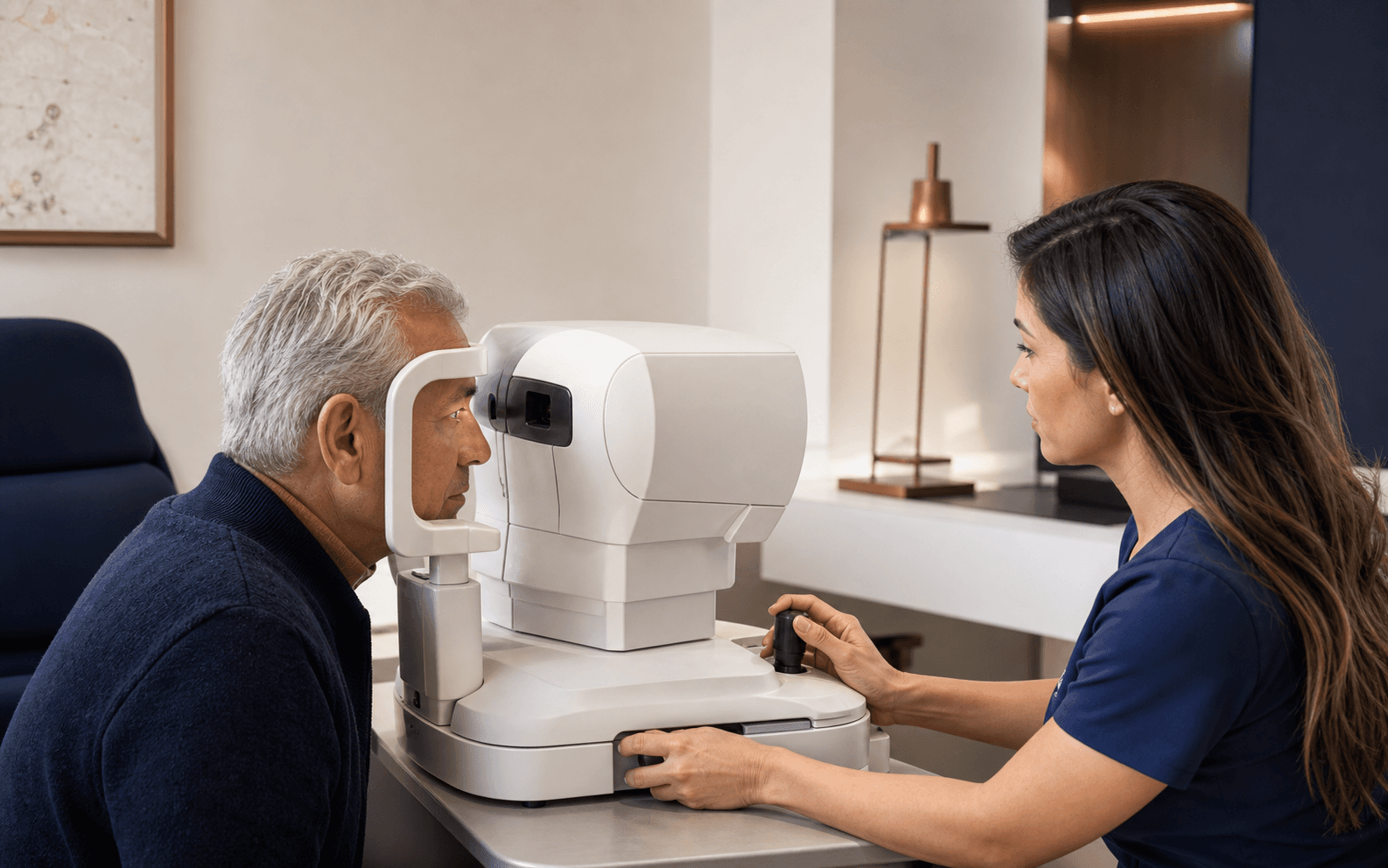
Toric IOL planning starts before surgery day. The surgeon needs repeatable measurements, not just one number on a glasses prescription. Corneal topography, keratometry, biometry, tear-film stability, eyelid inflammation, prior LASIK or PRK history, and retina health can all change whether toric correction is likely to help.
Dry eye matters here. If the tear film is unstable, the corneal readings can fluctuate, and a toric lens may be planned on unreliable data. In those cases, the better sequence is often to treat dry eye, repeat measurements, and then decide whether a toric, multifocal, or simpler monofocal lens is the safer option.
The most useful consultation should end with a written lens recommendation: how much astigmatism is regular, how much will be treated, what distance target is planned, whether a premium toric design is appropriate, and what glasses may still be needed after surgery.
Why the astigmatism number has to be repeatable
Astigmatism can look different from one test to the next if the tear film is unstable, the eyelids are inflamed, the cornea is irregular, or the cataract itself is affecting refraction. That matters because a toric IOL is selected and aligned from measurements taken before surgery.
The consultation should compare multiple data points:
- Glasses prescription and manual refraction.
- Keratometry and biometry.
- Corneal topography or tomography.
- Tear-film and eyelid health.
- Prior LASIK, PRK, RK, pterygium, keratoconus, corneal scar, or trauma history.
- Macula and optic nerve status.
If those measurements do not agree, the safer move may be to treat dry eye or eyelid inflammation first, repeat the measurements, and only then finalize the IOL plan. That sequence is especially important when the patient also wants a multifocal, EDOF, trifocal, blended, or Light Adjustable Lens strategy.
Toric monofocal vs premium toric lenses
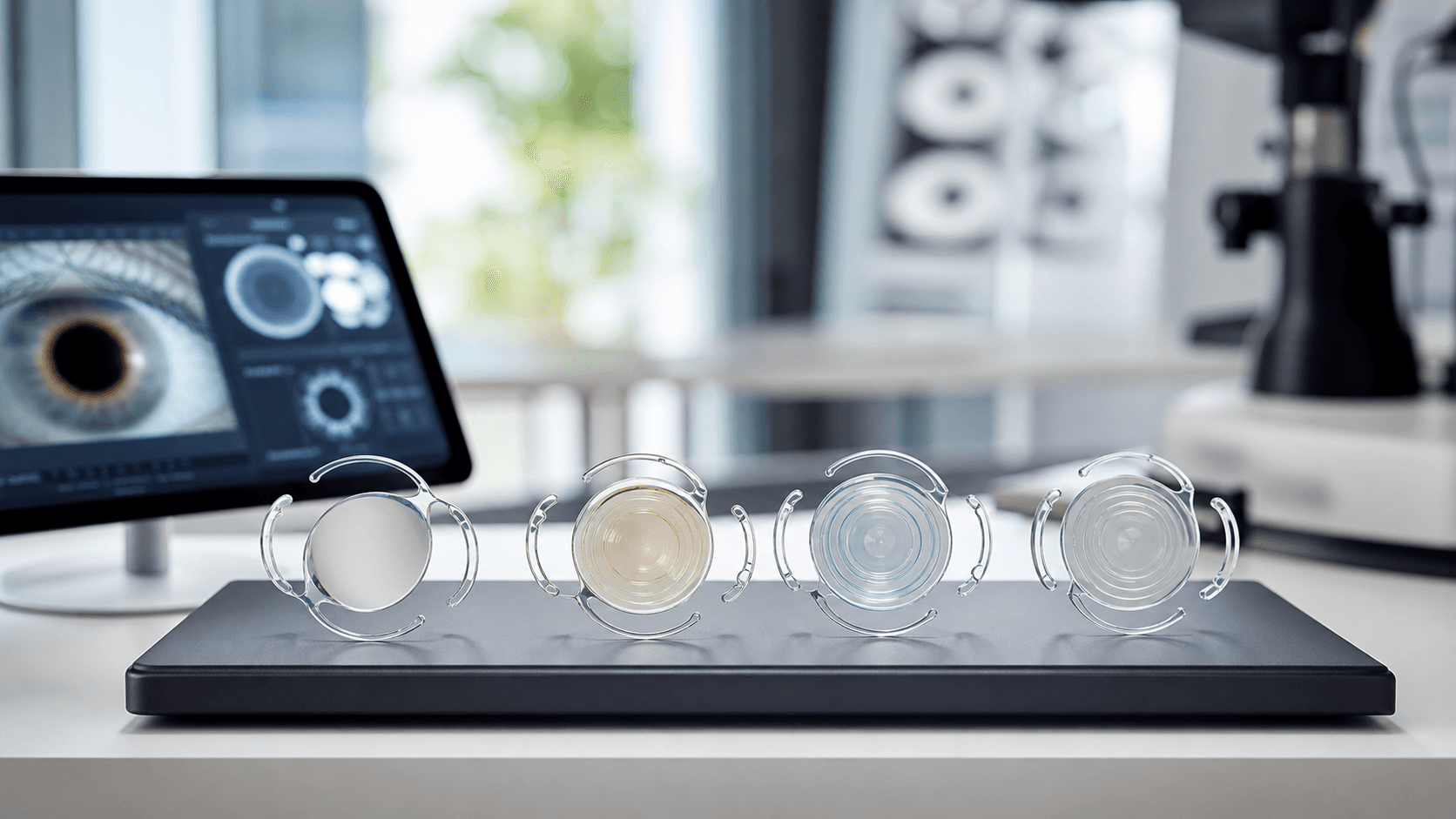
"Toric" describes astigmatism correction. It does not automatically tell you how much range the lens provides.
A toric monofocal lens may be chosen when the goal is crisp distance vision with readers for near work. A toric EDOF or toric multifocal platform may be discussed when the patient also wants more computer or reading range. A Light Adjustable Lens discussion may fit when post-healing fine-tuning and residual astigmatism are central concerns.
This is why PanOptix, Vivity, Symfony, Odyssey, RxSight LAL, and other named lens questions should not skip the astigmatism workup. Some platforms have toric versions or astigmatism strategies. Others may not fit if the astigmatism is irregular, the cornea is unstable, or the patient has retina or glaucoma findings that make premium optics less predictable.
Toric IOL vs regular IOL
| Feature | Standard monofocal IOL | Toric IOL |
|---|---|---|
| Removes cataract | Yes | Yes |
| Replaces natural lens | Yes | Yes |
| Corrects astigmatism | No, not meaningfully | Yes, when properly selected and aligned |
| May reduce distance glasses | Sometimes | More likely if astigmatism is the main reason glasses are needed |
| Requires axis planning | No | Yes |
Who is a good candidate?
You may be a good toric IOL candidate if:
- You have regular corneal astigmatism.
- Your measurements are stable.
- Your retina is healthy enough for the visual goal.
- You want less dependence on glasses for distance.
- You understand that reading glasses may still be needed unless another premium lens strategy is chosen.
You may not be a good candidate if:
- Your astigmatism is irregular.
- You have advanced corneal disease.
- Your dry eye makes measurements unstable.
- Your retina limits visual potential.
- The amount of astigmatism is too small to justify a toric lens.
Where toric IOL planning fits
A toric IOL is part of the cataract lens decision. It belongs in the same conversation as monofocal, EDOF, multifocal, trifocal, blended, and light adjustable lens options because astigmatism correction affects how sharp every distance can be after surgery.
The main cataract lens options page compares those choices side by side. This article focuses only on the astigmatism question so patients can understand why axis alignment, stable measurements, and ocular surface treatment matter.
For McKinney, Dallas, Frisco, Allen, Richardson, Carrollton, Denton, and North Texas patients, the same rule applies: local convenience is useful, but the measurements decide whether a toric lens is likely to help.
Does a toric lens fix reading vision?
Not by itself.
A toric lens corrects astigmatism. It does not automatically provide near vision. Some toric lenses are monofocal, while others are available in premium designs that also extend range.
That means the question is not just "Do I need toric?" It is:
- Do I need astigmatism correction?
- Do I want distance only, or more range?
- Do I want less dependence on readers?
- Is my eye a good candidate for a premium toric lens?
What should your toric lens plan explain?
Many cataract pages correctly say that a toric IOL can treat astigmatism, but they do not always explain the conditions that make toric planning reliable.
Before surgery, the visit should answer whether the astigmatism is mostly corneal or lens-based, whether it is regular or irregular, whether the axis is repeatable, whether the ocular surface needs treatment first, whether prior LASIK or PRK changes the formula choice, and how much distance or near glasses are still likely after surgery.
That is the difference between simply mentioning toric IOLs and actually planning cataract surgery for astigmatism.
What to ask at your consultation
Ask these questions before cataract surgery:
- How much astigmatism do I have?
- Is it regular or irregular?
- Is it mostly corneal or lens-based?
- Would a toric IOL improve my outcome?
- What happens if I choose a standard lens instead?
- Will I still need readers?
- Are there premium toric options for my goals?
The answers should be specific to your measurements.
Related resources
- Cataract lens options
- Premium lens guide
- Premium Cataract Surgery
- McKinney cataract surgeon guide
- Affordability and payment options
Bottom line
Cataract surgery can correct astigmatism when the right toric lens is chosen and aligned correctly.
For cataract surgery for astigmatism in Plano, start with a cataract consultation that includes corneal mapping, biometry, and a lens-options discussion. Learn more about Premium Cataract Surgery, compare cataract lens options, use the McKinney cataract surgeon guide if you are asking locally from McKinney, or review broader lens replacement options.
Medically Reviewed by Dr. Shehz, DO
Dr. Shehzad Batliwala, DO—better known as Dr. Shehz—is a board-certified ophthalmologist and eye surgeon who brings both technical precision and genuine compassion to every patient he treats.
Explore this content with AI
Open this article in your preferred AI assistant for a plain-English summary, action steps, and questions to ask before booking a consultation.
Want a direct answer about your eyes? A complimentary consultation gives you a clear, written recommendation.