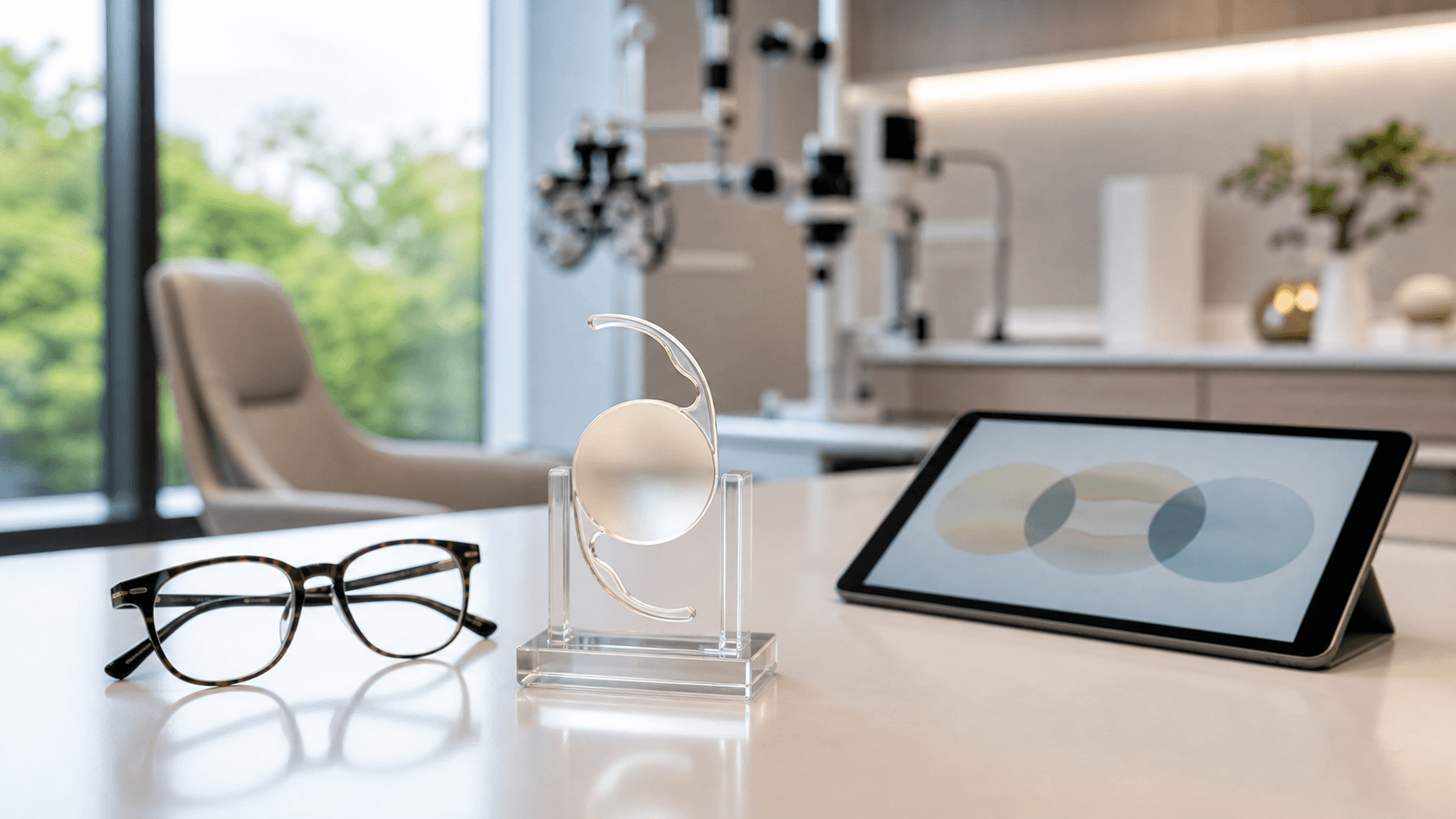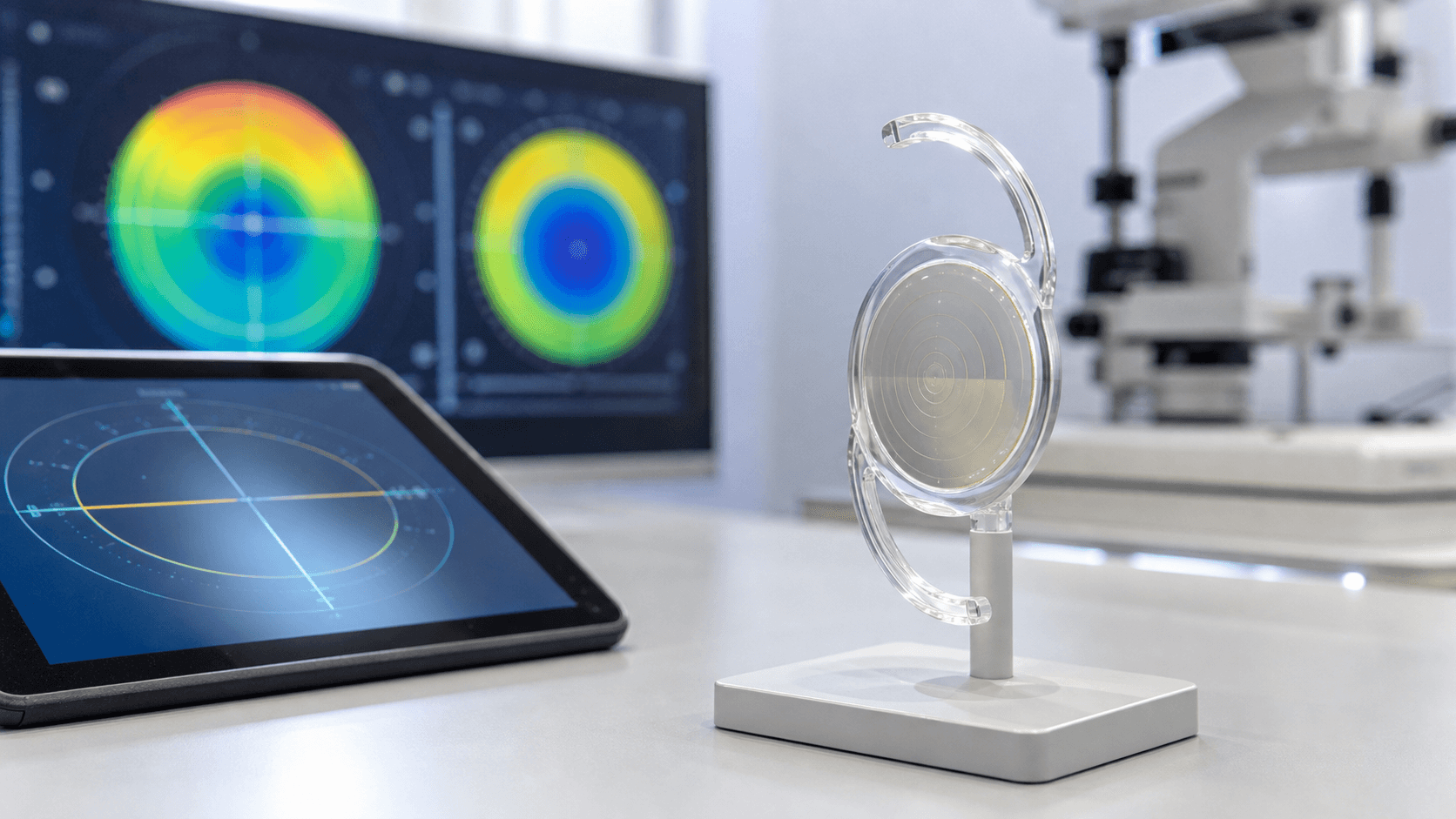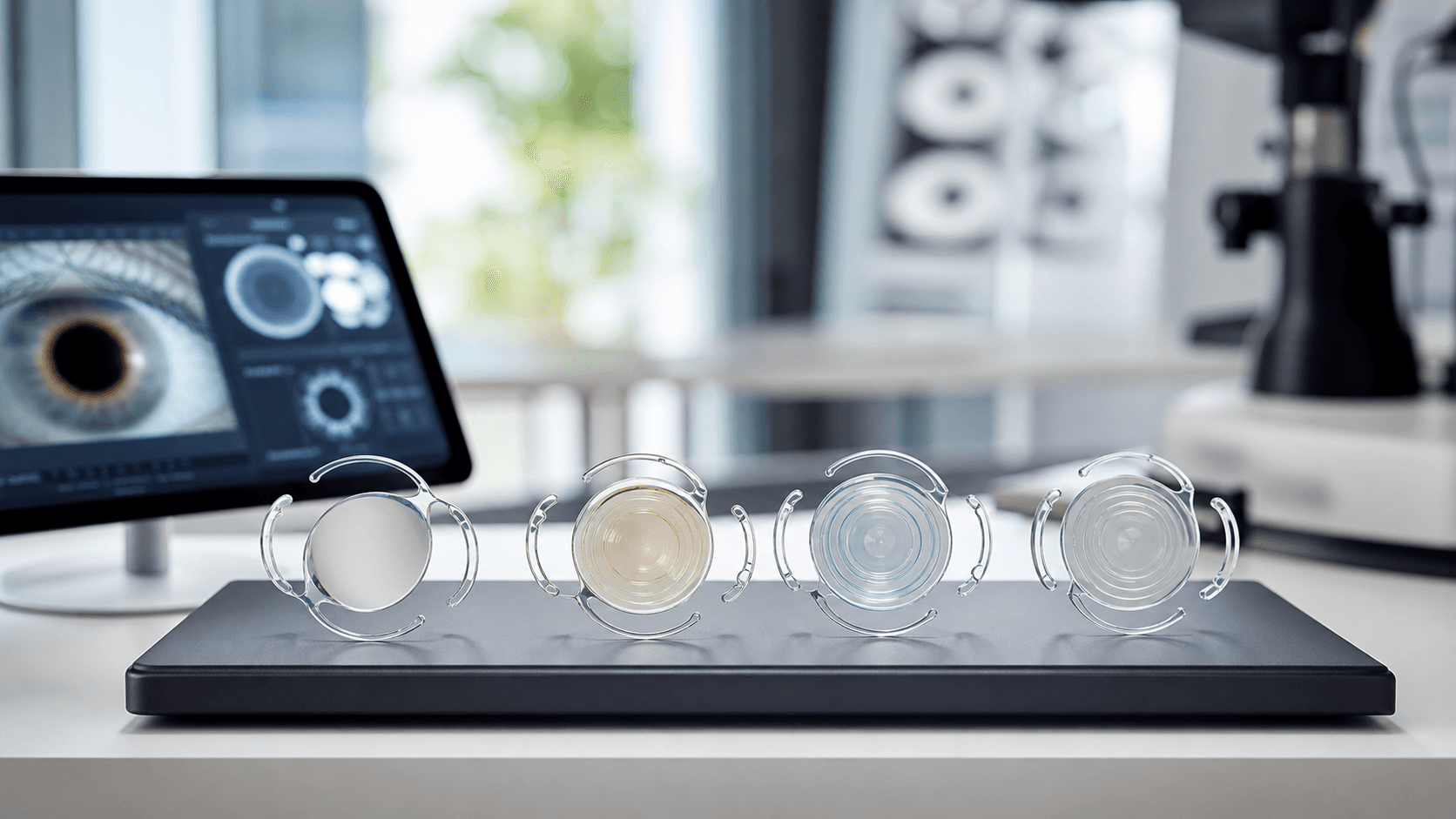
The best lens for cataract surgery is not the same for every patient. The answer starts with corneal measurements, retina health, astigmatism, night-driving needs, and visual goals rather than a brand name.
That may be the most important thing to understand before choosing an intraocular lens, or IOL. A lens that is excellent for one person can be the wrong choice for another person with a different retina, cornea, astigmatism pattern, night-driving needs, or reading goals.
Cataract lens options at a glance
| Lens type | Best for | Tradeoff |
|---|---|---|
| Monofocal | Crisp vision at one distance | Usually need glasses for other distances |
| Toric | Astigmatism correction | Must be aligned precisely |
| EDOF | Distance and intermediate range | May still need readers for small print |
| Multifocal/trifocal | More range, including near | More halos/glare risk for some patients |
| Light Adjustable Lens | Fine-tuning after surgery | Requires post-op light treatments and UV protection period |
How named cataract lenses fit the categories
Many competing cataract pages lead with specific lens names. That can be helpful if you already know what each name means, but it can also make the decision feel like shopping from a menu.
A stronger way to use those names is to connect each one to the optical category:
| Common lens examples | Category to discuss first | Why it matters |
|---|---|---|
| RxSight Light Adjustable Lens or LAL | Adjustable monofocal strategy | Fine-tuning happens after the eye heals and requires light-treatment visits plus UV-protection instructions. |
| PanOptix or other trifocal IOLs | Multifocal/trifocal range | These lenses aim for more near, intermediate, and distance range, with halo and glare tradeoffs to discuss. |
| Vivity or similar EDOF lenses | Extended-depth range | Often fits patients who value distance and computer range and may accept readers for very small print. |
| Symfony, Odyssey, or other full-range families | EDOF or full-range platform | The exact platform matters after the eye proves which category is realistic. |
| Toric versions of premium lenses | Astigmatism correction | The eye needs regular, repeatable astigmatism measurements and precise alignment planning. |
Cost and scheduling should be discussed after the appropriate lens category is clear. A conventional monofocal IOL is usually the insurance-reviewed baseline for medically necessary cataract surgery, while toric, EDOF, multifocal, trifocal, and Light Adjustable Lens upgrades may be paid out of pocket or financed. The written estimate should identify the covered baseline, premium upgrade, follow-up schedule, and whether readers or distance glasses are still likely.
Monofocal IOLs
Monofocal lenses are the standard lens option. They are designed to focus at one main distance.
Most patients choose distance vision. That means they can often see well for driving and walking around, but they still use readers for near tasks.
Monofocal lenses may be a strong choice if:
- You prioritize night-driving clarity.
- You do not mind reading glasses.
- You want a simpler optical profile.
- Your retina or cornea makes premium lenses less predictable.
Simple does not mean inferior. For many eyes, a monofocal lens is the cleanest and most predictable plan.
Toric IOLs
Toric lenses correct astigmatism during cataract surgery.
If you have meaningful astigmatism and it is not corrected, you can have a successfully removed cataract and still see blur after surgery. That is why astigmatism planning is part of modern cataract surgery.
Toric lenses may fit if:
- Your astigmatism is regular.
- Your corneal measurements are stable.
- You want less dependence on distance glasses.
- Your surgeon can align the lens accurately.
Toric lenses can be monofocal, extended-depth, or multifocal depending on the platform selected.
EDOF lenses
EDOF stands for extended depth of focus. These lenses are designed to stretch the range of useful vision, especially from distance into intermediate tasks.
Patients who work on computers, drive, cook, shop, and move between rooms often appreciate this range.
EDOF may fit if:
- You want good distance and intermediate vision.
- You are okay using readers for fine print.
- You want less halo risk than some multifocal designs.
- Your lifestyle is more screen/dashboard focused than book focused.
Multifocal and trifocal IOLs
Multifocal and trifocal lenses aim to provide more range: distance, intermediate, and near.
These lenses can be powerful for patients who want the best chance of reducing glasses across daily tasks. They also require careful screening.
They may fit if:
- You strongly value near vision without readers.
- Your retina is healthy.
- Your cornea is regular.
- Your dry eye is controlled.
- You understand that halos or glare can happen.
They may not fit if:
- You drive at night constantly.
- You have retinal disease.
- You have irregular astigmatism.
- You expect every distance and lighting condition to feel effortless.
Light Adjustable Lens
The Light Adjustable Lens is designed to allow prescription fine-tuning after surgery. After the eye heals, controlled UV light treatments adjust the lens power.
This can be useful for patients who want more post-op customization. It also requires a specific follow-up schedule and UV-protective glasses during the adjustment period.
It is not the right lens for everyone, but it is an important part of the modern cataract lens conversation.
How we choose the lens
A good cataract lens decision should include:
- Your glasses prescription.
- Corneal curvature and astigmatism.
- Eye length and biometry.
- Retina health.
- Dry eye status.
- Pupil behavior.
- Night-driving needs.
- Reading and computer habits.
- Your tolerance for tradeoffs.
The consultation should end with a clear recommendation and the reasoning behind it. When useful, that reasoning may include femtosecond laser planning, intraoperative aberrometry or ORA measurements, toric alignment strategy, and why a presbyopia-correcting IOL, monofocal, toric, EDOF, multifocal, trifocal, or Light Adjustable Lens is likely to fit the eye.
What cataract lens menus often leave unanswered
If you compare cataract lens pages across Dallas, Plano, and North Texas, you will see many of the same choices: monofocal, toric, EDOF, multifocal, trifocal, and Light Adjustable Lens. The missing piece is often the decision logic.
Before choosing a lens, the visit should answer whether astigmatism is regular, whether dry eye is distorting measurements, whether prior LASIK or PRK changes the formula choice, whether the macula and optic nerve can support premium optics, whether halos would be acceptable, and whether the written estimate separates insurance-covered cataract surgery from premium lens costs.
The best lens question is not only a brand question
Brand names can be useful once candidacy is clear. But patients usually need a more basic answer first: which optical strategy fits the eye and lifestyle?
That is why the consultation should document astigmatism, tear film, corneal shape, retina status, pupil behavior, prior LASIK or PRK history, night-driving needs, reading goals, budget, and follow-up capacity. A light adjustable lens may fit one patient because fine-tuning matters and they can return for light treatments. A toric monofocal may fit another because contrast and distance clarity matter more than near range. A multifocal or trifocal may fit a third because reducing readers is the top priority and the eye can support the tradeoffs. An EDOF lens may fit a screen-heavy patient who wants distance and computer range with a different near-vision compromise.
An implant category and a two-eye focusing strategy are different decisions. If your surgeon proposes different targets in the two eyes, read the mini-monovision lens-replacement guide and ask how the plan fits your cataract findings and visual priorities.
Related resources
- Cataract Lens Options
- Toric IOL guide
- Premium lens guide
- Premium Cataract Surgery
- McKinney cataract surgeon guide
- Affordability and payment options
Bottom line
The best lens for cataract surgery is the one that fits your eye and your life.
If you want to reduce glasses, premium lenses may help. If you want the cleanest optical profile, a monofocal or toric lens may be better. If you want more range, EDOF or multifocal options may be worth discussing.
Start with the main Premium Cataract Surgery page, compare the cataract lens options page, or use the McKinney cataract surgeon guide if you are asking from McKinney and want local drive and visit details first. The right lens choice starts with your real daily visual priorities.
Medically Reviewed by Dr. Shehz, DO
Dr. Shehzad Batliwala, DO—better known as Dr. Shehz—is a board-certified ophthalmologist and eye surgeon who brings both technical precision and genuine compassion to every patient he treats.
Explore this content with AI
Open this article in your preferred AI assistant for a plain-English summary, action steps, and questions to ask before booking a consultation.
Want a direct answer about your eyes? A complimentary consultation gives you a clear, written recommendation.