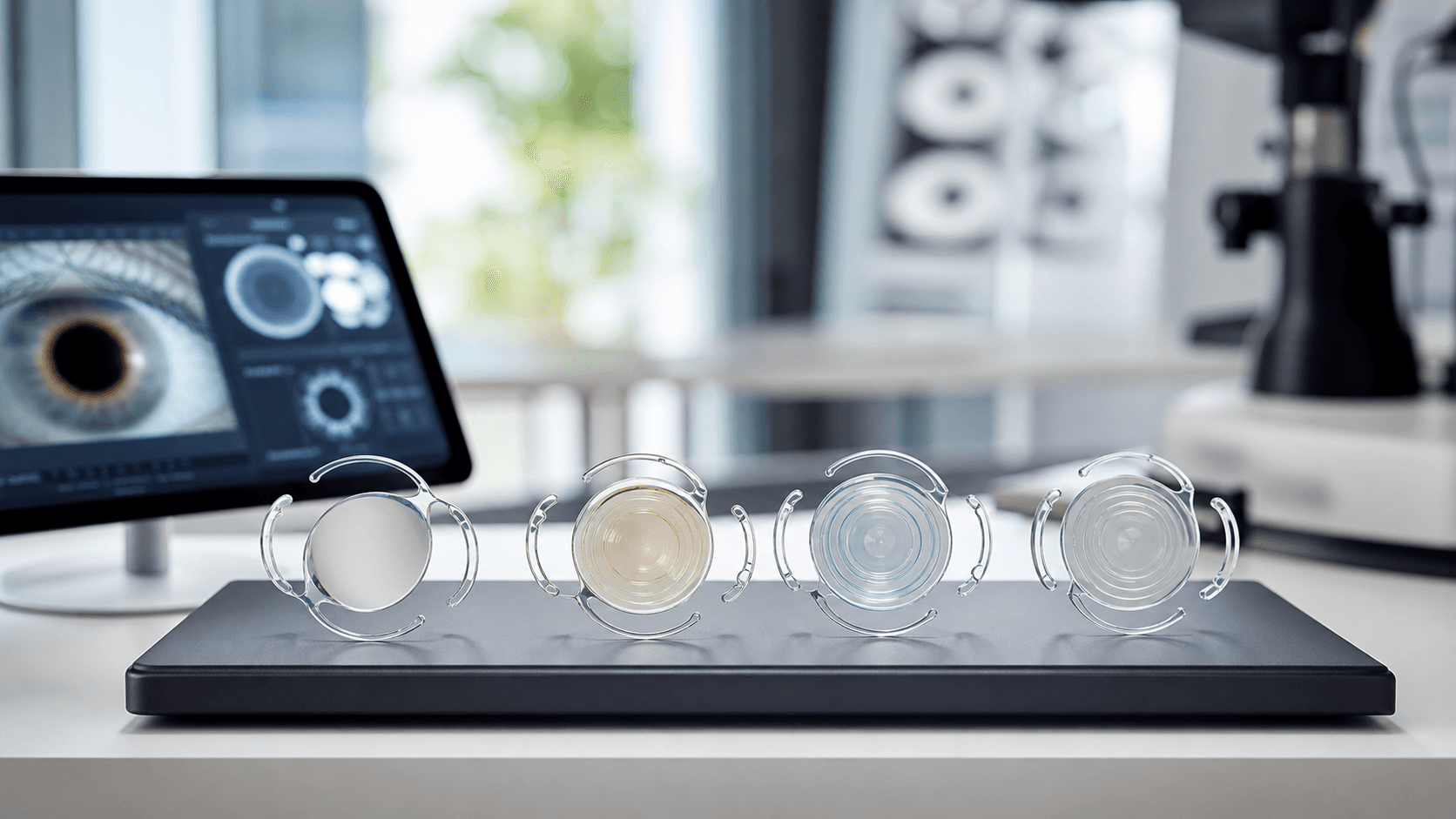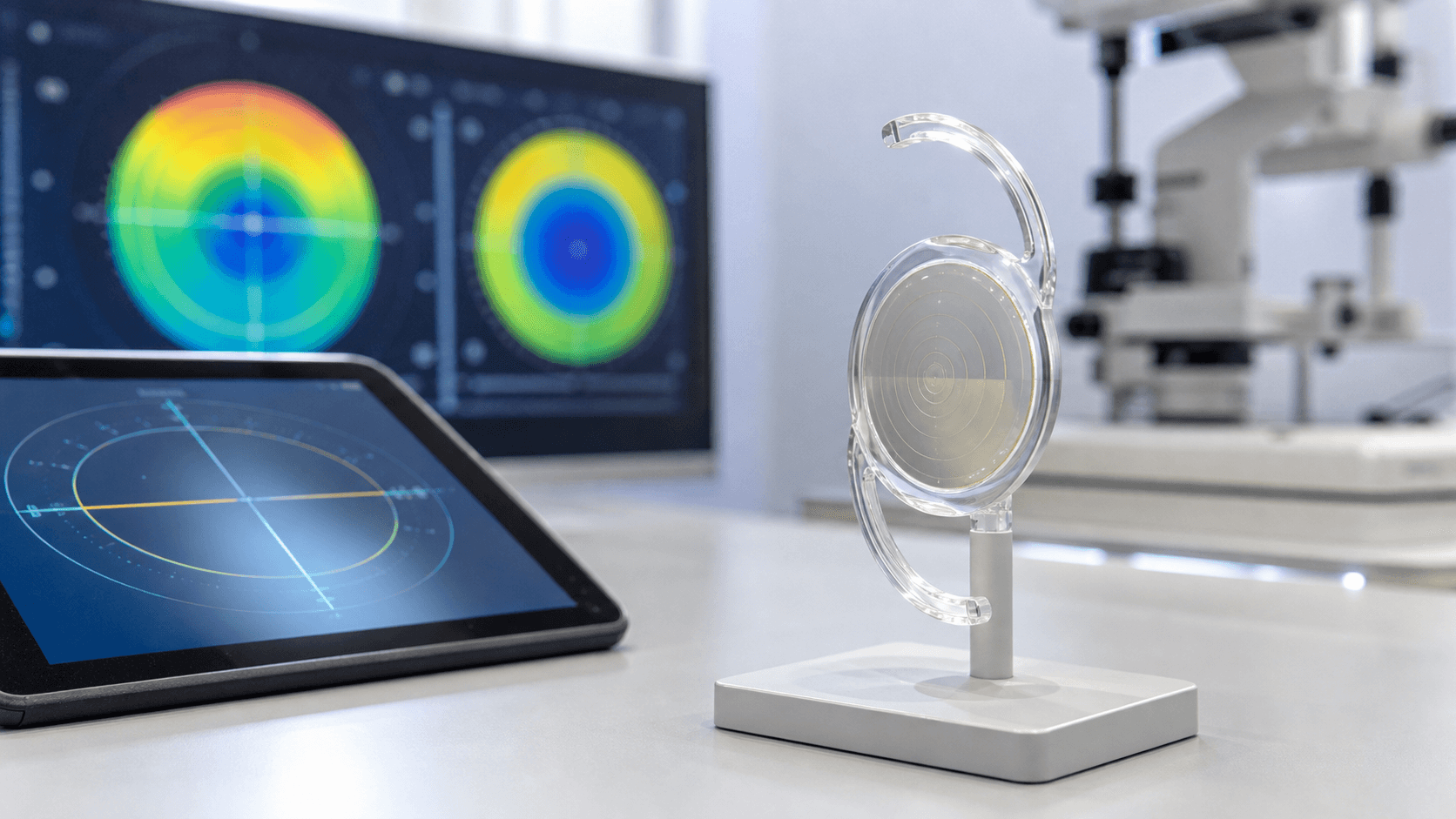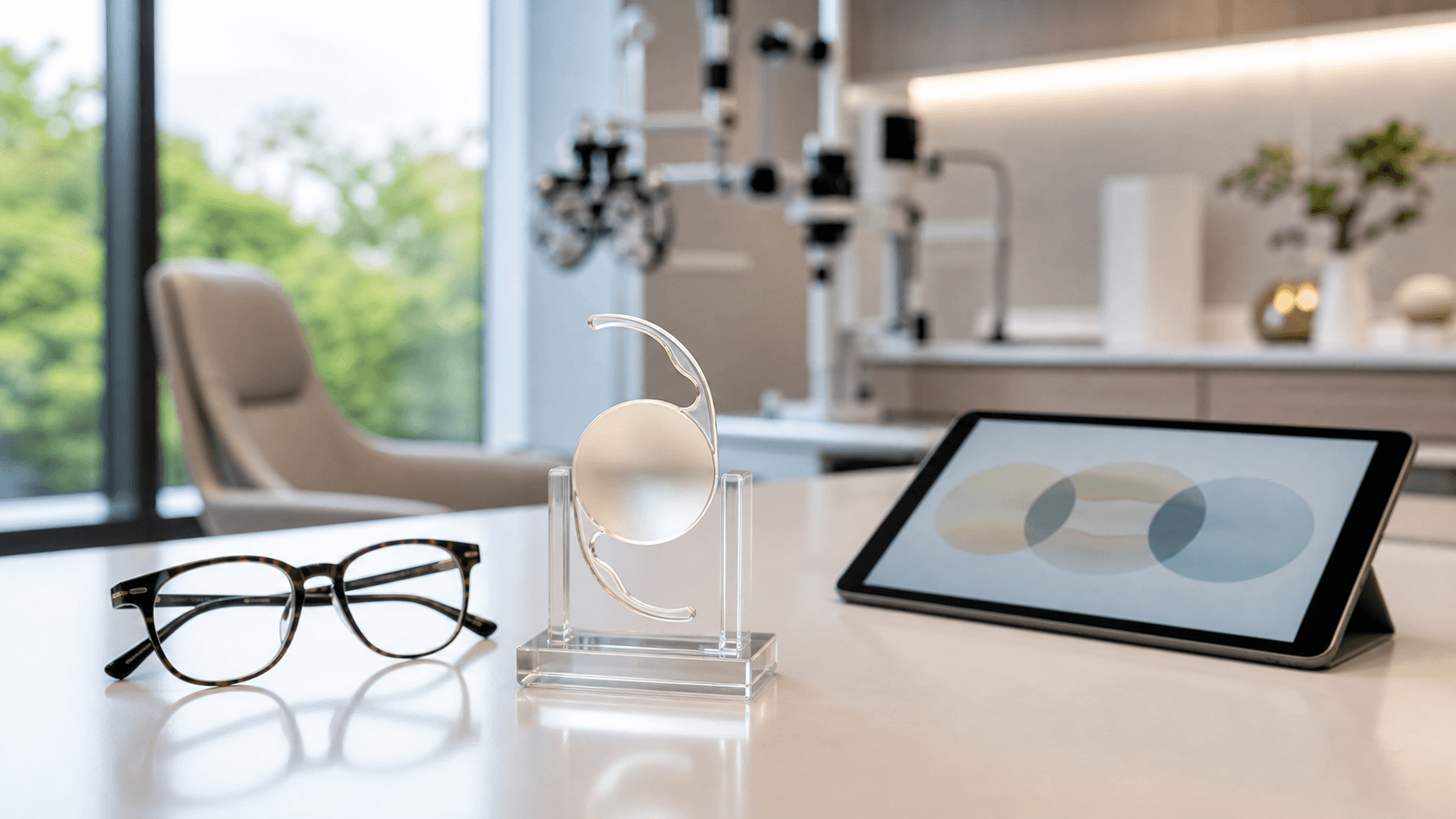
Cataract surgery can do more than clear a cloudy lens. For the right patient, it can also reduce dependence on glasses.
That does not mean every patient stops using glasses for every task. It means cataract surgery is the moment when we choose the lens that will determine how you see after the cataract is gone.
The simple version
| Goal | Lens strategy often considered |
|---|---|
| Clearest distance vision, okay with readers | Monofocal IOL |
| Distance vision plus astigmatism correction | Toric monofocal IOL |
| Better range for distance and screens | Extended-depth-of-focus IOL |
| More range from distance to near | Multifocal or trifocal IOL |
| Customized final prescription after surgery | Light Adjustable Lens, when appropriate |
The "best" cataract lens is not the most expensive lens. It is the lens that fits your eye, your retina, your cornea, your night-driving needs, and your expectations. For a side-by-side IOL comparison, use the main cataract lens options page.
What "without glasses" means by lens type
The phrase cataract surgery without glasses can mean very different things depending on the lens. This is where patients often get conflicting answers online.
- A monofocal lens can give excellent distance clarity, but readers are common for near work.
- A toric monofocal lens can improve distance sharpness when regular astigmatism is part of the problem, but it does not create near vision by itself.
- An EDOF lens, including Vivity-style discussions, often focuses on distance and intermediate tasks such as driving, cooking, dashboards, and computer work.
- A multifocal or trifocal lens, including PanOptix-style discussions, may create a wider range for near, intermediate, and distance vision, but halos, glare, contrast, and night-driving tolerance matter.
- A Light Adjustable Lens or RxSight LAL strategy uses postoperative fine-tuning after the eye heals, which means the schedule and UV-protective-glasses instructions matter as much as the lens itself.
That is why goals involving fewer glasses, a broader range of vision, astigmatism correction, or postoperative lens adjustment should all lead into the same measurement-based conversation before a platform is chosen.
Why glasses are still part of the conversation
Before cataract surgery, the natural lens is cloudy. During surgery, that cloudy lens is removed and replaced with an artificial intraocular lens, or IOL.
Every IOL has a design. Some are optimized for one distance. Some split or extend focus so you can see across more than one distance. Some correct astigmatism. Some can be adjusted after surgery.
The tradeoff is that the more range a lens tries to provide, the more carefully we have to evaluate side effects, contrast, glare, halos, and whether your eye can support that lens.
Good cataract surgery is not just "remove the cataract." Advanced cataract surgery is choosing the right optical plan after measurements show what the eye can support.
Monofocal lenses
A monofocal lens focuses at one main distance. Most patients choose distance vision, then use reading glasses for near tasks.
This can be the right choice if you want crisp distance, drive often at night, or want the simplest optical profile.
Monofocal lenses can still produce excellent results. The limitation is range: you should expect glasses for reading, fine print, or some computer tasks.
Toric lenses
If you have astigmatism, a toric IOL may be recommended. Astigmatism means the eye focuses light unevenly, often causing blur, ghosting, or distortion.
A toric lens corrects astigmatism during cataract surgery. Without that correction, you may still need glasses even after the cataract is removed.
Toric planning requires precise measurements and careful alignment. If the lens is not aligned correctly, the astigmatism correction is weaker.
Extended-depth-of-focus lenses
Extended-depth-of-focus, or EDOF, lenses are designed to provide a broader range of vision than a standard monofocal lens.
Many patients like EDOF lenses because they can make distance and intermediate vision more convenient. That can help with driving, computer work, dashboards, cooking, and some daily tasks.
The tradeoff is that fine near work may still require readers. If your main goal is reading small print without glasses, EDOF may not be enough by itself.
Multifocal and trifocal lenses
Multifocal and trifocal IOLs are designed to provide more vision across distance, intermediate, and near.
For patients who strongly want to reduce glasses for reading and daily life, these lenses can be powerful. But they require the right eye anatomy and the right expectations.
They may not be ideal if you have certain retinal problems, irregular corneas, severe dry eye, or a job/lifestyle where halos and night-vision symptoms would be unacceptable.
Who is a strong candidate for cataract surgery without glasses?
You may be a good candidate if:
- Your cataracts are affecting daily life.
- Your retina is healthy.
- Your cornea is regular enough for premium lens planning.
- Your dry eye is controlled.
- You understand that "less glasses" is more realistic than "never glasses."
- You are willing to choose the lens based on how you actually live.
You may not be a good candidate if:
- You have active retinal disease.
- Your cornea is irregular.
- Your dry eye is untreated.
- You expect glasses-free near vision in every lighting condition.
- You drive at night constantly and cannot tolerate halos.
Why advanced cataract surgery pages can sound similar
Many advanced cataract surgery pages mention the same lens categories and brands: toric IOL, multifocal IOL, Light Adjustable Lens, PanOptix, Vivity, Symfony, Odyssey, and RxSight LAL. Those terms are useful, but they do not answer whether a specific eye should choose that lens.
The stronger consultation explains how the measurements change the recommendation. A patient with regular astigmatism may need toric IOL planning. A patient who drives at night may prioritize contrast and halo tolerance. A patient with dry eye, epithelial basement membrane dystrophy, prior LASIK, keratoconus risk, pterygium, macular disease, or glaucoma may need a more conservative lens choice or more preparation before premium lens planning.
That is the difference between a premium lens menu and an advanced cataract surgery plan.
The consultation should feel specific
A serious cataract lens consultation should not sound like a menu pitch.
It should include:
- Corneal measurements.
- Astigmatism analysis.
- Retina evaluation.
- Lifestyle questions.
- Night-driving discussion.
- Reading and screen-distance goals.
- Insurance and premium upgrade explanation.
At Visionary Eye, the goal is to tell you what your eye can realistically support. Sometimes that means a premium lens. Sometimes it means a simpler lens with a better risk-benefit profile.
Where this fits in your cataract decision
If you are still learning whether cataracts are ready for surgery, start with Premium Cataract Surgery in Plano. If you already know surgery is likely and your main question is monofocal vs toric vs EDOF vs multifocal vs light adjustable lens, use the cataract lens options guide.
That separation matters because a glasses-reduction goal needs more detail than a basic cataract overview. The next step is still a diagnostic exam, because retina health, corneal shape, tear film, pupil behavior, and astigmatism decide what is realistic.
Use the estimate and scheduling pages after lens candidacy is clear. Cost should not decide the lens before the retina, cornea, tear film, pupil behavior, and astigmatism are measured, because the safest premium-lens plan is the one the eye can actually support.
Related resources
- cataract lens options
- Toric IOL guide
- Premium Cataract Surgery
- McKinney cataract surgeon guide
- Schedule a cataract consultation
Bottom line
Cataract surgery can reduce your need for glasses, but the lens decision determines how realistic that goal is.
If you are comparing cataract surgery without glasses in Plano, start with a lens-planning consultation, not a generic cataract evaluation. Read more about Premium Cataract Surgery, compare cataract lens options, use the McKinney cataract surgeon guide for local drive and visit details, or review how timing differs in our RLE vs cataract surgery overview.
Medically Reviewed by Dr. Shehz, DO
Dr. Shehzad Batliwala, DO—better known as Dr. Shehz—is a board-certified ophthalmologist and eye surgeon who brings both technical precision and genuine compassion to every patient he treats.
Explore this content with AI
Open this article in your preferred AI assistant for a plain-English summary, action steps, and questions to ask before booking a consultation.
Want a direct answer about your eyes? A complimentary consultation gives you a clear, written recommendation.