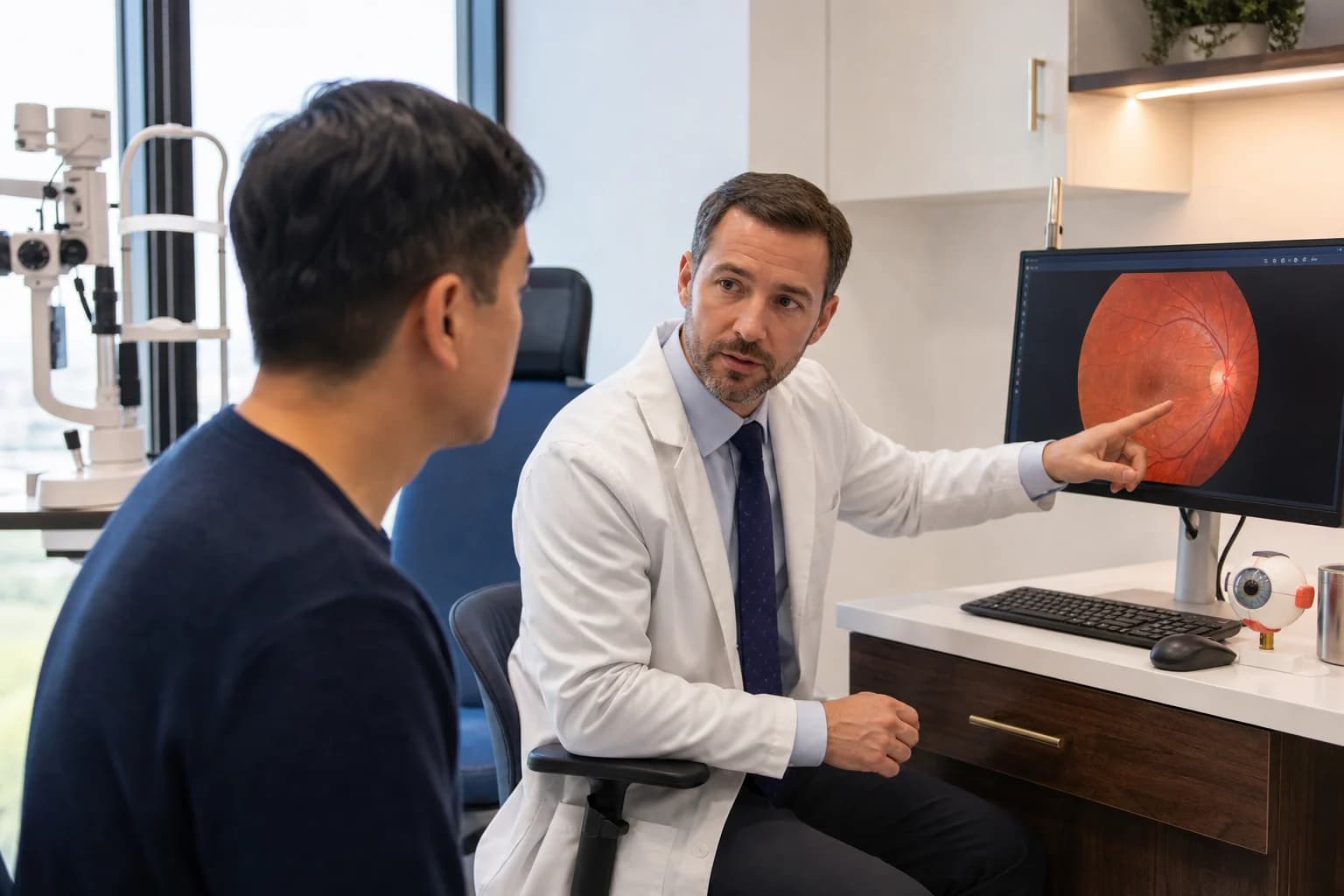
Sudden vision loss or rapidly worsening eyesight while taking semaglutide needs urgent medical assessment, not an online diagnosis or a routine surgery consultation. Gradual blur also deserves an examination, but it does not by itself prove that the medicine damaged the eye. Do not change or stop prescribed treatment on your own; contact the prescribing clinician.
For non-urgent concerns, a comprehensive ophthalmology assessment can help identify which part of the eye is responsible. An urgent change should not wait for an elective appointment.
What did the recent safety guidance actually say?
In February 2026, the UK's MHRA updated semaglutide product information about a very rare risk of non-arteritic anterior ischemic optic neuropathy, or NAION. This condition affects blood supply to the optic nerve and can cause sudden, painless vision loss. The European medicines regulator had also reviewed this risk.
Those are identified UK and European regulatory communications. They are not a claim that every GLP-1 medicine has the same evidence, that everyone taking semaglutide will develop an eye problem, or that U.S. prescribing instructions automatically changed in the same way. Headlines often lose those distinctions.
Does blurred vision mean NAION?
No. A symptom alone cannot identify its cause. Diabetes, changes in glucose, cataracts, retinal disease, the eye surface, and a glasses prescription can all enter the assessment. Your clinician needs the timing, symptoms, medical history, and examination rather than a conclusion based on the medicine's name.
Do not assume that painless means harmless. Sudden loss in one eye, a new missing area of vision, or a rapid change calls for urgent care. If immediate ophthalmic assessment is unavailable, seek emergency care rather than waiting for an email reply. Do not drive yourself with impaired vision.
What should you tell the eye doctor and prescriber?
Bring the exact drug name, dose history, start date, and any recent changes, alongside your full medication list. Note when the visual change began and whether one eye or both are affected. If you have prior eye records, bring those too.
Tell both clinicians about existing diabetic eye disease or previous optic-nerve problems. Ask who will communicate the findings and who is responsible for any medication decision. An eye examination and a prescribing decision are connected, but they are not the same appointment or responsibility.
How should DFW patients act on a headline?
Use the headline to organize questions, not to self-diagnose. Ask whether your symptom needs urgent evaluation, what the examination found, and whether additional testing or referral is needed. If you are seeking routine care in Plano from another DFW city, confirm what records are useful before traveling.
Visionary Eye Surgery's contact page is for arranging care, not an emergency monitoring service. Sudden or rapidly worsening vision should be assessed urgently wherever you can obtain appropriate care. Even when symptoms are gradual, a new pair of glasses or elective laser procedure should not be the starting assumption until the cause is understood.
Sources
Keep reading
Your exam can clarify which options fit your eyes. Visit our Plano team from anywhere in DFW.
Book a free visit