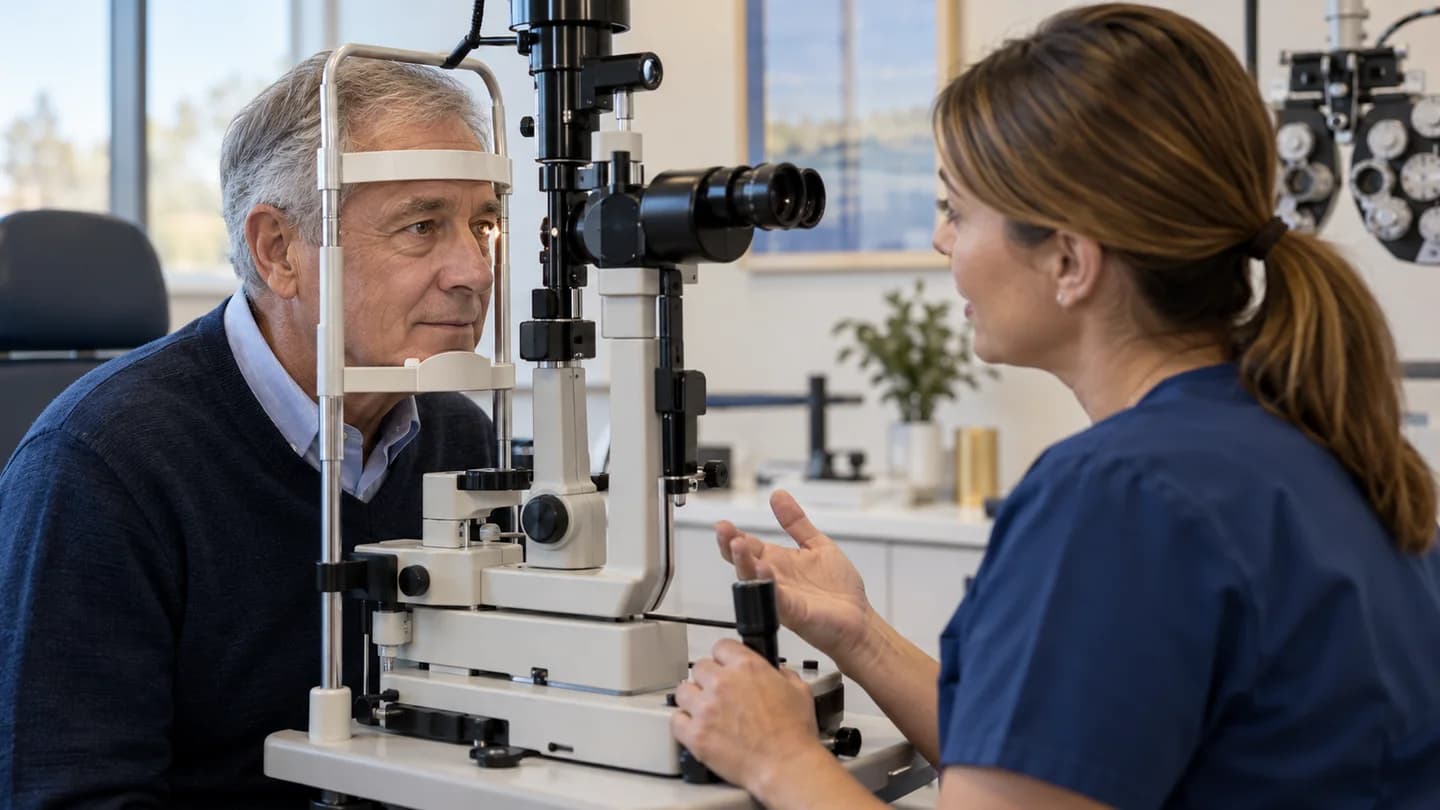
A pterygium can change corneal shape and make a laser vision correction plan less dependable. If it distorts the cornea or makes measurements unstable, the surgeon may recommend treating the growth and reassessing before deciding about LASIK or PRK. Not every small pterygium requires removal.
Begin with a cornea assessment and a laser vision correction evaluation. This article addresses the sequence before elective laser surgery; it does not establish that removing a pterygium will make someone a candidate.
Why does the growth matter to a laser plan?
A pterygium is tissue extending onto the cornea from the conjunctiva. It can alter curvature and contribute to regular or irregular astigmatism. LASIK and PRK planning depends on reliable corneal measurements and a suitable eye surface.
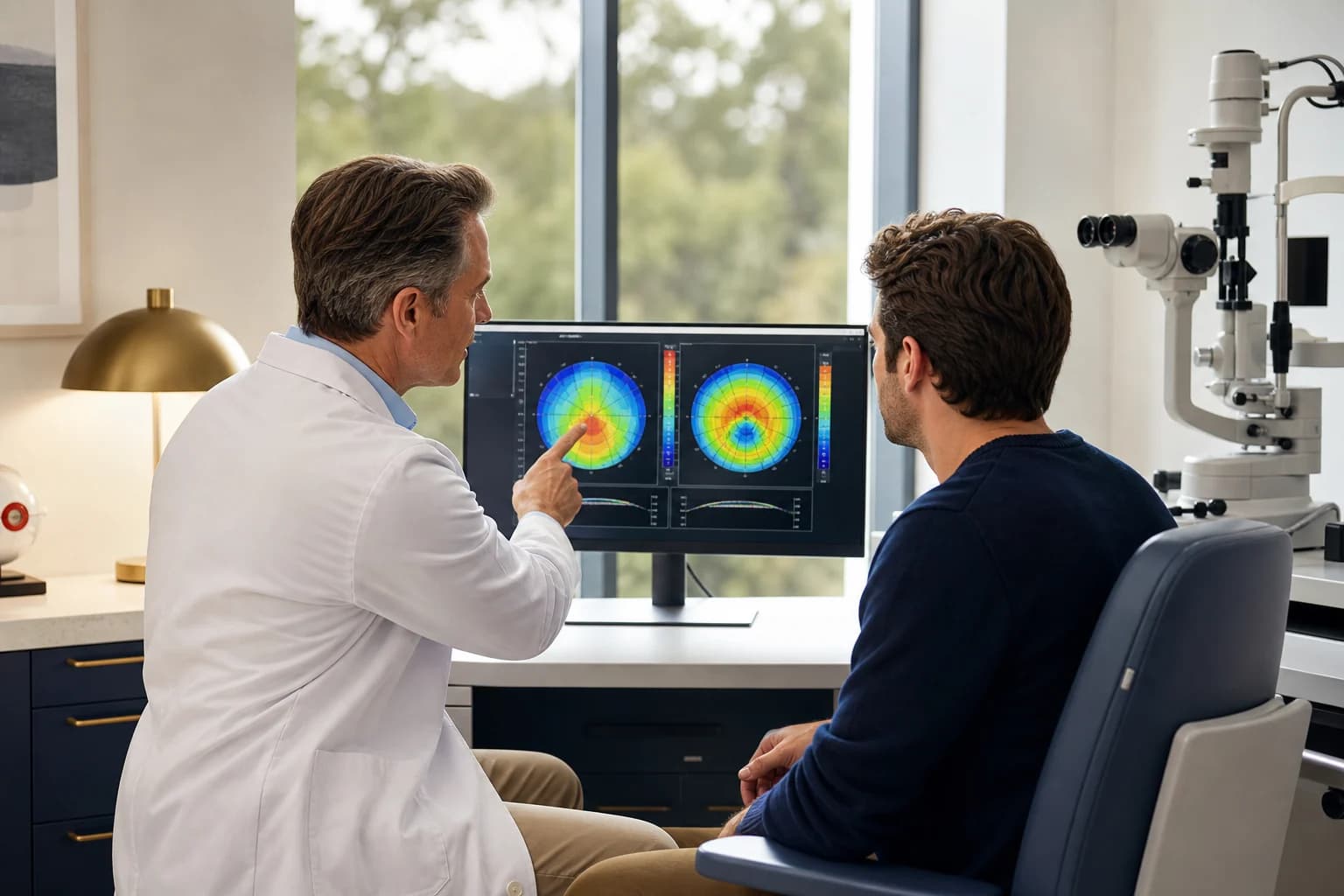
Ask the clinician to show whether the growth affects your topography, the map of corneal curvature. A visible growth alone does not quantify its effect. Current glasses, older prescriptions, and previous maps can help establish what has changed and whether the pterygium explains the change.
When might removal come before another decision?
Removal may be discussed if the growth affects vision, is progressing, causes significant symptoms, or interferes with reliable surgical planning. Our pterygium surgery candidacy guide covers the decision to treat the growth itself.
Ask what removal is intended to improve even if laser surgery never becomes appropriate. It is a separate operation with its own recovery and recurrence discussion. A plan should not present it as a guaranteed admission ticket to LASIK or imply that choosing PRK avoids every surface-related concern.
How long should laser treatment wait after removal?
There is no single waiting interval that establishes readiness for every eye. Repeat measurements need to demonstrate adequate stability, and the surface must be assessed again. Pterygium size, healing, and the parameters being measured can affect the timeline.
Prospective studies have reported different patterns of postoperative stability. That is a reason to ask which measurements must agree and over what interval in your case, rather than adopting another patient's surgery date. Do not arrange nonrefundable travel around an assumed clearance date.
Does a stable map mean LASIK is now safe?
Stability is one part of candidacy. The clinician still needs to consider corneal thickness and shape, any scarring, prescription, dry eye, and other eye-health findings. Laser treatment cannot promise to erase every optical effect of the original growth or its removal.
If the map remains unsuitable, ask why and what alternatives fit. Glasses, contact lenses, or another assessment may be more appropriate than a corneal laser procedure. A different technique still needs its own suitability review; it should not be selected merely because the first option was declined.
What should be agreed before paying for a sequence?
Request separate explanations and estimates for pterygium care and elective vision correction. Ask what happens if the second procedure is deferred or ruled out, which repeat tests are included, and how follow-up is arranged. Coverage for one operation does not establish coverage for the other.
A consultation should produce a staged decision with clear checkpoints: assess the growth, treat if indicated, confirm the healed cornea, and only then decide whether a laser procedure offers a reasonable benefit.
Sources
- AAO: Pterygium assessment and refractive effects
- Prospective study: Time to keratometric stability after removal
- Prospective study: Corneal curvature after pterygium excision
Keep reading
Your exam can clarify which options fit your eyes. Visit our Plano team from anywhere in DFW.
Book a free visit