Not every pterygium needs surgery.
That is the most important starting point.
A pterygium, often called surfer's eye, is a growth on the white part of the eye that can move toward or onto the cornea. Some stay small and quiet for years. Others cause chronic redness, burning, foreign-body sensation, cosmetic concern, astigmatism, or blurry vision.
What a pterygium surgeon is trying to decide
A pterygium surgeon is not only deciding whether a growth can be removed.
The better questions are:
- Is it truly pterygium, or is it pinguecula or another surface lesion?
- Has it grown onto the cornea?
- Is it changing corneal shape or inducing astigmatism?
- Is it causing symptoms despite lubrication and anti-inflammatory treatment?
- Is it moving toward the visual axis?
- Has it returned after prior removal?
- Is appearance a major concern for the patient?
The answer determines whether to monitor, treat inflammation, or plan surgery with recurrence prevention in mind.
What the exam should include
A useful pterygium evaluation should be more specific than a quick look at redness.
It should usually include:
- Visual acuity, so the surgeon can document whether vision is affected.
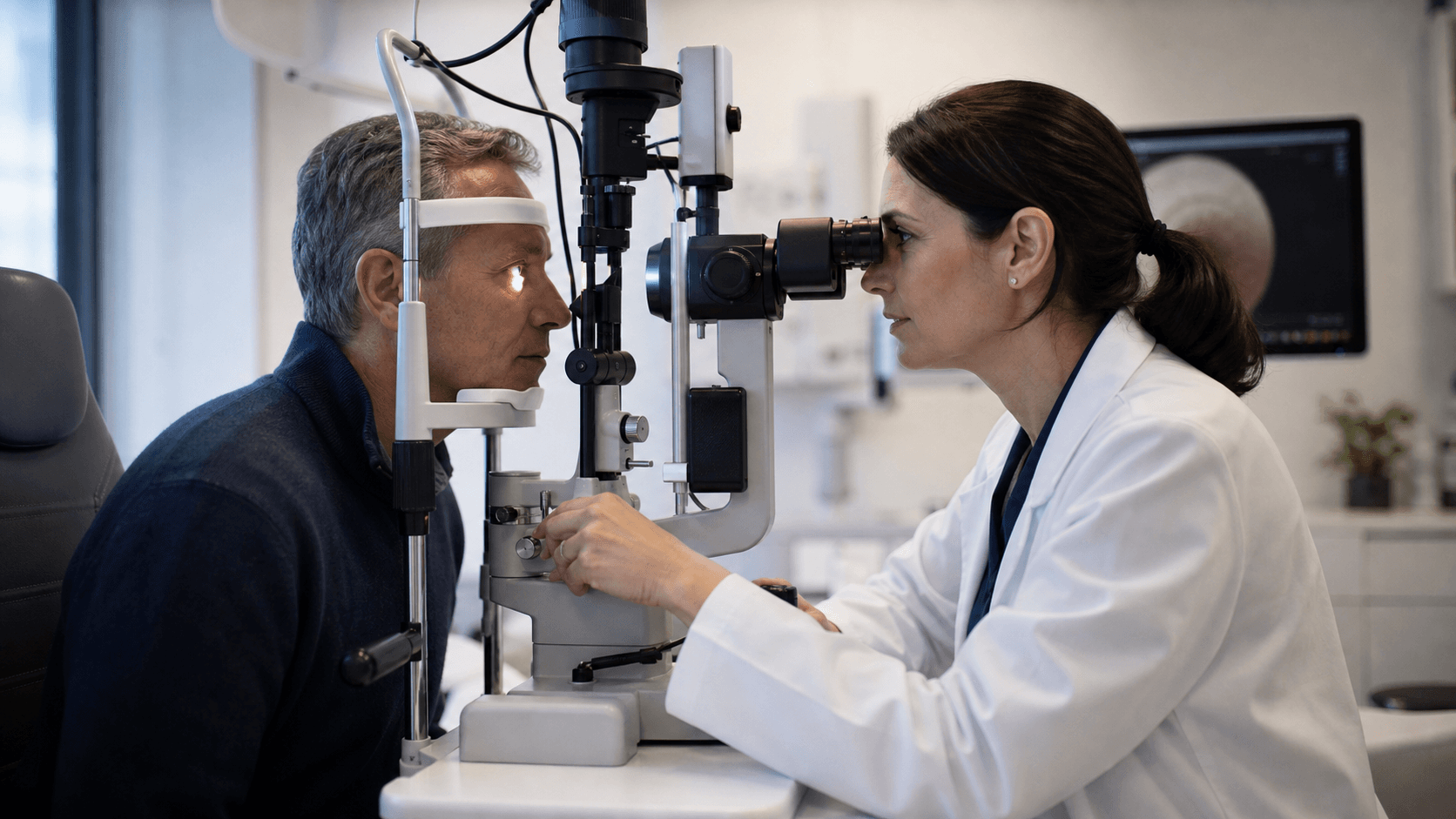
- Slit-lamp examination, so pterygium, pinguecula, dry eye redness, and atypical surface lesions are separated.
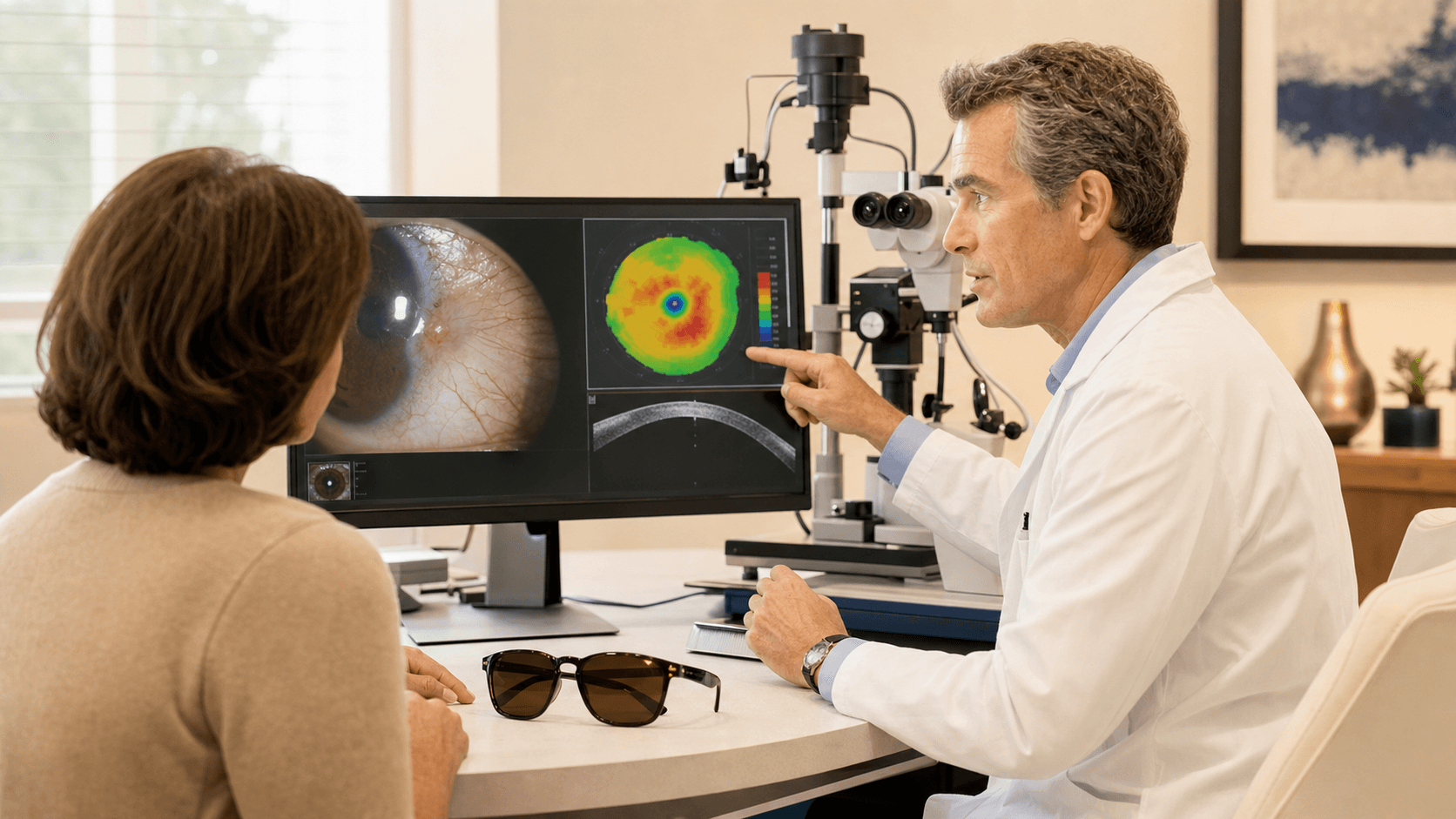
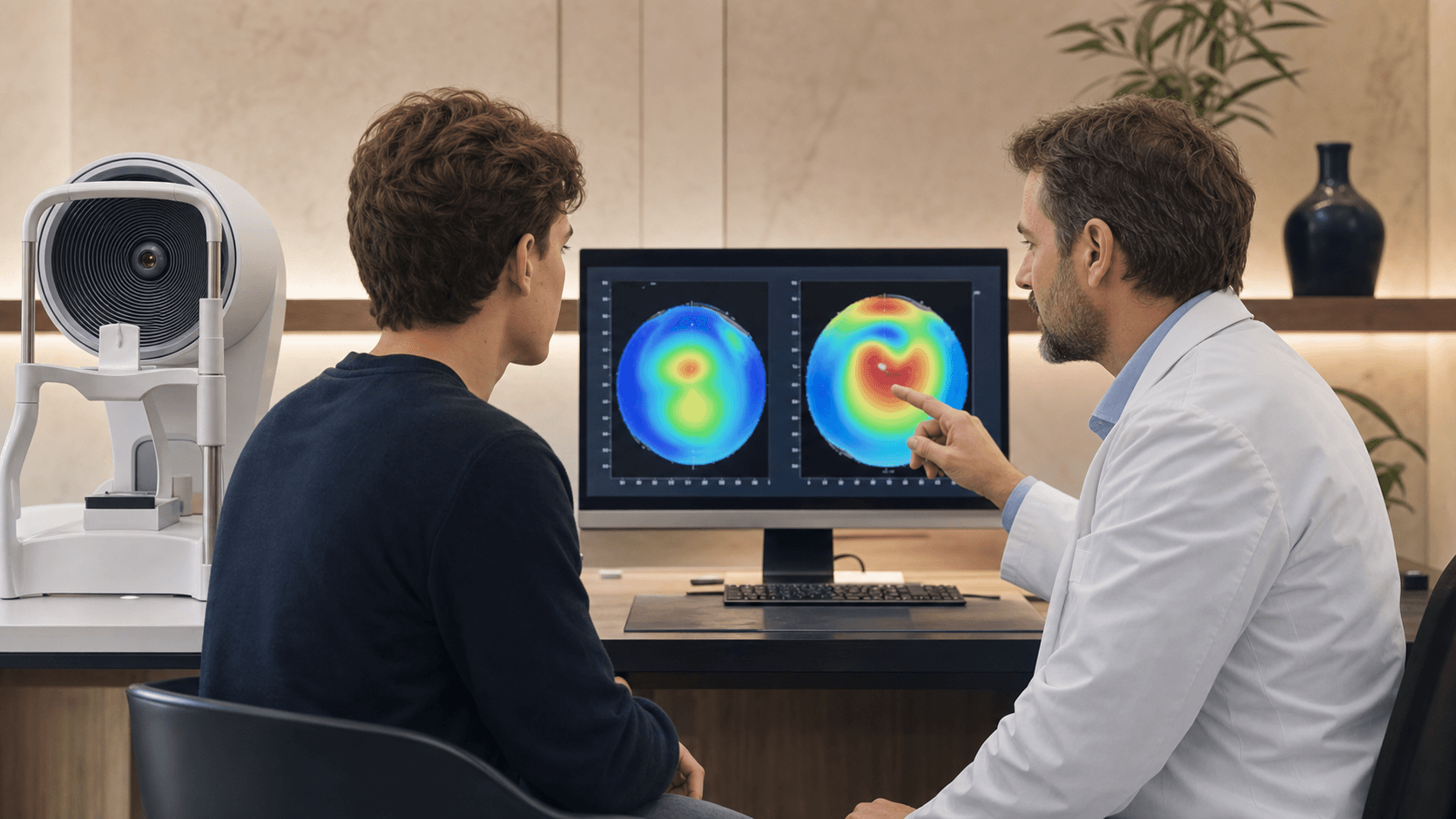
- Corneal measurements and topography when the growth reaches the cornea or astigmatism is changing.
- Photos or measured extension onto the cornea, especially if growth rate is part of the decision.
- Tear-film and eyelid inflammation review, because dry eye or blepharitis can make redness worse and affect healing.
- A discussion of work, sun exposure, dust, wind, contact lenses, and whether prior pterygium surgery was done.
That detail matters because the safest answer may be monitoring, surface treatment, or conjunctival autograft surgery depending on the examination and measurements.
When monitoring may be enough
Monitoring may be reasonable when the growth is small, stable, and not causing meaningful symptoms.
That usually means:
- It is not approaching the center of the cornea.
- It is not causing astigmatism or blurry vision.
- Redness and grittiness are mild.
- Lubricating drops help.
- The appearance does not bother you enough to justify surgery.
- Photos or measurements show it is not growing quickly.
For quiet pterygia, UV protection, sunglasses, lubrication, and periodic measurement may be the right plan.
When surgery becomes worth discussing
Pterygium surgery becomes more important when the growth is no longer just a cosmetic finding.
Surgery may be discussed if:
- The pterygium is growing toward the pupil.
- It is causing blurry or distorted vision.
- Corneal measurements show induced astigmatism.
- Redness, burning, tearing, or foreign-body sensation keeps returning.
- The growth is cosmetically bothersome.
- Contact lenses are harder to tolerate.
- It has come back after prior surgery.
- Your surgeon is concerned about an atypical surface lesion.
These are the moments where a pterygium surgeon evaluation is more useful than guessing from a mirror photo.
Why pterygium can affect vision
Pterygium starts on the conjunctiva, but it can extend onto the cornea.
The cornea is the clear front window of the eye. Its shape matters. When pterygium pulls on the cornea or grows across it, the surface can become irregular. That can create astigmatism, blur, ghosting, or fluctuating vision.
Glasses may help some of that distortion, but they do not remove the growth. If the pterygium keeps changing the corneal shape, surgery may be discussed to clear the surface and allow the cornea to stabilize.
Pterygium vs pinguecula
Pterygium and pinguecula are often confused.
A pinguecula is usually a yellowish bump on the white of the eye. It can be red or irritated, but it has not grown onto the cornea.
A pterygium is a wing-shaped growth that moves toward or onto the cornea. That corneal involvement is why pterygium can create astigmatism and vision changes.
The distinction matters. A red bump may need dry-eye or inflammation care. A growing pterygium may need surgical planning.
Why conjunctival autograft matters
The major surgical concern with pterygium is recurrence.
Older bare-sclera removal simply removed the growth and left the area exposed. That approach had much higher recurrence rates.
Modern pterygium surgery usually closes the area with tissue. At Visionary Eye, the main repair is conjunctival autograft: after the growth is removed, a small piece of healthy surface tissue from your own eye is moved into the treated area.
That graft helps the surface heal and lowers recurrence risk compared with older bare-sclera removal. It also usually gives a cleaner cosmetic result.
What if the pterygium came back?
A recurrent pterygium deserves a more careful plan.
Second surgeries can be more complex because there may be scarring, inflammation, or altered surface tissue from the first procedure. The surgeon should look at:
- How soon it came back.
- How much scar tissue is present.
- Whether it is affecting eye movement.
- Whether it is changing the cornea.
- Whether a graft, medication, or different surface strategy is needed.
If you already had surgery and the growth returned, bring your prior records if you have them.
Recovery expectations
Pterygium surgery is usually outpatient.
Most patients should expect redness, tearing, foreign-body sensation, and light sensitivity during early healing. Many return to office work within a few days, but the surface continues improving over several weeks.
Your surgeon will usually prescribe drops to control inflammation and reduce infection risk. Follow-up matters because recurrence risk is highest early after surgery, and UV protection is part of long-term prevention.
Sources and clinical references
- Pterygium clinical overview - American Academy of Ophthalmology EyeWiki
- Eye health and surgery patient guide - American Academy of Ophthalmology
These sources support general clinical context. Growth, corneal effect, and surgical candidacy require an examination.
Related resources
Bottom line
You may need pterygium surgery if the growth is enlarging, reaching onto the cornea, causing chronic irritation, changing astigmatism, blurring vision, bothering you cosmetically, or returning after prior removal.
You may not need surgery if the pterygium is small, stable, and comfortable with lubrication and UV protection.
The right answer comes from a slit-lamp exam, corneal measurements, growth history, symptom review, and a clear discussion of recurrence prevention.
Start with Pterygium Surgery in Plano, review the pterygium condition guide, or schedule a pterygium surgeon evaluation if the growth is changing, irritating, or affecting vision.
If cataract surgery is also being planned, read which problem to address first before final lens measurements are made.
Your exam can clarify which options fit your eyes. Visit our Plano team from anywhere in DFW.
Book a free visit