A pterygium does not always need removal before cataract surgery. If the growth changes the cornea's shape or makes measurements unreliable, however, treating it first and repeating cataract measurements after the cornea stabilizes may lead to a more dependable lens plan. The right sequence depends on the growth, the cataract, and how urgently vision needs to be improved.
This article is about sequence and measurement. For whether the growth itself needs treatment, read Do I need pterygium surgery?. For the cataract operation and available implants, start with the cataract surgery page.
Why can a pterygium affect a cataract lens calculation?
A pterygium is tissue growing from the white of the eye onto the clear cornea. When it pulls on or extends across the cornea, it can change curvature and astigmatism. Cataract surgery planning uses corneal measurements, along with eye length and other data, to select an intraocular lens. If the cornea changes after the lens is chosen, the original calculation may no longer describe the eye accurately.
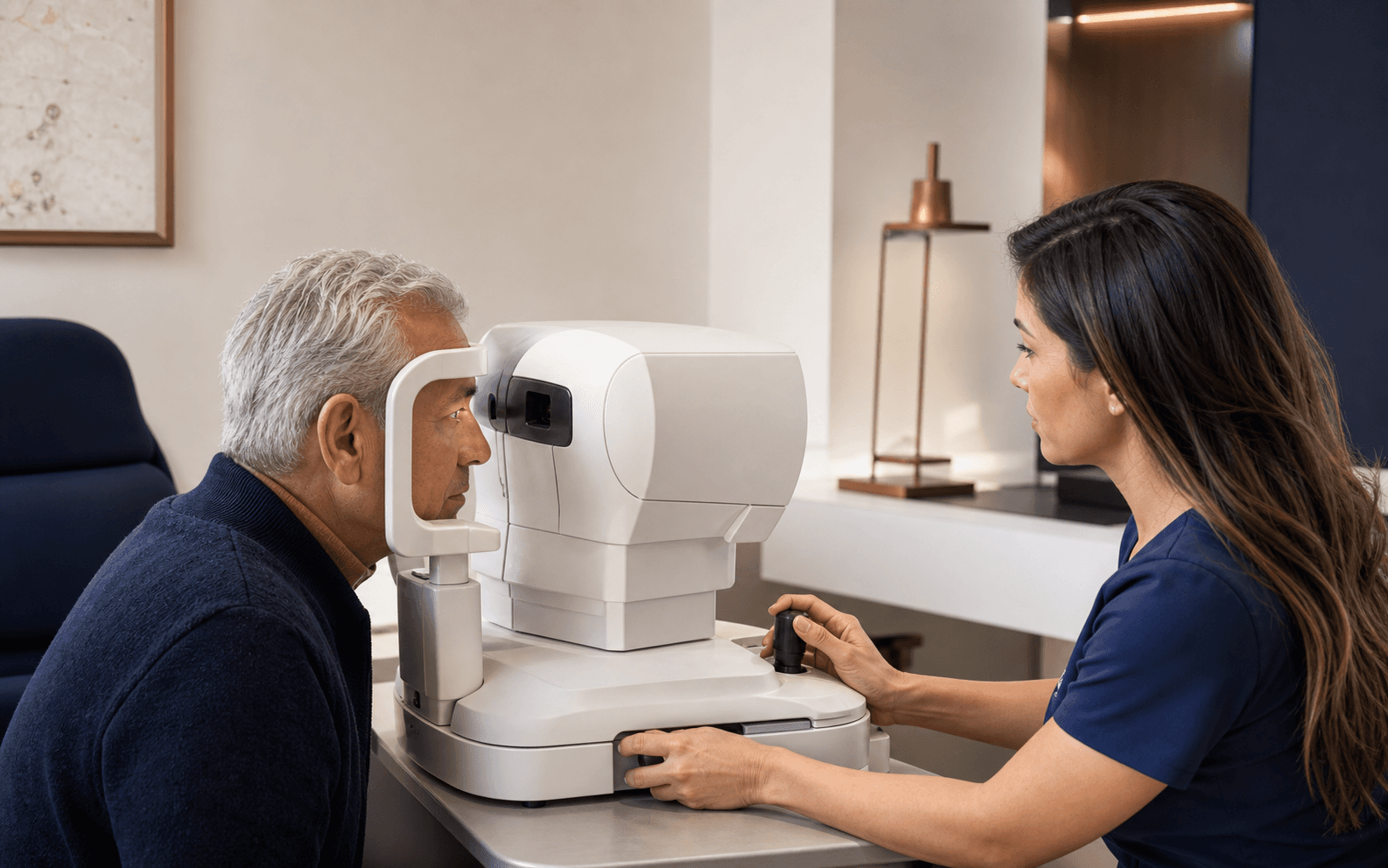
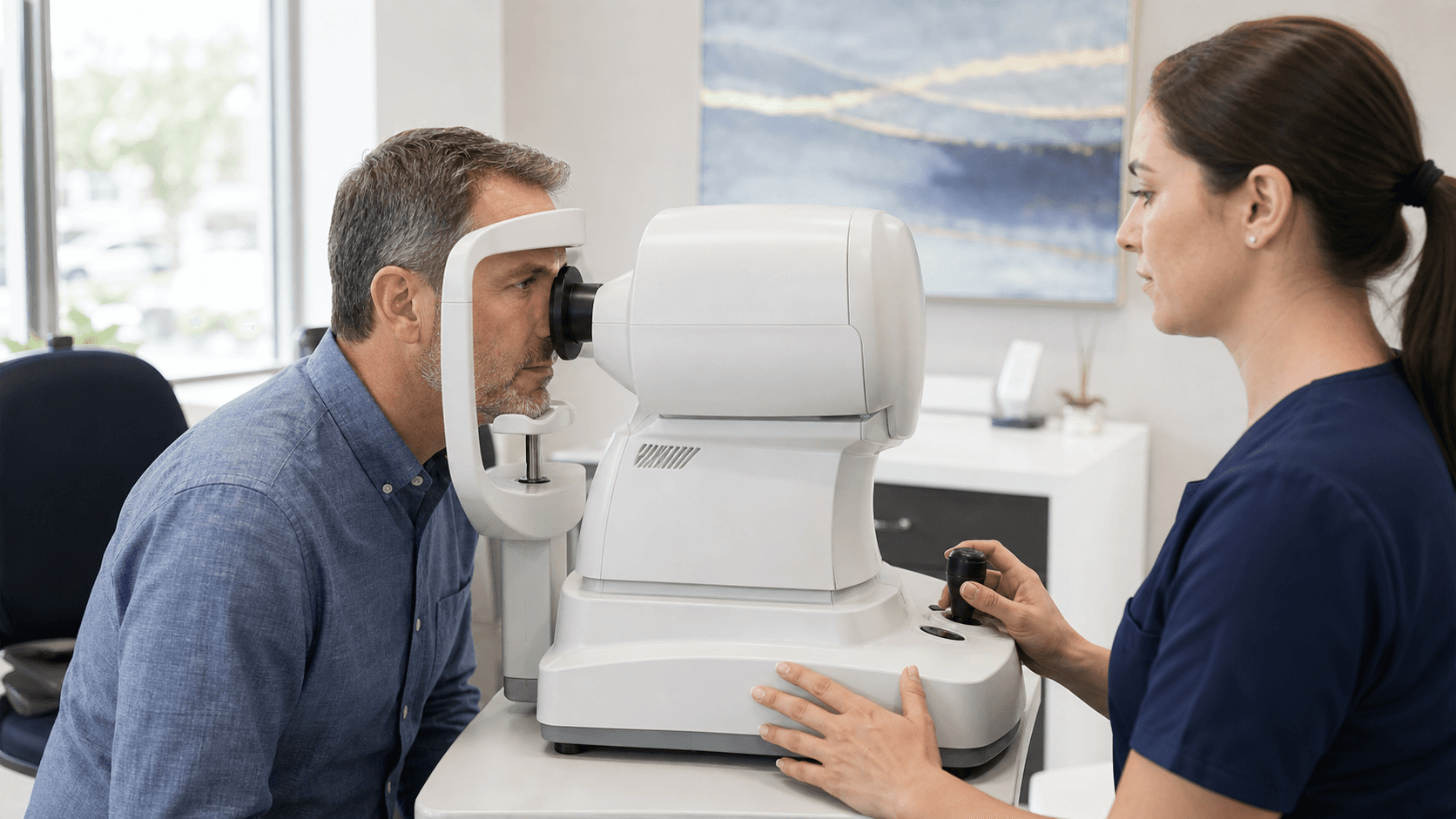
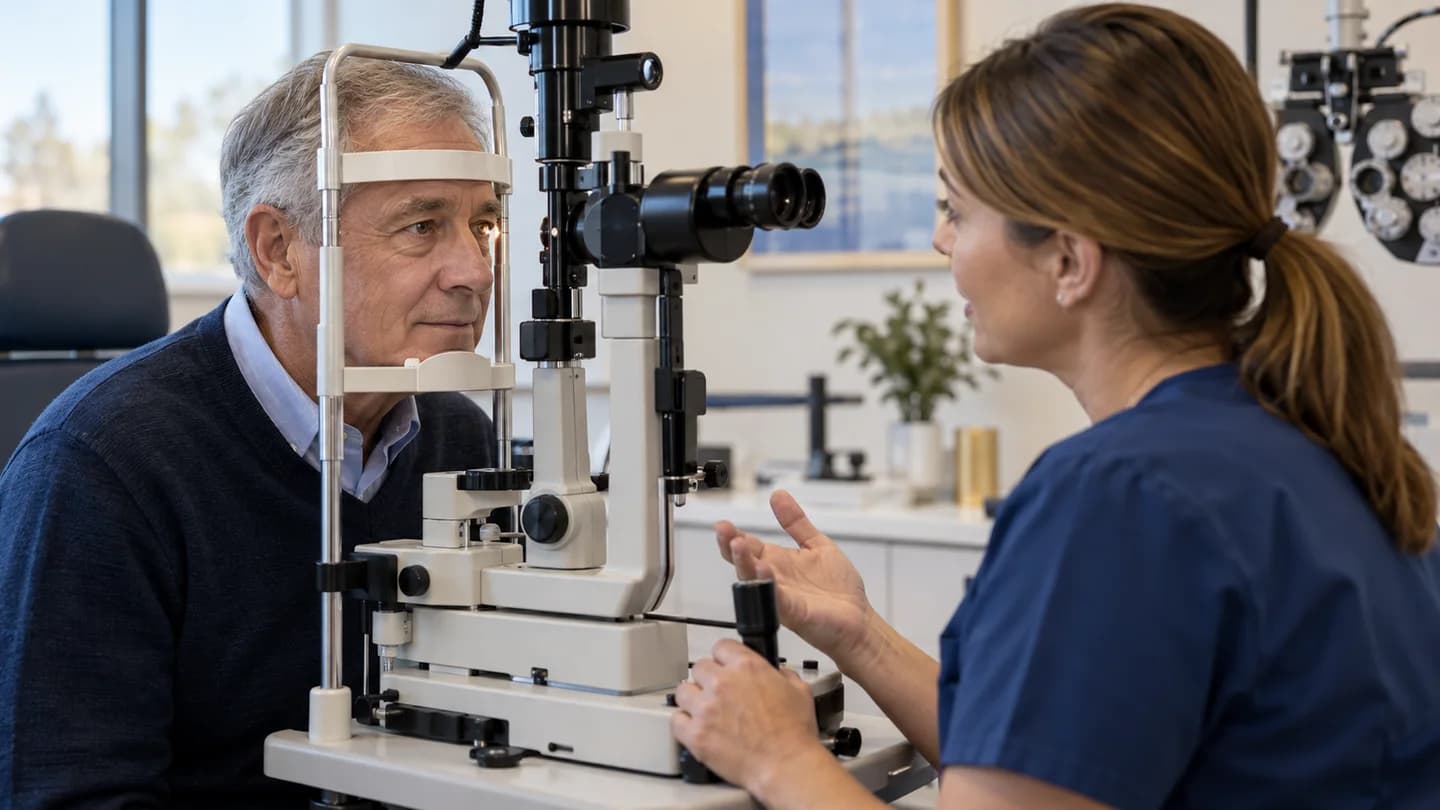
Not every visible pterygium alters measurements enough to matter. Size, location, progression, surface inflammation, tear-film stability, and whether repeat topography agrees all influence the decision. An examination is needed; a photograph or the patient's symptoms cannot replace corneal mapping and biometry.
When might the pterygium be treated first?
Staged care may be discussed when the growth is large, changing, near the visual axis, causing substantial irregular astigmatism, or producing inconsistent measurements. The pterygium can be removed, the cornea allowed to heal and stabilize, and cataract biometry repeated before finalizing the lens power.
There is no universal waiting period that fits every eye. Healing and corneal stability must be checked rather than assumed from a calendar. The exact timing depends on the surgical approach, the ocular surface, and whether repeat measurements have settled. This matters especially when someone is considering a toric or other premium lens whose result depends on a reliable corneal estimate.
Ask what would make the team confident that measurements are stable enough to order the cataract lens. Also ask whether the surface needs treatment for dryness or inflammation; a pterygium is not the only reason biometry can change. Our dry eye and cataract measurements guide covers a distinct, common source of uncertainty.
Can cataract surgery happen first or at the same time?
Sometimes. A small, stable pterygium that does not distort the cornea may be monitored while cataract surgery proceeds. If the cataract significantly limits vision, delaying its treatment may have a real cost to daily life. In selected cases surgeons may discuss combined surgery, but doing both together can make the final corneal shape and lens prediction less certain.
A published comparison of combined and sequential procedures found differences in refractive predictability; it was a limited study, not a rule for every eye. Ask the surgeon which measurements support the proposed order and how the plan would change if the cornea shifts afterward. The goal is not automatically to do more operations, but to avoid choosing a lens from unreliable measurements.
What if you want to reduce glasses use?
Be clear about that goal before either procedure. A toric implant is selected to address astigmatism, while other premium lenses have different tradeoffs for near vision and night vision. If pterygium-related astigmatism is changing, it is difficult to know how much correction should be built into an implant.
The cataract lens selection guide explains lens choices. For a patient traveling to Plano from Richardson, Frisco, or Dallas, sequencing also changes the number of visits and the time between them. Ask for the follow-up schedule before assuming both problems can be settled in one trip.
Which questions belong in the consultation?
Ask whether the pterygium is changing the corneal map or astigmatism, whether the cataract measurements agree on repeat testing, and how stable the cornea must be before choosing an implant. Ask whether removing the growth has a benefit apart from cataract planning, what recurrence risk and recovery would be, and whether observation is reasonable.
Visionary Eye Surgery evaluates both the eye surface and cataract plan in Plano. The best sequence may be pterygium treatment first, cataract treatment first, or monitoring one problem while addressing the other. A consultation should make the measurements and tradeoffs clear before a procedure is scheduled.
Sources
- Comparison of combined and sequential pterygium and cataract surgery
- National Eye Institute: Cataract surgery
Keep reading
Explore this content with AI
Open this article in your preferred AI assistant for a plain-English summary, action steps, and questions to ask before booking a consultation.
Want a direct answer about your eyes? A complimentary consultation gives you a clear, written recommendation.