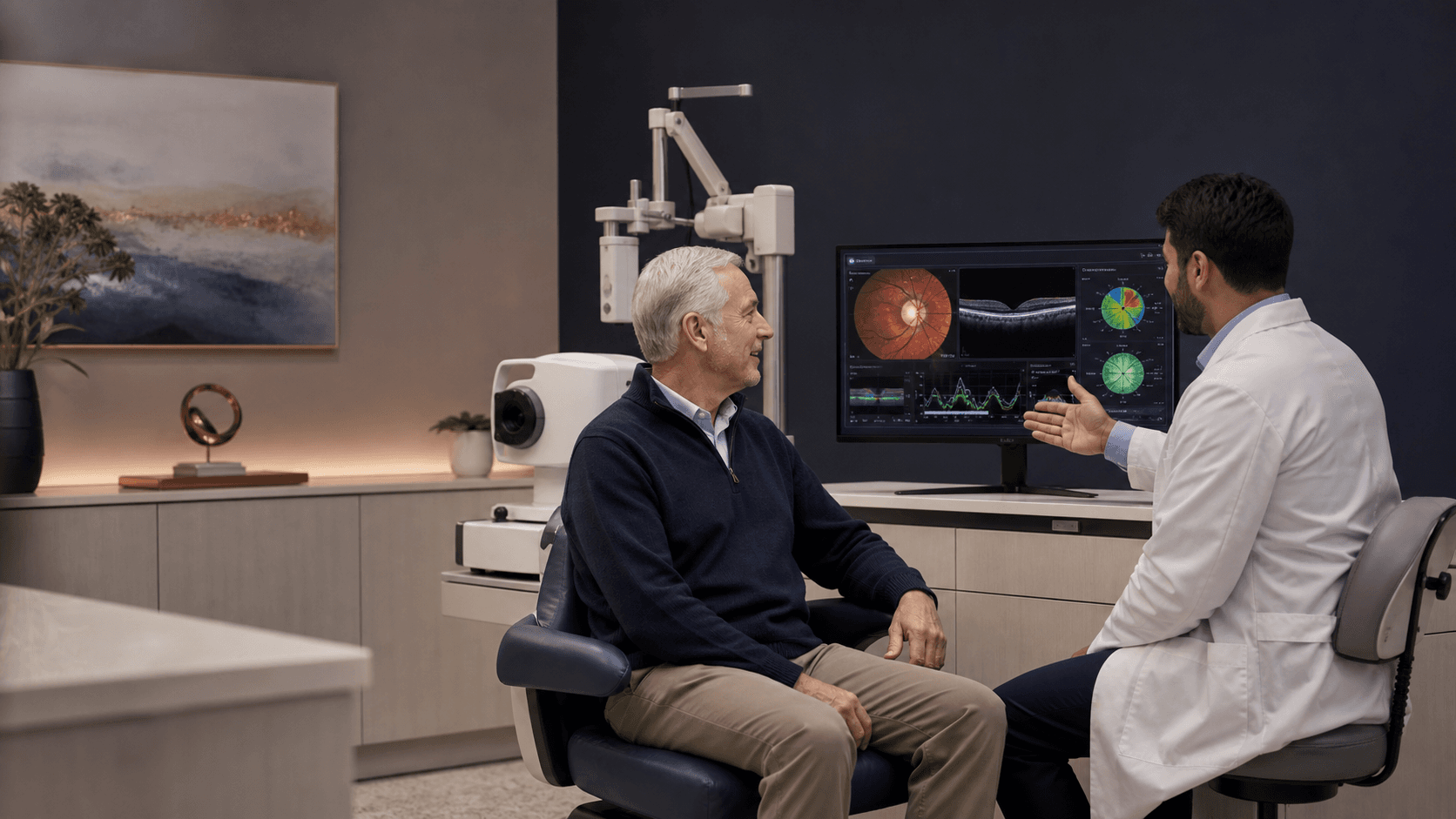
MIGS recovery is often shorter than recovery from traditional glaucoma operations, but minimally invasive does not mean no recovery or no follow-up. The exact experience depends on which procedure was performed, whether cataract surgery happened at the same time, the starting eye pressure, and how the eye responds to inflammation and postoperative medication.
This guide explains the usual checkpoints after minimally invasive glaucoma surgery at Visionary Eye Surgery in Plano. It does not replace the instructions from your surgeon. Glaucoma recovery is measured by more than comfort or clear vision; pressure control and optic-nerve protection remain the reason for treatment.
The short answer
Many patients can return to light daily activities relatively quickly after angle-based MIGS. Vision can still be blurry, especially when MIGS is combined with cataract surgery, and eye pressure can change during early healing.
A practical overview is:
- Surgery day: rest, use the prescribed medication, and have another adult drive.
- Early follow-up: check eye pressure, inflammation, the incision, and any implanted device.
- First week: vision and comfort often improve, but medication and activity instructions still matter.
- First month and beyond: confirm the pressure response and decide whether glaucoma drops should change.
MIGS is a category, not one operation
Recovery advice must match the procedure. The term MIGS includes several approaches that improve fluid drainage with smaller incisions and less tissue disruption than traditional filtering surgery.
At Visionary Eye Surgery, drainage-based options can include:
- iStent, which bypasses part of the trabecular meshwork.
- Hydrus Microstent, which scaffolds a portion of Schlemm's canal.
- Goniotomy, which opens part of the trabecular meshwork.
- Canaloplasty, which treats the natural drainage canal.
Durysta and iDose TR deliver glaucoma medication inside the eye. Their placement, follow-up, labeling, and recovery questions are different from drainage-based MIGS. A useful recovery plan names the exact treatment rather than using one generic timeline for everything.
Surgery day
MIGS is generally performed as an outpatient procedure. If cataract surgery is performed at the same time, the early visual experience reflects both procedures. Blur can come from dilation, the ocular surface, inflammation, corneal swelling, the new lens, or a small amount of blood in the front of the eye after an angle procedure.
Arrange transportation home. Use the prescribed drops exactly as directed and do not rub or press on the eye. Your team may provide an eye shield and procedure-specific guidance about bending, lifting, water exposure, and sleeping position.
Do not stop your preoperative glaucoma medication unless the surgeon gives explicit instructions. Some patients continue one or more pressure-lowering drops during early recovery even when reducing medication is a longer-term goal.
The first-day pressure check
The early examination is important even when the eye feels comfortable. MIGS changes fluid outflow, and postoperative inflammation or steroid medication can also affect pressure.
The surgeon may check:
- Eye pressure.
- Vision.
- Corneal clarity.
- Inflammation or blood in the anterior chamber.
- The surgical incision.
- The position of a stent or implant when applicable.
- Whether the postoperative and glaucoma-drop plans should change.
A good pressure reading on one visit is encouraging, but it is not the final result. Pressure varies, and glaucoma decisions depend on the target pressure and the condition of the optic nerve over time.
Days two through seven
Mild irritation, light sensitivity, blur, or fluctuating vision can occur during the first week. Combined cataract surgery can make the visual recovery feel more noticeable than a standalone angle procedure.
Return-to-work timing depends on the job. Quiet desk work, commercial driving, construction, healthcare, and outdoor work have different visual and contamination risks. Ask your surgeon about your specific responsibilities rather than relying on a universal day number.
Before resuming an activity, consider whether it involves:
- Heavy straining or vigorous exertion.
- Dust, chemicals, smoke, or dirty water.
- A risk of being struck in the eye.
- Swimming or hot-tub exposure.
- Driving before vision is adequate and the surgeon has cleared it.
Weeks two through four
During the following weeks, the eye usually becomes more stable. Follow-up focuses increasingly on whether the procedure is meeting its pressure goal.
That review may include:
- Repeat pressure measurements.
- Gonioscopy to inspect the drainage angle when appropriate.
- Medication reconciliation.
- Assessment of inflammation and the ocular surface.
- A decision about whether to continue, reduce, or change glaucoma drops.
Never adjust drops based only on how the eye feels. Glaucoma can progress without pain, and medication changes should be tied to measured pressure and the optic-nerve plan.
Will I be drop-free after MIGS?
MIGS may reduce medication burden, but it does not guarantee that every patient will stop every drop. Some patients need fewer bottles. Some continue the same treatment while the pressure response is evaluated. Others need additional treatment later because glaucoma is chronic.
The Glaucoma Research Foundation's MIGS overview describes the tradeoff clearly: MIGS generally offers a better safety profile than traditional glaucoma surgery but may provide less pressure reduction. That is why the procedure must match the disease stage and target pressure.
If medication burden is the main concern, compare MIGS and glaucoma drops. If the need for surgery is still unclear, read when glaucoma needs surgery.
What symptoms require an urgent call?
Contact the surgical team promptly for symptoms that are severe, worsening, or identified as urgent in your postoperative instructions. Warning signs can include:
- A sudden or substantial decrease in vision.
- Severe or increasing eye pain.
- Marked redness or discharge.
- Significant nausea or vomiting with eye pain or visual change.
- New flashes, a sudden shower of floaters, or a curtain-like shadow.
- New trauma to the eye.
The American Glaucoma Society position paper notes that MIGS still requires careful postoperative care because complications can include pressure spikes, bleeding in the front of the eye, inflammation, and device-related issues. Smaller incisions reduce some risks; they do not remove the need for monitoring.
MIGS recovery vs traditional glaucoma surgery
Traditional procedures such as trabeculectomy or tube-shunt surgery create a different drainage pathway and generally involve a more intensive recovery and follow-up schedule. MIGS often preserves the outer surface of the eye and uses an internal approach, which can allow faster visual recovery for selected patients.
That difference does not make MIGS the right answer for every glaucoma stage. An eye that needs a very low target pressure may require a more powerful traditional operation or referral-level glaucoma care. Recovery speed should not override the pressure needed to protect the optic nerve.
Plan recovery before choosing the procedure
At a MIGS consultation in Plano, ask:
- Which exact procedure are you recommending?
- Is it standalone or combined with cataract surgery?
- What pressure goal are we trying to reach?
- Which drops continue immediately after surgery?
- When will pressure be checked?
- What would make the plan change?
- What work, driving, exercise, and travel restrictions apply to me?
For a records-based review before deciding, use our glaucoma second-opinion guide. To discuss your pressure history and treatment options, schedule a glaucoma evaluation at Visionary Eye Surgery in Plano.
Medical sources
Medically Reviewed by Dr. Shehz, DO
Dr. Shehzad Batliwala, DO—better known as Dr. Shehz—is a board-certified ophthalmologist and eye surgeon who brings both technical precision and genuine compassion to every patient he treats.
Explore this content with AI
Open this article in your preferred AI assistant for a plain-English summary, action steps, and questions to ask before booking a consultation.
Want a direct answer about your eyes? A complimentary consultation gives you a clear, written recommendation.