Current or previous isotretinoin use needs to be disclosed before LASIK or PRK. The decision depends on medication history, eye-surface health, healing concerns, and repeatable measurements, not a universal waiting period found online. Do not stop acne treatment or change its schedule yourself to qualify for surgery.
The LASIK page explains the procedure. This guide addresses medication history; it is not a substitute for instructions from the refractive surgeon and the clinician prescribing isotretinoin.
Why does the surgeon need to know about it?
The FDA identifies medicines that can affect healing, including retinoic acid, as relevant to refractive-surgery assessment. Isotretinoin history is also important when evaluating dryness and the stability of the ocular surface.
Tell the team the exact product, current or prior use, dates, and any symptoms. A medication list should include prescription skin treatments even if you do not think of them as eye medicines. Do not omit a completed course because it ended before you requested the consultation.
Is there one waiting period that makes surgery safe?
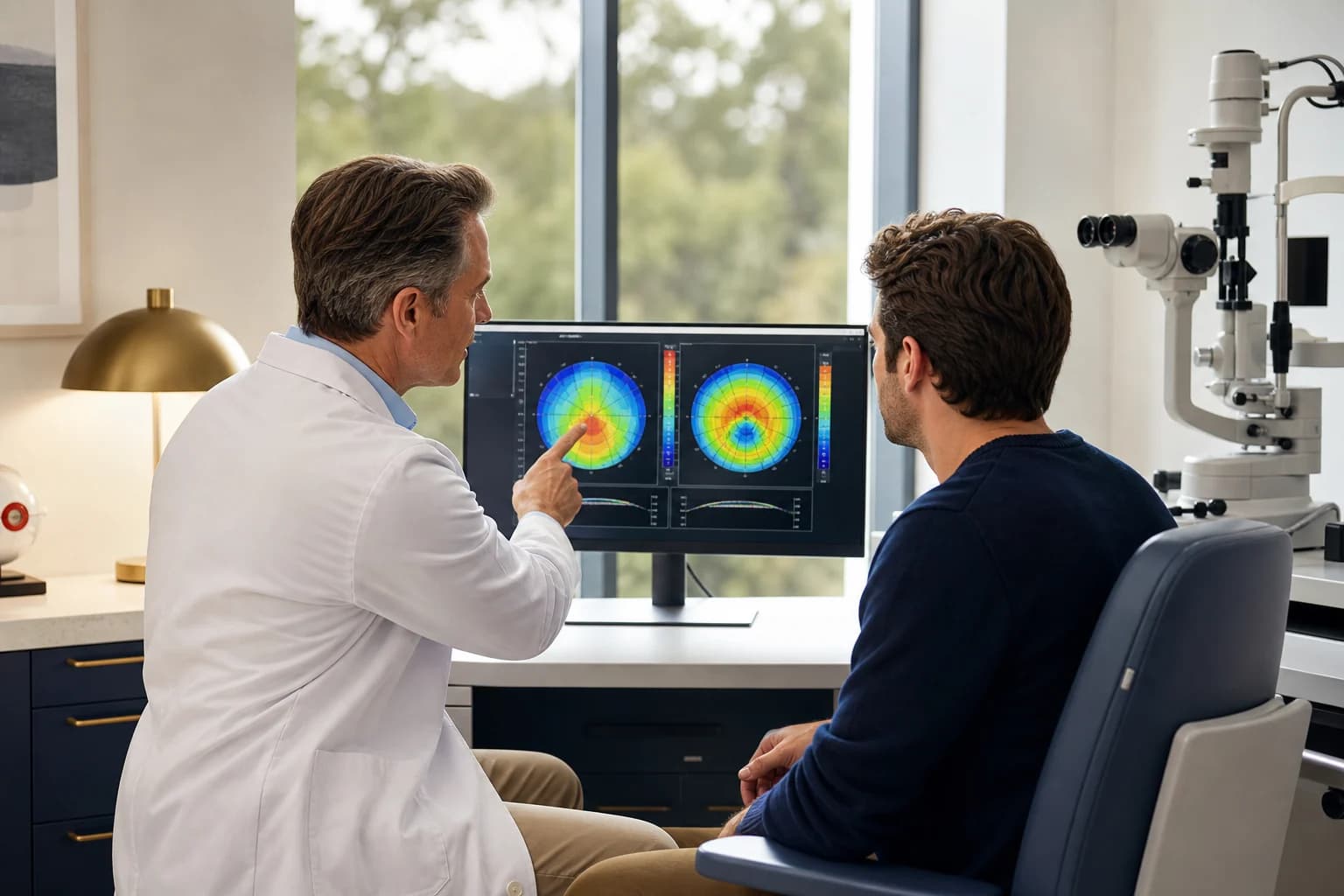
No online interval can establish that your eyes are ready. Device labeling, your treatment history, symptoms, and examination findings may lead the clinicians to defer surgery or repeat testing. Reaching a particular date is not the same as showing stable measurements.
Ask what finding must improve or remain stable before reconsideration and who will communicate with your prescriber. A useful answer explains the conditions for reassessment rather than giving a countdown without an examination.
Is PRK automatically a safer workaround?
No. PRK avoids a LASIK flap, but it still treats the cornea and depends on surface healing. Changing the procedure name does not bypass an unresolved medication or eye-surface concern. Our PRK/ASA page explains that technique separately.
If a clinic recommends one method, ask why the eye qualifies for that method now. The answer should address the medication history and measurements directly. Do not infer that an ineligible LASIK patient is automatically a PRK candidate.
Which symptoms and records are useful?
Describe burning, fluctuating blur, contact-lens intolerance, and any treatment you use for the eyes. Bring relevant dermatology information and prior eye records if available. Ask whether the surface needs treatment before final mapping and refraction.
For a patient coming to Plano from elsewhere in DFW, clarify whether the first visit is an initial assessment or final surgical testing. If repeat visits are needed, understanding their purpose makes planning easier and avoids assuming the first available slot is a surgery commitment.
What should the next step be?
Discuss the history openly at a consultation, and let the eye-care team coordinate any timing question with the prescriber. Continued glasses or contacts, when appropriate, may remain the better option while the situation is assessed.
Seek prompt care for significant pain or a sudden visual change rather than attributing everything to dryness or a medicine. The aim is a medically sound recommendation, including postponement when necessary, not finding the shortest route around a screening concern.
Sources
- FDA: Conditions and medicines relevant to LASIK suitability
- FDA: Professional-use information discussing isotretinoin
Keep reading
Your exam can clarify which options fit your eyes. Visit our Plano team from anywhere in DFW.
Book a free visit