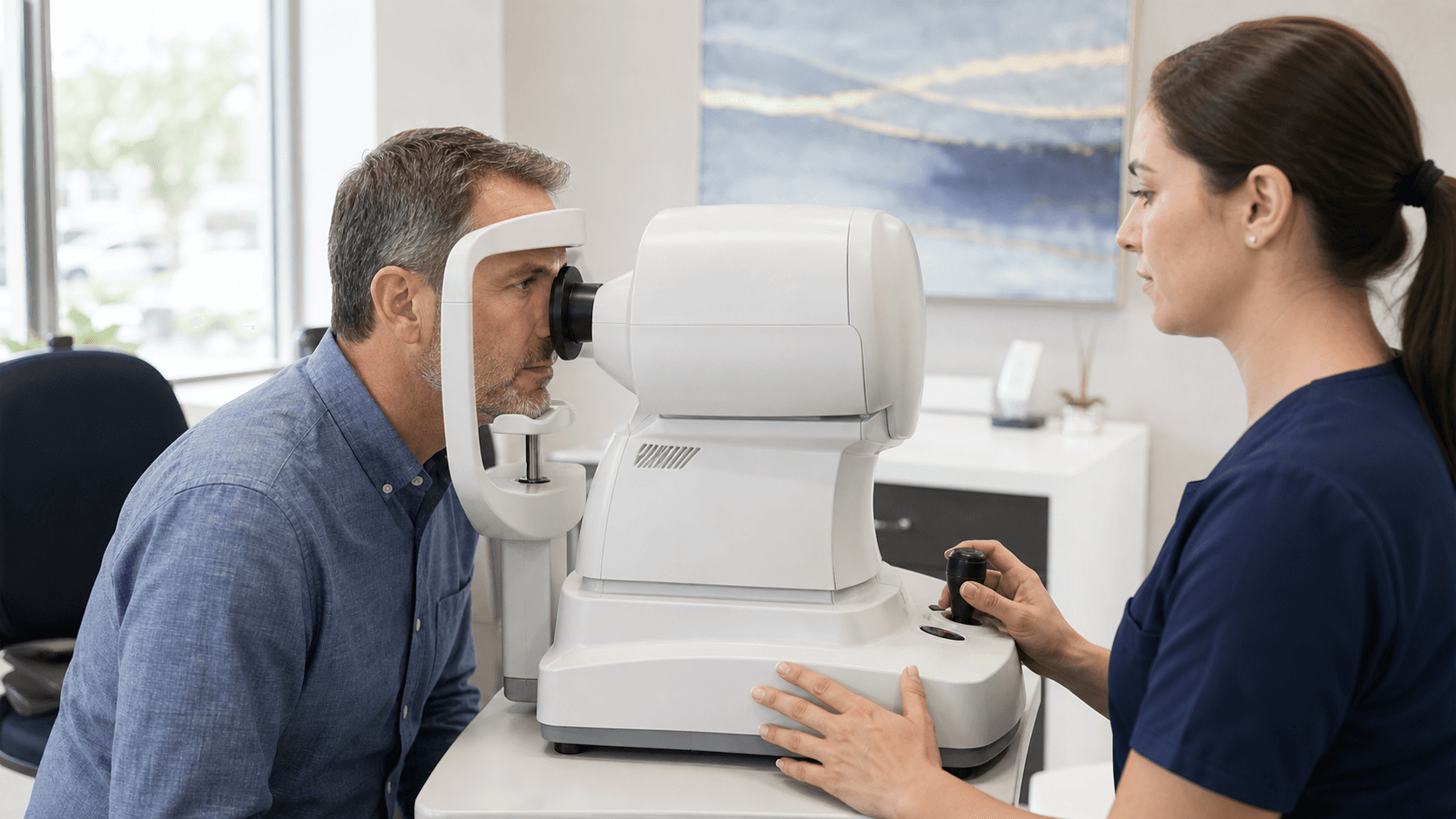
Lens replacement may be possible after LASIK, but previous laser correction changes the planning. The surgeon must assess the cornea, calculate an implant using methods appropriate for prior refractive surgery, and decide whether removing the natural lens is justified. It is not simply another LASIK touch-up.
Our custom lens replacement page covers RLE generally. This guide addresses an elective decision after LASIK; if a cataract is already affecting vision, the cataract-after-LASIK guide is the closer starting point.
Why is the old LASIK history important?
LASIK reshaped the cornea. That history matters when estimating the power of an implanted lens, even if your original laser procedure was many years ago. Current testing is still needed; an old prescription alone does not describe the eye today.
Ask the original clinic for the operation record and available preoperative measurements. Bring whatever you can obtain, but do not assume missing records automatically rule surgery in or out. Ask the current surgeon how the history changes the measurements, calculation strategy, and uncertainty discussed with you.
Is RLE the answer when reading gets harder?
Not automatically. Near-vision difficulty after successful distance LASIK may reflect age-related loss of focusing ability, but an examination should identify the cause. Reading glasses, other optical approaches, or continued observation may remain sensible.
RLE removes the natural lens permanently. The decision should compare that irreversible step with the specific problem you want solved. Ask what improvement is realistic for your main tasks and what glasses you may still need. Avoid choosing an operation simply because it is described as the next stage after LASIK.
Does previous LASIK determine which implant you need?
No single implant follows automatically from the history. Corneal quality, retinal and optic-nerve health, visual priorities, and tolerance for optical trade-offs all matter. A premium label does not establish that a lens is appropriate for a previously treated cornea.
Ask the surgeon to explain the intended focus and the plan if a residual prescription remains. Questions about glare, night driving, reading distance, and computer use are more informative than asking only whether the implant will produce 20/20 vision. Obtain an explanation of uncertainty before agreeing to a target.
What should you bring to a DFW evaluation?
Bring your current glasses, prior LASIK records, and a short description of when the visual difficulty occurs. If your work depends on night driving or detailed near tasks, say so early. Ask whether the eye surface needs treatment before final measurements.
For a Plano visit from another DFW city, confirm whether testing and consultation occur together and whether dilation changes your travel plan. Do not book an operation around a single convenient date before the assessment is complete.
What should a recommendation explain?
It should explain why RLE is preferable to reasonable alternatives for your eye now, not merely why lens surgery is technically possible. Ask about individual risks, the expected role of glasses, the follow-up plan, and how a refractive miss would be managed.
A consultation may conclude that no additional surgery is the better choice. Prior LASIK deserves careful planning, not an automatic upgrade.
Sources
- ESCRS: Cataract assessment and calculations after refractive surgery
- ESCRS: Refractive surgery recommendations
Keep reading
Your exam can clarify which options fit your eyes. Visit our Plano team from anywhere in DFW.
Book a free visit