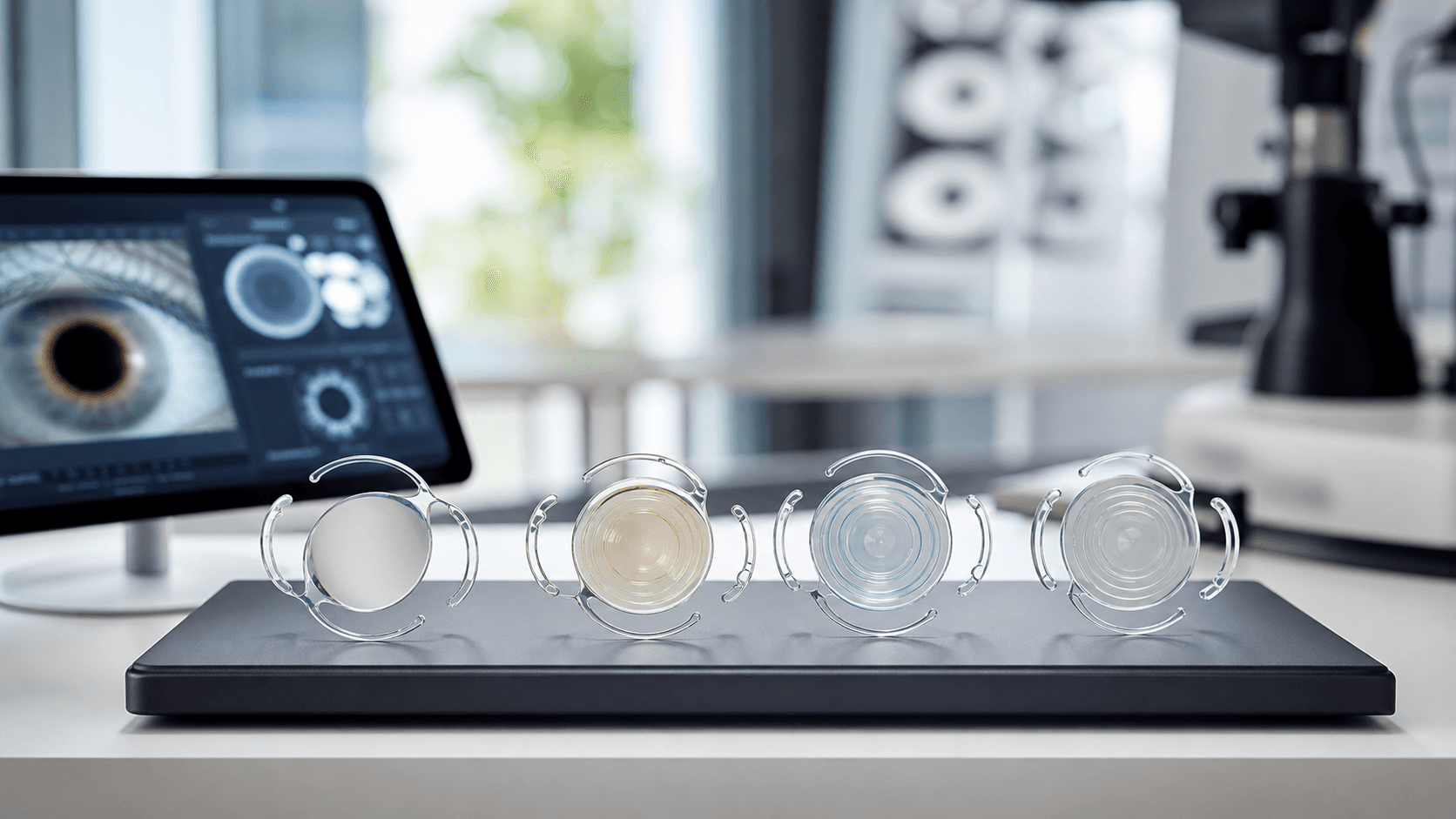
The Light Adjustable Lens (LAL) is an intraocular lens whose focusing power can be adjusted with a specialized ultraviolet-light treatment after cataract surgery. That flexibility comes with a commitment: additional examinations, light treatments, and prescribed UV-protective eyewear until the treatment course is complete.
For someone comparing cataract options in Plano or elsewhere in Dallas-Fort Worth, the practical question is whether that process fits both the eyes and the calendar. This guide explains one technology. Our cataract lens comparison remains the place to compare monofocal, toric, and extended-range approaches.
How does the light adjustable lens work?
RxSight's system combines a photosensitive lens implant with a Light Delivery Device. After the surgeon removes the cataract and implants the lens, the team measures the healing eye's prescription. Controlled light treatments can then alter the implant's power before final lock-in treatments stabilize it.
Preoperative measurements still matter. Adjustability is not a substitute for careful assessment of the cornea, retina, optic nerve, or visual goals. Other lens choices also use detailed measurements; describing them as a guess understates the planning involved. A remaining prescription with a conventional implant may sometimes be managed with glasses or another treatment after evaluation, rather than simply being the final answer.
How many visits and light treatments are needed?
RxSight describes one to three adjustment treatments followed by two lock-in treatments. The number of examinations and the timing depend on healing and the treatment plan. A brief light exposure does not mean the whole appointment is brief: testing, dilation, discussion, and checking vision take additional time.
Ask the team to write down the expected sequence for each eye. Clarify which appointments are routine surgical checks, which involve light treatment, and what happens if a measurement has not stabilized. Do not arrange a departure date based on an assumed single final adjustment.
Before scheduling, settle three practical questions: who will provide the light treatments, where those appointments take place, and who will manage an unexpected problem. Confirm current lens availability and the entire treatment pathway with the practice; this educational description is not a device-availability guarantee.
Why are special protective glasses required?
During the adjustable period, unintended UV exposure can affect the lens. The manufacturer's instructions call for the prescribed RxSight UV-protective glasses during waking hours and through 24 hours after the final light treatment, unless the treating team provides updated device-specific instructions.
Ordinary sunglasses are not a substitute. Ask about the correct fit, indoor and outdoor pairs, sleep, showering, work requirements, and what to do if the glasses are lost or forgotten. Contact the team promptly about missed protection; do not try to compensate by changing appointment dates yourself.
If protective eyewear would conflict with your work or daily responsibilities, raise that before surgery. The safest plan is one you can realistically follow, not one that depends on finding a workaround afterward.
Who should discuss this lens with a surgeon?
The FDA-approved indication concerns cataract patients meeting specified criteria, including pre-existing corneal astigmatism and absence of pre-existing macular disease. The surgeon must check the current model's labeling, health history, medications, and examination findings. Some medications or eye conditions can make the light-treatment process unsuitable.
Previous LASIK or PRK can make implant-power planning more complex, which is one reason adjustability may enter the discussion. It does not automatically establish suitability or guarantee a particular result. Bring old records and explain which tasks matter most, including reading, computer use, and driving after dark.
If the discussion is about replacing a clear lens before a cataract develops, ask explicitly about the indication and any off-label use. Refractive lens exchange is a separate decision with its own benefit-risk discussion; cataract approval should not be presented as blanket approval for every elective lens procedure.
How can DFW patients plan the follow-up commitment?
For patients traveling from Dallas, Frisco, or McKinney, several shorter appointments may matter more than the length of surgery day. Arrange transport for dilated visits and confirm when driving is appropriate.
If you are coming from Fort Worth, Arlington, or Denton, discuss work leave and a backup transport plan before reserving treatment dates. Visionary Eye is based in Plano; serving DFW patients does not mean there is a separate treatment office in each city. Ask whether every stage is handled at the same location.
What should you ask about cost and expectations?
Request an itemized estimate separating covered cataract care from any noncovered refractive features, testing, and light-treatment services. Do not assume a premium lens means Medicare covers none of the surgery, or that insurance covers the whole package. Our cataract cost and Medicare guide explains the coverage distinction.
Ask what glasses you may still need, what result is realistic for each working distance, and how unresolved symptoms would be assessed. Adjustability cannot promise freedom from glasses or eliminate surgical risks. Start with the cataract surgery overview and bring these questions to a consultation.
Sources
RxSight: patient information and approved use
RxSight: treatment and protective-eyewear questions
FDA: Light Adjustable Lens approval and labeling
This is educational information, not a personal lens recommendation. The treating surgeon's current device-specific instructions take priority.
Keep Reading
Explore this content with AI
Open this article in your preferred AI assistant for a plain-English summary, action steps, and questions to ask before booking a consultation.
Want a direct answer about your eyes? A complimentary consultation gives you a clear, written recommendation.