Bring the names of your drops and medicines, a short record of your symptoms, and your contact lens information to a dry eye evaluation. You can also bring photos of bottle labels, any previous exam notes, and a description of when your vision fluctuates. Before coming in, ask whether to wear contacts or use drops as usual that day.
Write down what happens on an ordinary day
Note whether the problem is worse on waking, near the end of the day, during screen work, or outdoors. Explain whether it affects one eye or both, how long it has been happening, and whether blinking, taking out your contacts, or using a particular drop changes it. Include discomfort, watering, and any moments when the blur makes it harder to read or drive.
Tell the clinician what you have already tried and how often. Bring up recent eye surgery, any continuing treatment plan, and relevant health or medication changes. Keep prescribed medicines and drops on their regular schedule unless the clinician has given you different instructions.
Ask what each test would change
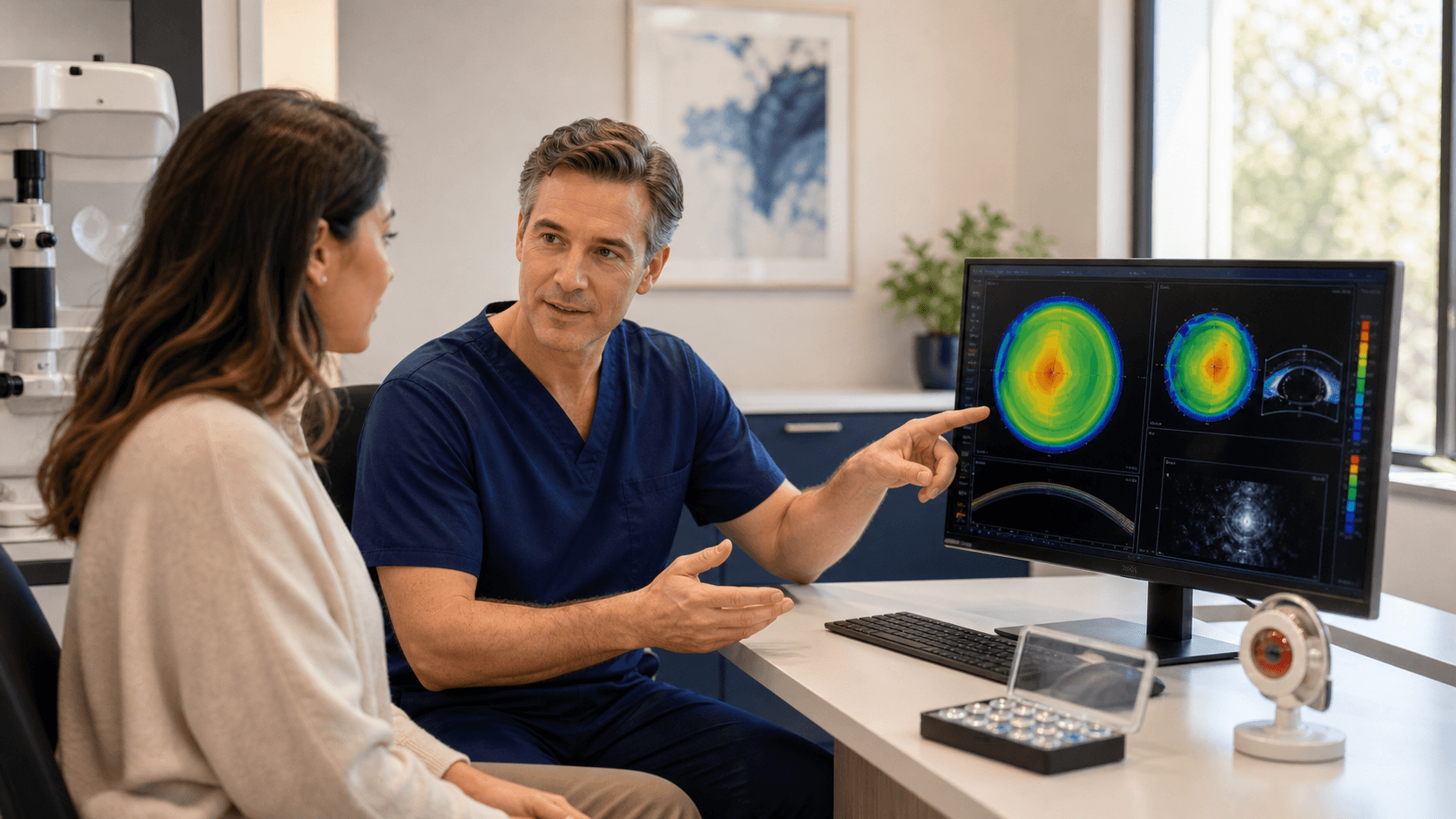
The National Eye Institute describes tests that look at how much moisture is present, how long the tear film remains stable, and what the clinician can see when examining the eye surface and eyelids. The tests taken depend on the symptoms and examination. Ask which findings explain your symptoms, whether the eyelids or tear film need attention, and how the team will judge whether treatment is helping.
Before leaving, confirm which steps to try first and what would bring you back sooner. If you are also planning cataract or vision correction surgery, ask whether the surface needs to be addressed before the measurements are used for surgery planning.
If drops alone have not addressed your symptoms, see what a Plano dry eye evaluation includes. Call the office with any questions about appointment preparation and what to bring.
Bring your symptom notes, current drops, and contact lens details. Call the Plano dry eye clinic to arrange an evaluation.
Plan a dry eye evaluation