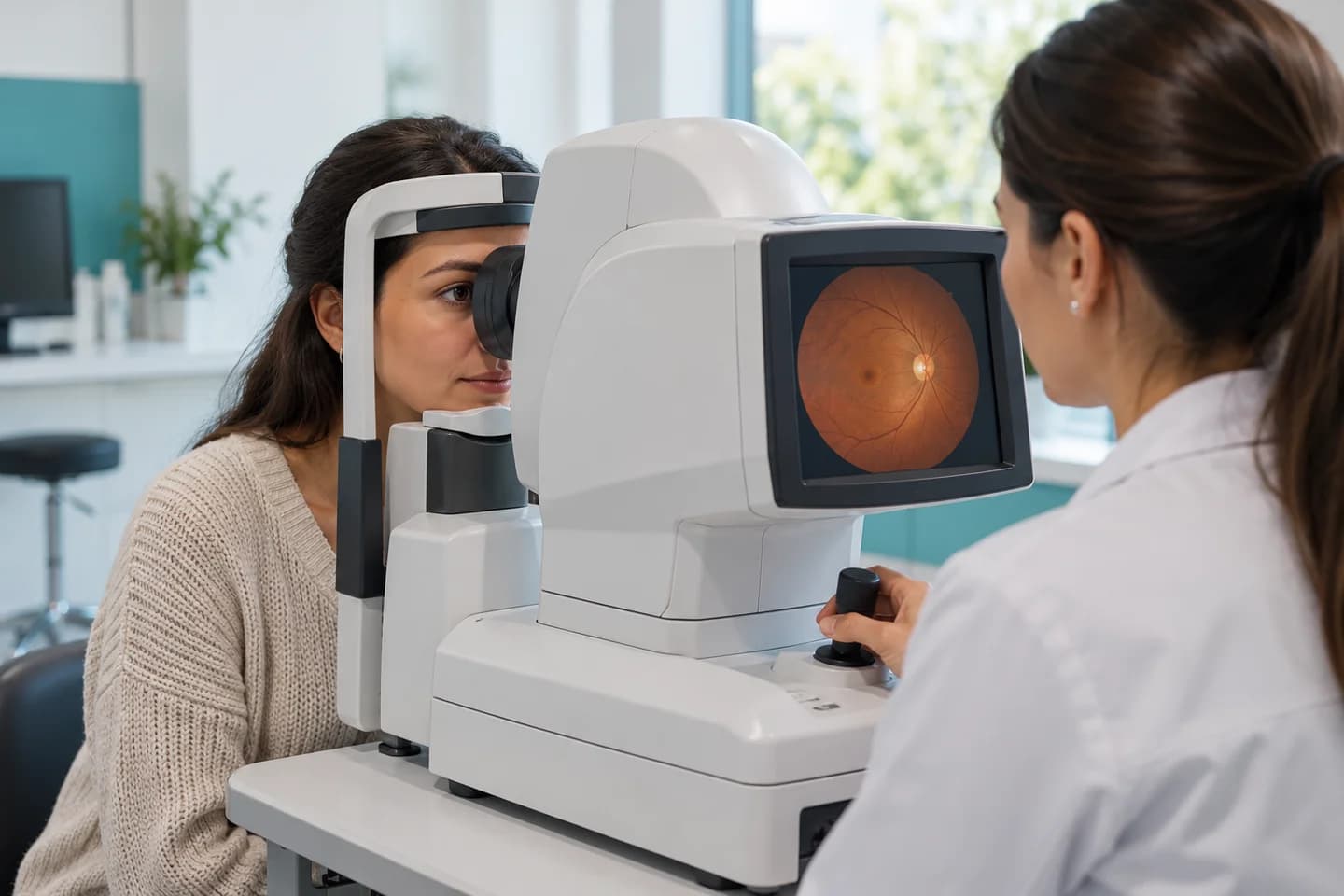
AI diabetic-eye screening does not replace a comprehensive eye examination for every purpose. Certain authorized systems assess retinal images for a defined diabetic-retinopathy screening task. A chatbot, phone photograph, or reassuring screening result cannot rule out all eye disease or establish candidacy for eye surgery.
The ophthalmology page explains broader eye care. This article focuses on what a screening result does and does not answer, rather than promoting an AI product.
What can an authorized system actually assess?
A medical screening system has a specific intended use, supported by its authorization and operating instructions. Some systems analyze retinal photographs and return a screening or referral result for diabetic retinopathy. They are not a general-purpose replacement for every eye test.
The American Diabetes Association's 2026 standards discuss authorized AI screening as one approach to improving access to retinal screening. That does not mean any app using the word AI has the same evidence or regulatory status. Ask for the product name and the exact condition it is designed to assess.
Does a negative screening result mean my eyes are healthy?
Not in every respect. A result relates to the system's specified task and the images it could evaluate. It is not an all-clear for glaucoma, cataracts, corneal disease, dry eye, or a new symptom outside that task.
Ask what happens if images cannot be graded or the result recommends referral. Screening is useful only when the follow-up pathway is clear. Keep a copy of the result so the next clinician knows what was assessed and what was not.
Can a chatbot interpret a symptom or choose surgery?
A conversational answer is not the same as an authorized medical-device result or an examination. A chatbot cannot measure your eye pressure, inspect the drainage angle, or verify the corneal measurements needed for a refractive-surgery decision.
Use an online explanation to prepare questions, not to override an examination or reassure yourself about a sudden change. New vision loss, severe eye pain, or rapidly worsening symptoms need prompt clinical assessment rather than repeated prompts. Do not enter identifying medical records into an unfamiliar service without understanding its privacy arrangements.
What should you ask before agreeing to screening?
Ask which condition is being screened, whether the test is appropriate for your situation, who receives the result, and who arranges any referral. Also ask when a full examination is needed regardless of the screen. These questions are more useful than asking whether AI is generally accurate.
If screening occurs at a primary-care appointment in Dallas and follow-up is arranged in Plano, confirm that the result and images can reach the eye-care team. A referral should not become a dead end because the two offices cannot share the report.
How does this apply at Visionary?
This educational guide does not claim Visionary operates an AI screening system. For a routine appointment, describe the reason for the visit and bring any outside screening report. The team can clarify the appropriate assessment or referral.
The useful comparison is the clinical question each test answers. Screening can expand access for a defined purpose; comprehensive care remains a separate responsibility when symptoms, risk factors, or the result call for it.
Sources
Keep reading
Your exam can clarify which options fit your eyes. Visit our Plano team from anywhere in DFW.
Book a free visit