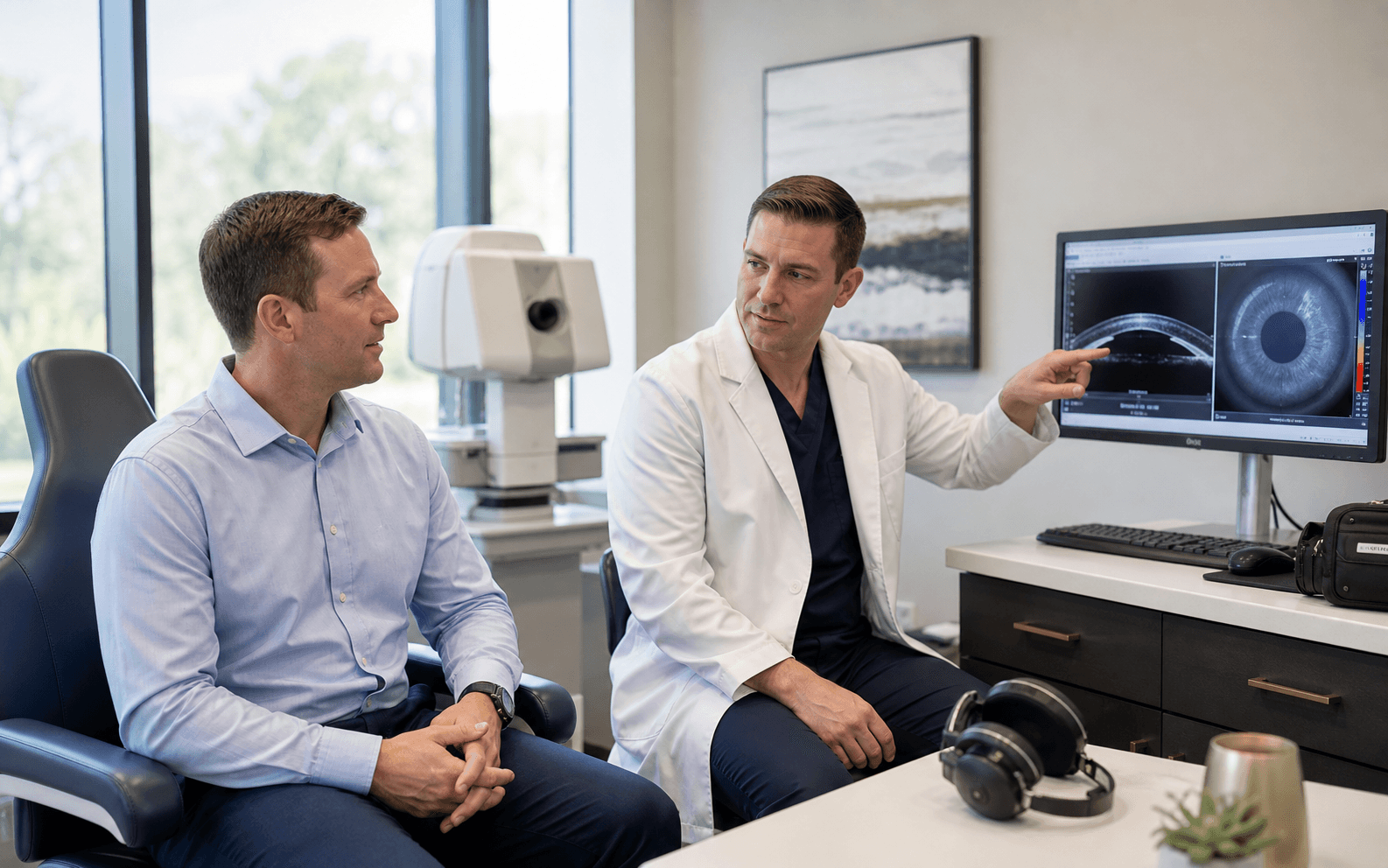
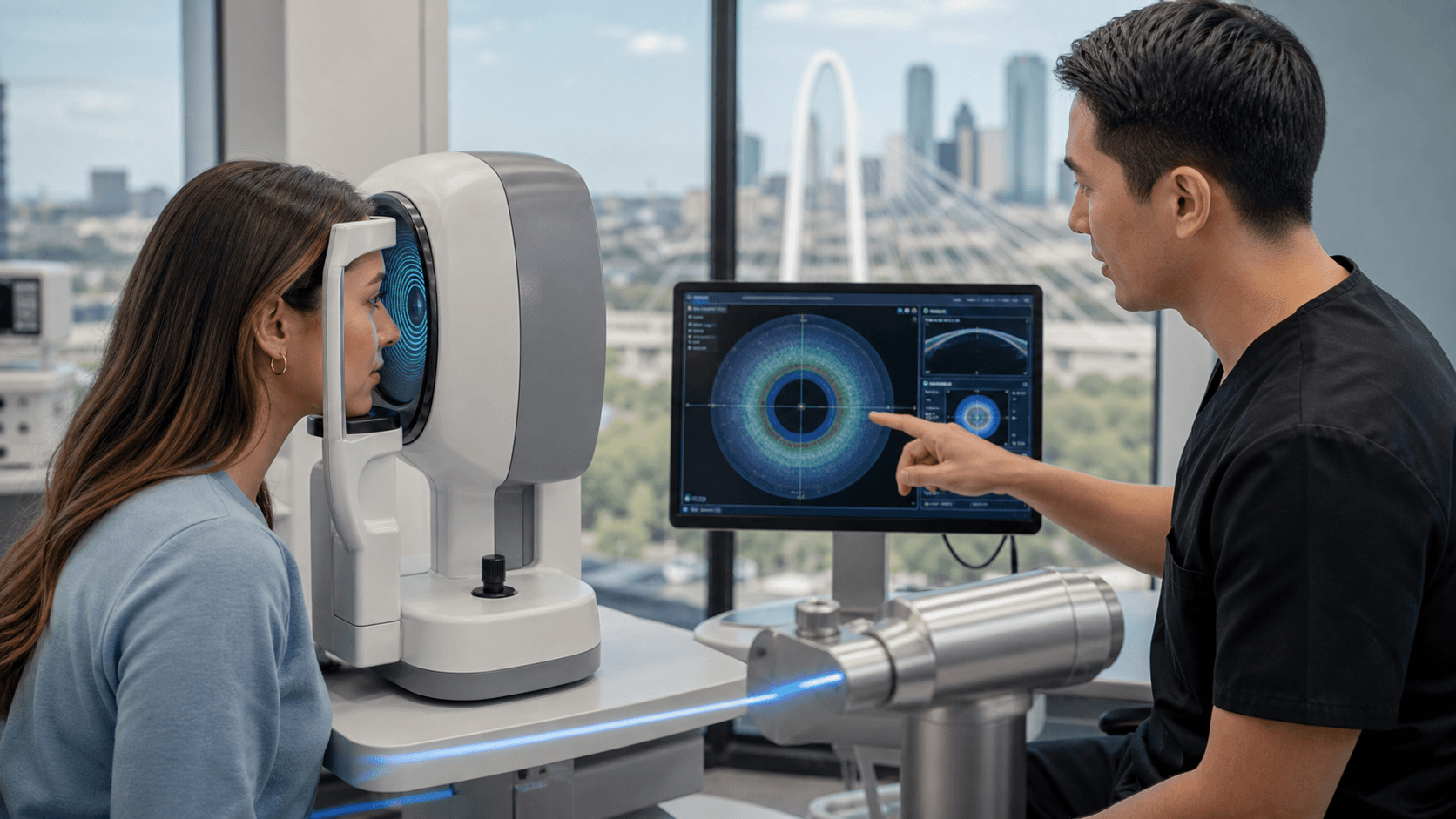
First responders and service members considering vision correction need both a suitable eye exam and confirmation of their role's current procedure and duty requirements. A good surgical result does not, by itself, establish fitness for an academy, deployment, flight assignment, or unrestricted duty.
This guide focuses on occupational planning for DFW patients, not a universal clearance policy. The LASIK, SMILE, and PRK pages explain the operations. None can determine whether a particular agency or military role accepts your proposed treatment.
What should you confirm before choosing a procedure?
Ask the relevant occupational-health, recruiting, or military medical authority for the current requirements that apply to your exact status and assignment. An applicant, serving member, pilot, and specialist trainee may face different review processes. Do not rely on a coworker's approval or a clinic's general statement that a procedure is accepted.
Clarify which procedures may be considered, what records are needed, whether prior authorization or a waiver is relevant, and who provides final clearance. Bring that information to the consultation before paying a deposit or choosing surgery dates. If official requirements are unclear, resolve them with the responsible authority first.
Does avoiding a flap make the eye safe from impact?
No. SMILE and PRK avoid a LASIK flap, but both alter the cornea and have their own surgical risks. Flapless does not mean impact-proof or ready for immediate combatives, rescue work, or contact sports. Eye protection and restrictions still matter.
Describe foreseeable exposure: smoke, dust, chemical splash, tight protective gear, physical confrontation, or pressure around the face. The clinician must consider those demands alongside corneal shape, thickness, prescription, and tear-film health. Job title alone does not determine the best procedure, and continuing with glasses or contacts may be appropriate.
How should you plan shifts, training, and travel?
Separate readiness for quiet tasks from readiness for emergency driving, lifting, live-fire training, or unpredictable physical work. Ask for written activity restrictions and the examination checkpoints used to revise them. A Friday operation does not guarantee a normal Monday shift.
Confirm the consultation, surgery, and early follow-up schedule at the Plano practice before arranging travel from elsewhere in DFW. Have a driver for surgery and transport for checks until cleared to drive. Medical recovery and occupational clearance are separate decisions; neither should be compressed to fit an academy or deployment date.
Which symptoms and records matter afterward?
Glare, halos, dryness, and fluctuating vision can affect night duty, equipment use, and response driving. Some problems persist or need additional care. Report symptoms rather than treating an early good eye-chart result as evidence that every job task is safe.
Keep the operative report, preoperative measurements, follow-up findings, and any restrictions requested by your reviewing authority. Ask the surgical team how to obtain records and whom to contact for urgent symptoms. Do not assume a routine examination near home replaces a required surgical follow-up.
What about discounts and payment?
Ask the practice which current offers apply to your procedure and status, and request eligibility and exclusions in writing. This article does not promise a discount, employer reimbursement, or military benefit. Include leave and transportation costs when comparing choices, and review the total repayment if financing.
Use the affordability guide for payment questions. Procedure suitability and role requirements should be settled before a promotion becomes the reason to proceed.
Sources
FDA: LASIK candidacy and contact-sport considerations
FDA: preparing for LASIK and follow-up
Womack Warfighter Refractive Eye Surgery Program, an example of a program-specific process, not a policy for every military role or civilian agency.
Keep Reading
Your exam can clarify which options fit your eyes. Visit our Plano team from anywhere in DFW.
Book a free visit