Civilian pilots can have LASIK, but surgery does not remove the obligation to meet Federal Aviation Administration vision standards. The important question is not simply whether LASIK is allowed. It is whether vision has stabilized, significant adverse effects are absent, the appropriate documentation is complete, and the pilot still meets the standards for the medical certificate held.
That distinction matters throughout Dallas-Fort Worth, where pilots, flight instructors, air traffic professionals, and aviation employees may be balancing clinical recovery with employer policies and FAA requirements.
This guide addresses civilian FAA considerations. Military aviation, airline employment, and individual training programs may apply additional rules. Confirm the current requirements with an Aviation Medical Examiner, the FAA, and your employer before choosing a procedure or surgery date.
Does LASIK automatically disqualify a pilot?
No. The FAA does not treat prior LASIK as an automatic disqualification.
The FAA states that a pilot should not resume piloting until the treating health care professional determines that:
- The postoperative condition has stabilized.
- There are no significant adverse effects or complications.
- The pilot meets the applicable FAA vision standards.
The FAA also describes documentation responsibilities after refractive surgery. Those requirements can change, and the correct path can depend on the medical certificate, timing, symptoms, and whether an Aviation Medical Examiner needs additional records.
Do not schedule around an assumed return-to-flight date. Establish the certification and employer requirements first, then build the surgical plan around them.
Why is pilot candidacy different from ordinary LASIK candidacy?
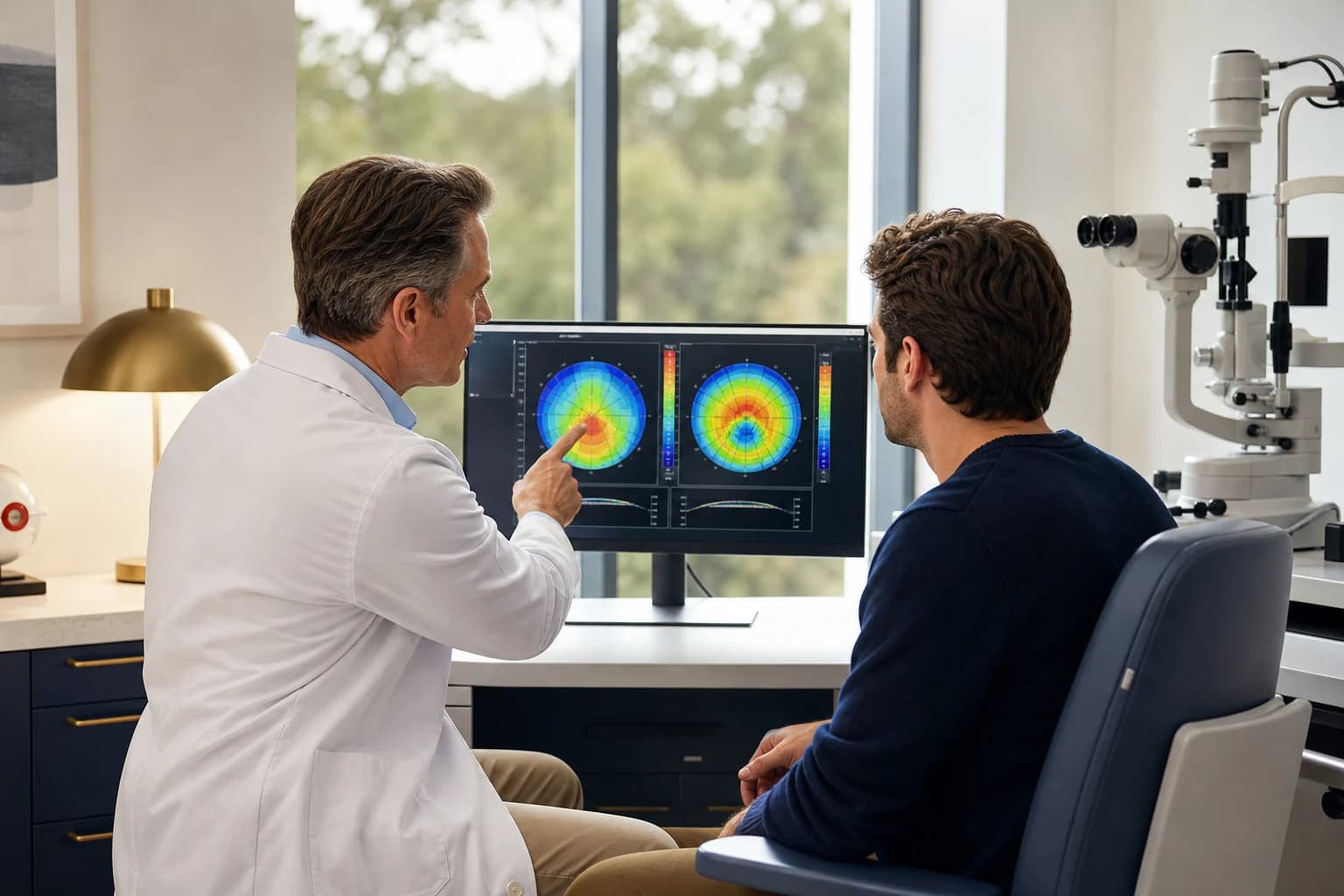
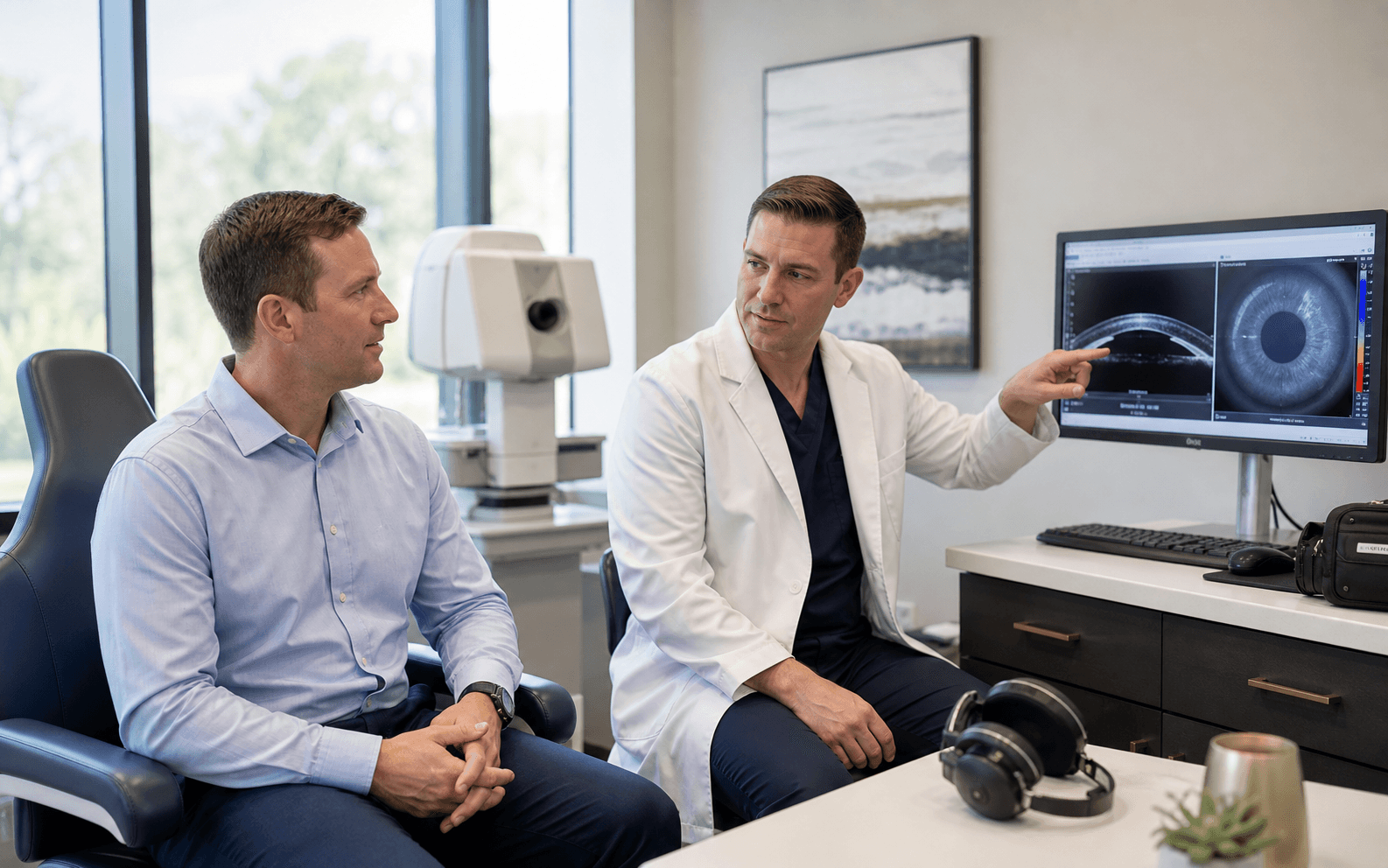
The medical examination is still the foundation. A safe LASIK evaluation reviews prescription stability, corneal shape and thickness, tear-film health, pupil findings, prior eye history, and the retina.
For a pilot, the consultation also needs to account for visually demanding tasks that may be less important in an ordinary office setting:
| Visual concern | Why it matters in aviation |
|---|---|
| Night glare or halos | Runway, instrument, and approach lighting can make low-light symptoms more noticeable |
| Fluctuating clarity | Variable vision can interfere with reading instruments or identifying distant traffic |
| Dryness | Long duty periods, airflow, low-humidity cabins, and screen use can increase discomfort |
| Contrast sensitivity | High-contrast chart acuity does not describe every real-world visibility condition |
| Monovision | Deliberately setting one eye for near and one for distance can affect depth perception and requires a separate FAA discussion |
The best procedure is not automatically the one with the fastest advertised recovery. It is the one that fits the eye, visual demands, occupational rules, and tolerance for each tradeoff.
What should a pilot verify before booking LASIK?
Start with four separate conversations.
1. Ask an Aviation Medical Examiner about the current pathway
An AME can explain which records may be needed and whether the planned timing affects an upcoming medical examination. Ask specifically about the class of certificate you hold or are pursuing.
2. Check employer or training-program requirements
FAA acceptance does not guarantee that an airline, flight school, public-safety aviation unit, or other employer uses the same return-to-duty process. Obtain the policy in writing when possible.
3. Tell the refractive surgeon what and when you fly
Night operations, long-haul flying, instrument work, frequent dry-air exposure, and a fixed training date all matter. Bring the current prescription and any occupational forms to the consultation.
4. Leave room for individual healing
No surgeon can guarantee the exact day that vision will stabilize or that a pilot will have no glare, dryness, or fluctuation. A schedule that leaves no margin for follow-up is a poor fit for an aviation deadline.
What happens before returning to flight duties?
Follow the surgeon's postoperative schedule and do not fly while vision is unstable, while a medication affects safe performance, or before the required clinical release and documentation are complete.
The first review checks healing and vision. Later reviews may be needed to confirm stability or investigate symptoms. A normal-looking eye does not replace the occupational process, and passing an ordinary driver's-license standard is not the same as satisfying an FAA medical standard.
Pilots should report symptoms accurately. Minimizing night glare or variable focus to return sooner can create a safety problem and may delay the correct treatment.
What about PRK or another vision-correction procedure?
PRK or ASA may be considered when corneal anatomy, dry-eye findings, or occupational concerns make a flapless surface procedure worth discussing. Recovery is different and often slower than LASIK. Procedure choice must come from measurements, not an assumption that one operation is universally preferred for pilots.
The FAA and an AME should remain the sources for certification requirements. The surgeon's role is to determine medical candidacy, explain procedure-specific risks, document recovery, and identify whether vision is clinically stable.
Planning a consultation from DFW aviation corridors
Patients traveling from Addison or Irving can use the consultation to compare the eye findings with an upcoming medical, recurrent training, or duty schedule. Pilots coming from Dallas or Fort Worth should also ask which early follow-ups must occur in Plano before routine care can be coordinated closer to home.
Before the appointment:
- Confirm whether contact lenses need to be removed before testing.
- Bring current glasses, prescriptions, and relevant eye records.
- Bring FAA, AME, employer, or training forms.
- List night-vision, dryness, or visual-fluctuation concerns.
- Ask whether dilation is expected and arrange transportation when needed.
The goal is a plan that works clinically and administratively. A free surgical consultation cannot substitute for FAA or AME guidance, but it can provide the measurements and medical documentation needed for an informed decision.
Questions DFW pilots should ask
- Does my corneal shape and tear film support LASIK?
- Would PRK or another option create a different recovery tradeoff?
- How will night vision and contrast be assessed?
- Which symptoms would delay clinical release?
- What records will the practice provide for my AME?
- When will vision be checked for stability?
- Which follow-ups must happen in Plano?
Start with the LASIK procedure guide, then review how to choose a refractive surgeon before booking measurements.
Sources
- Federal Aviation Administration: reporting LASIK or other laser eye surgery
- FAA Guide for Aviation Medical Examiners: refractive procedures
- FAA medical certification information
- U.S. Food and Drug Administration: what to expect before, during, and after LASIK
This article provides general education, not FAA, employment, or individualized medical clearance. Current FAA guidance, the Aviation Medical Examiner, the employer, and the treating surgeon control the actual decision.
Your exam can clarify which options fit your eyes. Visit our Plano team from anywhere in DFW.
Book a free visit