Dry eye can improve as the eyes heal after LASIK, and some people have persistent symptoms. Ask your surgeon what to expect from your own exam, especially if your eyes already burn, your vision fluctuates, or you have difficulty wearing contact lenses. There is no date on which everybody can expect symptoms to resolve.
Which symptoms belong in the conversation?
Ask about dryness, scratchiness, and blur that changes during the day or improves after blinking. These symptoms can occur when the tear film is unstable. After surgery, share when they start, how long they last, and whether they affect reading, screen work, or driving. That information helps the surgeon decide whether an exam is needed.
When should you ask to be seen?
Tell your surgical team if symptoms are limiting your normal activities, persisting despite the plan they gave you, or getting worse. For severe pain or worsening vision after LASIK, the FDA advises contacting your doctor immediately. Follow your surgeon's instructions for drops and follow-up. Ask before adding or stopping treatments on your own.
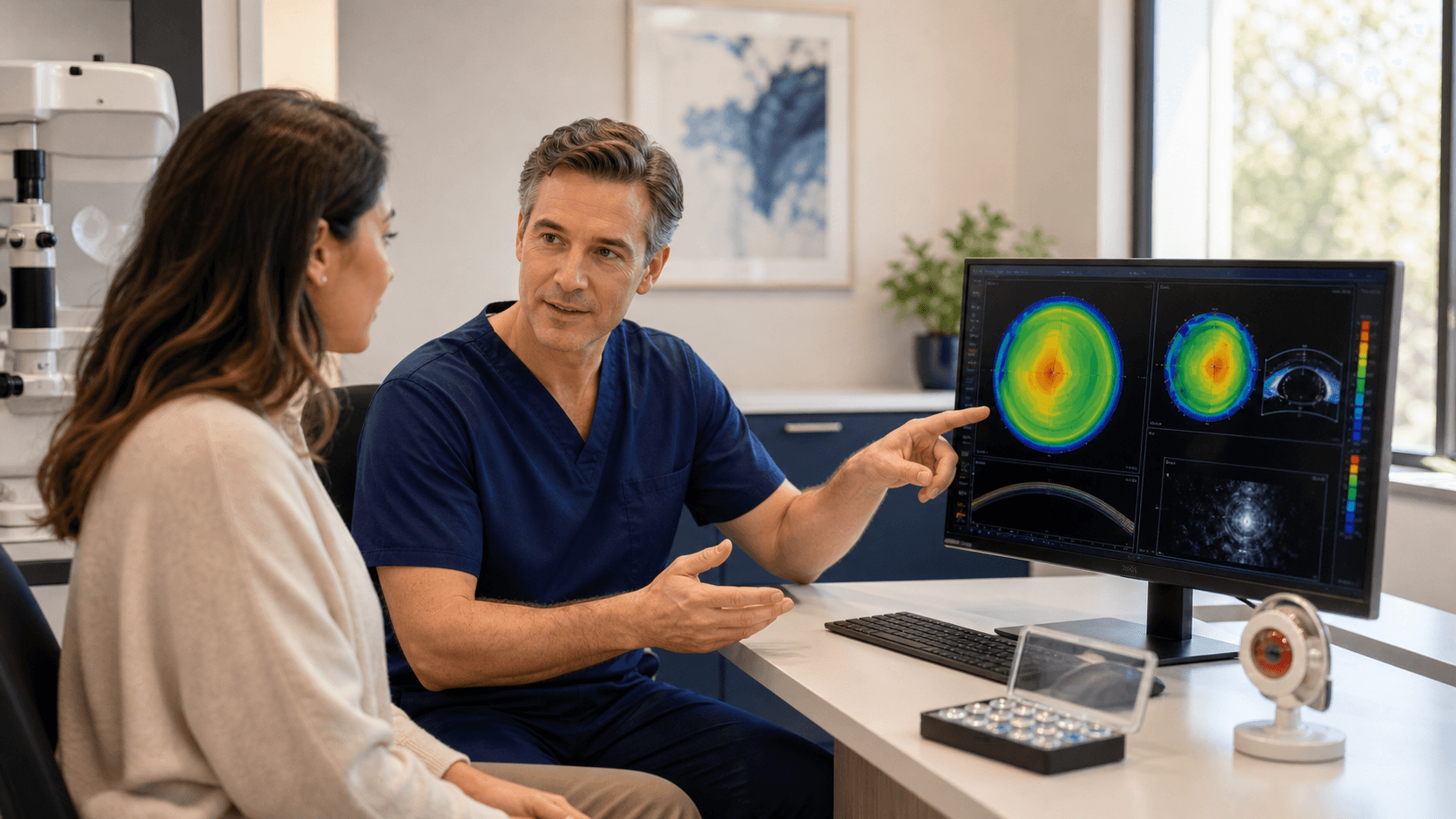
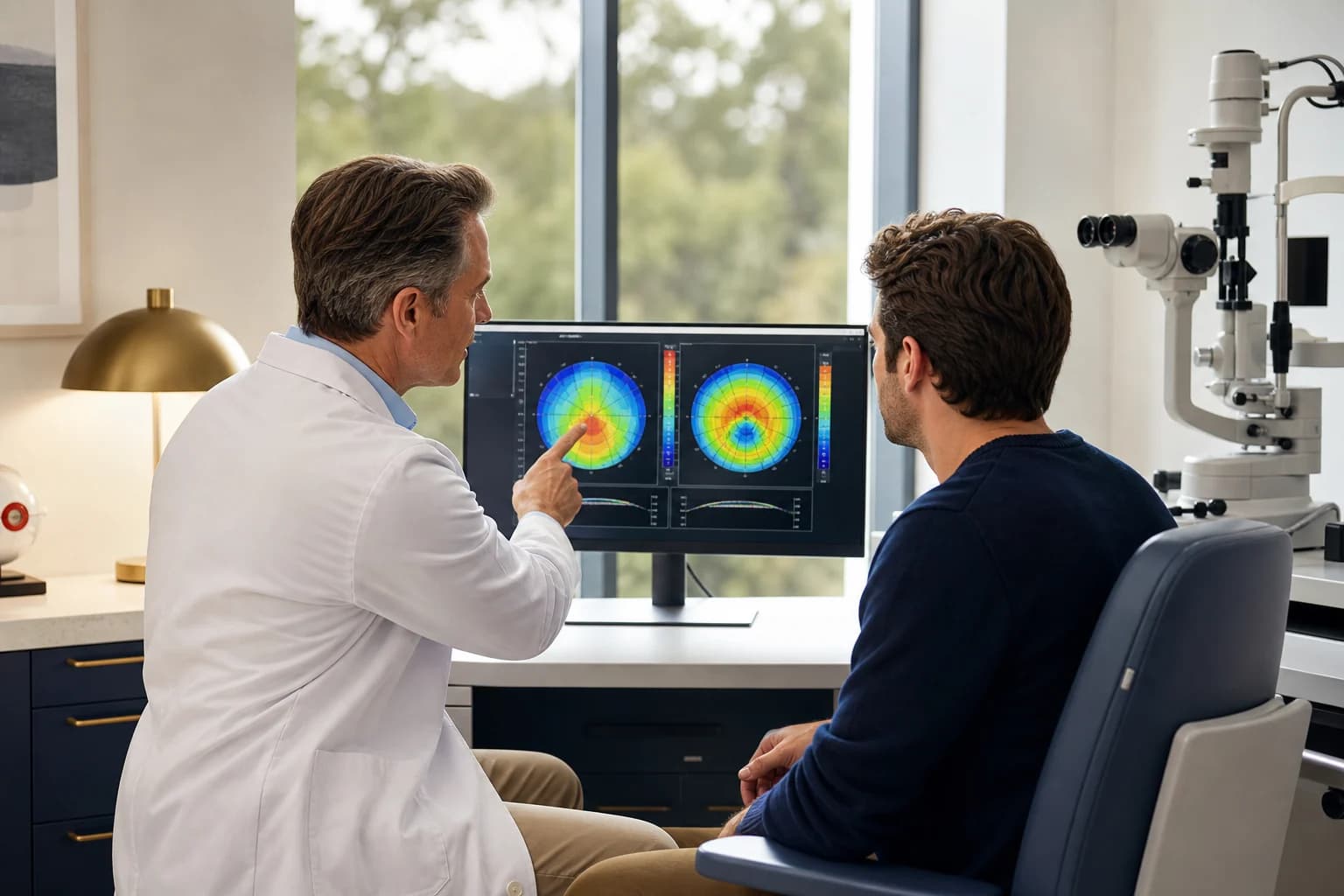
At the review, ask whether the clinician is checking the tear film, the eyelids, and the healing cornea. Dryness can be one explanation for discomfort or variable vision. An exam can help identify another cause or a problem that needs a different plan.
If you are still deciding whether to have LASIK
Bring a list of the drops you use, your contact-lens history, and a description of what makes symptoms worse. Ask whether the eye surface is ready for reliable measurements. Existing dry eye can worsen after LASIK, and the screening visit may lead to treatment and repeat measurements before a surgery recommendation.
If the measurements still raise concerns, discuss continuing with glasses or contacts and whether any surgical alternative is appropriate for your eyes. Ask how each option could affect dryness and what follow-up would involve.
Read the full LASIK recovery guide for other recovery milestones. If dryness is already affecting daily life, start with a dry-eye evaluation and bring the issue up before choosing a surgery date.
Sources: FDA LASIK candidacy guidance, FDA recovery guidance, and American Academy of Ophthalmology LASIK complications guide.
For new or worsening symptoms after surgery, contact your surgical team. For ongoing dryness before surgery, ask about a dry eye evaluation.
See what a dry eye evaluation covers