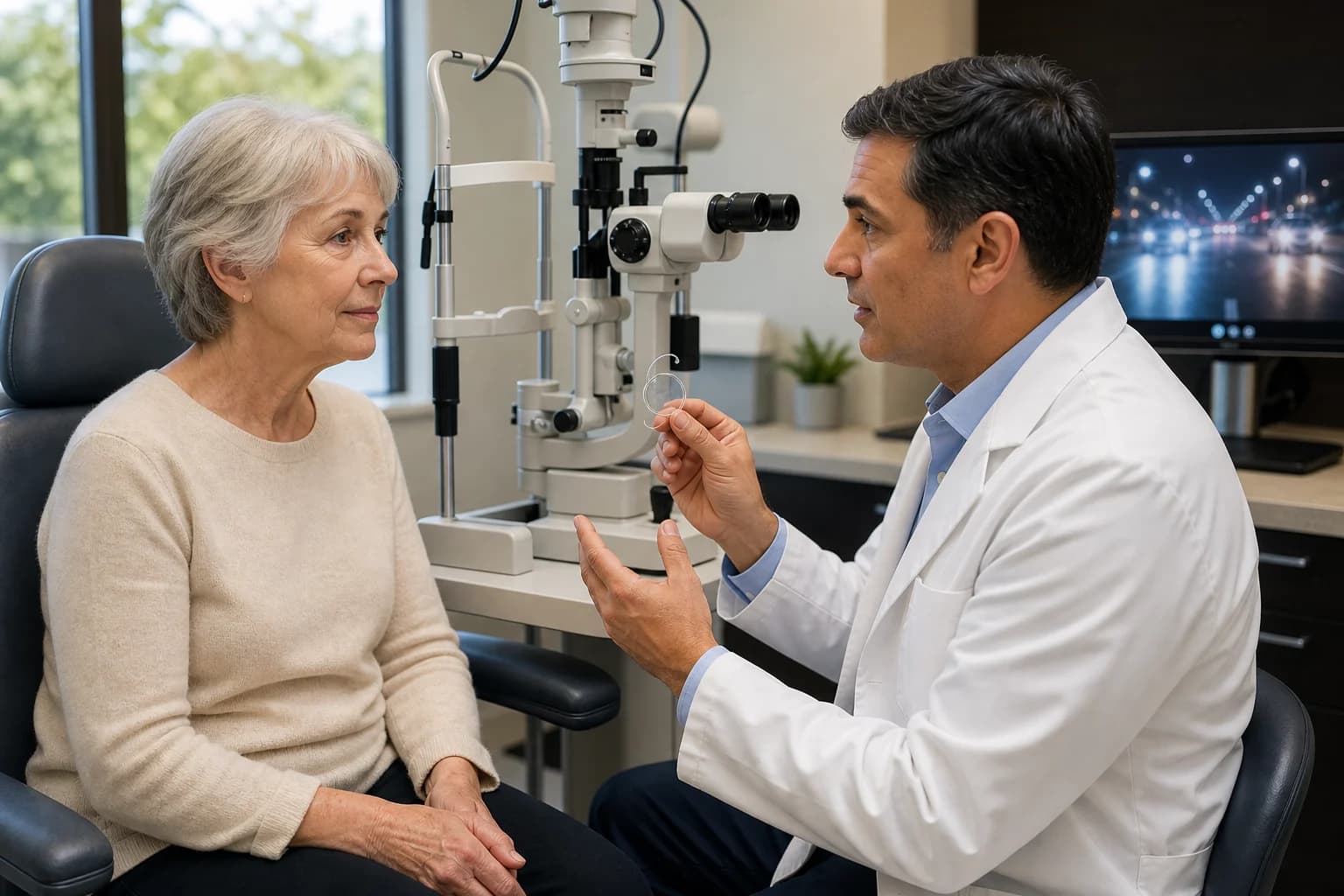
Cataract surgery can be considered when age-related macular degeneration, or AMD, is also present. Removing a cloudy lens may improve the cataract-related part of vision loss, but it does not repair the macula. Expected benefit depends on both conditions, not just how cloudy the lens looks.
Start with the cataract surgery page for the operation itself. This guide addresses the additional decisions created by macular disease; it is not a general comparison of every cataract lens option.
Which part of the vision problem is the cataract?
A cataract affects the natural lens near the front of the eye. AMD affects the macula, the central part of the retina used for detailed vision. When both are present, replacing the lens cannot be expected to remove all blur, distortion, or difficulty reading.
The exam should relate your symptoms to the lens findings, retinal examination, and any imaging. Describe which tasks have changed: reading text, seeing faces, coping with glare, or noticing straight lines appear bent. A description of daily difficulty is more useful than a request for a particular implant.
The National Eye Institute's AMD overview explains why the type and stage of macular disease matter. New distortion, a dark central area, or a sudden vision change needs prompt clinical assessment rather than waiting for an elective cataract consultation.
Does cataract surgery make AMD worse?
An NEI analysis of AREDS2 participants found no increased risk of progression to advanced AMD among eyes that underwent cataract surgery compared with those that did not. That is reassuring evidence, not a promise that AMD will stop progressing after an operation.
The question for your consultation is whether treating the cataract offers a meaningful benefit for your eye now. Ask how the surgeon distinguishes the likely lens-related improvement from vision that may remain limited by retinal damage.
Surgery still has its own risks, and AMD still needs monitoring or treatment as appropriate. Neither condition should be treated as an automatic reason to ignore the other.
How does macular disease affect lens choice?
Discuss retinal function before choosing a lens on the basis of reading-glasses goals. Some implants split or extend focus in ways that may not suit an eye with reduced visual quality from disease.
The American Academy of Ophthalmology's lens-selection guidance cautions that multifocal and EDOF lenses are generally not recommended for people with vision loss from macular degeneration and other eye diseases. An individual recommendation depends on the examination and the particular implant, rather than a blanket rule based only on age.
Ask what the proposed lens is expected to improve, what glasses are likely to remain necessary, and how the macular findings affect that recommendation. A premium-priced lens is not automatically a better choice for an eye with AMD. You should understand the optical tradeoff before agreeing to an upgrade.
How should the cataract and retina teams coordinate?
If you receive retinal treatment, bring your diagnosis, medication or injection history, most recent imaging, and the retina clinician's contact information. Ask the two teams to coordinate timing rather than canceling or moving treatment yourself.
Clarify who will monitor the macula, who will manage surgical drops, and whom to call about a new symptom. Some postoperative blur may have a different explanation from the blur present before surgery. An expected recovery timeline should not be used to dismiss deterioration.
Ask whether your planned follow-up is with the operating team, your current eye doctor, or both. This matters especially when appointments are split between practices.
What should DFW patients bring to the consultation?
Visionary's practice is in Plano. Patients traveling from McKinney, Dallas, or elsewhere in DFW can ask whether records should be sent before the visit. Bring your current glasses and a short list of tasks you most want to improve.
Request a clear explanation of the expected benefit, remaining limitations, lens recommendation, and follow-up responsibilities. The goal may be less glare or more useful vision with glasses, rather than complete freedom from correction.
Contact the practice to arrange an assessment. A useful plan should explain both what cataract surgery can change and what continued retinal care must address.
Keep Reading
When to consider cataract surgery
Cataract lenses when glaucoma is present
Your exam can clarify which options fit your eyes. Visit our Plano team from anywhere in DFW.
Book a free visit