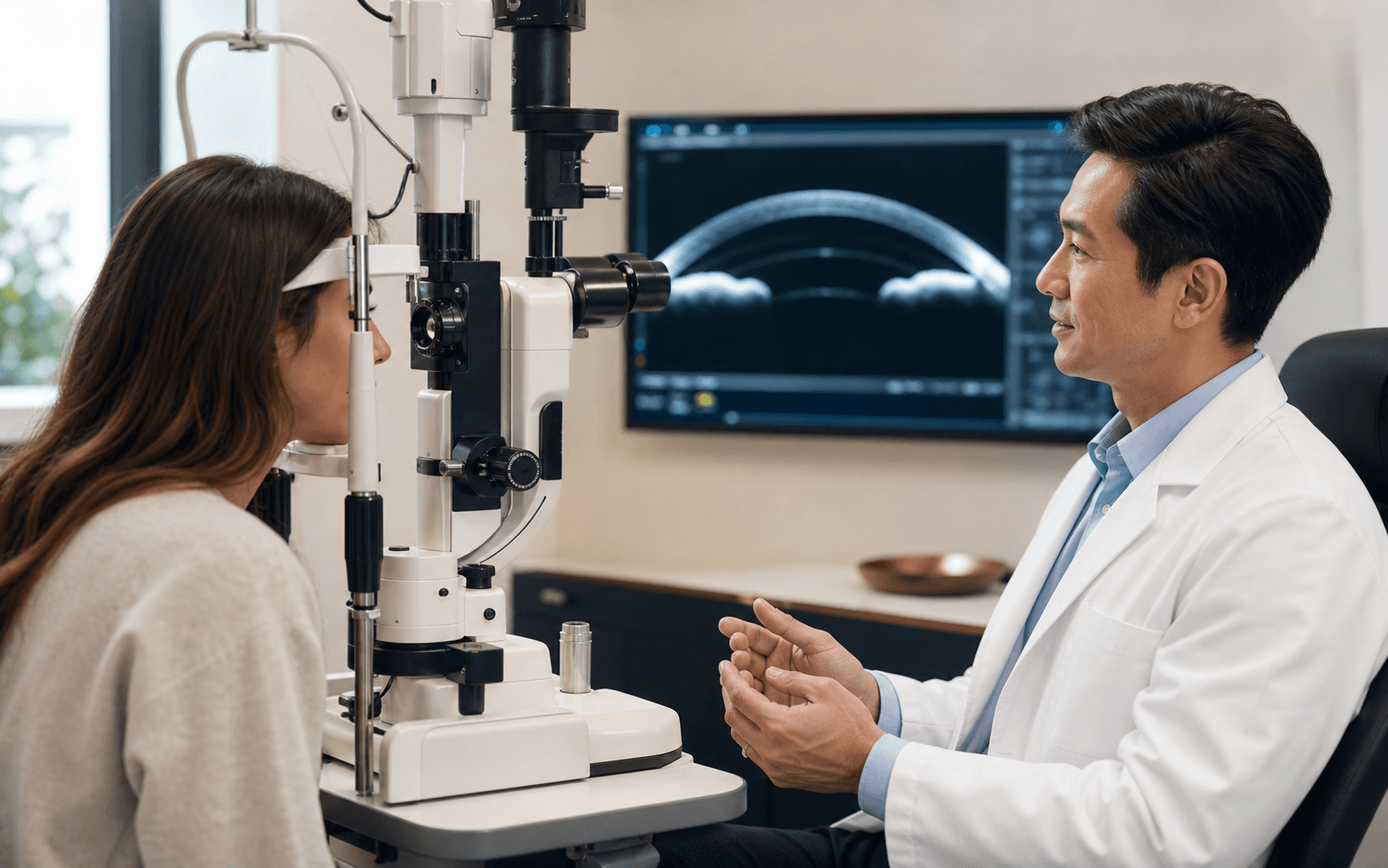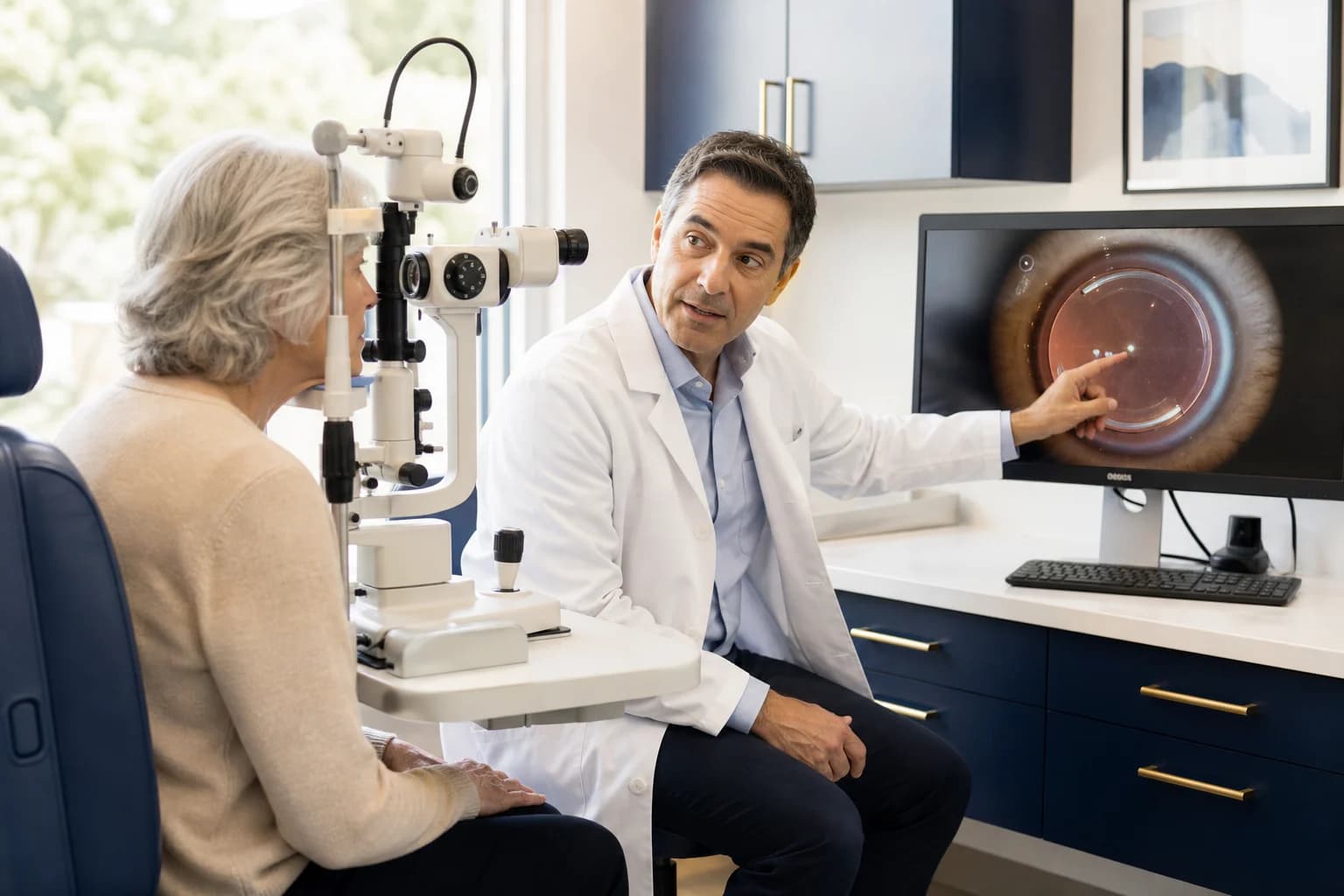
Cataract surgery can be needed after an ICL because the natural lens remains in the eye after phakic lens implantation. If that lens becomes cloudy enough to require surgery, the surgeon plans removal of the phakic implant and the cataract, followed by a replacement intraocular lens. Your exact implant and eye findings determine the surgical plan.
The cataract procedure page explains lens replacement for cataracts. This guide is for patients who already have a phakic implant, not people comparing first-time vision-correction options.
Is an ICL the same as a cataract implant?
No. A phakic ICL is added while the natural lens remains. A cataract implant replaces the natural lens after it is removed. Similar words such as implant and lens can make the two procedures sound interchangeable when they are not.
Ask the examiner to identify which lens is present and which structure is causing the current blur. An old implant does not prove that every later vision change is a cataract, and cataract surgery is not the answer to every symptom after ICL.
What records help the surgeon?
Bring the implant card, original operation report, available lens measurements, and follow-up records. If the procedure happened elsewhere, ask that office to send the information directly as well as giving you a copy.
Knowing the model and prior findings helps the team plan the assessment. Do not assume missing paperwork makes care impossible, but identify the gap early. A specific request for the implant record is more useful than asking for a generic summary saying you once had eye surgery.
Is this just a routine ICL exchange?
No. Exchanging a phakic lens and replacing the natural lens address different structures and goals. If cataract surgery is recommended, ask how the existing implant will be handled and whether anything about your anatomy changes the approach.
Discuss the intended focus of the replacement lens and the likelihood of needing glasses afterward. A good result from the earlier ICL does not guarantee the same visual experience after natural-lens removal. Ask how the surgeon is accounting for your current retinal health, corneal findings, and priorities.
What should highly nearsighted patients ask?
Ask whether your original degree of nearsightedness or retinal history changes the risk discussion or need for further assessment. Removing a cataract or an implant does not erase every feature of a highly myopic eye.
Do not select a replacement lens only by its advertised range of focus. Ask why it is appropriate for your eye and which trade-offs apply. The lens-choice guide can help organize that conversation without replacing individual advice.
How should you plan a DFW consultation?
For care in Plano after surgery elsewhere in DFW, arrange the record transfer before the appointment if possible. Confirm whether dilation or additional testing affects transportation and whether the surgeon needs another specialist's assessment.
A consultation should distinguish the cause of the current problem, the role of the old implant, and the proposed replacement-lens plan. Sudden vision loss, severe pain, or new flashes and floaters should be assessed promptly rather than waiting for routine cataract planning.
Sources
Keep reading
Your exam can clarify which options fit your eyes. Visit our Plano team from anywhere in DFW.
Book a free visit