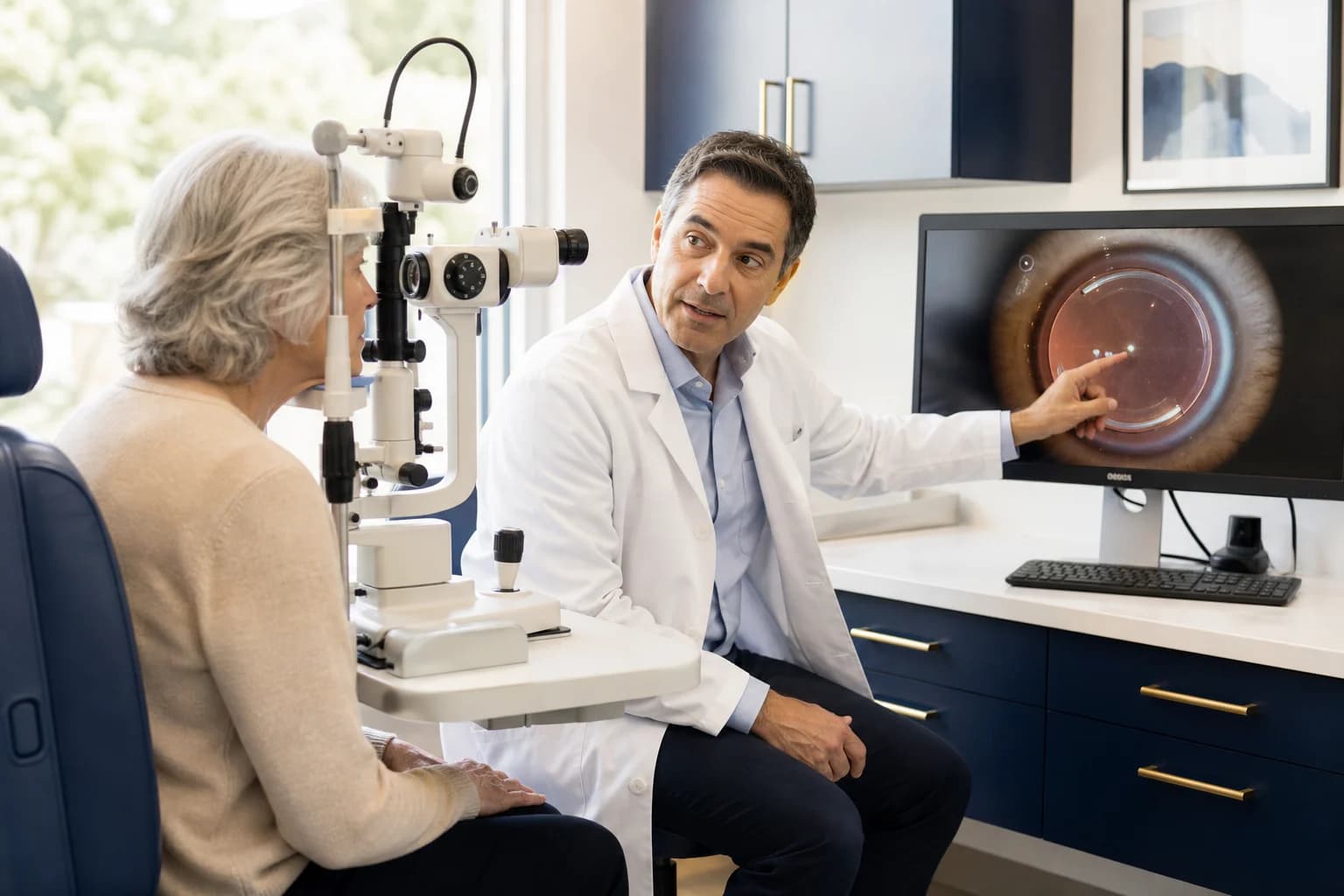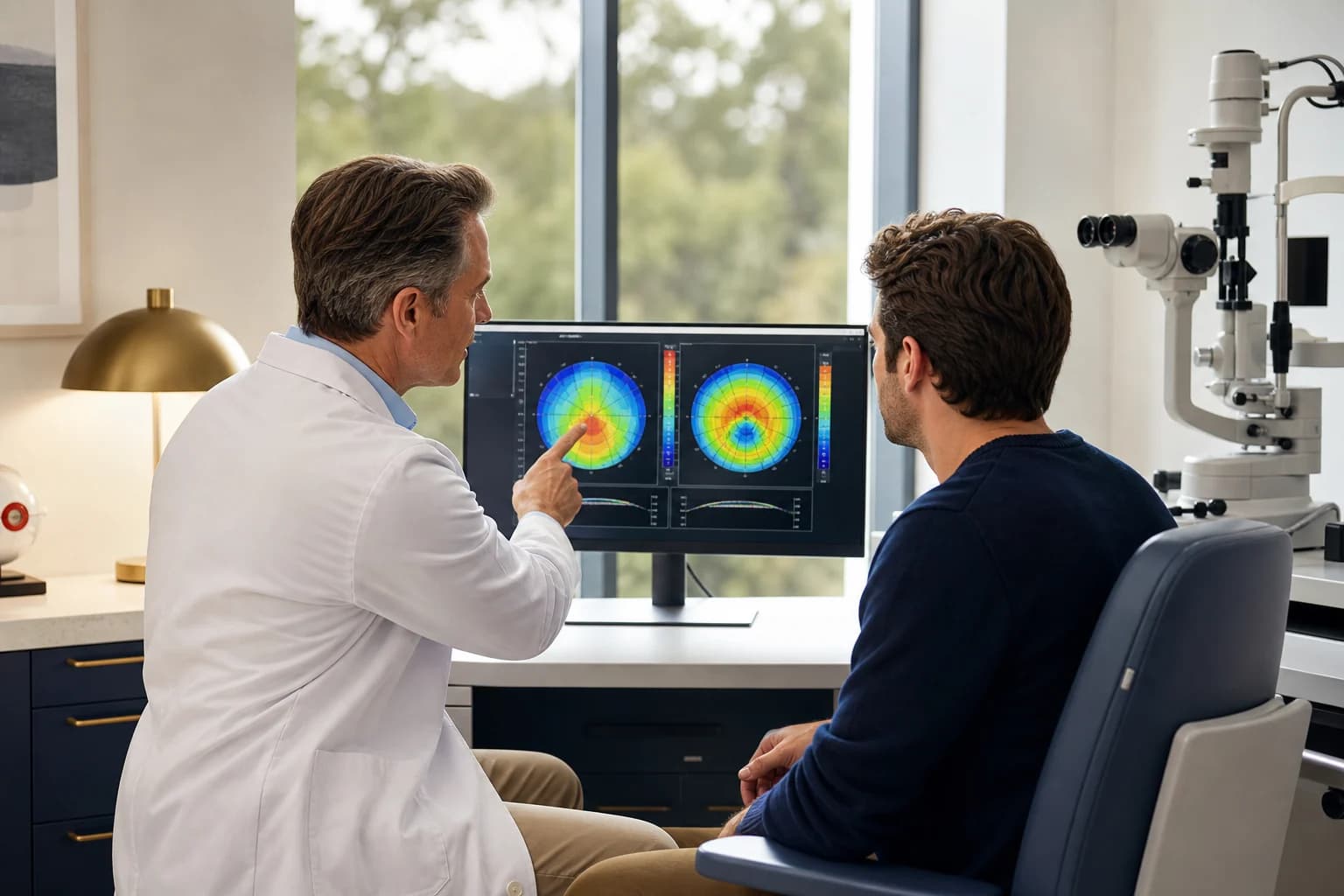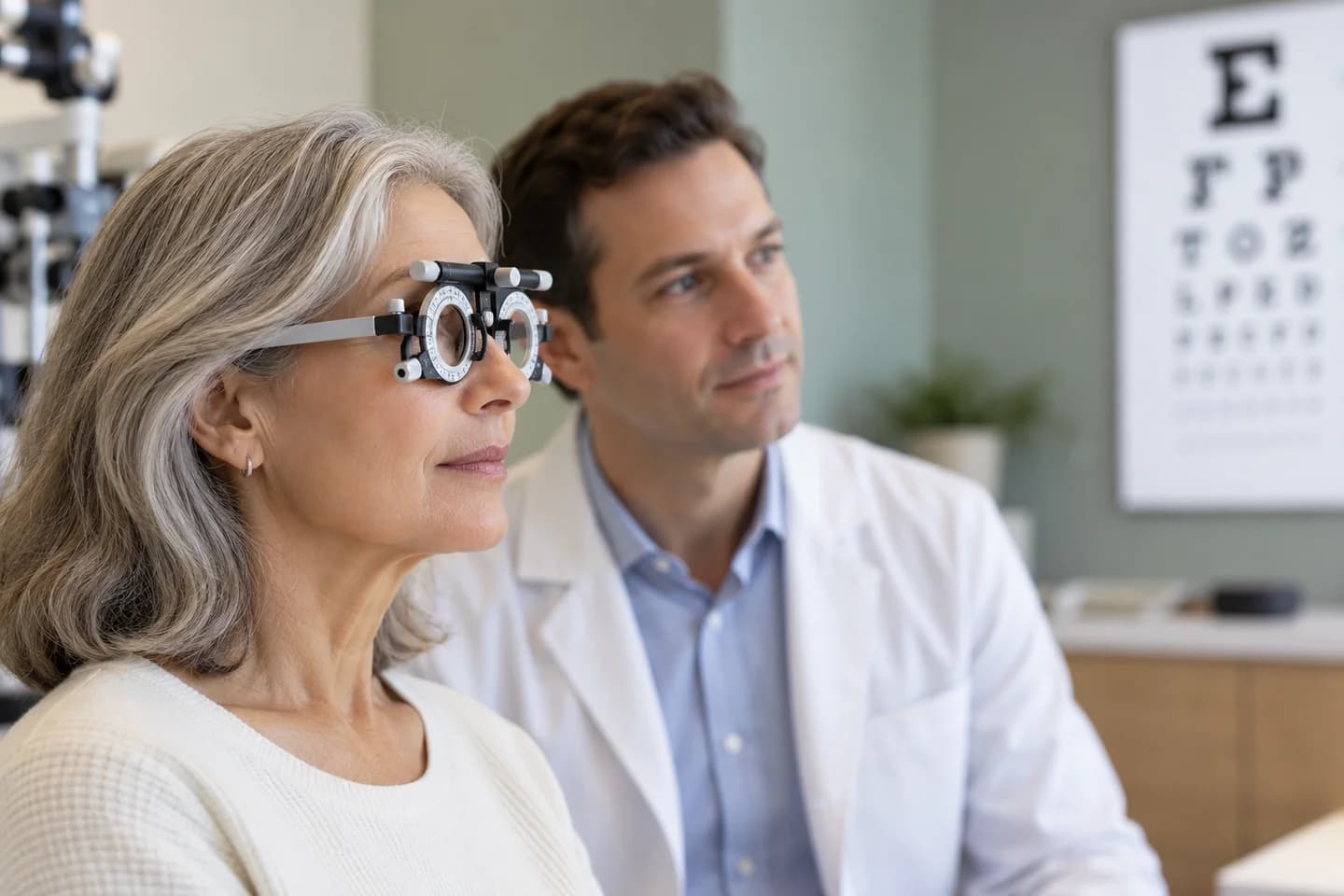
LASIK or PRK may be considered after cataract surgery when a stable remaining prescription is the confirmed reason for unwanted glasses dependence. Laser treatment is not a general fix for every disappointing visual result. First establish the cause, then compare the benefit of an enhancement with glasses and other appropriate options.
The laser vision correction service explains procedure assessment. If the cause of blur is still unknown, begin with the cloudy vision after cataract surgery guide and an examination instead of selecting a laser procedure.
What needs to be confirmed first?
Ask whether refraction, the glasses-prescription test, shows a stable error that explains the problem. The evaluation also needs to consider the eye surface, corneal shape, implant position, and retina. A new prescription should not simply be inferred from blurry vision.
Describe what happens with your best glasses correction. Does it sharpen the distance you want to improve, or does distortion or glare remain? That distinction helps frame the expected benefit. Sudden loss of vision, significant pain, or new flashes and floaters require prompt assessment rather than an elective enhancement discussion.
How do glasses, LASIK, and PRK compare?
Glasses avoid another operation and can demonstrate the value of correcting the measured prescription. For some people, that is the preferred long-term solution. Others find that glasses interfere with particular activities and want to understand a surgical alternative.
LASIK creates a corneal flap; PRK treats the corneal surface without a flap. Both require suitable measurements and a discussion of risks and healing. PRK assessment may be relevant when a flap approach is unsuitable, but PRK is not automatically safe for every cornea excluded from LASIK.
Ask which method is being recommended for your cornea, how recovery differs, and what degree of glasses reduction is realistic. Neither procedure guarantees the full range of vision you may have hoped for before cataract surgery.
When might a lens-based solution be discussed?
The size and cause of the refractive problem, implant position, and overall eye health can change the recommendation. Sometimes the surgeon considers an implant-related approach rather than reshaping the cornea. Such procedures involve different risks and may require referral.
Bring the original implant information and operative report. Mention any posterior capsule laser treatment, often called YAG, because this history matters when further lens surgery is considered. Do not schedule a capsule procedure solely to fix an undiagnosed visual complaint without discussing the full plan.
When is it reasonable to commit?
Ask what establishes that healing and prescription measurements are stable enough, rather than relying on a universal waiting period. Request the proposed target, likely remaining glasses needs, and alternatives if the enhancement cannot safely deliver the desired change.
Discuss the complete estimate: testing, treatment, medication, follow-up, and any enhancement policy from the original cataract operation. Do not assume a second procedure is included or covered by insurance.
A consultation should end with a diagnosis-linked recommendation. Bring current glasses and describe the specific task you want to improve so the decision reflects useful vision rather than a promise of perfect numbers.
Sources
- Primary study: LASIK versus lens-based correction after cataract surgery
- Primary study: PRK after cataract surgery with a premium implant
- AAO: Refractive error after cataract surgery
- AAO: Cataract surgery side effects and causes of blur
Keep reading
Your exam can clarify which options fit your eyes. Visit our Plano team from anywhere in DFW.
Book a free visit