Contoura Vision is a topography-guided LASIK treatment that uses a detailed map of the corneal surface to help customize laser planning. It goes beyond the glasses prescription by measuring surface irregularities that may affect visual quality. At Visionary Eye Surgery in Plano, the treatment profile is selected from the diagnostic findings rather than from a technology label.
Patients often arrive asking whether wavefront-guided or topography-guided LASIK is better. The useful answer is not a universal winner. It is which measurement addresses the optical problem in a specific eye.
Wavefront-Optimized, Wavefront-Guided, and Topography-Guided LASIK
These terms describe different ways of measuring an eye and programming an excimer-laser treatment.
Wavefront-optimized LASIK uses the prescription and corneal shape to plan treatment while accounting for the natural curvature of the cornea. It is commonly used for regular corneas with straightforward prescriptions.
Wavefront-guided LASIK measures how light travels through the complete optical system of the eye. That measurement can identify higher-order optical errors that do not appear in a standard glasses prescription.
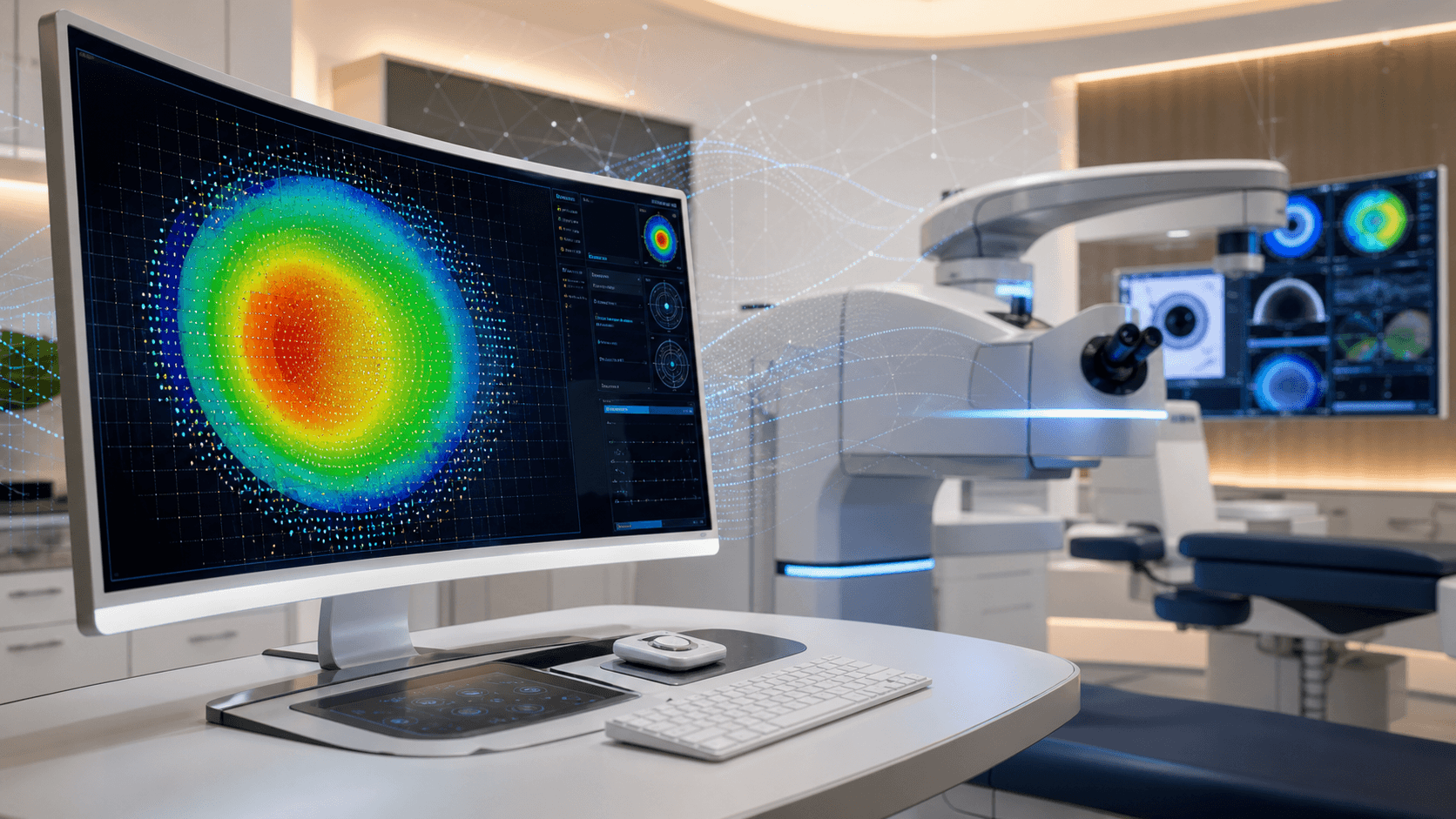
Topography-guided LASIK, including Contoura Vision, starts with a detailed map of the corneal surface. It may be useful when safe, treatable surface irregularities or certain astigmatism patterns are important to the plan.
One map is not automatically more advanced for every patient. Wavefront data describes the eye's overall optical pathway, while topography concentrates on the corneal surface. The surgeon's job is to decide which data is clinically relevant and whether the cornea is suitable for laser treatment at all.
How Is Contoura Vision Different from Standard LASIK?
Conventional LASIK planning primarily corrects refractive error: nearsightedness, farsightedness, and astigmatism. Modern planning may add wavefront or topography data when those measurements improve the treatment design.
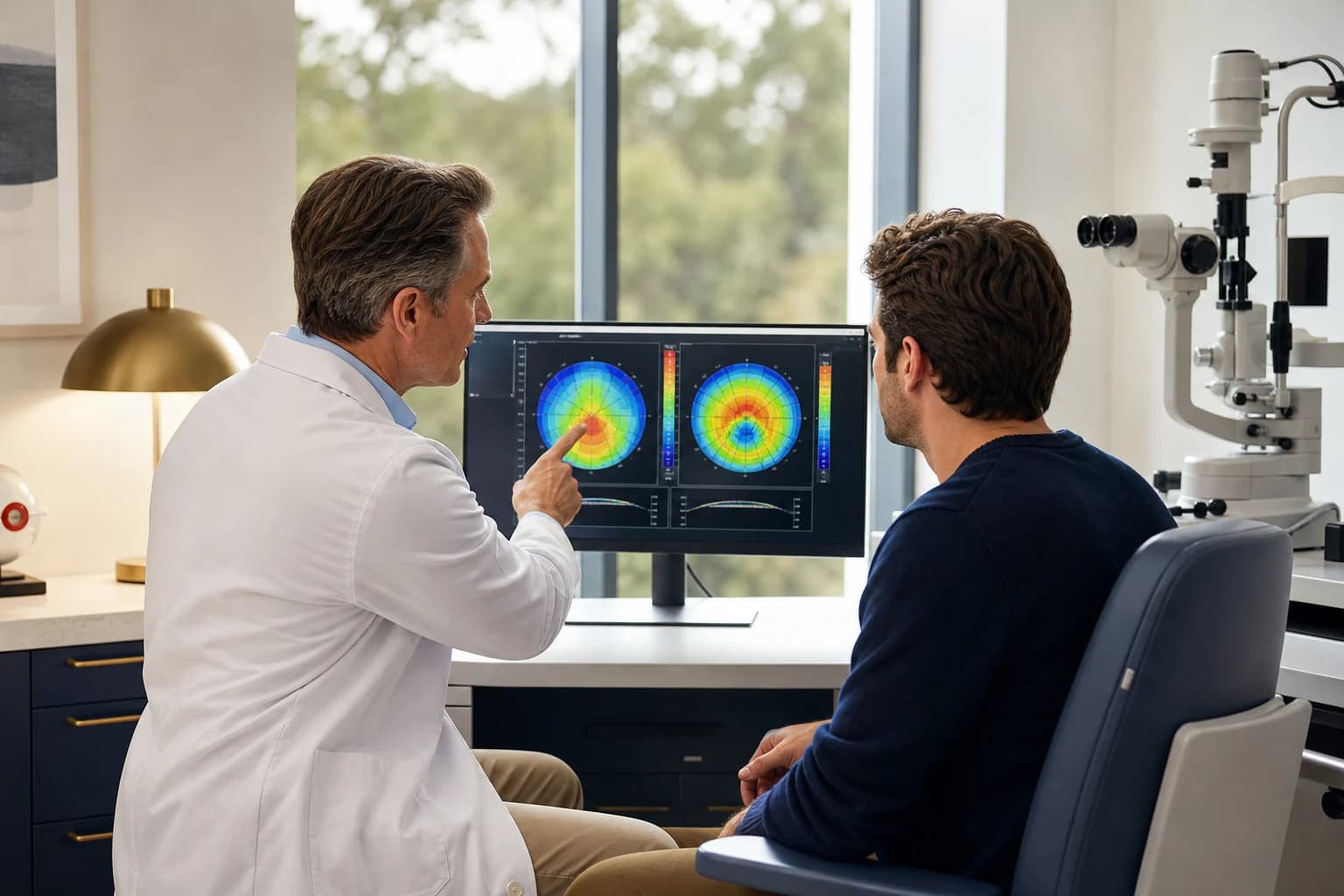
Contoura Vision uses the Topolyzer VARIO to create a detailed topographic map of the corneal surface. The system measures small variations in shape that a glasses prescription alone does not describe.
Those measurements can help the surgeon decide whether a topography-guided profile is appropriate. They also help identify corneas that should not receive LASIK. Mapping is therefore a candidacy tool as well as a treatment-planning tool.
Who Is a Good Candidate for Contoura Vision in Dallas-Fort Worth?
Not everyone needs Contoura Vision. If you have a straightforward prescription with a healthy, regular cornea, standard all-laser LASIK will probably give you an excellent outcome. I am not going to upsell you on technology you don’t need.
Topography-guided planning may be considered when a safely treatable corneal surface pattern contributes to visual quality or astigmatism. Symptoms such as glare or vision that remains imperfect with glasses can have several causes, so the map must be interpreted alongside the tear film, prescription, pupil size, lens, and retina.
There is an important boundary: Contoura is not a treatment for progressive keratoconus or an unstable cornea. If mapping suggests ectasia, thinning, or a keratoconus pattern, the next step is a cornea evaluation, not elective LASIK.
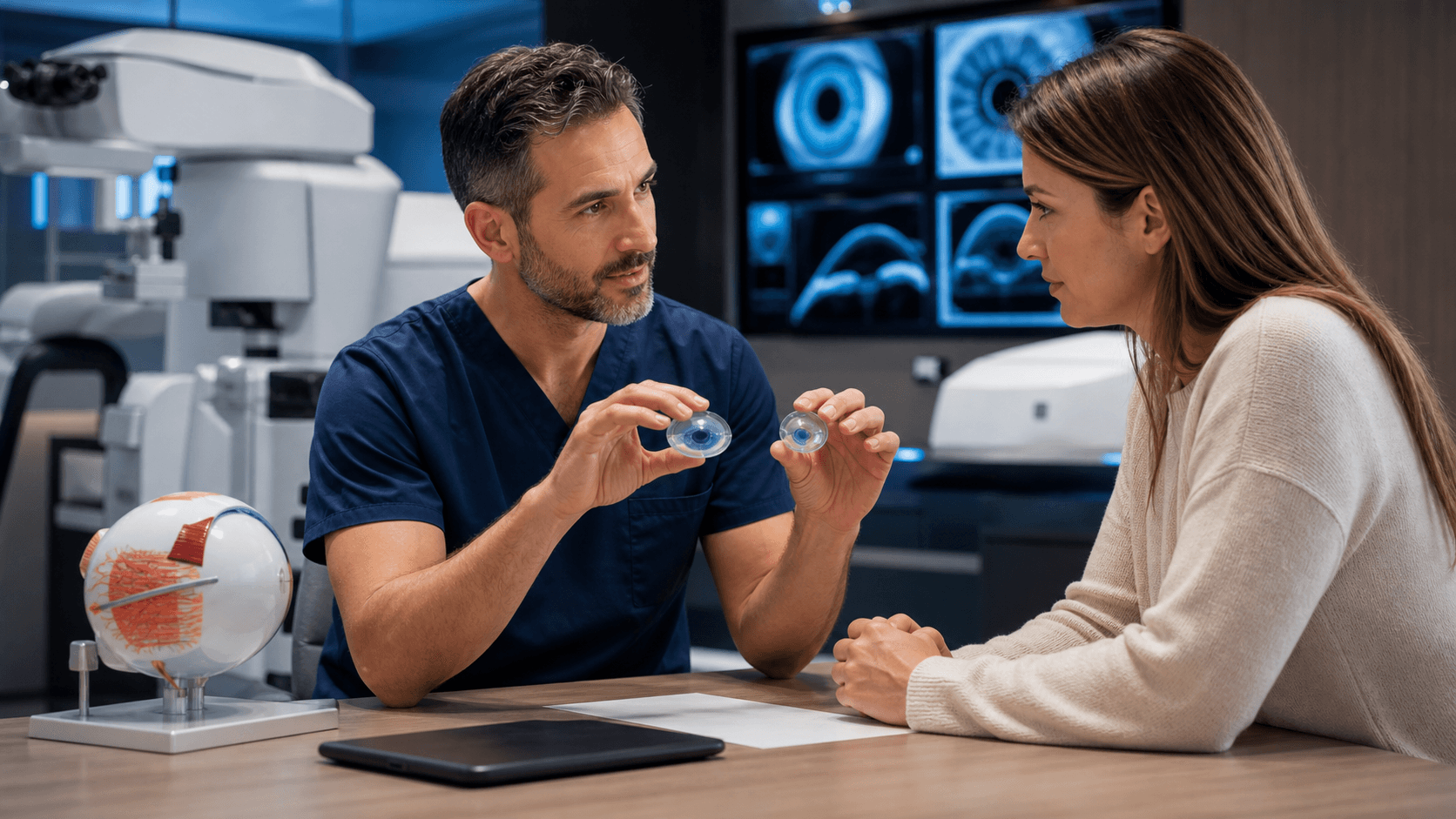
During your LASIK consultation, I review topography with the rest of the diagnostic workup. If the findings support topography-guided treatment, I explain why. If another laser profile or another procedure protects the eye better, that becomes the recommendation.
What Are the Results Like?
Topography-guided LASIK has produced strong visual-acuity and patient-satisfaction results in appropriately selected clinical-trial patients. Those study results do not mean every eye will see better than 20/20 or that one profile eliminates glare, halos, dryness, or the possibility of an enhancement.
The relevant outcome is the one supported by the patient's starting prescription, corneal regularity, tear film, pupil behavior, and healing response. Those factors are why screening matters more than choosing a treatment name from an advertisement.
How Does the Procedure Work?
The procedure follows the same basic steps as other all-laser LASIK treatments. A femtosecond laser creates the corneal flap, and the excimer laser applies the selected treatment profile. The appointment includes preparation and post-procedure checks; the laser treatment itself takes only a short time.
The difference is in the planning data. Topography measurements are reviewed before the procedure and used to prepare the treatment profile when the eye qualifies.
Is Contoura Vision More Expensive Than Regular LASIK?
It can be, depending on where you go. At Visionary Eye Surgery, I keep pricing transparent because I think hidden costs are disrespectful to patients. When you come in for a consultation, I will tell you exactly what your procedure will cost based on the technology your eyes actually need. No surprises at checkout.
The useful comparison is not whether a technology sounds premium. It is whether the diagnostic findings support it and what the complete quote includes. If topography-guided treatment is recommended, the reason should be visible in your measurements.
How Do I Find Out If Contoura Vision Is Right for Me?
The topographic mapping takes a few minutes, but it is only one part of the evaluation. Corneal thickness and shape, prescription stability, dry-eye findings, pupil size, lens health, and lifestyle all affect whether all-laser LASIK, SMILE, ASA/PRK, EVO ICL, or no surgery is the responsible answer.
If you are in Plano, Dallas, or elsewhere in DFW, book a complimentary consultation to review the measurements and the tradeoffs behind the recommendation.
Keep Reading
SMILE Eye Surgery at Visionary Eye
EVO ICL for High Prescriptions
Medically Reviewed by Dr. Shehz, DO
Dr. Shehzad Batliwala, DO—better known as Dr. Shehz—is a board-certified ophthalmologist and eye surgeon who brings both technical precision and genuine compassion to every patient he treats.
Explore this content with AI
Open this article in your preferred AI assistant for a plain-English summary, action steps, and questions to ask before booking a consultation.
Want a direct answer about your eyes? A complimentary consultation gives you a clear, written recommendation.