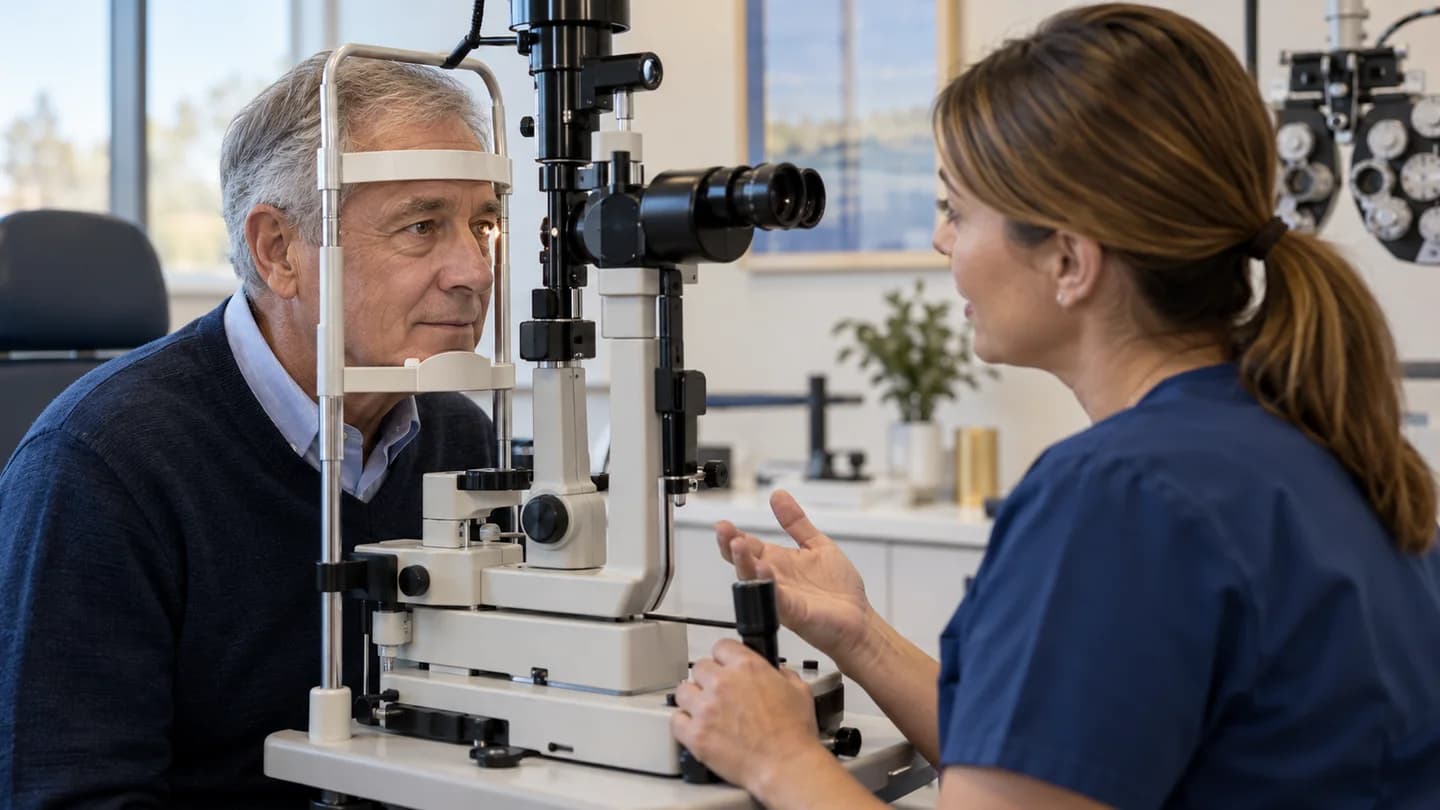
Cataract surgery may help someone with Fuchs endothelial dystrophy, but the plan depends on how much the cataract and cornea each limit vision. Some eyes can have cataract surgery alone. Others need a discussion about corneal transplantation, performed separately or alongside cataract surgery.
Before committing to an implant, ask for a cataract evaluation that accounts for corneal health. A cornea consultation can help clarify the sequence when the two problems overlap.
Which part of the eye is limiting vision?
Fuchs affects the endothelial cells that help keep the cornea clear. When that layer cannot manage fluid adequately, corneal swelling can affect vision. A cataract is clouding of the natural lens. Removing that lens does not replace the cornea's endothelial cells.
Describe morning blur, glare, fluctuations, and the tasks you want to improve. The examination can assess the cataract, corneal swelling, thickness, and endothelial appearance. A single cell count or thickness number should not become a personal treatment rule copied from the internet.
When might cataract surgery alone make sense?
If the cataract is an important cause of difficulty and the cornea appears able to tolerate surgery, the surgeon may recommend cataract surgery without a transplant. That is still a discussion about risk: the cornea may recover slowly or need additional treatment later.
An observational study of patients with Fuchs found that preoperative corneal findings helped predict later need for endothelial keratoplasty. It supports individualized assessment rather than assuming that everyone with the diagnosis needs the same operation. It does not provide a personal probability from an online description.
When should combined or staged treatment be discussed?
If corneal disease is also limiting vision, ask whether endothelial keratoplasty, which replaces the affected inner corneal layer, belongs in the plan. Combined surgery and separate operations have different scheduling and measurement considerations.
Ask the team to compare the proposed sequence with the alternative. What improvement is expected from the first operation? What finding would trigger the second? Who will manage recovery? The answer should explain why the sequence fits your eye and circumstances, including whether care needs coordination with another surgeon.
How does this change the lens decision?
Lens selection should follow the corneal assessment. Discuss the vision you can reasonably expect, how corneal treatment could affect measurements, and why a particular implant is suitable. Paying for a lens feature does not remove limitations elsewhere in the eye.
Bring previous scans, surgery records, and your current glasses. Name your priorities, such as dependable distance vision or reading comfort, rather than starting with a brand. Ask for the recommended lens, alternatives, and reasons in plain language.
What should you settle before scheduling?
Request a written plan covering the procedure sequence, likely follow-up, and what happens if the cornea remains cloudy. Ask which parts are medically necessary, which lens choices are optional, and how estimates change if another procedure is needed. Coverage requires an individual benefits check.
For DFW patients planning visits to Plano, a consultation is the next step toward deciding which operation, if any, to schedule. The useful outcome is a coordinated plan with realistic expectations for both the lens and cornea.
Sources
- AAO: What is Fuchs dystrophy?
- Prospective study: Fuchs and cataract surgery planning
- ESCRS cataract recommendations: corneal comorbidities
Keep reading
Your exam can clarify which options fit your eyes. Visit our Plano team from anywhere in DFW.
Book a free visit